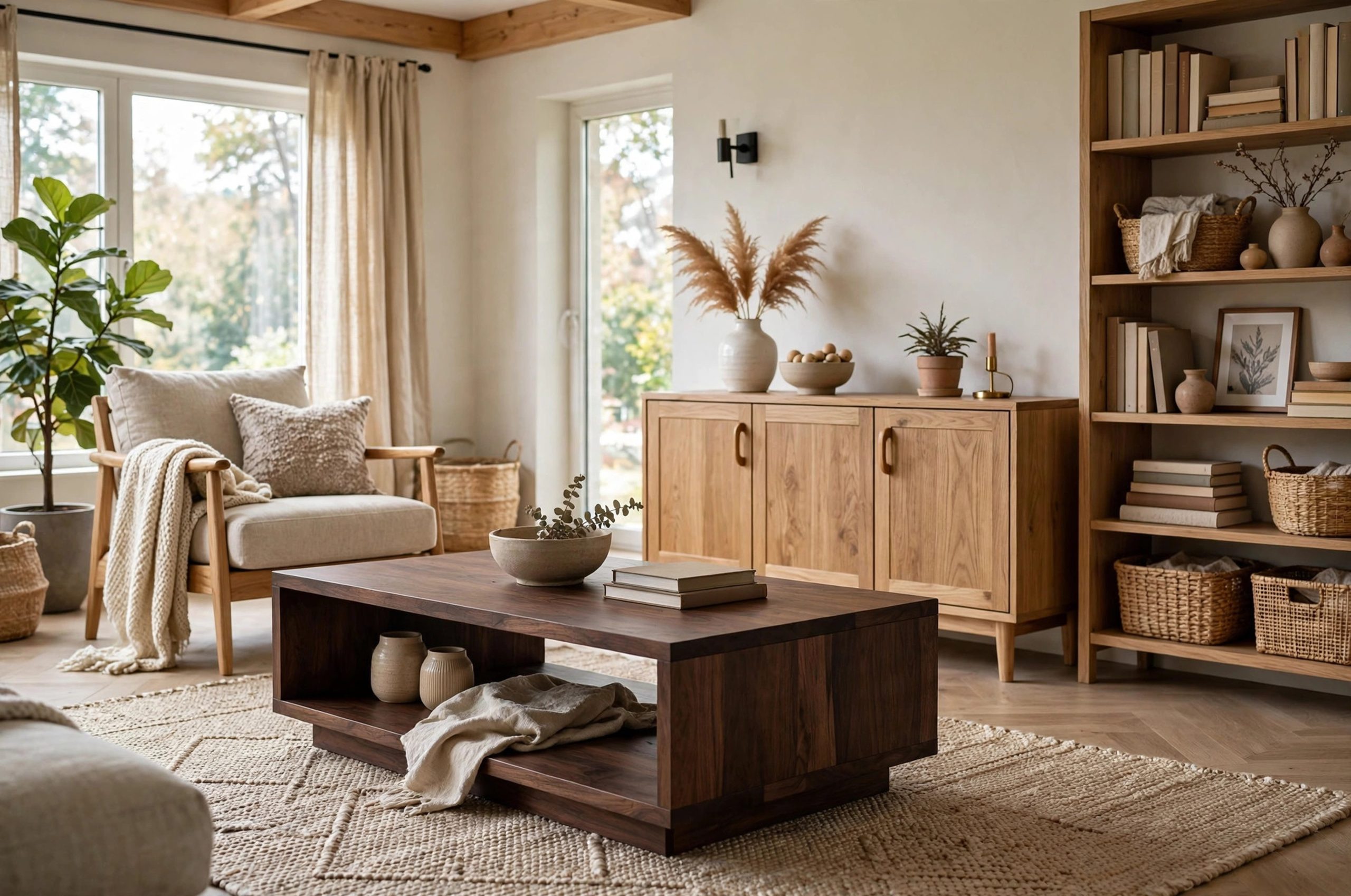
Walk into any well-designed living room and you will notice something. As House Digest notes in its wood-tone myth-busting piece, the old rule that all woods must match is one designers are happy to break. The wood furniture does not match. The coffee table is dark walnut. The sideboard is pale oak. The floor is something else entirely. And it all looks right. That is not luck. It is a small set of rules that anyone can learn. Here is how to mix wood tones in living room furniture without fuss.
Table of Contents
Table of Contents
- Mix Wood Tones in Living Room Furniture: Forget Matching. Learn Undertones.
- Pick a Dominant Wood and Let It Lead
- Repeat Every Tone at Least Twice
- Use Contrast on Purpose
- Mind the Grain, Not Just the Color
- Buffer With Neutrals and Soft Materials
- The Floor Is Part of the Mix
- A Room-by-Room Cheat Sheet
- What About Painted Wood?
- Common Mistakes to Avoid
- Try It Before You Commit
- The Bottom Line
- References
Most people were taught that wood has to match. It does not. Matching every piece is what makes a room look like a furniture showroom floor, flat, safe, and a little dull. When you learn how to mix wood tones in living room furniture, the room gains depth and character. Mixed woods look collected over time, which is the feeling every decorator is chasing.
The fear is real, though. Mix woods badly and the room looks like a yard sale. This guide gives you the rules that keep mixed wood looking intentional: undertones, ratios, repetition, and the buffer materials that tie it all together.
Mix Wood Tones in Living Room Furniture: Forget Matching. Learn Undertones.
When it comes to mix wood tones in living room furniture, getting the details right makes all the difference.
Many homeowners find that mix wood tones in living room furniture is easier than they expected once they know the basics.
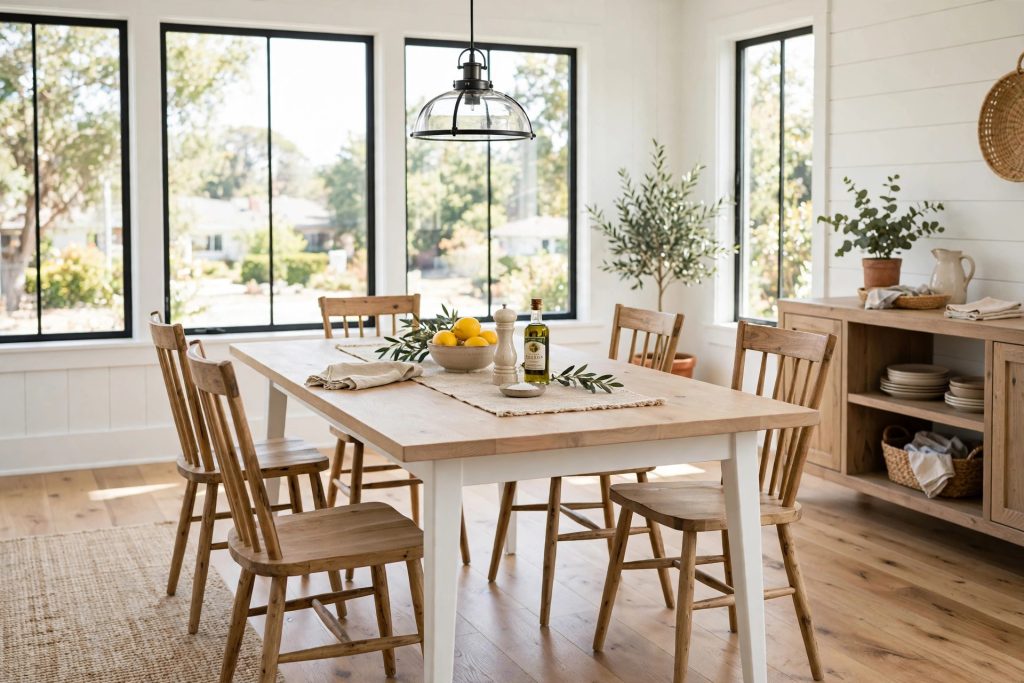
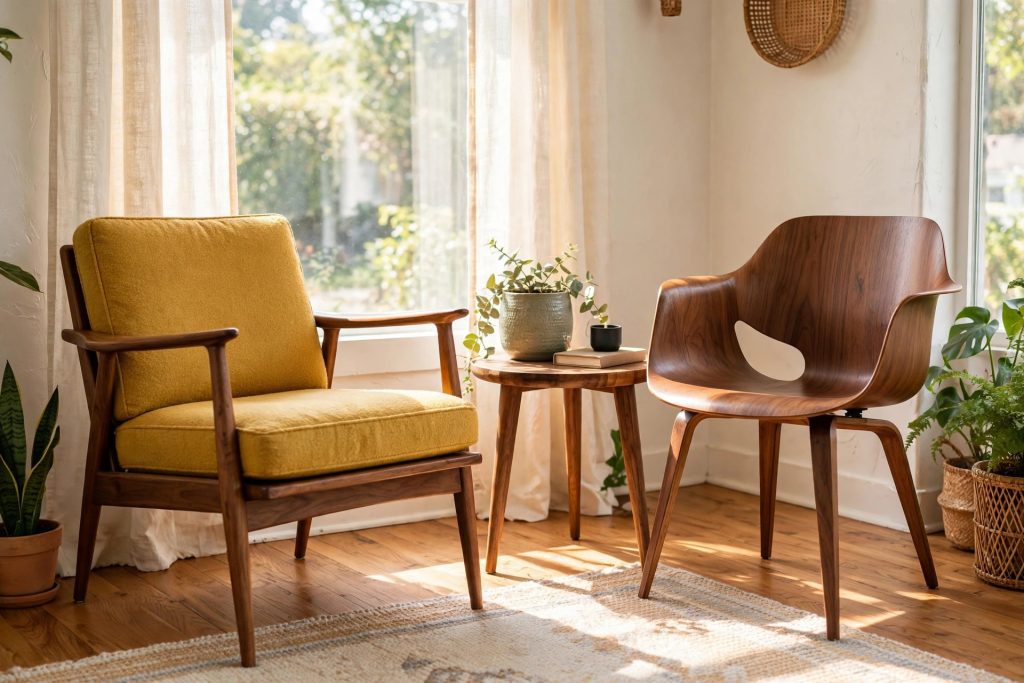
The first rule of mixing wood is the one that matters most. Match the undertone, not the color. Every wood finish leans warm or cool. Warm woods carry red, yellow, or golden hints, think cherry, honey oak, and mahogany. Cool woods lean gray or ashy, think weathered gray oak, some maples, and driftwood finishes. Walnut sits in the middle and plays well with both sides.
Stand your pieces side by side in daylight and ask one question: warm or cool? If the big pieces share the same temperature family, they will get along even when one is much darker than the other. If the temperatures clash, a red-toned cherry next to a gray-washed oak, the eye reads it as a mistake. This undertone check is the backbone of every designer guide to the topic, including the clear walkthrough at Chris Loves Julia, which lays out the warm-versus-cool test in plain terms.
Write this down: contrast in lightness is good. Clash in temperature is bad.
Pick a Dominant Wood and Let It Lead
Many homeowners find that mix wood tones in living room furniture is easier than they expected once they know the basics.
The key to mix wood tones in living room furniture is choosing the right approach for your space and budget.
Mixed wood only works when one tone is clearly in charge. Without a leader, the room looks accidental. With one, everything else reads as a deliberate choice.
Your dominant wood is usually the one you have the most of. In most living rooms, that is the floor. Hardwood floors cover more visual area than any single piece of furniture, so they set the tone. If your floors are medium oak, that is your 60 percent. A dark walnut coffee table and a pale ash side table become the supporting cast.
Designers often use a simple ratio for this: roughly 60 percent dominant tone, 30 percent secondary tone, and 10 percent accent. You do not need to measure. Just make sure one tone is obviously the majority and the others are clearly smaller players. The Woman & Home designer rules explain this 60-30-10 split well and show how small accents, a lamp base, a picture ledge, can carry the accent tone without new furniture.
Repeat Every Tone at Least Twice
The key to mix wood tones in living room furniture is choosing the right approach for your space and budget.
With a little planning, mix wood tones in living room furniture can fit even a busy schedule.
Here is the rule that separates the pros from the amateurs. Every wood tone in the room must appear at least twice. One dark walnut piece alone looks like it wandered in from another house. Two walnut pieces, say, the coffee table and a picture frame, or the coffee table and a tray, look like a plan.
Repetition builds rhythm. The eye travels from one walnut piece to the other and registers the connection. The tones do not need to be identical twins. Close cousins work fine. A walnut coffee table and an espresso-stained frame are close enough to read as a pair.
Scatter the repeats around the room. Do not cluster all the dark pieces on one side and all the light pieces on the other. Spread them so the tones weave through the space. A dark wood on the left balanced by a dark wood on the right keeps the room feeling even.
Use Contrast on Purpose
With a little planning, mix wood tones in living room furniture can fit even a busy schedule.
Before you start, it helps to understand how mix wood tones in living room furniture works in real homes.
Once undertones match, go ahead and use real contrast. Light floors with a dark coffee table. A dark media console against pale walls with light oak shelves. Contrast is what makes mixed wood interesting. A room where every wood is a medium brown is not mixed; it is just muddy.
The trick is to make the contrast look chosen. Pair a light wood dining-height table with darker chairs. Set a pale oak bookshelf against a walnut desk. When the values are clearly different, light versus dark rather than medium versus slightly-different-medium, the mix reads as confident. Neo Livin's pro guide puts it well: light and dark together bring depth, and contrast is your friend once the undertones agree.
Mind the Grain, Not Just the Color
Before you start, it helps to understand how mix wood tones in living room furniture works in real homes.
A good plan for mix wood tones in living room furniture saves time, money, and frustration.
Color gets all the attention, but grain is the quiet troublemaker. A bold, cathedral-grained oak next to a wild burl veneer next to a knotty pine is a lot of visual noise, even if the colors harmonize. Busy grains fight each other.
Keep it simple. Let one piece carry the dramatic grain, usually the largest piece, like a dining table or a statement sideboard, and keep the surrounding woods calmer. Fine, straight grain reads as modern and quiet. Bold grain reads as rustic and loud. Mixing one loud with several quiet pieces works. Mixing three loud pieces does not.
Finish matters too. A high-gloss lacquered piece and a matte oiled piece can sit in the same room, but they should not sit right next to each other fighting for attention. Give glossy pieces some breathing room.
Buffer With Neutrals and Soft Materials
A good plan for mix wood tones in living room furniture saves time, money, and frustration.
For most people, mix wood tones in living room furniture comes down to a few smart choices.
Wood next to wood next to wood gets heavy. The pros break up wood tones with materials that are not wood at all. This is the secret step most beginners skip.
A neutral rug between a wood coffee table and wood floors gives the eye a rest. Upholstered pieces, a linen sofa, fabric armchairs, act as buffers between wood tones. Textiles like curtains, throw pillows, and blankets soften the transitions. Metal and stone accents, brass lamp bases, a marble side table, matte black frames, add variety so the room does not feel like a lumber yard.
Think of it as punctuation. The woods are the sentences. The rug, the sofa fabric, and the metal accents are the commas and periods that keep the sentences readable. Jennifer Mehditash's design guide makes the same point about balance: mixed woods need breathing room from other materials to feel calm rather than crowded (Jennifer Mehditash).
The Floor Is Part of the Mix
For most people, mix wood tones in living room furniture comes down to a few smart choices.
If you are new to mix wood tones in living room furniture, start with the simplest option and build from there.
People forget the floor when they count their wood tones, but the floor is the biggest wood in the room. If you have warm oak floors, that warm tone is your dominant whether you planned it or not. Choose furniture tones that get along with it.
This is good news for renters and anyone who cannot change the flooring. You do not need to match the floor. You need to work with its temperature. Warm floors plus warm-toned furniture in different depths looks rich. Warm floors plus cool gray furniture looks off. The floor sets the temperature; everything else follows.
If your floors are a tone you dislike, a large rug can cover most of them and reset the room's base. A neutral rug over warm floors lets you lean cooler with your furniture. Rugs Direct's layering guide is useful here, since it covers which rug constructions sit best over existing flooring. It is the easiest way to change the dominant wood without touching the floor itself.
A Room-by-Room Cheat Sheet
If you are new to mix wood tones in living room furniture, start with the simplest option and build from there.
When it comes to mix wood tones in living room furniture, getting the details right makes all the difference.
Coffee table versus floors. This is the most visible pairing in the living room. If the floors are light, a darker coffee table anchors the seating area. If the floors are dark, a lighter table keeps the center of the room from feeling like a hole. Either way, the rug underneath should be neutral enough to let both woods show.
Media console versus side tables. These sit near each other, so keep their temperatures aligned. Different depths are fine, a walnut console with oak side tables works, as long as both lean the same way on the warm-cool scale.
Bookshelves and built-ins. Tall wood pieces carry a lot of visual weight. If your built-ins are dark, keep the nearby furniture lighter so the room does not get top-heavy on one side. Books and objects on the shelves break up the wood and count as buffers.
Small accents. Trays, bowls, frames, and lamp bases are your repeaters. When a tone needs its second appearance, a ten-dollar wooden bowl does the job. This is the cheapest way to make a mix look finished.
What About Painted Wood?
When it comes to mix wood tones in living room furniture, getting the details right makes all the difference.
Many homeowners find that mix wood tones in living room furniture is easier than they expected once they know the basics.
Painted pieces are free agents. A white or black painted side table does not count as a wood tone at all; it reads as a neutral. This makes painted furniture the perfect peacemaker in a room with tricky wood mixes. A black painted bookshelf can sit between a warm oak table and a cool walnut desk and belong to neither camp, which is exactly what you want.
Use painted pieces to separate two woods that are close but not quite aligned. The painted piece acts as a visual break so the near-miss does not read as a mistake.
Common Mistakes to Avoid
Many homeowners find that mix wood tones in living room furniture is easier than they expected once they know the basics.
Too many tones. Two or three wood tones is the sweet spot. Five or six is a crowd. If you have inherited pieces in many finishes, pick the two or three you like best and let the others go to another room.
Matching undertones but ignoring value. Three medium-brown woods with the same warm undertone can still look muddy if none of them is clearly light or dark. You need a range: something light, something dark, and the dominant in the middle.
Forgetting the second appearance. The single biggest giveaway of an accidental mix is the lone piece. Walk your room and check: does every wood tone show up at least twice? If not, add a small repeater, a frame, a tray, a basket.
Matching the set. The old rule said the coffee table, end tables, and TV stand should all match. Break it. Matched sets are the reason rooms look dated. The Spruce's awkward-layout guide makes the same point about collected, mixed pieces forgiving tricky rooms. Keep one piece from the set if you love it, and replace the others with different tones.
Try It Before You Commit
The key to mix wood tones in living room furniture is choosing the right approach for your space and budget.
Wood tones look different in your light than they did in the store. Before you buy, bring home a sample, a drawer front, a stain chip, even a photo on your phone held next to the existing piece in daylight. Check it morning and evening, because warm afternoon light flatters everything and cool morning light tells the truth.
Live with the sample for a day. If it still looks right at night under your lamps, buy it. If something nags at you, trust the nag. Your eye is better at this than you think.
The Bottom Line
With a little planning, mix wood tones in living room furniture can fit even a busy schedule.
Mixing wood tones comes down to four habits. Match the temperature, not the color. Let one tone dominate. Repeat every tone twice. Break up the woods with rugs, fabric, and metal. Luxeyard Designs' layering strategies show how texture contrast between rug and wood keeps the mix feeling deliberate. Do those four things and your living room will look collected and confident, like the rooms in the magazines, where nothing matches and everything works.
For more on choosing the right foundational pieces, see our guides to living room floor lamps and sofa console tables, and if your room needs a rug to tie the woods together, our rug buying guide covers sizing that works in any room. Once you try it, you can mix wood tones in living room furniture with ease.
References
Before you start, it helps to understand how mix wood tones in living room furniture works in real homes.
Chris Loves Julia. (n.d.). How to mix wood tones like a pro. https://chrislovesjulia.com/how-to-mix-wood-tones-like-a-pro/
House Digest. (n.d.). The design rule Nate Berkus wants you to break when decorating with wood tones. https://www.housedigest.com/1597779/nate-berkus-hgtv-mix-wood-tones-in-room-interior-design-myth-vintage-decor/
Jennifer Mehditash. (n.d.). How to mix wood tones interior design for a cohesive and stylish home decor. https://jennifermehditash.com/how-to-mix-wood-tones-interior-design/
Neo Livin. (n.d.). How to mix and match different wood furniture colors like a pro. https://neolivin.com/how-to-mix-and-match-different-wood-furniture-colors-like-a-pro/
Woman & Home. (n.d.). How to mix wood tones: 5 rules of thumb designers follow. https://www.womanandhome.com/homes/how-to-mix-wood-tones-interior-design-rules/
The Spruce. (n.d.). 18 clever ways to design around an awkward living room layout. https://www.thespruce.com/arrange-furniture-awkward-living-room-5194365
Rugs Direct. (n.d.). Can you put an area rug on carpet? https://www.rugs-direct.com/area-rugs-on-carpet
Was this guide helpful?

About My Garden US
The My Garden US editorial team writes practical, in-depth home and garden guides for American homeowners — tested advice, no fluff.
You May Also Like

Where to Buy Living Room Ottomans in the USA: A Complete Guide
May 15, 2026 17 views
Luxury Area Rugs for Sale USA: A Complete Buyer's Guide
August 10, 2026 17 views
Modern Farmhouse Tables: A Guide to Reviews and Buying in the USA
June 19, 2026 22 views