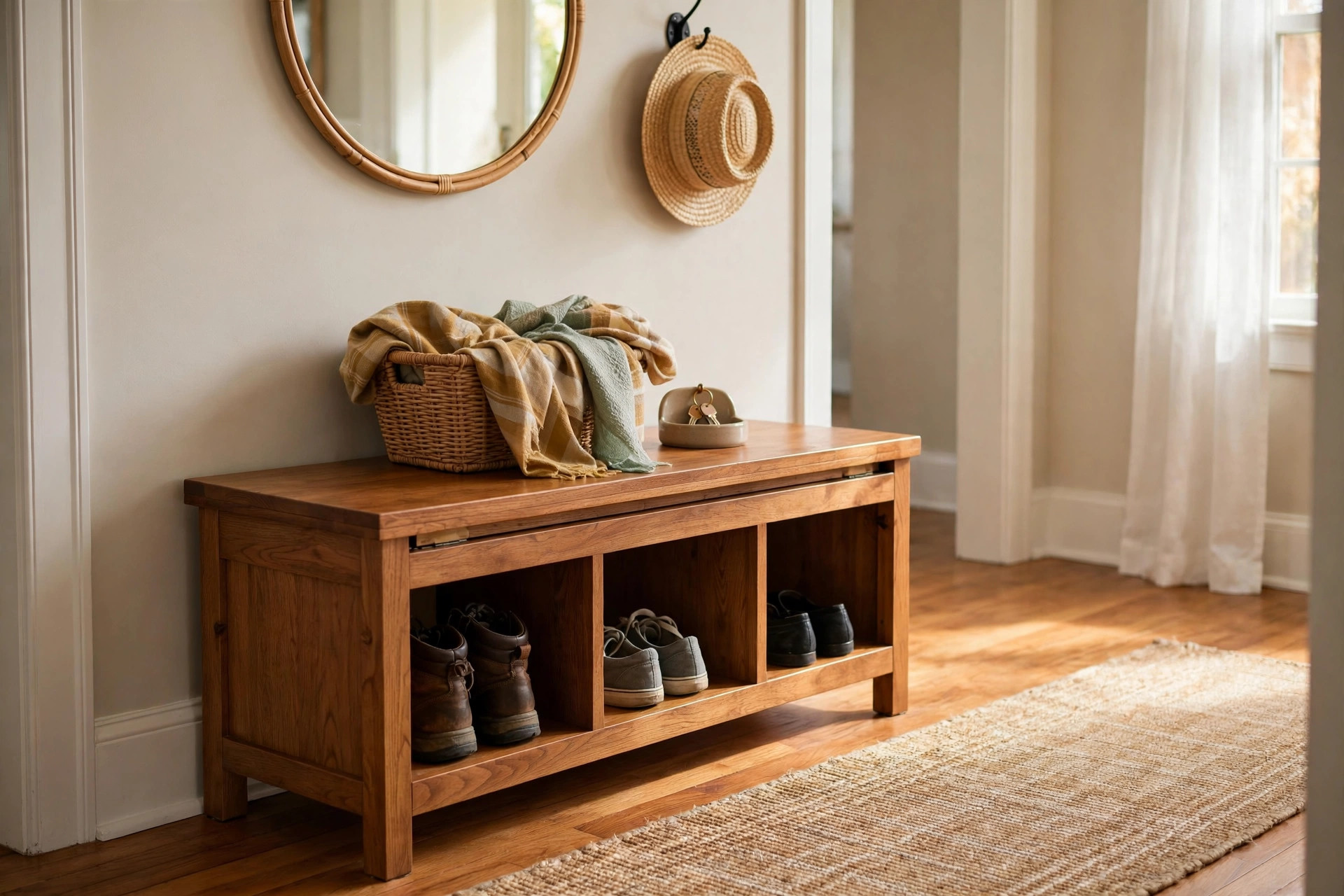

This entryway storage benches american homes guide begins with a simple truth. The entryway is the first room anyone sees. It sets the tone for the whole house. It is also where coats, shoes, bags, and keys pile up. A bench that stores things and gives you a seat can solve this problem in one stroke. American homes come in many shapes. Some have a grand foyer. Some have a short hall. Some open straight into the living room. A well-chosen entryway storage bench fits each of these cases. It brings order to a busy spot and keeps daily life moving.
Why the Entryway Deserves a Storage Bench
The entryway works harder than most rooms. It handles every coming and going. Children drop backpacks by the door. Boots track in mud and snow. Mail lands on the nearest flat surface. In many houses this small space holds more traffic than the kitchen. Without a plan, it fills with clutter by the end of the week. Order in the entryway saves time. You find your shoes when you need them. You sit down to tie them. You store the umbrella where it belongs.
A storage bench does two jobs at once. It gives you a seat for putting on shoes. It also hides gear inside. Many designs hold six pairs of shoes or more. Others keep scarves, hats, and gloves in a divided box. This double duty is why the bench has become a fixture in homes across the country. Design writers at Apartment Therapy have noted how the mudroom bench grew into a full entryway staple over the last few decades. A piece that once belonged on a farm porch now sits in city apartments and suburban halls alike. Its rise says something plain. American families want furniture that works as hard as they do.
A bench also greets guests. A tidy entryway tells visitors the home is cared for. A low bench with a cushion looks warm and inviting. It asks nothing of a guest but offers comfort at once. That first impression lasts. Real estate agents often advise sellers to clear and style the entryway for this reason. A small bench with a basket of blankets or a tray for keys can lift the whole look of a home for sale.
What to Look For When You Choose: Entryway Storage Benches American Homes Guide
Shopping for an entryway storage bench can feel like a maze. There are hundreds of styles. The choices narrow when you know your measurements and your needs. Start with the facts of your own space. Then weigh build, material, and storage layout.
Size and Fit
Measure first. Measure the wall where the bench will sit. Measure the depth from the wall to the nearest door swing. Leave room for the front door to open fully. A bench that blocks the door is worse than no bench at all. In narrow halls, choose a slim bench with a depth of twelve to fourteen inches. In a wide foyer, you may fit a bench forty-eight inches wide or more. Height matters too. A seat height of eighteen inches suits most adults. Taller households may prefer nineteen or twenty inches.
Watch the clearance around vents and outlets. An entryway often holds the thermostat or a floor vent. If the hall is also the path to stairs or a closet, keep a clear walking lane of at least thirty inches. The bench should tuck to one side, not stand in the traffic lane.
Build and Materials
Solid wood is the classic choice. Oak, maple, pine, and acacia all make sturdy benches. Wood frames carry weight well and age with grace. Engineered wood costs less and can look fine, though it handles knocks less kindly. Metal frames with wood seats suit modern rooms and clean easily. Wicker and rattan benches bring warmth but store less and sag over time.
Check the joints. Screws and bolts should feel tight. A bench that wobbles in the store will wobble worse at home. Test the lid if it lifts. Hinges should move smooth and stay shut without slamming. Some lids use soft-close hinges that keep fingers safe.
Think about the finish. A sealed surface resists water from wet boots. Dark finishes hide scuffs. Light finishes brighten a dim hall but show marks sooner. Many buyers compare bench options at large home stores before they decide, and browse furniture collections for finish ideas, since the right finish can double the useful life of the piece.
Storage Design
Storage comes in three main layouts. The lift-up seat opens like a chest. It holds bulky items such as winter boots and thick blankets. The open cubby design gives quick access to shoes but shows dust. Drawers keep small things neat and stay closed, which looks tidier. Some benches mix all three. A center chest flanked by cubbies gives both hidden and open storage.
Count what you must store. A family of four needs more room than a single renter. List the shoes, coats, and bags that pass through your entryway on a normal day. Then choose a bench that holds that load with a little room to spare. Buyers who skip this step often find the bench too small within a month.
Types of Entryway Storage Benches
The market offers several broad types. Each fits a certain home and a certain habit.
The lift-top bench is the most common. The seat hinges up to reveal a deep box. It swallows clutter fast. It suits families that need to hide gear before guests arrive.
The cubby bench has open squares below the seat. Shoes slide in and out with no door to open. It suits households where everyone wears different shoes each day. Baskets inside the cubbies can hide small items and add texture.
The shoe cabinet bench has tilt-out or pull-out drawers made for footwear. It keeps shoes out of sight and off the floor. This type suits neat homes and narrow halls. The flat top still gives a seat for tying laces.
The coat-rack bench, sometimes called a hall tree, adds hooks and a shelf above the bench. It holds coats, hats, and bags in one unit. It needs more wall height but replaces three pieces of furniture. This type suits busy family entries with no closet nearby.
The upholstered bench puts a padded cushion on a storage box. It looks soft and welcoming. It suits formal foyers where the bench is also part of the decor. Slipcovers or dark fabrics handle daily use best.
A rustic console table beside the bench adds extra surface space, and a mid-century chair nearby gives guests a second seat. In a wide foyer, the bench can sit under a mirror flanked by modern wall bookshelves. Browse entryway styling ideas to see how the pieces fit together.
Mixing styles is common. A farmhouse bench in a modern home can look fine if the wood tone matches other pieces. ## Cost and Price
Prices run wide. A simple pine bench with a lift-up seat can cost under one hundred dollars at big discount retailers. A mid-range solid wood bench with drawers often runs from two hundred to five hundred dollars. Handmade or designer benches can pass one thousand dollars.
What drives the price? Material first. Solid hardwood costs more than particle board. Build quality second. Dovetail drawers and soft-close hinges add to the bill. Size third. A sixty-inch bench costs more than a thirty-inch one.
Set a budget before you shop. Decide what matters most: storage size, wood type, or looks. If money is tight, a well-built simple bench beats a fancy weak one. Used benches can be a fine deal. Check thrift stores and resale sites, or find affordable new benches and compare solid wood options online first. A coat of paint and new hardware can turn an old bench into a fresh piece. Just inspect the frame for cracks and test every hinge and drawer before you pay.
Remember the hidden costs. Delivery fees add up for heavy furniture. Some stores charge for assembly or for hauling away packaging. A cushion or baskets bought later can add fifty to one hundred dollars.
Placement and Everyday Use
Put the bench where the daily routine flows. Most homes place it against the wall beside the front door. In homes with a side or garage door used more often, that door deserves the bench instead. The right spot is the door you use most, not the prettiest one. Home shows on HGTV often use this exact layout.
Keep daily items at arm’s reach. The shoes you wear today go in the easiest cubby. Off-season boots go in the deep chest or a closet. A small tray on the bench top holds keys and mail. A wall hook above keeps the dog leash and a spare umbrella handy. This order takes five minutes to set up and saves five minutes every morning.
Change the setup with the seasons. Winter demands room for boots, heavy coats, and salt-stained mats. Summer needs space for sandals and hats. A bench with a deep chest swallows the off-season gear. Twice a year, clear the bench and restock it for the season ahead.
Care and Upkeep
A storage bench lasts longer with simple care. Dust wood surfaces weekly with a soft dry cloth. Wipe spills at once so water does not soak in. Every few months, check screws and bolts and tighten what has loosened. Heavy daily use shakes hardware loose over time.
Treat the finish kindly. Avoid harsh cleaners on wood. A damp cloth with mild soap handles most dirt. For more help, The Spruce publishes simple wood care guides. For wax or oil finishes, reapply the product once a year to keep the surface sealed. For painted benches, touch up chips with matching paint before bare wood shows.
Mind the load. Every bench has a weight limit. Do not stand on the seat to reach a high shelf. Do not let children jump on the lid. Respect the limit and the frame will stay true for years. If the bench sits on a hard floor, add felt pads under the legs.
Air out closed storage now and then. Lift the seat on a dry day and let fresh air in. Damp shoes stored in a sealed box can grow musty. A small box of baking soda inside absorbs odors.
Safety
Safety starts with stability. A bench must not tip when a child climbs on it. Wide, heavy benches are safest. If the bench is tall, such as a hall tree, anchor it to the wall with the straps or brackets that come in the box. Wall anchors are a small job with a large payoff.
Watch the lid. A heavy lift-up seat can pinch small fingers. Soft-close hinges or a lid that stays open at ninety degrees lowers the risk. Teach children to keep hands clear of the edges.
Keep the floor around the bench clear. A bench that invites sitting invites shoes on the floor beside it. Set a rule that shoes go inside, not under. Mats with a rough surface cut slips from wet boots. Good lighting also helps. A dark entryway with a low bench is a trip risk for older visitors.
Check the finish for safety too. In older used benches, lead paint is a real concern. Benches made before 1978 may carry lead-based paint. If you buy an old bench, test the paint or strip and refinish it safely. New benches sold in the United States must meet current safety standards, which is one reason to buy from known retailers.
Frequently Asked Questions
How much weight can an entryway storage bench hold? Most benches hold between 200 and 400 pounds. Solid wood models often carry more. Check the label or product page before you buy. Do not guess. A bench used as a seat must hold the weight of two adults without strain.
What size bench fits a small entryway? A bench thirty to thirty-six inches wide and twelve to fourteen inches deep suits most small halls. Leave at least thirty inches of walking space in front. Measure the door swing too. The bench must never block the door.
Is a lift-up seat or open cubbies better? It depends on your habit. Lift-up seats hide clutter and hold bulky items. Open cubbies give fast access to daily shoes. Many buyers choose a bench that mixes both. The mix covers quick daily use and hidden seasonal storage.
Can I build my own entryway storage bench? Yes, if you have basic tools. A simple plywood box with a hinged lid is a common weekend project. Use solid screws, sand all edges, and add a sealed finish. Buyers who want dovetail drawers or soft-close hinges often find a store-bought bench easier. Modern shops and design retailers both list ready-made options.
How do I keep a storage bench from smelling? Air it out often. Do not store damp shoes in a closed box. A small open box of baking soda inside absorbs odors. Wipe the inside with a damp cloth each month. If the smell stays, leave the lid open overnight in a dry room.
A Short Final Word
The entryway sets the tone for the home. A storage bench brings order to that busy first space. Choose by measure, not by wish. Pick solid build over flashy looks. Keep it clean and it will serve for years. Your mornings will run smoother, and your guests will notice the calm the moment they step inside.
References
Apartment Therapy. (n.d.). Home design ideas and inspiration. https://www.apartmenttherapy.com Article. (n.d.). Modern furniture. https://www.article.com CB2. (n.d.). Modern furniture and decor. https://www.cb2.com Crate and Barrel. (n.d.). Furniture and home decor. https://www.crateandbarrel.com HGTV. (n.d.). Home and garden ideas. https://www.hgtv.com Houzz. (n.d.). Home design and remodeling. https://www.houzz.com IKEA. (n.d.). Home furnishings. https://www.ikea.com The Spruce. (n.d.). Home and garden advice. https://www.thespruce.com Wayfair. (n.d.). Furniture and home goods. https://www.wayfair.com West Elm. (n.d.). Modern furniture and home decor. https://www.westelm.com
Was this guide helpful?

About Sarah Mitchell
The My Garden US editorial team writes practical, in-depth home and garden guides for American homeowners — tested advice, no fluff.
You May Also Like
Finding Entryway Storage Benches USA Online Deals
July 30, 2026 0 views
Couch Throw Pillows for Florida Homes USA: How to Choose the Right Ones
July 1, 2026 0 views
Sofa Console Tables: Where to Buy in the USA
June 30, 2026 0 views