
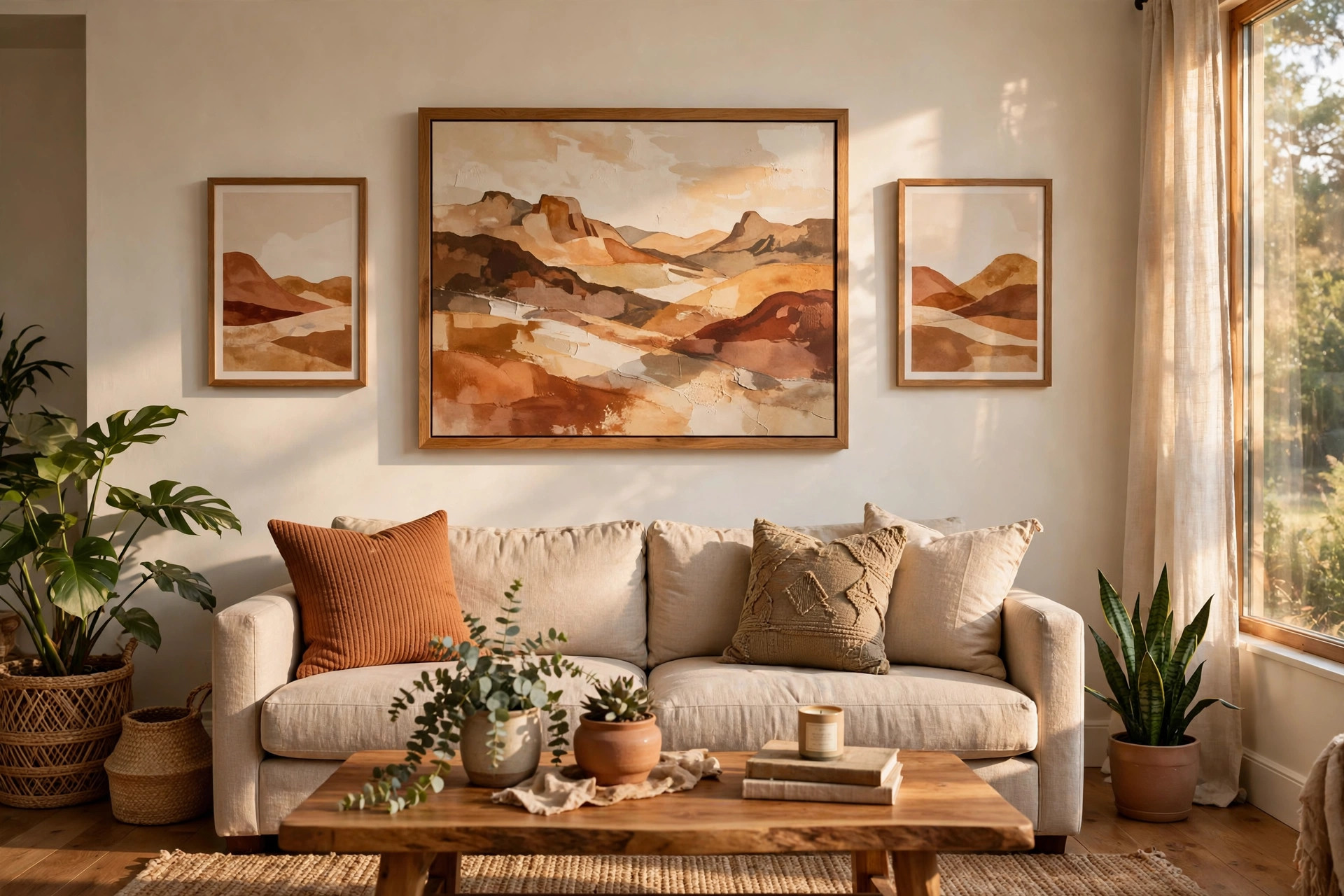

A good living room wall art buying guide usa plan can change how your whole house feels. Art is the first thing a guest sees when he or she walks into the room. It sets the mood. It tells a small story about the people who live there. Yet many home owners find the task hard. Prices run from twenty dollars to two thousand dollars. Sizes range from tiny desk prints to pieces that cover a full wall. This guide walks through each step in plain terms.
Why Wall Art Matters in a Living Room
The living room is the heart of most American homes. Family members gather there. Friends visit there. For that reason, the walls of this room deserve more care than any other room. Bare walls can make a room feel cold and empty. The right piece of art adds warmth. It gives the eye a place to rest. It can pull the whole room together, even when the sofa, rug, and tables come from different stores.
Art also serves as a bridge between colors. If your sofa is gray and your rug has blue and gold tones, a painting with those same colors can tie the two pieces into one look. That is why designers often start with art and then pick pillows and throws to match. A well chosen piece can make low cost furniture look fine.
Finally, art gives the room a personal touch. Mass made furniture looks the same in every home. Art does not. A print of a beach scene can show love for the coast. A bold abstract piece can show a modern taste. Wall art is one of the few items in a home that speaks for the owner. That is why it is worth some thought before you buy.
What to Look for When You Choose Wall Art: Living Room Wall Art Buying Guide Usa
Size Comes First
Size is the single most common mistake. Most buyers pick art that is too small. A small print on a big wall looks lost. A big piece over a small sofa looks crowded. There is a simple rule to follow. The art should cover about two thirds of the width of the furniture below it. For example, if your sofa is nine feet wide, the art above it should be about six feet wide. You can use one large piece or a group of smaller pieces that add up to the same width.
Height matters too. Hang art so that the center of the piece is at eye level. For most adults, that means about fifty seven to sixty inches from the floor to the center. If the art hangs above a sofa, leave six to eight inches of space between the top of the sofa and the bottom of the frame. These small rules make a big difference. A piece at the right height looks natural. A piece too high looks like it is floating away from the room.
Color and Mood
Next, look at the colors in your room. You do not need to match them exactly. You need to link them. Start with the largest color in the room, which is often the sofa or the rug. Then find art that shares one or two of those colors. The rest of the colors in the art can be new. New colors in the art give you ideas for small items like pillows, vases, and books.
Think about mood as well. Cool colors like blue and green bring a calm feel. Warm colors like red, orange, and gold bring energy. A quiet reading corner may suit a soft landscape. A busy family room may suit a bright abstract piece. There is no right or wrong mood. There is only the mood you want in that room.
Style and Subject
Style is a matter of taste, but it should fit the home. A modern home with clean lines looks best with modern or abstract art. A farmhouse style home looks best with nature prints or folk art. A classic home looks best with framed oil style prints. When the style of the art matches the style of the room, the room looks planned and calm.
Subject matter is personal. Landscapes, city scenes, animals, maps, words, and abstract shapes are all common. Many buyers pick a subject that means something to them, such as a city skyline from a home town or a national park they have visited. Personal meaning makes the art feel right for years.
Types of Living Room Wall Art
Canvas Prints
Canvas prints are the most common choice. The image is printed on canvas cloth and stretched over a wooden frame. The edges often show the image wrapping around, so no outer frame is needed. Canvas prints look like real paintings from a short distance. They are light and easy to hang. Prices are low to mid range. They work well in casual and modern rooms.
Framed Prints and Posters
Framed prints include art prints, posters, and photos set behind glass or clear plastic. The frame can be thin and black for a modern look, or thick and gold for a classic look. Framed pieces protect the art from dust and sun. They are easy to swap out. Many stores sell the print and the frame as a set, which makes the choice simple.
Original Art
Original art means a piece made by hand, such as an oil painting, a watercolor, or a drawing. Original pieces cost more than prints. They also hold a special feel that no copy can match. Local art fairs, galleries, and college shows are good places to find them at fair prices. Some buyers also buy directly from artists through online shops. If you love the piece, the higher cost is worth it.
Photography
Large photos of nature, cities, or family events make strong wall art. Black and white photos add a classic feel. Color photos add life. Many print shops can turn your own photos into large wall pieces, a low cost way to get art that is fully personal. Just be sure the photo is sharp enough for a large print.
Textile and Mixed Media
Tapestries, quilts, woven pieces, and metal art add texture to a wall. They catch light in ways that flat prints do not. Metal art with cut out shapes is common in farmhouse and rustic rooms. Tapestries soften rooms with hard floors and high ceilings.
Cost and Price: What to Expect
Wall art comes at every price level. A clear budget helps you shop with ease. Here are the common ranges in the United States.
Under fifty dollars. This buys small posters, small canvas prints, and prints from large chain stores. Quality is fair. These pieces are a good start for a first home.
Fifty to two hundred dollars. This is the sweet spot for most buyers. You can find large canvas prints, framed art sets, and good quality photo prints. Many online home stores sell well sized pieces in this range. For ideas on how other decor items fit this price level, see our guide to luxury area rugs and velvet living sofas, which follow the same buying rules.
Two hundred to one thousand dollars. This buys gallery style framed prints, hand finished canvas pieces, and small original works from local artists. The quality of the print and the frame is much higher. These pieces can serve as the main focus of the room.
Over one thousand dollars. This is the range of large original art and signed limited prints. Buyers at this level often work with a gallery. The piece may hold or gain value over time.
Do not forget the cost of hanging. Large or heavy pieces may need special wall anchors. A frame shop can add a wire and hooks for a small fee. If you hire a handyman to hang a heavy piece, the cost is often fifty to one hundred dollars. Plan for this in your budget.
How to Place Art in the Room
Placement is just as important as the piece itself. The most common spot is above the sofa. The two thirds rule from above applies here. A second common spot is above the fireplace mantel. Art above a mantel should be narrower than the mantel shelf, with four to six inches of space above the shelf.
Do not forget small walls. The wall beside a window, the space above a console table, and the entry wall all take smaller pieces. A set of two or three small pieces in a row can fill a long narrow wall. A gallery wall, a group of many small pieces hung close together, can fill a large blank wall at low cost.
If you are unsure, trace the art shape on paper and tape the paper to the wall. Step back and look. This simple trick shows you the true size before you hang a thing. Many home decor sites share free placement guides with photos. For more ideas on wall decor that pairs with storage pieces, see our guide to modern wall bookshelves.
Care and Upkeep
Wall art needs little care, but a few steps keep it looking new. Keep art out of direct sun. Sun fades colors over time. This is true for prints, photos, and even original paintings. If a wall gets strong sun, use glass or clear plastic with UV protection on framed pieces.
Dust the art once a month. Use a soft dry cloth. Do not use water or sprays on canvas. For glass covered frames, spray the cleaner on the cloth, not on the glass. Cleaner that runs under the frame can stain the art.
Check the hanging hardware once a year. Wires stretch. Hooks loosen. Heavy pieces can shift over time. Tighten screws and replace worn wire. This small check takes five minutes and can save a costly fall.
In damp rooms or homes near the coast, watch for mold on paper art. Good air flow helps. If you see spots on a frame, clean them at once so the damage does not spread to the art.
Safety When You Hang Wall Art
Safety is simple but worth a note. Use the right hook for the weight of the piece. Standard picture hooks hold up to a set weight, which is printed on the package. For heavy pieces, use wall anchors or mount into a wall stud. A stud finder is a low cost tool that finds the wood beams behind the wall.
Keep heavy art away from beds, cribs, and seats where small children sit. A falling frame can cause harm. In homes in earthquake zones, use special quake hooks or museum putty on the bottom corners. These small items keep the piece on the wall during a shake.
If you drill into tile or brick, use the right drill bit and wear eye protection. When in doubt, hire a handyman. The cost is small compared to the cost of a repair.
FAQ
How do I pick the right size of wall art for my living room?
Measure the wall and the furniture below it. The art should cover about two thirds of the width of the sofa, mantel, or table it hangs above. The center of the piece should sit at eye level, about fifty seven to sixty inches from the floor. When in doubt, go larger. Most buyers pick pieces that are too small.
What colors of wall art work best in a living room?
Pick art that shares one or two colors with your sofa or rug. The other colors in the art can be new. New colors give you ideas for pillows and small decor. Cool colors bring calm. Warm colors bring energy. Match the mood to how you use the room.
Is canvas or framed art better for a living room?
Both work well. Canvas prints look like paintings and need no glass. They suit casual and modern rooms. Framed prints protect the art behind glass and suit classic and formal rooms. Pick the one that fits your room style and your care habits.
How much should I spend on living room wall art?
Most buyers spend fifty to two hundred dollars per piece. This range buys large canvas prints and good framed sets. Spend more on the main piece above the sofa. Spend less on small accent pieces. Set the budget before you shop so you can compare with a clear head.
Can I mix different art styles in one living room?
Yes, with care. Keep one link between the pieces. The link can be a shared color, a shared frame style, or a shared subject. Without a link, mixed styles look messy. With a link, they look collected and personal. A gallery wall is a good way to mix styles in a planned way.
Where should I buy wall art in the USA?
Large home stores, online decor shops, local galleries, and art fairs all sell good pieces. Online shops let you filter by size, color, and price, which makes the search fast. Local fairs let you see the true colors in person and meet the artist. For broad shopping ideas, sites like Wayfair and IKEA carry wide ranges at low to mid prices, while West Elm, CB2, and Crate and Barrel focus on modern styles. Design idea sites such as Houzz, Apartment Therapy, The Spruce, and HGTV show room photos that help you see how art looks in real homes, and Article offers a tight modern range worth a look.
A Short Final Word
Buying wall art does not need to be hard. Start with size. Then look at color and style. Pick a type that fits your room and your budget. Hang it at the right height and keep it safe. Trust your own taste. The best piece is the one you still like five years from now. With the steps in this guide, your living room walls can move from bare to warm in a single weekend.
References
Apartment Therapy. (n.d.). Home design ideas and inspiration. https://www.apartmenttherapy.com Article. (n.d.). Modern furniture. https://www.article.com CB2. (n.d.). Modern furniture and decor. https://www.cb2.com Crate and Barrel. (n.d.). Furniture and home decor. https://www.crateandbarrel.com HGTV. (n.d.). Home and garden ideas. https://www.hgtv.com Houzz. (n.d.). Home design and remodeling. https://www.houzz.com IKEA. (n.d.). Home furnishings. https://www.ikea.com The Spruce. (n.d.). Home and garden advice. https://www.thespruce.com Wayfair. (n.d.). Furniture and home goods. https://www.wayfair.com West Elm. (n.d.). Modern furniture and home decor. https://www.westelm.com
Was this guide helpful?

About Sarah Mitchell
The My Garden US editorial team writes practical, in-depth home and garden guides for American homeowners — tested advice, no fluff.
You May Also Like

Kitchen Island Stools Deals Near Me: A Plain Guide to Good Seating at Low Prices
January 15, 2026 0 views
Living Room Floor Lamps for Florida Homes USA
February 10, 2026 0 views
Dining Room Sets Reviews Buying Guide USA
March 30, 2026 0 views