Many American homes face one quiet problem. The water from the tap is safe, but it does not always taste good. It may carry the faint smell of chlorine. It may leave hard mineral spots on glassware. This under sink filters american homes guide explains how a small filter system under the kitchen sink can solve these common problems.
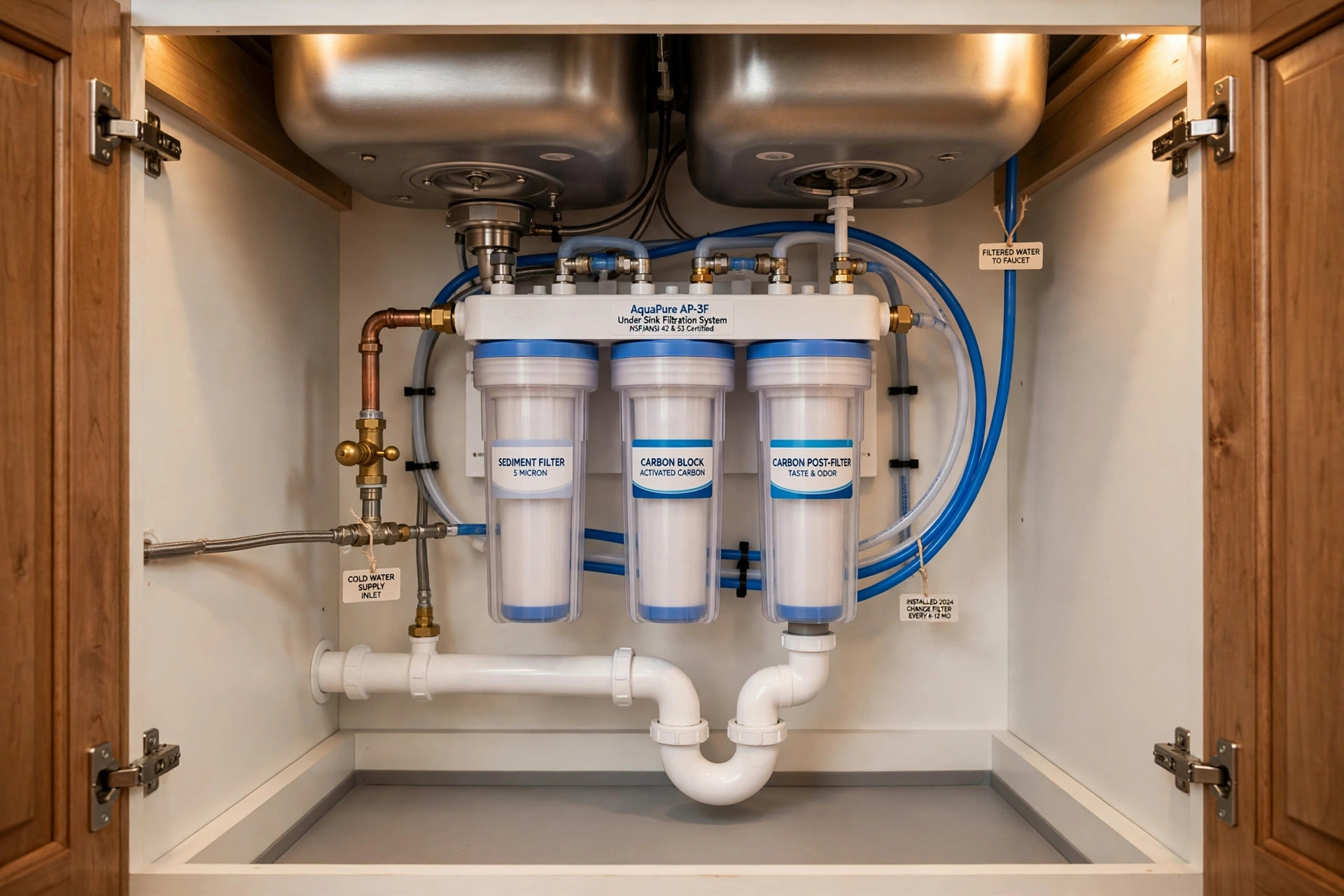
The idea is simple. A filter unit mounts inside the cabinet, under the sink. It connects to the cold water line. Some systems feed a small, separate faucet at the sink. Others filter all the cold water that flows to the main faucet. Either way, the filter stays hidden, and the kitchen keeps its clean look.
Homeowners across the country use these systems for drinking water and cooking water. They are not the same as whole-house systems, which treat water at the point where it enters the home. They treat only the water at one tap. That makes them smaller, cheaper, and easier to maintain.
Why Under Sink Filters Matter
Water quality in the United States is regulated. Public water systems must meet federal standards, and they test their water on a regular schedule. But regulated does not mean perfect. Old city pipes can add lead. Wells can add iron and sulfur. Treatment plants use chlorine to kill germs, and the chlorine leaves a taste and smell that many people dislike.
An under sink filter acts as a final step. It polishes the water right before use. For renters, it offers a way to improve tap water without changing the whole plumbing. For owners, it adds value to the kitchen without a large project.
There is also a cost angle. A family that buys bottled water week after week spends real money. Over a few years, the cost of a filter and its replacement cartridges is often far less. Reviews from Consumer Reports suggest that shoppers compare ongoing cartridge costs, not just the price on the box.
Health is the deeper reason. Filters that carry proper certifications can reduce lead, mercury, cysts, and certain chemicals. Certification from groups such as NSF International shows that the product was tested for the claims on the label. A filter that claims to remove lead should prove it on paper.
How to Choose the Right System: Under Sink Filters American Homes Guide
Start with the water you have. Cities publish annual water quality reports. You can also ask your water utility for a copy. If you use a well, test the water at a certified lab before you buy anything. The test tells you what needs to be removed.
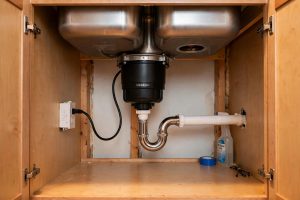
Then think about space. Open the cabinet under your sink. Measure the height and width. Note the garbage disposal, if you have one. Disposals take up room and can crowd a filter. A guide to garbage disposal installation can help you plan the space before you buy a filter.
Next, decide how much water you need. A single person drinks less than a family of five. Larger households may want a system with a small storage tank so the filtered water flows fast. Smaller households can often use a direct-flow system with no tank.
Look at the cartridges. Some systems use one cartridge. Others use two or three. More cartridges can mean better filtration, but they also mean higher yearly cost. Check the replacement schedule. A cartridge that lasts six months may cost more per year than one that lasts twelve months.
Think about who will do the work. Some homeowners install the system in an afternoon. Others hire a plumber. If the plumbing is old or the valves are stiff, a plumber is worth the fee. Product pages at Lowe’s and Home Depot list tools and parts needed, which helps you judge the job before you start.
Types and Options
There are four main types of under sink filters.
Carbon filters. These are the most common. Activated carbon traps chlorine, improves taste, and cuts odors. Many also reduce lead and certain chemicals. A basic carbon cartridge is cheap and easy to replace. For most homes with city water, a carbon system is enough.
Reverse osmosis systems. These push water through a fine membrane. The membrane blocks a wide range of dissolved solids, including lead, fluoride, nitrates, and sodium. Reverse osmosis gives very clean water, but it sends some water down the drain in the process. Newer models waste less than older ones. The ENERGY STAR program notes that efficiency matters in every water-using device in the home.
Sediment pre-filters. These catch sand, rust, and dirt before the water reaches the main filter. They do not improve taste by themselves. They protect the more expensive cartridges and help them last longer. Homes with older pipes often benefit from a pre-filter.
Specialty cartridges. Some cartridges target one problem, such as iron, sulfur smell, or scale. These are sold as add-ons. Buy them only if a water test shows the problem exists. Guessing wastes money.
Each type suits a different home. City homes with chlorine taste do well with carbon. Homes with heavy mineral content may need reverse osmosis. Well owners should treat sediment first, then move to the main filter.
Cost and Price
The price of under sink filters in American homes varies widely. A simple single-cartridge carbon system may cost between thirty and eighty dollars. A multi-stage system with two or three cartridges may cost between one hundred and three hundred dollars. A reverse osmosis system may cost between one hundred fifty and five hundred dollars.
Installation adds to the total. A do-it-yourself job costs only the price of a few tools and fittings. A plumber may charge one hundred to three hundred dollars for a basic install. Complex installs with a new air-gap faucet cost more.
The true cost is yearly. Replacement cartridges for a basic carbon system may run forty to one hundred dollars per year. Reverse osmosis systems need membrane replacements every two to three years, which adds to the yearly average. Always add the yearly cartridge cost before you buy.
Compare that to bottled water. A family that drinks a gallon a day from bottles spends several hundred dollars a year. A filter system often pays for itself within the first year. After that, the savings continue.
Where you buy matters too. Home centers carry the common brands. Appliance makers such as GE Appliances and Whirlpool publish buying guides that explain what each model does. These guides help shoppers match a model to their needs.
Care and Upkeep
An under sink filter is not a device you install and forget. It needs care on a schedule.
Change cartridges on time. This is the most important rule. An old cartridge stops working. Worse, it can harbor bacteria. Mark the change date on a calendar or set a phone reminder. The maker sets the schedule, often six or twelve months.
Watch for leaks. After any cartridge change, check the connections. Run the water and look for drips. Place a dry towel in the cabinet and check it the next day. A small leak caught early is a small problem. A small leak caught late is a ruined cabinet.
Clean the faucet. The small filtered-water faucet collects mineral deposits. Wipe it with vinegar and a soft cloth. Do not use harsh cleaners that can damage the finish. Advice on keeping fixtures clean appears in home care articles at The Spruce.
Flush new cartridges. Most new cartridges need a flush before first use. Run water through them for the time stated in the manual. This clears loose carbon dust. The first glass may look cloudy. That is normal and clears quickly.
Keep the manual. The manual lists the cartridge model number and the change schedule. Keep it in a folder near the kitchen. When you need parts, the model number saves time.
If you pair the filter with a new sink during a remodel, read a guide to undermount stainless sinks. The sink type affects how much room the filter has and where the lines run.
Safety
Under sink filters are safe when installed and maintained as directed. But there are rules to respect.
Do not treat water of unknown safety with a simple carbon filter. If your well water has not been tested, test it first. Carbon filters do not kill germs. A home with bacterial contamination needs disinfection, not just filtration.
Follow local plumbing codes. Some areas require an air gap for reverse osmosis drain lines. The air gap stops drain water from flowing back into the system. Skip it, and you may fail an inspection or create a health risk.
Turn off the water before you start. Open the cabinet and close the supply valves under the sink. Test that the water is off before you cut any line. Keep towels and a bucket nearby. Water damage is the most common do-it-yourself accident.
Check the weight. A reverse osmosis system with a full tank is heavy. Make sure the cabinet floor or a mounting bracket can hold it. A falling tank can break pipes and flood the kitchen.
If you have young children, keep the cabinet locked. Curious hands can turn valves or pull lines loose. Child-safety latches cost little and prevent large problems.
Frequently Asked Questions
Do under sink filters remove fluoride? Most carbon filters do not remove fluoride. Reverse osmosis systems do remove it. If fluoride removal is your goal, choose reverse osmosis and check the product specs for the removal rate.
How long does installation take? A basic carbon system may take one to two hours for a careful do-it-yourselfer. A reverse osmosis system may take three to four hours. Add time if you must drill a hole for the new faucet or run lines around a disposal.
Can I install one in a rental home? Often yes. Many systems connect with simple fittings and can be removed when you move. But check the lease first. Some landlords forbid changes to plumbing. Ask in writing and keep the answer.
Will the filter lower my water pressure? Slightly, at first. Multi-stage systems add resistance to the flow. Most homes notice little change. If the pressure drops a lot, the cartridge may be clogged and due for replacement.
Do I still need to soften hard water? Filtration and softening are different jobs. A filter removes taste, odor, and many chemicals. A softener removes hardness minerals such as calcium and magnesium. Hard-water homes may need both. For guidance on planning kitchen upgrades, Bosch offers renovation resources, and practical how-to advice is available from Bob Vila.
How do I know when to change the cartridge? Follow the schedule in the manual first. Signs of a spent cartridge include bad taste, bad smell, slow flow, or cloudy water. Some systems have a built-in timer or indicator light. If your kitchen faucet style affects the install, a guide to pot filler faucets can help you plan the plumbing layout.
A Short Final Word
Under sink filters are a modest upgrade with real benefits. They improve taste. They cut the cost of bottled water. They give a household one reliable source of good water at the kitchen tap.
The path is plain. Test your water. Measure your cabinet. Choose the system that fits your needs and budget. Install it with care, and keep to the cartridge schedule.
An American home runs on hundreds of small choices like this one. Few are as simple, or as rewarding, as clean water from your own tap.
References
Bob Vila. (n.d.). Home improvement advice. https://www.bobvila.com Bosch. (n.d.). Home appliances. https://www.bosch-home.com Consumer Reports. (n.d.). Product reviews and ratings. https://www.consumerreports.org ENERGY STAR. (n.d.). Energy efficient products. https://www.energystar.gov GE Appliances. (n.d.). Kitchen and home appliances. https://www.geappliances.com Lowe’s. (n.d.). Home improvement products. https://www.lowes.com The Home Depot. (n.d.). Home improvement products. https://www.homedepot.com The Spruce. (n.d.). Home and garden advice. https://www.thespruce.com Whirlpool. (n.d.). Home appliances. https://www.whirlpool.com
Was this guide helpful?

About David Wilson
The My Garden US editorial team writes practical, in-depth home and garden guides for American homeowners — tested advice, no fluff.