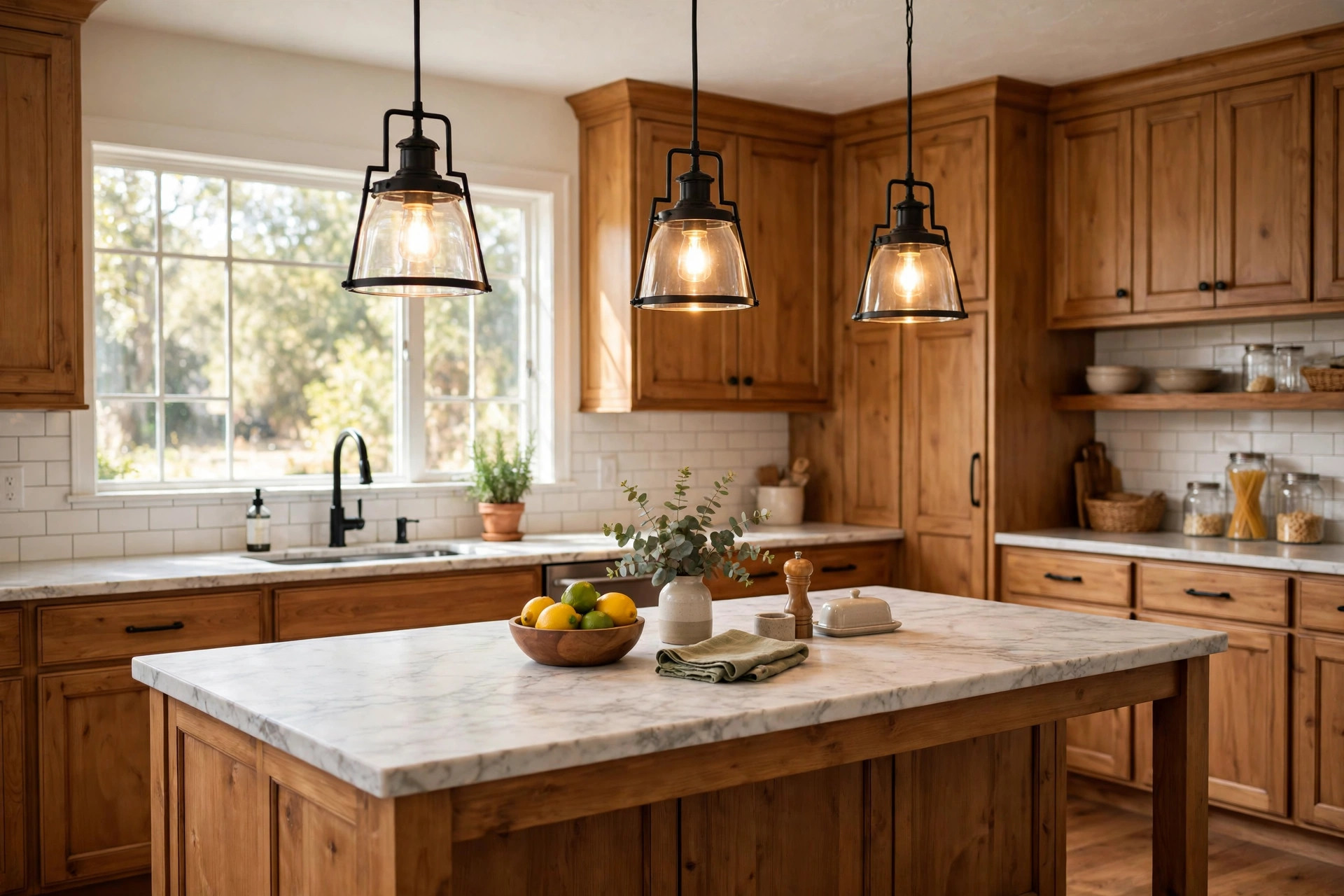

A kitchen island is the heart of the modern home. Families eat there. Children do homework there. Guests gather there during parties. The light above the island decides how the whole room feels. This kitchen island hanging lights buying guide usa will help you choose the right fixtures for your home. You will learn how to measure your island, how many lights to hang, how high to hang them, and what kind of bulbs to use. You will also learn about costs, care, and safety. Read this guide before you buy, and you will avoid the common mistakes that many homeowners make.
Why Hanging Lights Over the Island Matter
The island is a work surface. People chop vegetables there. They read recipes there. They pour coffee there. Bad light makes these simple jobs hard. Shadows fall across the counter. Eyes grow tired. Good light makes the same jobs easy and pleasant.
Hanging lights do two jobs at once. First, they give task light. The light falls straight down on the counter where you need it most. Second, they set the mood of the room. A pendant light is like jewelry for the kitchen. It draws the eye. It shows your taste. When you plan a kitchen remodel, the island lights deserve as much care as the countertop material. A guide to butcher block countertops can help with the surface, but the lighting above it needs its own plan.
Hanging lights also mark the island as a separate zone. In an open floor plan, the island can look lost. A row of pendants says, “This is a place to gather.” That sense of place adds warmth to a large, open room. It also helps when you sell the home. Buyers notice good lighting. It makes the kitchen look finished and cared for.
How to Choose: Size, Number, and Spacing: Kitchen Island Hanging Lights Buying Guide Usa
Choosing well starts with a tape measure. Do not guess. Numbers make the job simple.
Measure the Island First
Measure the length and the width of your island. Write both numbers down. A standard pendant for a kitchen island is between eight and sixteen inches wide. As a rule, each pendant should be about one third to one half as wide as the island is deep. An island that is four feet wide pairs well with pendants that are twelve to sixteen inches wide.
For a long island, a linear chandelier may fit better than several round pendants. A linear light is about two thirds as long as the island. This rule keeps the fixture in balance with the counter below it.
Decide How Many Pendants You Need
A common question is how many pendant lights for a kitchen island is right. For most American kitchens, the answer is two or three. A four-foot island looks good with two pendants. A six-foot island looks good with three. Islands longer than seven feet may need four small pendants or one long linear fixture.
Count the seats at your island too. One pendant over every two stools is a simple guide. This gives each seat its own pool of light.
Set the Right Height
The question of kitchen island pendant light height comes up in every lighting store. The rule is simple. Hang the bottom of the fixture thirty to thirty-six inches above the countertop. Measure from the counter surface to the lowest point of the light. Thirty inches suits rooms with low ceilings. Thirty-six inches suits rooms with tall ceilings.
Never hang the lights lower than thirty inches. Low lights block the view across the island. People will bump their heads. Guests will stare into bare bulbs. Never hang them higher than forty inches. High lights lose their effect and leave the counter dim.
Spacing Rules
Space pendants evenly across the island. Leave about six inches from each end of the island to the center of the nearest light. Then divide the rest evenly. Each pendant should sit about twenty-four to thirty inches from the next one, measured center to center. Keep the spacing equal. Uneven spacing looks careless.
Types of Hanging Lights
There are many styles of hanging light fixtures for kitchen island use. The best one depends on your kitchen and your taste.
Single Pendants
A pendant is a small fixture that hangs from one cord or rod. You hang two or three in a row over the island. Pendants come in glass, metal, fabric, and rattan. Clear glass shows the bulb and gives an open feel. Metal shades send light down in a strong beam. Fabric shades soften the light and suit a cozy kitchen.
Linear Chandeliers
A linear chandelier is one long fixture with several bulbs. It covers a long island with a single piece. This style suits modern kitchens. It also means one junction box instead of three. That can lower the cost of wiring.
Mini Pendants
Mini pendants are small, often under eight inches wide. They suit a small island or a breakfast bar. Use three or four of them in a row. They give light without a heavy look.
Lanterns and Globes
Lantern styles borrow from old carriage lights. They suit farmhouse kitchens. Globe styles are round balls of glass that spread light in all directions. They suit rooms where you want soft, even light. A buying guide can show photos, and stores such as The Home Depot carry all of these styles in one place. Home guides like The Spruce show real kitchens with each style so you can compare looks.
Bulbs, Brightness, and Energy
The fixture is only half the choice. The bulb decides how the light feels.
How Bright Should the Light Be
Plan for about fifty to eighty lumens of light for each square foot of counter space. An island that is six feet by three feet has eighteen square feet. That means about one thousand to one thousand four hundred lumens total. Split that across your pendants. Three pendants at four hundred lumens each reach the goal.
Choose the Right Color Temperature
Color temperature is measured in kelvin. Warm white, around 2700K, suits most kitchens. It flatters food and skin. It feels cozy at night. Cool white, around 4000K, suits a kitchen that needs sharp task light. It can feel cold. Pick one temperature for all island lights. Mixed temperatures look wrong.
Pick the Right Bulb Type
LED bulbs are the best choice today. They use little power. They last for years. They stay cool. Many are dimmable. Look for bulbs that carry the ENERGY STAR label. That label means the bulb passed tests for quality and efficiency. Test results from Consumer Reports can also help you compare bulb life and brightness claims.
Add a Dimmer
A dimmer switch is worth every penny. Bright light helps you cook. Soft light helps you relax after dinner. Make sure the dimmer matches the bulb type. LED bulbs need an LED-rated dimmer. Ask the store if you are unsure.
Cost and Price
Prices vary widely. A single pendant from a big box store may cost forty dollars. A designer pendant may cost four hundred dollars or more. For three quality pendants, most American families spend between three hundred and nine hundred dollars on the fixtures alone.
Bulbs add to the cost. LED bulbs cost more than old bulbs, but they last longer and cut the electric bill. A dimmer switch costs fifteen to forty dollars.
Installation is the other cost. If your ceiling already has wiring where you need it, an electrician may charge one hundred fifty to three hundred dollars per fixture. If new wiring must run through the ceiling, the cost rises. Guides from Bob Vila explain what to expect from an electrical quote. Get two or three written quotes. Ask each electrician what the price includes.
You can save money by choosing fixtures from large retailers. Lowe’s and The Home Depot often sell matching sets of three pendants for less than buying them one by one. Watch for holiday sales. Kitchen fixtures often go on sale around Memorial Day and Labor Day.
Care and Upkeep
Hanging lights are easy to care for if you build simple habits.
Dust the fixtures once a month. A microfiber cloth works well. Glass shades may need warm soapy water twice a year. Let them dry fully before you turn the power back on.
Turn off the power before you clean. This is a firm rule. Water and live wires are a dangerous pair.
Check the bulbs once a year. LEDs last long, but they do dim over time. Replace bulbs that have grown dim. While you are there, check that each fixture hangs straight. Rods and cords can shift. A slight turn of the mounting nut sets them right again.
If your kitchen work creates grease, as frying does, wipe the shades more often. Grease builds up fast near a stove. A thin film of grease dims the light more than you would think.
Safety
Safety comes first with any electrical fixture.
Turn off the circuit breaker before you install or change a fixture. Do not rely on the wall switch alone. Test the wires with a voltage tester before you touch them.
Check the weight rating of your ceiling box. Heavy fixtures need a fan-rated or heavy-duty box. A standard box may not hold a large chandelier. If you are unsure, ask an electrician.
Keep lights away from water sources. Pendants over the island are fine, but they must not hang over a sink unless they are rated for damp locations. Steam from cooking will not harm most fixtures, but direct splashes will.
Never exceed the wattage printed on the fixture. LED bulbs draw far less power than old bulbs, so this is rarely a problem, but read the label anyway.
If you live in a home with old wiring, have an electrician check the circuit before you add lights. Old homes sometimes lack a ground wire. A professional can tell you in minutes. Guides from This Old House explain what to expect when an electrician works in an older kitchen.
Frequently Asked Questions
How high should pendant lights hang over a kitchen island? Hang the bottom of the fixture thirty to thirty-six inches above the countertop. Measure from the counter surface to the lowest point of the light. Use thirty inches for standard eight-foot ceilings and thirty-six inches for taller ceilings.
How many hanging lights do I need for my kitchen island? Most islands need two or three pendants. A four-foot island suits two. A six-foot island suits three. Islands over seven feet long suit four small pendants or one linear chandelier.
What is the best bulb for kitchen island hanging lights? Dimmable LED bulbs in warm white, around 2700K, suit most kitchens. They use little energy, last for years, and look warm and natural. Choose bulbs with the ENERGY STAR label for tested quality.
Can I install island pendant lights myself? You can replace an existing fixture yourself if the wiring is already in place. You must turn off the breaker first. If new wiring is needed, hire a licensed electrician. Electrical work inside the ceiling is not a beginner job.
What style of pendant light is most popular in the USA? Clear glass pendants with black or brass hardware are very popular today. They suit both modern and farmhouse kitchens. Simple metal dome shades are another favorite. They send strong task light down to the counter.
How much does it cost to install three pendant lights over an island? Fixtures often cost three hundred to nine hundred dollars for three. Installation often costs one hundred fifty to three hundred dollars per fixture when wiring exists. Total costs run from seven hundred fifty dollars to about two thousand dollars in most cases.
A Short Final Word
Choosing kitchen island hanging lights is not hard when you follow the numbers. Measure your island. Pick the right size and count. Hang them at the right height. Choose warm, dimmable LED bulbs. Keep safety first. Do these things, and your island will have light that works for cooking, eating, and gathering.
When the lighting plan is set, you can turn to the rest of the room. A new island pairs well with fresh cabinets, and a guide to shaker cabinet doors can help with that choice. If you are planning the full surface too, read about quartz countertop installation before you sign a contract. Appliance makers such as GE Appliances and Whirlpool publish kitchen style guides that pair finishes with lighting. Light first, then the rest. The kitchen will thank you for it.
References
Bob Vila. (n.d.). Home improvement advice. https://www.bobvila.com Consumer Reports. (n.d.). Product reviews and ratings. https://www.consumerreports.org ENERGY STAR. (n.d.). Energy efficient products. https://www.energystar.gov GE Appliances. (n.d.). Kitchen and home appliances. https://www.geappliances.com Lowe’s. (n.d.). Home improvement products. https://www.lowes.com The Home Depot. (n.d.). Home improvement products. https://www.homedepot.com The Spruce. (n.d.). Home and garden advice. https://www.thespruce.com This Old House. (n.d.). Home renovation guidance. https://www.thisoldhouse.com Whirlpool. (n.d.). Home appliances. https://www.whirlpool.com
Was this guide helpful?

About Lisa Anderson
The My Garden US editorial team writes practical, in-depth home and garden guides for American homeowners — tested advice, no fluff.
You May Also Like

Kitchen Pantry Cabinets USA Online Deals: A Smart Buyer’s Guide
March 4, 2026 0 views
Kitchen Island Hanging Lights: How to Find the Best Deals Near You
February 20, 2026 0 views
Pot Filler Faucets Buying Guide USA
January 11, 2026 0 views