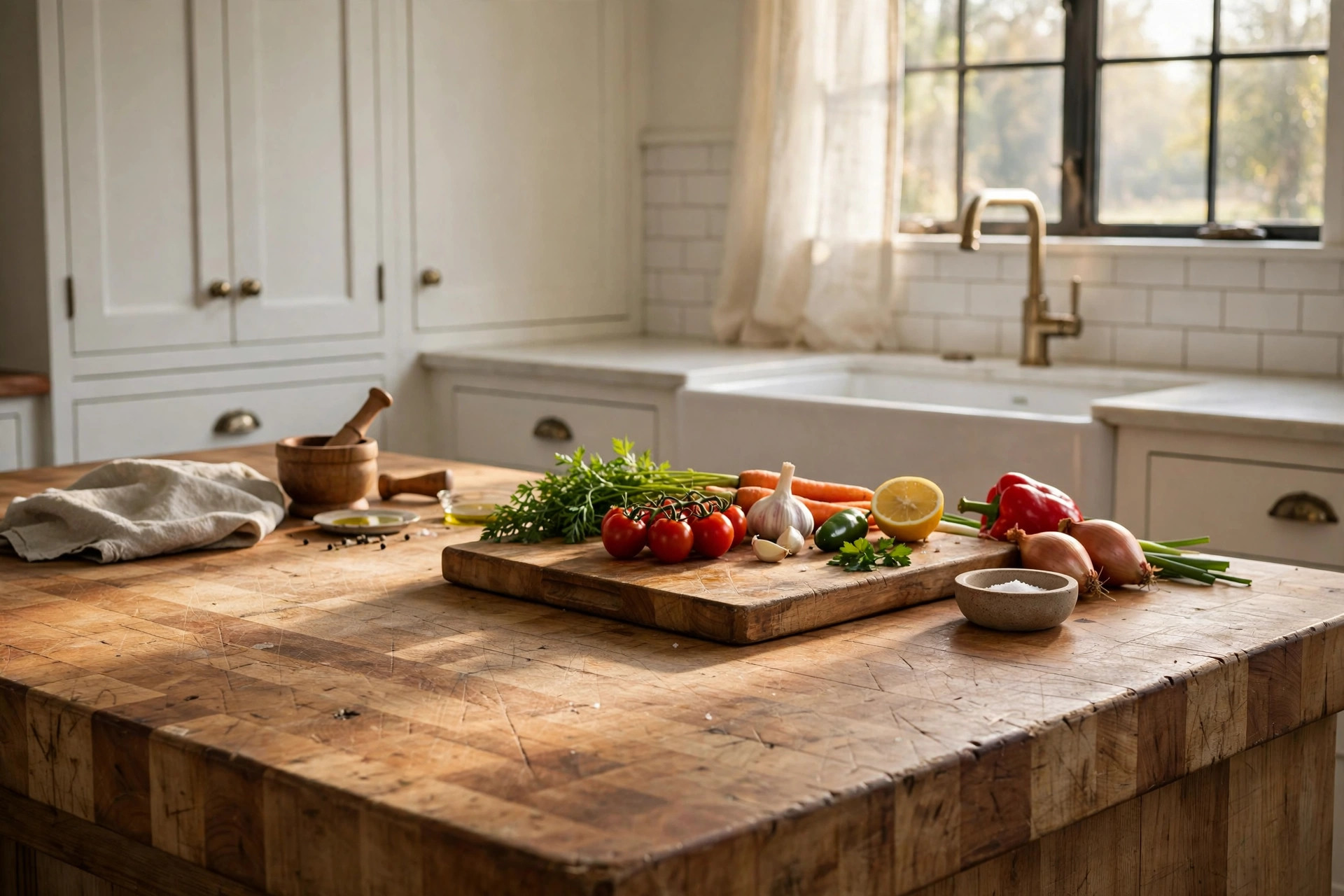

Many American kitchens today carry counters of stone or plastic. Yet wood keeps a steady place in the market. This butcher block countertops American homes guide explains why so many families still choose wood, what kinds of wood are sold, how much the work costs, and how to keep the surface in good shape for years. The answers here come from plain facts and long practice in the kitchen trade.
Why It Matters
A countertop sets the tone of a whole kitchen. Stone is cold and hard. Plastic laminate is cheap but shows wear fast. Wood sits between the two. It is warm to the touch, easy on knives, and it can be sanded back to a fresh face when it shows age. That is a rare trait. Few other surfaces can be made new again with an afternoon of work.
Many cooks also like wood because it serves as both a work counter and a cutting board. You can chop, roll dough, and serve straight from the top. For families who cook daily, that ease matters more than a perfect showroom look. A wood top takes marks and dents as proof of use, not as damage.
Wood counters also fit a wide range of home styles. They suit farmhouse kitchens, cabins, and modern flats alike. A maple top can sit beside stainless range hoods and still look at home, while a dark walnut slab pairs well with painted cabinets. Price is part of the pull too. As shown in our guide to butcher block countertops buying, wood often costs less than stone while giving the same long life.
What to Look For When You Choose: Butcher Block Countertops American Homes Guide
Not all wood tops are built the same way. The words on the label tell you how the pieces were joined.
Edge Grain
Most tops sold today are edge grain. Strips of wood are glued side by side with the edges facing up. This gives a striped look and a hard surface. It resists dents well and costs less than other builds.
End Grain
End grain tops show the cut ends of short blocks, like a checkerboard. This is the classic butcher’s block. It is the kindest to knives and the toughest against cuts. It also costs the most and needs more care, since the many joints can move with damp air.
Face Grain
Face grain shows the wide face of the boards. It is the least common for counters. It marks more easily and is best kept for a small baking station or a bread board area rather than a full work top.
Thickness and Backing
A good kitchen top runs one and a half inches thick at least. Thinner tops can cup or bow over wide spans. Some makers add a plywood backing. That backing adds strength but it also limits how you can sand the face later. Solid tops are simpler to refinish.
When you shop, ask about the glue. Food safe glue is standard from good makers. Also ask if the top has been finished with oil or left raw. Oil finished tops can be oiled at home from day one. Raw tops must be sealed before first use.
Types of Wood Used
The kind of wood sets the color, the hardness, and the price. Maple is the most common choice in American homes. It is hard, pale, and takes marks without darkening much. Sugar maple, sold as hard rock maple, is the best grade.
Oak is next in rank. It is strong and cheaper than maple. Red oak has a warm tone and a bold grain. White oak is a bit harder and paler. Both take oil well.
Walnut gives a dark, rich look that many buyers want for island tops. It is softer than maple, so it marks more easily. Cherry starts light and darkens with age and light. It is a fine choice where a warm glow is wanted.
Bamboo is sold as a wood counter though it is a grass. It is hard, pale, and marketed as green. It can be a good pick for buyers who want a fast growing material.
A few rare tops use teak or iroko. These woods hold up to water well but cost much more. For most kitchens, maple or oak is the sound buy.
Most American big box stores carry stock tops in maple and oak in common cabinet depths. Special widths, long island runs, and unusual woods come from custom shops. A custom shop can also match the wood of your cabinets, which gives a built in look that stock tops cannot match.
Cost and Price
Prices move with wood type, thickness, and whether the top is stock or custom. A stock maple top from a big box store can run near the price of good laminate. Custom walnut or end grain tops cost much more, often in the range of mid grade stone.
Labor adds to the bill. A simple top on straight cabinets is quick work. A top with a cooktop cutout, an undermount sink cutout, or a long L shape needs a skilled hand and takes longer. Cutouts must be sealed well, since raw edges drink water fast.
Do not forget the finish. Food safe mineral oil is cheap. Hard wax oils made for wood counters cost more but last longer. Sandpaper, oil, and a free afternoon are all it takes to refinish the top later. That low cost of renewal is part of the true price of the surface.
For a full kitchen plan, it helps to price the whole job at once. Our guide to quartz countertop installation shows how a stone bid is built, and you can use the same method: measure the square feet, add the cutouts, add the labor, then add the finish. Wood usually comes out lower than stone on the same plan.
Care and Upkeep
Wood asks for steady, simple care. It does not ask for much time, but it asks for it often.
Oiling
New tops need oil every week for the first month. After that, once a month is enough. Use food grade mineral oil. Warm the oil and rub it in with a soft cloth. Let it sit, then wipe off the rest. If the surface looks dry or pale, it wants oil. If water beads on the top, the oil is doing its job.
Daily Cleaning
Wipe spills soon. Use a damp cloth and mild soap. Never soak the top. Never let water stand on it for long. A pan of water left overnight can leave a dark ring that takes hard sanding to remove.
Sanding
When the top shows cuts and stains, sand it. Start with medium grit paper and work to fine grit. Always sand with the grain. Wipe the dust away and oil the fresh wood. A full sanding can take a few hours, but the result is a top that looks new.
Stains and Odors
Dark stains from berries or wine can be lifted with lemon juice and salt. Rub the paste in, let it sit a few minutes, and wipe clean. For odor, a cut lemon rubbed on the board works well. Baking soda paste also helps. Deep stains may need sanding.
Safety in the Kitchen
Wood counters are safe when they are kept clean and dry. Wood does not feed germs the way some people fear. Tests over the years have shown that clean wood boards hold no more risk than plastic boards, and in some tests less.
Still, safe habits matter. Wash the surface with hot soapy water after raw meat touches it. Use a separate board for raw meat if you want extra care. Cut fruits and vegetables on a clean area. Let the surface dry fully between uses.
Heat is another safety point. Do not set hot pots straight on the wood. Use a trivet or a pad. A hot pot can scorch the top and burn through the oil finish. Sharp knives are fine on the wood, but keep blades clean and dry after use.
Some finishes are not food safe. If the top came with a hard varnish, it may be meant for a bar or a bathroom, not a cutting surface. Check with the maker. A top you cut on should carry only food safe oil or wax. You can find care guides from makers at Weber, and broad kitchen planning advice at This Old House.
Frequently Asked Questions
Can you cut straight on a butcher block counter? Yes. That is one of its main strengths. Knives stay sharper longer on wood than on stone. The marks that build up can be sanded out. Many cooks keep a small separate board for raw meat and use the counter for the rest.
How long does a butcher block countertop last? With steady care, a wood top can serve for twenty to thirty years or more. It outlives laminate by a wide margin. The secret is oil and the willingness to sand it now and then. A top that is left dry and soaked with water will fail much sooner.
Does butcher block hold bacteria? Wood does not breed germs on its own. A clean, oiled top is a safe food surface. Wash after raw meat, dry the surface, and oil it on schedule. A cracked or water logged top is a different case. That top needs repair or replacement.
Is butcher block cheaper than granite? In most cases, yes. A stock maple top costs far less than granite or quartz installed. Even a custom walnut top often comes in below high grade stone. The trade is time. Wood needs oil each month. Stone needs almost none.
Can you put a sink in a butcher block counter? Yes, both drop in and undermount sinks work. The cut edges must be sealed with care. Water is the main enemy of a wood top. Many owners choose a drop in sink because its rim keeps water off the wood. An undermount sink needs a skilled sealer and watchful care.
Will the wood change color over time? Yes, and that is normal. Cherry darkens a lot. Walnut lightens a little. Maple stays close to its first tone. Sunlight speeds the change. Most owners find the aged color richer than the new one.
A Short Final Word
Butcher block counters suit the cook who likes a warm kitchen and does not mind a little upkeep. The wood forgives mistakes in a way stone does not. A scratch can be sanded away. A dry top can be oiled back to life. That give and take makes wood a living part of the kitchen, not just a surface.
Before you buy, measure twice and plan for the cutouts. Choose the wood that fits your budget and your style. Oil it on schedule. Treat it with the same care you give a good knife or a good pan. If you do, the top will serve your family for decades.
For more on planning the space around your new counters, see our guide to kitchen island seating. You can compare finishes at Lowe’s, check buying advice at Bob Vila, read test reports at Consumer Reports, browse kitchen ideas at The Spruce, review appliance pairings at GE Appliances, compare energy labels at Energy Star, and shop stock tops at The Home Depot.
References
Bob Vila. (n.d.). Home improvement advice. https://www.bobvila.com Consumer Reports. (n.d.). Product reviews and ratings. https://www.consumerreports.org ENERGY STAR. (n.d.). Energy efficient products. https://www.energystar.gov GE Appliances. (n.d.). Kitchen and home appliances. https://www.geappliances.com Lowe’s. (n.d.). Home improvement products. https://www.lowes.com The Home Depot. (n.d.). Home improvement products. https://www.homedepot.com The Spruce. (n.d.). Home and garden advice. https://www.thespruce.com This Old House. (n.d.). Home renovation guidance. https://www.thisoldhouse.com Weber. (n.d.). Grills and outdoor cooking. https://www.weber.com
Was this guide helpful?

About Lisa Anderson
The My Garden US editorial team writes practical, in-depth home and garden guides for American homeowners — tested advice, no fluff.
You May Also Like

Kitchen Island Hanging Lights USA Online Deals
May 26, 2026 0 views
Kitchen Pantry Cabinets: A Guide for American Homes
February 19, 2026 0 views
Kitchen Pantry Cabinets Reviews Buying Guide USA
August 26, 2026 0 views