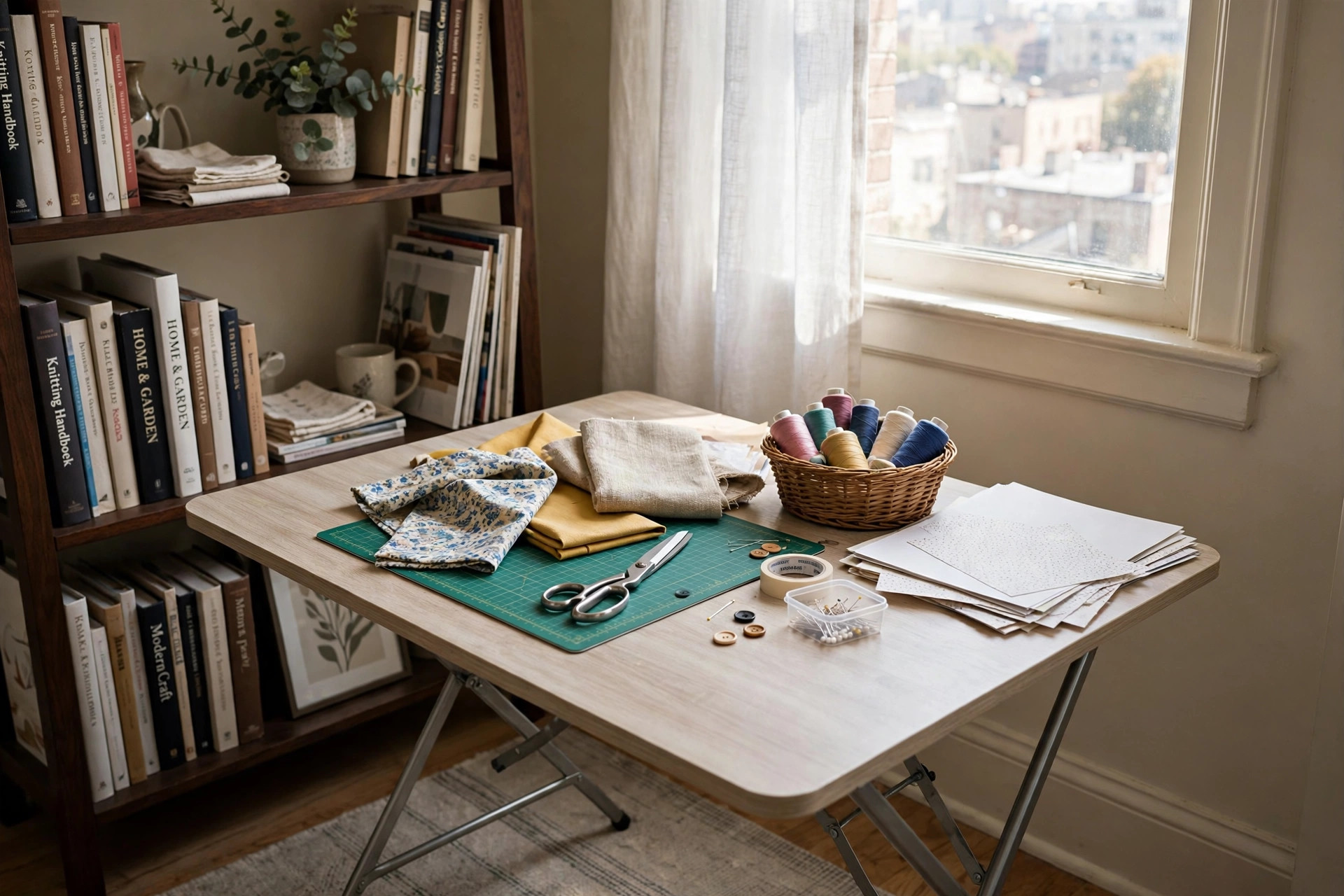
Many crafters live in small apartments. They sew, paint, cut paper, and make jewelry at home. They need a work table. A full-size desk takes up too much room. The best craft table foldable for small apartments solves this problem. It opens wide when you work. It folds flat when you are done. You can lean it against a wall or slide it into a closet.
A good foldable craft table changes daily life for a small-space crafter. You no longer clear the dining table before each project. You no longer work on the floor. You gain a real workspace in minutes, and you get your room back when the project ends.
This guide explains what to look for in a foldable craft table, the main types on the market, fair prices, safety, and how to care for your table for years of steady use.
Why a Foldable Craft Table Matters in a Small Apartment
Small apartments ask every piece of furniture to do more than one job. The dining table serves as a desk, a craft table, and a place to eat. This causes friction. Craft projects often stretch across days. A half-finished sewing project sits on the table. Dinner time comes. Everything must move. Pieces get lost. Work gets damaged.
A foldable craft table ends this cycle. It gives your projects a home of their own. When you finish for the day, you fold the table and tuck it away. Your living room returns to normal. Your project stays safe on the folded surface or moves into a bag or box.
There is also a simple human reason. People craft more when the setup is easy. If you must drag out boards and clear counters each time, you will skip projects. A table that opens in under a minute removes that barrier. Weekend crafters, evening hobbyists, and parents who craft after bedtime all benefit from this kind of ease.
How to Choose a Foldable Craft Table: Best Craft Table Foldable for Small Apartments
Choice comes down to four questions: how much room you have, what you make, how heavy your tools are, and where the table will sleep when folded. Answer these first. Then compare tables.
Measure Your Space First
Take a tape measure and record two numbers. First, the open space where you plan to work. Second, the storage spot for the folded table. Many buyers measure only the work area. Then the folded table will not fit behind the door or under the bed.
Common foldable craft tables open to about 40 to 60 inches wide and 20 to 36 inches deep. Folded, many shrink to 4 to 8 inches thick. Write down your limits before you shop. A table that is two inches too wide for your closet is a poor purchase, no matter how nice it looks.
Also check the height. Standard craft tables stand 28 to 30 inches tall. Taller crafters may want 32 to 36 inches to protect their backs during long cutting or painting sessions.
Check the Work Surface
The top matters most for daily work. Smooth laminate or sealed wood suits paper crafts, card making, and painting. A surface with a slight texture helps fabric stay in place for cutting and pinning. Some tables include a built-in cutting mat with printed grid lines, which quilters and sewists love.
Think about the crafts you do most. A jeweler needs a small, hard, steady surface. A scrapbooker needs a wide, smooth area for 12-inch paper. A painter needs a surface that wipes clean and resists stains. Match the top to the work.
Edge finish matters too. A table with a raised lip keeps beads and pins from rolling off. A flat edge makes it easier to sweep scraps into a bin.
Weight Capacity and Sturdiness
Folding tables vary widely in strength. Light models hold 25 to 40 pounds, enough for paper crafts and hand sewing. Sturdier models hold 75 to 100 pounds or more, which suits sewing machines, heat presses, and wood craft projects.
Check how the legs lock. Look for metal locking braces or push-button locks that snap firmly into place. Avoid tables that rely only on friction to stay open. Sit at the table in the store if you can. Press down on the center of the top. A good table feels solid. A weak one flexes or rocks.
Steel frames last longer than thin aluminum ones, though they weigh more. If you will move the table often, look for a balance between strength and weight, ideally under 25 pounds for the table itself.
Storage and Portability
The best folding design is the one you will actually use every day. Some tables fold with one pull of a handle. Others need two people and a manual. Read reviews about the folding motion before you buy.
Built-in storage raises the value of a craft table in a small room. Side shelves, drawers, and pegboard backs hold tools close at hand. If you want more ideas for keeping tools near your workspace, see our guide to the best craft table with storage for sewing room. Pairing your table with a best craft storage organizer for small rooms or a best craft storage cart with drawers rolling keeps supplies tidy between sessions.
Types of Foldable Craft Tables
Four main designs serve small apartments well. Each has strengths and trade-offs.
Drop-Leaf Tables
A drop-leaf table has hinged leaves on one or both sides. The leaves fold down when you need less space and lift up for full width. This design is old and proven. It suits mixed-use rooms because the table can serve as a narrow console against the wall on ordinary days and a full craft surface on weekends.
The weak point is the hinge. Over years of use, cheap hinges loosen. Look for solid metal hinges and a locking support arm under each leaf.
Folding Leg Tables
These look like classic folding tables with legs that swing under the top. They set up fast and fold nearly flat. Many are light enough to carry with one hand. They cost less than most other types.
The downside is plain looks and limited storage. Most have no drawers or shelves. They suit renters who want a simple, cheap surface and already own storage boxes or carts.
Wall-Mounted Drop-Down Tables
A wall-mounted table bolts to the wall and folds up flat against it like a Murphy bed. When open, a leg or bracket supports the front edge. This design frees floor space completely when folded.
It suits very small studios where even a folded table in the closet feels like clutter. The trade-off is installation. You must find wall studs and drill into them. Renters should check their lease before mounting anything. Weight limits are lower than floor-standing tables, so these suit light crafts best.
Craft Tables with Built-In Storage
These are full craft stations that fold. They often include drawers, cubbies, a pegboard, and sometimes a sewing machine platform that lowers flush with the top. Folded, they look like a slim cabinet or armoire.
They cost more, but they replace several pieces of furniture at once. For a dedicated crafter in a one-bedroom apartment, this type often gives the best long-term value. Check the folded depth carefully, since storage models fold thicker than plain tables.
Cost and Price: What to Expect
Prices for foldable craft tables fall into three bands.
Budget tables run from about 40 to 80 dollars. These are simple folding-leg or small drop-leaf tables. They work well for light crafts and occasional use. Frames may be thin, and tops may be basic particleboard.
Mid-range tables run from about 90 to 180 dollars. This is the sweet spot for most buyers. You get stronger frames, better locking legs, smoother tops, and often some storage. Many of the most popular craft tables sold at large craft retailers fall in this band.
Premium tables run from 200 dollars and up. These include storage-rich folding cabinets and heavy-duty sewing tables. They suit daily crafters and home business owners who need a professional setup.
Watch for sales at major craft and home stores. Large retailers run seasonal discounts on craft furniture in January and during back-to-school season. A mid-range table bought on sale often beats a budget table bought at full price.
Care and Upkeep
A foldable craft table lasts many years with simple care. Wipe the top after each session, especially after paint, glue, or dye work. Dried glue and paint shorten the life of any surface. Use a cutting mat under blades and rotary cutters to protect the top.
Check the hinges and locking braces twice a year. Tighten loose screws with a screwdriver. A drop of household oil on stiff hinges keeps the folding motion smooth. Never force a stuck folding mechanism. Forcing bends the braces and ruins the lock.
Keep the table dry. Particleboard tops swell if they sit in water. If you do wet crafts like dyeing or watercolor, lay down a plastic sheet first. When storing the folded table, stand it upright in a dry spot. Do not lean heavy boxes against it, which can warp the top over time.
If the table has fabric storage bins or a canvas cover, wash them per the label. Clean bins keep dust off your supplies and make the whole station feel fresh.
Safety Tips
Folding tables have moving parts, so a few safety habits matter.
First, always lock the legs or leaves before you put weight on the table. An unlocked table can collapse without warning. Teach children not to climb on or hang from a folding table.
Second, keep fingers clear of hinges during setup and takedown. Pinch injuries are the most common harm from folding furniture. Move slowly and keep both hands on the handles or edges the manual points out.
Third, place the table on a flat, level floor. A wobbly table tips more easily when you lean on one corner. Use felt pads under the feet to stop sliding on hard floors.
Fourth, respect the weight limit printed by the maker. A sewing machine plus a heavy project bag can exceed a light table’s rating. When in doubt, choose the stronger table.
Finally, store the folded table where it cannot fall on anyone. Lean it securely against a wall or lay it flat under a bed. A tall folded table left freestanding in a hallway is a tipping hazard.
Frequently Asked Questions
Can I use a foldable craft table as my everyday desk? Yes, many people do. Choose a model with a sturdy frame and a height near 29 to 30 inches. Make sure the top is wide enough for your computer or writing work. A drop-leaf table works well here, since you can keep one leaf down on workdays and open both leaves for craft weekends.
Will a folding table hold a sewing machine? It can, if the table is rated for the weight. Most home sewing machines weigh 15 to 25 pounds. Add fabric and tools, and you may reach 40 pounds. Choose a table rated for at least 50 to 75 pounds with locking legs. Place the machine near the center of the top, not near an edge, for best stability.
How much room do I need to store a folded craft table? Most fold to a slab 4 to 8 inches thick. A 48-inch table folded flat can slide under many beds or stand behind a door. Wall-mounted models fold to about 6 inches from the wall. Measure your storage spot before you buy, and compare it with the folded dimensions in the product listing.
Are foldable craft tables comfortable for long sessions? Comfort depends on height and chair pairing. A table at the right height with a supportive chair lets you work for hours. If the table is too low, your back and neck will ache. Taller crafters should look for 32-inch or adjustable-height models. Take short stretch breaks every hour no matter which table you choose.
What is the best surface for messy crafts like painting? A sealed laminate or plastic top wipes clean and resists stains. Avoid raw wood or fabric-covered tops for wet work. Always use a protective mat or plastic sheet under messy projects. Even the best top lasts longer when shielded from direct paint and glue.
A Short Final Word
The best craft table foldable for small apartments is the one that fits your room, holds your tools, and folds away without a struggle. Measure first, choose honest strength over fancy extras, and buy from a maker with clear weight ratings. With the right table, a small apartment can hold a big creative life.
For more background, see This Old House, Bob Vila, and Michaels. For more background, see The Home Depot, JOANN, and Blick Art Materials. See Family Handyman for more detail. See also Target for further detail.
References
Blick Art Materials. (n.d.). Art and craft supplies. https://www.dickblick.com Bob Vila. (n.d.). Home improvement advice. https://www.bobvila.com Family Handyman. (n.d.). DIY home repair and maintenance. https://www.familyhandyman.com JOANN. (n.d.). Fabric and craft supplies. https://www.joann.com Michaels. (n.d.). Arts and crafts supplies. https://www.michaels.com Target. (n.d.). Retail store. https://www.target.com The Home Depot. (n.d.). Home improvement products. https://www.homedepot.com This Old House. (n.d.). Home renovation guidance. https://www.thisoldhouse.com
Was this guide helpful?

About Michael Thompson
The My Garden US editorial team writes practical, in-depth home and garden guides for American homeowners — tested advice, no fluff.