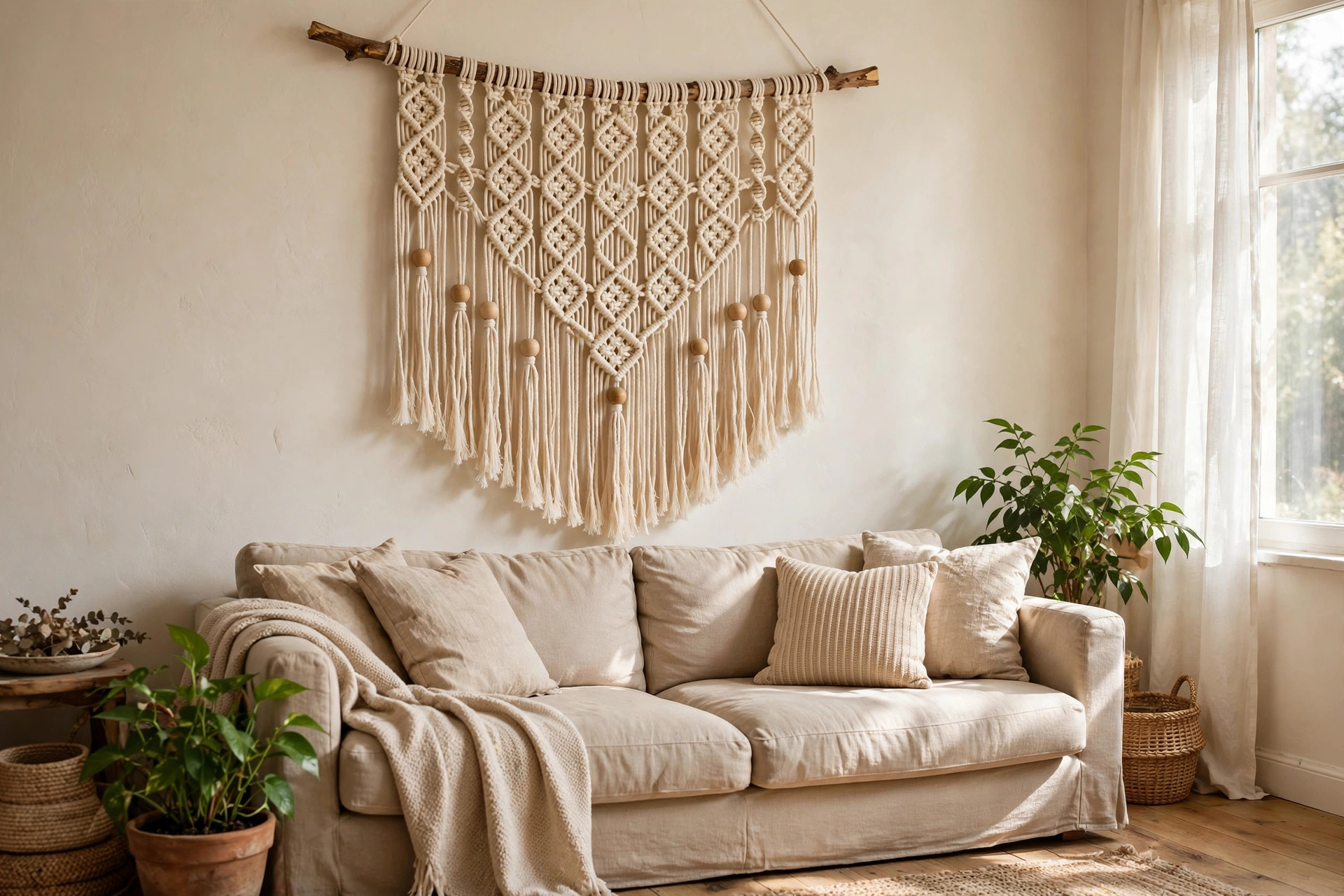

A diy wall hanging kit for boho home decor is one of the simplest ways to add warmth to a plain wall. The box holds nearly everything you need: cotton cord, a wooden dowel or branch, beads, and clear steps you can follow at your own table. You do not need skill with a loom or years of craft practice. In an hour or two, the cord takes shape into a piece that looks soft, handmade, and calm. For renters and new homeowners alike, it fills a bare space without nails through plaster and without a big bill from a store.
The bohemian look, often called boho, favors natural fiber, wood, and loose, free patterns. A woven or knotted hanging fits this style the way a frame fits a picture. It softens hard corners, breaks up long blank walls, and pairs well with houseplants, woven baskets, and low wooden furniture. If you are new to suncatcher kits for window decor or other home crafts, a kit is a kind hand to hold while you learn.
Why a Kit Makes Sense
Buying a ready-made wall hanging is easy, but it can cost forty dollars or more for a small one. A diy wall hanging kit for boho home decor usually costs far less and teaches you a skill you can repeat. The cord that comes in the box is measured and cut for the pattern, so there is no waste and no guesswork. Many kits also include a printed guide with pictures, which beats learning from a bare list of words.
A kit also keeps the first project small and safe. The cord is soft on the hands. There are no sharp tools beyond a pair of scissors. If a knot goes wrong, you can untie it and try again. This low pressure is why teachers and parents like kits too; the craft suits a quiet afternoon with a child old enough to handle string, and it suits a beginner working alone.
Beyond cost and ease, making the piece yourself gives you control of color and size. Store shelves may carry only cream cord and a fixed width. With a kit, you can pick the finish of the wood, add wooden beads, or leave the fringe long and wild. Small choices like these are what make a room feel personal rather than copied from a catalog page.
What to Look for When You Choose: Diy Wall Hanging Kit for Boho Home Decor
Not all kits are equal. A good diy wall hanging kit for boho home decor should state three things on the front of the package: the finished size, the time it takes, and the skill level. Look for those facts before you buy. A kit that says “beginner” and “two hours” is honest about what you will get.
Check the cord. Cotton cord between three and five millimeters thick is the common choice for boho hangings. Thinner cord makes fine detail; thicker cord makes bolder knots and covers a wall faster. The package should say whether the cord is single-twist or braided. Single-twist cord brushes out into a soft fringe, which suits the boho look very well. Braided cord holds its shape and resists fraying.
Look at the hanging rod. Many kits use a plain wooden dowel. Some use a natural branch with the bark still on, which looks more rustic. Either works. Make sure the rod is straight and sanded smooth, with no splinters that could snag the cord or scratch your wall.
Beads and extras matter less, but they add charm. Wooden beads in natural or dark stain, small metal rings, and feathers or shells all fit the boho style. If the kit promises extras, open the bag at home and count them against the printed parts list. A missing bead is a small thing, but it can stall a project on a Sunday evening when stores are closed.
Finally, read the instructions before you start. Clear steps with drawings are worth more than any extra bead. If the guide shows each knot from two angles and tells you how tight to pull, you will finish with less fuss. A good source of general craft how-to background is Michaels, which keeps large project libraries for fiber crafts.
Types and Options
Wall hanging kits fall into a few common types. Each gives a different look on the wall.
Macrame kits teach square knots, lark’s head knots, and half-hitches. The result is a knotted hanging with an open, airy pattern and long fringe at the bottom. This is the classic boho choice and the most common kit on the shelf.
Weaving kits come with a small loom and yarn. You pass weft yarn over and under warp threads to build bands of color and texture. Woven hangings look fuller and more textile-like than macrame, and they suit walls that need a stronger block of color.
Yarn and branch kits skip the knots and the loom. You tie strands of yarn, ribbon, and fiber to a branch at different lengths. The steps are simple enough for a first craft project, and the finished piece has a relaxed, wild look.
Bead and fiber kits mix cord with wood, clay, or stone beads. These kits often make smaller pieces, good for a narrow wall beside a door or above a bedside table. They pair nicely with a wooden spoon carving kit for beginners if you like layered handmade texture in the same room.
Some kits also combine two crafts. You may find a macrame kit that adds a small woven panel, or a hanging that includes a pocket for a small plant. These combo kits cost a little more and take a little longer, but they make a fuller piece for a large wall.
Cost and Price
Most kits fall between twelve and forty dollars. The price moves with the size of the finished piece and the quality of the fiber. A small kit that makes a ten-inch hanging may cost around twelve to eighteen dollars. A large kit that makes a thirty-inch statement piece may run twenty-five to forty dollars.
Cord quality is the main cost driver. Long-staple cotton cord costs more than short-staple cord, but it frays less and brushes into a cleaner fringe. Natural, undyed cord costs less than dyed cord. Kits with a real wood branch instead of a dowel may add a few dollars.
Buying one kit is usually cheaper than buying cord, a rod, beads, and a book of patterns on their own. Loose craft supplies add up fast: a single roll of good cotton cord can cost as much as a full kit. That said, once you finish one or two kits, loose cord makes sense, because you will own the skill and only need the raw material. For price checks on craft supplies, JOANN and Blick both list cord by the roll with honest prices.
Watch for hidden costs. You will need sharp scissors, and you may want a stiff brush or comb to work the fringe. A measuring tape helps keep the piece even. None of these cost much, and most homes already have them.
Care and Upkeep
A cotton wall hanging needs little care, but a few habits will keep it looking fresh for years.
Dust is the main enemy. Once a month, take the hanging down and shake it gently outside. A soft brush or a lint roller will lift dust from the knots without pulling them loose. Do not wash a macrame hanging in a machine; the knots will twist and the cord may shrink.
Sunlight will fade dyed cord over time. If your wall gets strong afternoon sun, hang the piece on a wall that gets shade, or move it now and then. Natural undyed cord fades less and hides sun wear better, which is one more reason the plain cream look is so popular in boho rooms.
Keep the fringe neat. After a few months, the brushed fringe may clump. A wide-tooth comb will separate the strands again. Trim stray fibers with sharp scissors, cutting straight across the bottom for a clean line or at angles for a shaped edge. This small trim is the same finish step found in most fabric paint craft guides for keeping fiber work neat.
Pets and small children can snag loose cord, so hang the piece out of reach if you share your home with either. A hanging above a sofa back or over a console table sits high enough to stay safe.
Safety
Craft kits are low-risk, but a few rules keep the project safe.
Cut cord with scissors on a table, not balanced in your lap. Keep small beads away from children under three, who may put them in their mouths. If the kit includes a metal ring or hook for hanging, check its weight rating before you hang a large piece over a bed or a seat.
Hanging hardware matters more than the craft itself. A small piece can hang from a simple adhesive hook. A large piece, especially one wider than two feet, should hang from a nail or a screw set into a wall stud or a proper wall anchor. Test the hook by pulling down with a little more force than the piece weighs. A fallen hanging is rarely dangerous, but it can scratch paint or a wood floor.
If you hang the piece in a rental home, use removable hooks and check the weight limit printed on the package. Damage-free hanging keeps your deposit safe and your landlord happy.
Hanging and Styling the Finished Piece
A finished hanging looks best with a little air around it. Leave at least six inches between the top of the piece and the ceiling or shelf above it. On a wide wall, center the piece over the furniture below it: over a sofa, over a bed headboard, or over a console table.
Boho rooms layer texture, so do not fear company for your hanging. A plant in a woven basket beside it, a stack of books, or a small lamp will make the wall feel full. Keep colors close together: cream cord with warm wood and green leaves is a calm mix that works in most rooms. If you want color, one dyed band of rust or sage in the cord can tie the piece to a rug or a throw pillow across the room.
For a fuller wall, hang two or three pieces of different sizes in a loose group. Keep the spacing even, about four to six inches apart, and let the largest piece anchor the set. This group trick turns small, cheap kits into a display that looks planned and rich.
Frequently Asked Questions
How long does a diy wall hanging kit for boho home decor take to finish? Most beginner kits take one to three hours. A small piece with simple knots may take under an hour. A large macrame piece with long fringe can take an afternoon. Work at your own pace; there is no prize for speed.
Do I need any craft experience to use a kit? No. Kits marked beginner assume you have never tied a knot for craft. The guide shows each knot step by step. If you can tie your shoes, you can follow a macrame guide.
What is the difference between macrame cord and yarn? Macrame cord is a smooth, strong cotton strand made for knotting. Yarn is softer and made for weaving or knitting. A macrame kit will list cord; a weaving kit will list yarn. The two are not easy to swap.
Can I wash my finished wall hanging? Hand wash only, and only if you must. Fill a basin with cool water and a drop of mild soap, press the piece gently, and rinse. Roll it in a clean towel to take out water, then lay it flat to dry. Never use a washing machine or a dryer.
Where should I hang a large wall hanging? Above a sofa, above a bed, or over a console table are the three best spots. Each gives the piece a wide wall and a piece of furniture to sit with. Keep it out of direct sun and away from steam, such as above a stove.
How do I stop the fringe from tangling? Brush it out after you finish the piece, and trim the ends straight. Hang it where people will not brush past it. A quick comb once a month keeps the strands apart and soft.
A Short Final Word
A diy wall hanging kit for boho home decor asks little and gives much. For the price of a takeout meal, you get an evening of calm work with your hands and a piece of art that no store shelf can match. Start with a beginner kit, follow the steps without hurry, and hang the result where you will see it each day. The wall will thank you, and you will have a new skill waiting for the next bare corner. For wider project ideas, the craft libraries at The Spruce, HGTV, Country Living, and Apartment Therapy all carry fiber-craft inspiration, and The Home Depot stocks the hooks and anchors you need to hang the finished piece.
References
Apartment Therapy. (n.d.). Home design ideas and inspiration. https://www.apartmenttherapy.com Blick Art Materials. (n.d.). Art and craft supplies. https://www.dickblick.com Country Living. (n.d.). Country home and lifestyle. https://www.countryliving.com HGTV. (n.d.). Home and garden ideas. https://www.hgtv.com JOANN. (n.d.). Fabric and craft supplies. https://www.joann.com Michaels. (n.d.). Arts and crafts supplies. https://www.michaels.com The Home Depot. (n.d.). Home improvement products. https://www.homedepot.com The Spruce. (n.d.). Home and garden advice. https://www.thespruce.com
Was this guide helpful?

About Robert Taylor
The My Garden US editorial team writes practical, in-depth home and garden guides for American homeowners — tested advice, no fluff.
You May Also Like

Macrame Plant Hanger Kit with Wooden Beads: A Simple Guide
February 11, 2026 0 views
Embroidery Pattern Transfer Pen for Fabric Crafts
April 16, 2026 0 views
Best Jewelry Making Kit for Beginners Adults: A Guide to Choosing Your First Kit
September 13, 2026 0 views