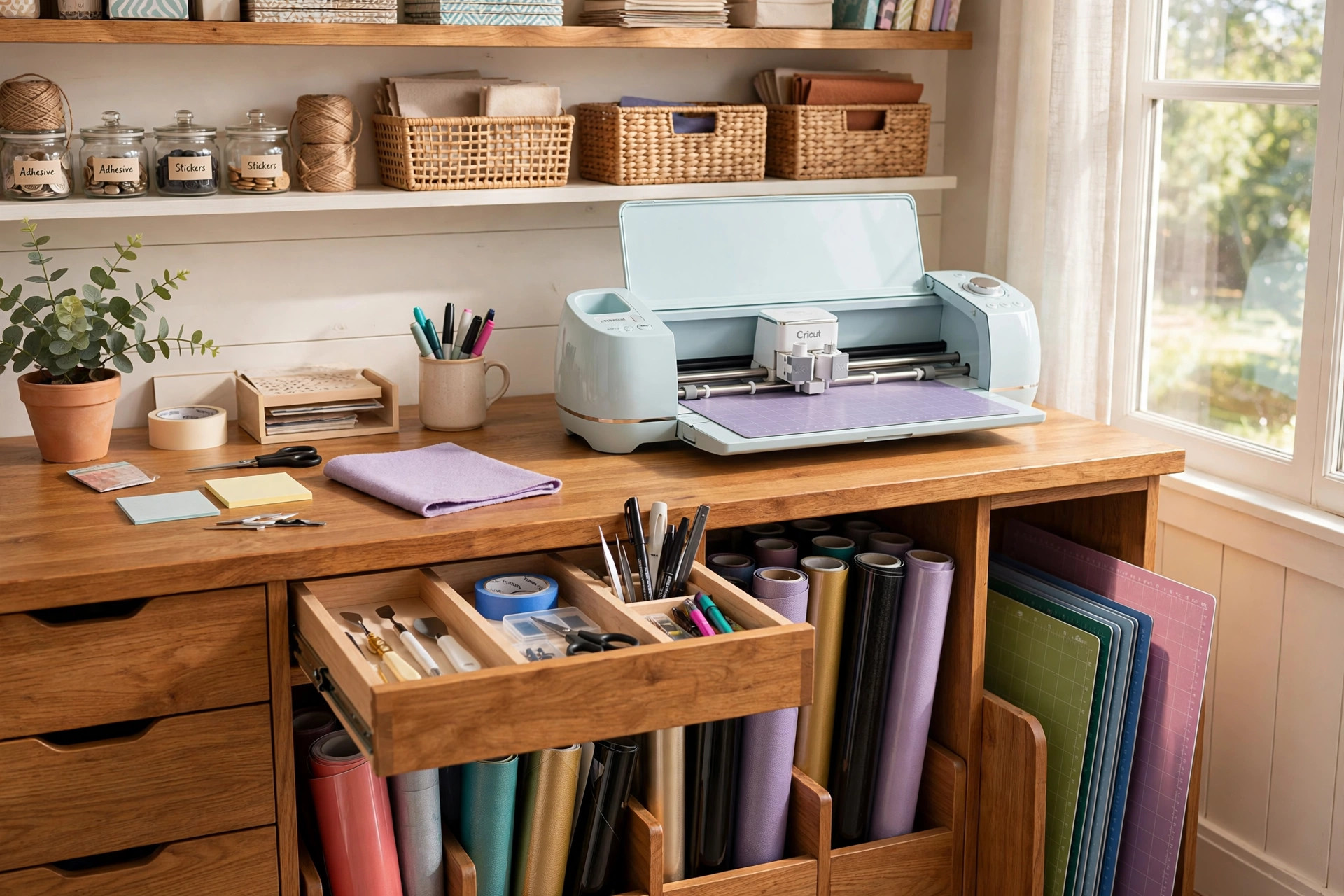
A Good Work Table Changes the Whole Craft
Anyone who has set up a Cricut machine on a kitchen table knows the same tired story. The machine takes the center. Mats lean against the wall. Vinyl rolls slide onto the floor. Small tools hide under paper scraps. The project still gets done, but the mess slows every step. A search for the best craft desk with storage for Cricut machine use usually begins at that moment, when the crafter admits that the dining table was never meant to hold a full cutting station.
A proper desk does more than hold the machine. It gives each part of the work its own place. The Cricut sits at a comfortable height. Cutting mats slide into a shelf beside it. Drawers hold weeding tools, pens, blades, and spare vinyl. The floor stays clear, and the work moves faster.
This guide walks through the whole choice. It covers why a craft desk matters, what features to look for, the main types on the market, what they cost, how to care for them, and how to stay safe. The advice stays plain and practical, written for the home crafter who wants a work space that simply works.
Why a Craft Desk Matters for a Cricut: Best Craft Desk with Storage for Cricut Machine
The Machine Is Heavier and Larger Than It Looks
A Cricut Explore or Maker weighs about ten to eleven pounds before any project is loaded. With a long cutting mat fed through it, the working footprint grows wider than the machine itself. Cheap card tables bend under the weight and wobble while the blade cuts. Wobble ruins precision. A solid craft desk gives the machine a steady base, and steady bases make cleaner cuts.
Supplies Multiply Faster Than Expected
Most crafters begin with one roll of vinyl and one mat. Within months the collection grows: heat transfer rolls, card stock stacks, transfer tape, tool sets, pen packs, extra blades, and iron-on sheets. Without storage these supplies spread across the room. A desk with drawers, shelves, and cubbies keeps them sorted and within arm’s reach. When a project calls for a new blade, the blade is one drawer away, not one room away.
Comfort Counts Over Long Sessions
Cricut projects often run long. Weeding a detailed decal or assembling a layered paper piece can take two hours or more. A desk at the wrong height forces the shoulders up and the neck down. Over time that posture brings pain. The right desk height, paired with a decent chair, lets the crafter work for hours without strain. Good lighting on the desk surface helps too, since weeding small cuts needs bright, even light.
What to Look for When You Choose
Desk Size and Surface Space
Measure before you shop. A Cricut Maker 3 measures about 22 inches wide, so the desk top should be at least 24 inches deep and 36 inches wide to hold the machine with room to work beside it. A longer top, say 48 to 60 inches, gives space for a laptop, a heat press, or a paper trimmer next to the machine. Bigger is not always better in a small room, but too small a top turns every project into a juggling act.
Weight Capacity
Check the weight limit the maker states. A sturdy desk should carry at least 100 pounds across its top. This covers the machine, a small heat press, and stacked materials with room to spare. Desks with metal frames or thick wood tops hold weight better than thin particle board with flimsy legs. Shoppers comparing reviews at Consumer Reports often note that real weight tests matter more than printed claims.
Storage Built Into the Desk
Storage is the heart of the best craft desk with storage for Cricut machine setups. Look for a mix of storage types:
– Drawers for tools, pens, blades, and small parts – Open shelves or cubbies for vinyl rolls, card stock, and cutting mats – A lower cabinet for bulkier items like heat presses or paper reams
Some desks include special vinyl roll holders or peg boards on the back. Those small extras save real space. If you also keep a sewing corner in the same room, shared storage between the two stations can cut clutter further.
Cord and Cable Management
A Cricut needs a power cord and a USB or wireless link. A laptop needs its charger. A task light needs an outlet. Without a plan, cords tangle behind the desk and make cleaning hard. Good desks include cable holes in the back, trays under the top, or clips along the legs.
Materials and Build Quality
Solid wood and hardwood veneer tops last the longest and clean up well. Metal frames add strength and a steady stance. Particle board with laminate is cheaper and lighter, but it chips and swells if liquids reach it. For a desk that will see daily use, stronger materials pay for themselves. Guides at This Old House explain how different wood and board products age under daily use, which helps buyers judge long-term value.
Assembly and Fit
Most craft desks ship flat and need assembly. Read the review notes on how long setup takes and whether the holes line up. Measure doorways and stairs too. A large L-shaped unit that cannot reach the craft room is no bargain.
Types of Craft Desks That Work with a Cricut
Standard Writing and Computer Desks
A plain, sturdy computer desk is often the cheapest way in. It holds the machine fine and gives a wide work top. The weakness is storage: a plain desk has no drawers or shelves, so supplies still need a separate cart or bookcase. Pairing a simple desk with a rolling craft storage cart solves the problem for a fair price.
Sewing and Craft Tables
Tables made for sewing rooms fit Cricut machines well. They are built wide, steady, and low enough for seated work, and they usually come with drawers and side shelves. Many have fold-out leaves that add work space when open and close flat against the table when the room needs to change. Shoppers at Michaels and JOANN will find craft furniture lines built with these features in mind.
L-Shaped Corner Desks
An L-shaped desk wraps into a corner and gives two work zones: one side for the machine, one side for weeding, ironing, or packing finished goods. Corner desks suit crafters who also run a small home business, since the second wing can hold shipping supplies. They need more floor space, so measure the room twice before ordering.
Folding and Portable Desks
For apartments and shared rooms, a folding desk or a drop-leaf table keeps the option of putting the craft station away. Look for locking legs, a top that stays level under weight, and hinges that do not loosen over time.
Standing and Height-Adjustable Desks
Some crafters weeding large projects like to stand for part of the session. A height-adjustable desk lets the worker change position through the day. These desks cost more and their motors add weight, but the comfort gain is real for people who craft for many hours at a time. Check the lifting range to be sure it drops low enough for seated work too.
Cost and Price: What to Expect
Prices for craft desks with storage run in clear bands. Simple computer desks with one drawer sell for about 40 to 80 dollars. Mid-range craft tables with drawers, shelves, and cable holes run about 100 to 250 dollars. Large L-shaped units or dedicated craft stations with extensive storage can reach 300 to 600 dollars or more. Height-adjustable models sit at the top of the range.
The focus keyword, best craft desk with storage for cricut machine, points buyers toward that middle band most often. Around 150 dollars buys a steady, well-reviewed table with enough storage for a full Cricut setup. Cheaper desks can work, but plan to add storage pieces beside them, which raises the true cost. Buying a desk that already includes the storage is usually the better deal.
Watch for seasonal sales. Furniture and office supply stores discount desks around back-to-school season and after the holidays. Floor models and open-box units at big home stores can cut the price further. Shoppers browsing IKEA and Wayfair often find strong value in the mid-range, and big-box aisles at The Home Depot let buyers test sturdiness in person before they commit.
Shipping matters too. A heavy desk may carry a large freight fee online. Check the full delivered price, not just the listed price, and compare it with local pickup options.
Care and Upkeep for a Craft Desk
A craft desk takes daily wear: hot vinyl, glue, paint specks, blade nicks, and coffee rings. A few simple habits keep it in good shape for years.
Wipe the top after each project session. A damp cloth with mild soap handles most craft residue. For sticky vinyl backing or glue spots, a little rubbing alcohol on a soft cloth works well, but test it on a hidden spot first. Never soak a laminate top; water that seeps into seams will swell the board beneath.
Keep cutting mats and sharp tools on the desk, not dragged across it. A self-healing cutting mat on the work area protects the surface and gives a clean cutting base. Store blades capped and pens upright so they do not roll and scratch the finish.
Tighten bolts and screws every six months. Wood joints loosen with use, and a desk that rocks will wobble the machine. Five minutes with a hex key twice a year prevents most problems. For deeper furniture care methods, the project guides at Family Handyman and Bob Vila cover wood repair, hardware, and refinishing in plain steps.
If the desk sits near a sunny window, consider a curtain or a UV film. Long sun exposure fades laminate and dries out real wood.
Safety in the Craft Space
A craft room holds more hazards than it seems, and the desk sits at the center of them all. Place the desk so its back is near a wall outlet. This keeps cords short and off the walking path, which cuts the trip risk.
Anchor tall storage units and bookcases to the wall. A fully loaded shelf can tip if a child or a pet climbs it. The safety guidance at the U.S. Consumer Product Safety Commission covers furniture anchoring and is worth a read for any home with young children.
Keep heat tools away from the desk edge. A heat press or a hot glue gun can scorch a laminate top in seconds and burn skin on contact. Use a silicone mat under any hot tool, and give the tool its own stable spot rather than the desk corner.
Store small blades, pins, and weeding picks in a closed drawer or a lidded box. Loose sharp tools on an open desk find fingers fast. If children share the room, add a child lock to the tool drawer. Good lighting over the desk reduces eye strain and also makes small sharp objects easier to see and avoid.
Finally, respect the weight limits. Stacking a heat press, a printer, and boxes of vinyl on a desk rated for light office use can break the top or collapse a leg. When the setup outgrows the desk, it is time for a stronger one.
Frequently Asked Questions
How much desk space does a Cricut machine really need?
Plan on a top at least 36 inches wide and 24 inches deep. The machine itself needs about 22 inches of width, and the cutting mat extends out the back during use. Extra room beside the machine for a laptop and weeding tools makes work far more comfortable.
Can I use a regular office desk for my Cricut?
Yes, if it is sturdy. A solid office desk with a 100-pound weight rating works fine. The trade-off is storage. Office desks rarely include craft-style drawers or cubbies, so most crafters add a rolling cart or a small shelf unit beside the desk to hold supplies.
What is the best desk height for Cricut work?
For seated work, a top between 28 and 30 inches high suits most adults. The key test: with your hands on the machine, your shoulders should stay relaxed and your elbows near a right angle. If you share the desk with someone taller or shorter, a height-adjustable model removes the argument.
How do I organize vinyl rolls in desk storage?
Stand rolls upright in deep cubbies or a dedicated roll holder so you can see each color at a glance. Shorter scraps can go in a drawer sorted by color family. Many crafters pair their desk with a small-room storage organizer to keep every roll visible and off the floor.
Should the desk be near a window?
Natural light helps with color matching and weeding, so a window nearby is a plus. Just keep the machine out of direct hot sun, which can warp vinyl and fade the desk finish. A sheer curtain gives light without the harsh rays.
Do I need a special desk if I also use a heat press?
A heat press adds weight and heat. Choose a desk rated well above the combined load, with a heat-safe spot for the press. Many crafters set the press on a separate sturdy side table to keep heat away from the Cricut and the paper supplies.
A Final Word
The best craft desk with storage for Cricut machine projects is not the most expensive one. It is the one that fits the room, holds the weight, keeps supplies sorted, and lets the crafter work in comfort for hours. Measure the space, set an honest budget, and choose storage that matches the supplies on hand today with room for the collection that will surely grow. Do that, and the desk fades into the background where good furniture belongs, leaving the crafter free to think about the next project instead of the mess around it. For more on Cricut machines themselves, the official maker site at Cricut carries machine specs and project ideas, and the art supply shelves at Blick round out any craft room’s stock.
References
Blick Art Materials. (n.d.). Art and craft supplies. https://www.dickblick.com Bob Vila. (n.d.). Home improvement advice. https://www.bobvila.com Consumer Reports. (n.d.). Product reviews and ratings. https://www.consumerreports.org Cricut. (n.d.). Cutting machines and craft supplies. https://www.cricut.com Family Handyman. (n.d.). DIY home repair and maintenance. https://www.familyhandyman.com IKEA. (n.d.). Home furnishings. https://www.ikea.com JOANN. (n.d.). Fabric and craft supplies. https://www.joann.com Michaels. (n.d.). Arts and crafts supplies. https://www.michaels.com The Home Depot. (n.d.). Home improvement products. https://www.homedepot.com This Old House. (n.d.). Home renovation guidance. https://www.thisoldhouse.com U.S. Consumer Product Safety Commission. (n.d.). Product safety information. https://www.cpsc.gov Wayfair. (n.d.). Furniture and home goods. https://www.wayfair.com
Was this guide helpful?

About Sarah Mitchell
The My Garden US editorial team writes practical, in-depth home and garden guides for American homeowners — tested advice, no fluff.