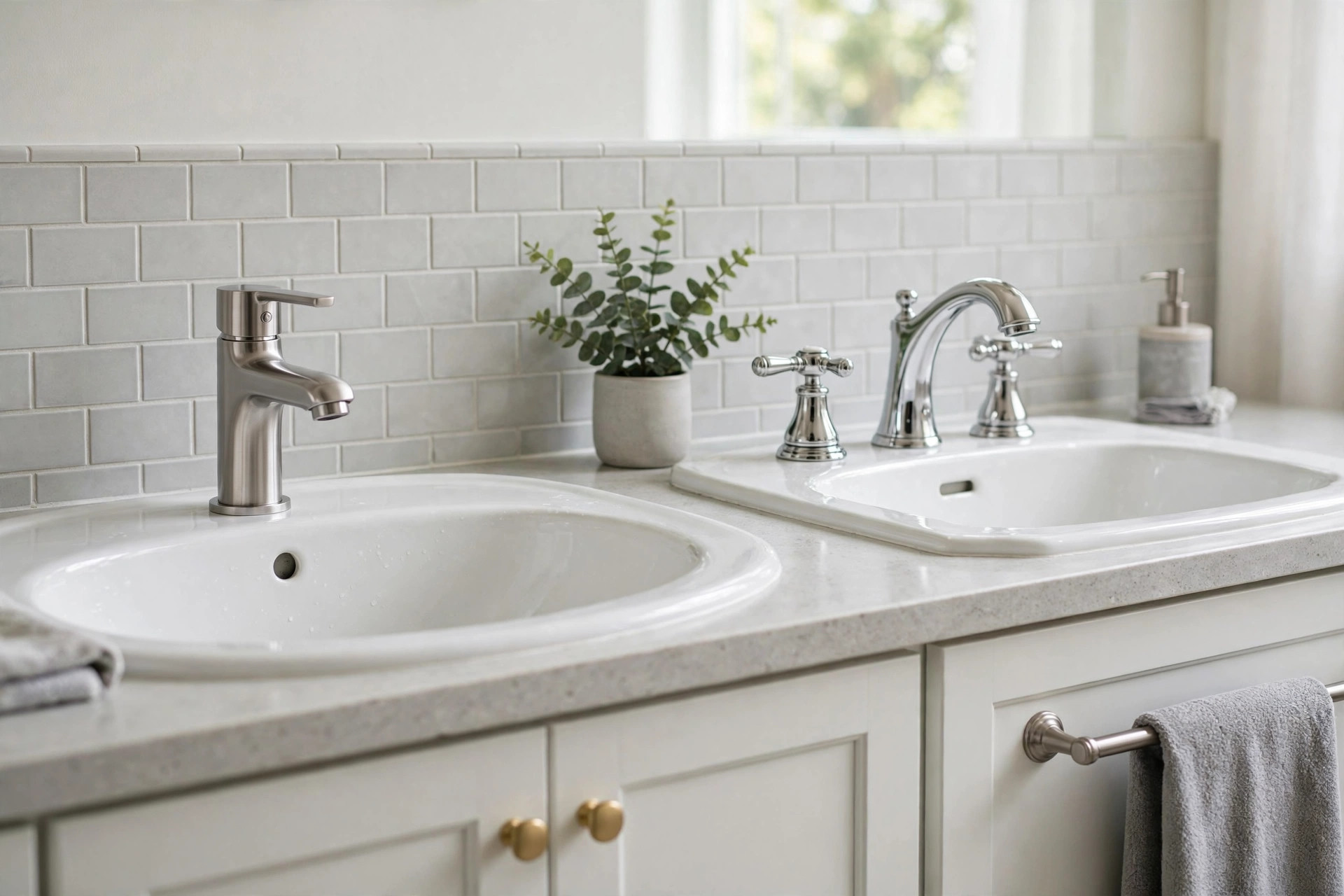

Choosing a new bath faucet can feel harder than it should. This single hole vs widespread faucet comparison sets the two most common styles side by side, in plain terms. A single hole faucet has one body. It needs only one hole in the sink or the deck. A widespread faucet has three parts. The spout sits in the middle. Two handles sit on each side. The three holes are spaced wide apart. Both styles bring clean water from the same pipes. The real difference lies in looks, price, and the sink they fit. This guide walks through each point in order. By the end, you should know which style suits your bath, your budget, and your daily habits.
Why This Comparison Matters
The bath faucet is one of the most used items in a home. Hands are washed at it. Teeth are brushed at it. Children splash at it. You may touch it twenty times a day. A poor choice stays in front of you for years. A good choice fades into the background and just works.
The number of holes in your sink or vanity deck makes the first decision for you. Most vanities come with the holes already cut. If your deck has one hole, a single hole faucet fits with no extra work. If your deck has three holes, you can fit a widespread faucet or cover two holes and use a single hole faucet. The hole pattern limits your options from the start. Maker pages such as Moen and Delta Faucet show both styles, and each maker notes the hole pattern each model needs.
Style also matters. A small bath can look cleaner with a single compact faucet. A large bath with a wide vanity can look balanced with a widespread faucet. The faucet sets the tone for the whole room. Homeowners who plan a full bath refresh often start here, because the faucet choice shapes the rest of the room.
The Basic Difference, Stated Plainly: Single Hole vs Widespread Faucet Comparison
A single hole faucet is one unit. The spout, the handle or handles, and the base form a single body. One hole in the deck is enough. The handle may be a single lever or a small joystick. Some single hole faucets have a tiny second lever for temperature. All of it mounts through one hole.
A widespread faucet has three separate pieces. The spout is one piece. The hot handle is a second piece. The cold handle is a third piece. Each piece needs its own hole. The outer holes are usually 8 to 16 inches apart, measured from center to center. The standard spread is 8 inches. Wide decks can take 12 or 16 inches.
In short, a single hole faucet is compact and simple. A widespread faucet is grander and more formal. Neither style is better in every case. Each one fits a different sink and a different taste.
What to Look For When You Choose
Count the Holes
Start with what you have. Look under the sink deck or vanity top. Count the holes. Measure the space between the outer holes. This step takes five minutes and saves real trouble. If you buy the wrong style, the faucet will not mount. You will face a return trip to the store or a change to the deck. Family Handyman gives clear steps for measuring hole spread before you shop.
Match the Sink
Sink style narrows the choice further. A vessel sink sits above the deck like a bowl. It often pairs with a tall single hole faucet. A standard drop-in sink sits in a cut hole. It often has one or three holes pre-cut in its own rim. A wall-mounted sink may need a wall-mounted faucet instead. Bring the sink model number to the store or keep it by the phone when you call.
Consider the Style and Finish
Faucets come in chrome, brushed nickel, matte black, oil-rubbed bronze, and polished brass. The finish should match or blend with the towel bars, the shower trim, and the cabinet pulls. Mixed metals can work, but they take a careful eye. For a calm result, keep the faucet finish close to the other metal in the room. Kohler and the big makers sell matching bath sets, which takes the guesswork out.
Check the Water Rules
New faucets in the United States must meet water limits. Bath faucets now flow at 1.2 gallons per minute or less under the EPA WaterSense program. Older faucets may flow at 2.2 gallons per minute. A low-flow faucet saves water and trims the water bill. Look for the WaterSense label on the box. It means the faucet passed tests for flow and performance.
Types and Options on the Market
Single Hole Faucets
The single hole faucet is the modern standard. It has one body and one hole. It costs less in most cases. It is easy to install. It is easy to clean because there are fewer edges and seams. The single lever gives fast control of flow and heat. Drawbacks are few. The style can look too plain in a large traditional bath. The single body also leaves less room for a separate side spray or soap dispenser, though many models add one on the side.
Widespread Faucets
The widespread faucet has a classic look. Three separate pieces spread across the deck. It suits wide vanities and formal baths. The separate hot and cold handles give precise temperature control. Drawbacks include price and cleaning. Three pieces mean three sets of edges where water spots gather. Installation takes longer because each piece must be set and leveled. Parts can loosen over time and need tightening.
Centerset Faucets
The centerset faucet is a close cousin of the widespread. It also has three holes, but the spout and handles join on a single base plate. The spread is fixed at 4 inches. It fits small decks that still have three holes. It costs less than a true widespread. If your deck has three holes close together, a centerset may be the simplest pick.
Wall-Mounted Faucets
Wall-mounted faucets attach to the wall above the sink. They need no deck holes at all. They free the whole deck for soap and small items. They suit vessel sinks and custom baths. The plumbing must run inside the wall, so they are best added during a remodel, not as a quick swap.
Cost and Price
Price varies by maker, finish, and style. A plain single hole faucet from a national maker often runs from 60 to 180 dollars. A widespread faucet from the same maker often runs from 120 to 350 dollars. Premium lines and special finishes can run much higher. Home Depot and Lowe’s list both styles side by side, so you can compare prices in one visit.
Installation adds cost if you hire a plumber. A simple swap of one faucet for the same style may take under an hour. Switching from a widespread to a single hole faucet takes more work. The deck holes must be covered with a plate. The water lines must be capped or moved. A plumber may charge 150 to 400 dollars for the job, depending on the area and the shape of the pipes. If you plan other plumbing work at the same time, it can pay to read our guide to hydro jetting cost for sewer line usa so you can group jobs and save on the service call.
Do not judge a faucet on price alone. A cheap faucet with weak valves can drip within a year. A drip wastes water and stains the sink. Solid brass bodies and ceramic disc valves last far longer than thin metal and rubber washers. The middle of the price range often gives the best value.
Care and Upkeep
Both styles need the same basic care. Wipe the faucet dry after heavy use. Water spots form when hard water dries on the finish. A soft cloth and mild soap keep most finishes bright. Never use steel wool, bleach, or strong acids on the finish. They scratch and dull the surface. Abrasive pads can ruin a brushed finish in one pass.
Clean the aerator once or twice a year. The aerator is the small screen at the tip of the spout. It shapes the stream and saves water. Sediment and lime can clog it and slow the flow. Unscrew it by hand or with a soft wrench. Soak it in white vinegar for an hour. Rinse and screw it back on. If the flow seems weak in every faucet in the house, the cause may not be the faucet at all. See our notes on low well water pressure solutions for homes before you replace anything.
Check under the sink now and then. Look for damp spots on the cabinet floor. Feel the supply lines for slow drips. Small leaks grow quiet and can rot the cabinet from below. Tighten loose handles and bases once a year. A widespread faucet has three bases to check. A single hole faucet has one.
Keep the drain clear as well. A good drain strainer keeps hair and soap bits out of the trap. Our roundup of the best drain strainer for shower hair usa shows what to look for in a quality strainer, and the same ideas apply to sink drains.
Safety Notes
Turn off the water before you start any faucet work. Each sink should have two shut-off valves under the deck, one for hot and one for cold. Turn them both clockwise until they stop. Open the faucet to release the pressure. If the valves are stuck or missing, shut off the main house valve first.
Set the water heater to a safe range. Water above 120 degrees can scald skin in seconds. Small children and older adults face the most risk. A thermometer at the tap takes one minute and tells you the true heat. Many new faucets include anti-scald parts that limit the hot side. This Old House explains how these parts work and how to set them.
Handle old plumbing with care. Homes built before the mid-1980s may have lead solder or old brass with lead content. Let the tap run for 30 seconds in the morning before you drink. If you worry about water quality, a filter from a trusted maker like Aquasana can add a layer of safety. Wear gloves and eye guards when you cut pipe or work in a tight cabinet. Pipes and tools are sharp in small spaces.
Frequently Asked Questions
Can I put a single hole faucet on a three-hole sink?
Yes. You need a deck plate, also called an escutcheon. It is a flat metal plate that covers the two unused holes. The single hole faucet mounts through the plate. Most makers sell matching plates for their faucets. The result looks clean and planned.
Which style costs less?
The single hole faucet costs less in most cases. It has fewer parts. The box holds one unit. The plumber spends less time on the install. A widespread faucet costs more for the unit and often more for the labor.
Which style is easier to clean?
The single hole faucet is easier to clean. One body means fewer seams. Water spots have less edge to cling to. A widespread faucet has three pieces and more trim rings. It takes a few more minutes with the cloth.
Do widespread faucets use more water?
No. Both styles must meet the same federal flow limits. A new bath faucet flows at 1.2 gallons per minute or less, no matter the style. Water use depends on the aerator and how long the tap runs, not on the number of handles.
Which style looks more modern?
The single hole faucet looks more modern to most eyes. Its clean single line suits current tastes. The widespread faucet looks more classic and formal. Neither look is wrong. Match the faucet to the style of the room.
Can I switch from one style to the other later?
You can switch, but the deck must allow it. Going from widespread to single hole needs a deck plate to cover the extra holes. Going from single hole to widespread needs three holes in the deck. A new hole can be cut in stone or solid surface by a pro, but it adds cost and dust.
A Short Final Word
This single hole vs widespread faucet comparison comes down to three facts. Count your holes. Match your sink. Pick the look you want to see each morning. The single hole faucet wins on price, ease, and cleaning. The widespread faucet wins on classic style and wide decks. Both give the same water from the same pipes. Take ten minutes to measure, read the box labels, and buy from a trusted maker. A careful choice now will serve you well for twenty years.
References
Aquasana. (n.d.). Water filtration systems. https://www.aquasana.com Delta Faucet. (n.d.). Kitchen and bathroom faucets. https://www.deltafaucet.com Family Handyman. (n.d.). DIY home repair and maintenance. https://www.familyhandyman.com Kohler. (n.d.). Bathroom and kitchen fixtures. https://www.kohler.com Lowe’s. (n.d.). Home improvement products. https://www.lowes.com Moen. (n.d.). Faucets and plumbing fixtures. https://www.moen.com The Home Depot. (n.d.). Home improvement products. https://www.homedepot.com This Old House. (n.d.). Home renovation guidance. https://www.thisoldhouse.com U.S. Environmental Protection Agency. (n.d.). Protecting human health and the environment. https://www.epa.gov
Was this guide helpful?

About Michael Thompson
The My Garden US editorial team writes practical, in-depth home and garden guides for American homeowners — tested advice, no fluff.
You May Also Like
Iron Filter for Well Water Reviews: What American Homeowners Report
February 14, 2026 0 views
Water Softener vs Conditioner: A Full Comparison for American Homes
February 20, 2026 0 views
Best Sump Pump for Basement Reviews USA: A Plain Buyer’s Guide
February 23, 2026 0 views