
Most babies start to crawl between six and ten months of age. At that stage, the floor of the nursery becomes their whole world. They rock, they scoot, they pull up on low furniture, and they fall down many times a day. A bare wood or tile floor is hard and cold for this work. That is why so many parents search for the best nursery rug soft for crawling babies. The right rug gives the baby a warm, cushioned spot to practice new skills. It also makes the room feel calm and finished. This guide explains what to look for, what types are sold, what they cost, and how to keep them safe and clean.
Why a Soft Rug Matters for a Crawling Baby
A baby who is learning to crawl spends most of the day on hands and knees. Knees press into the floor with each move. Hands slap down flat. Heads sometimes bump the ground when balance is lost. A soft rug takes some of the sting out of these small bumps. It does not stop all of them, and it should not. Babies learn balance by making mistakes. But a cushioned surface makes the learning period easier on joints and skin.
A rug also warms the floor. Nurseries on a ground floor or above a garage can feel cold, even with heat running. A baby who crawls in a diaper or a thin sleeper will feel that cold through hands and knees. A thick rug holds warmth and keeps the play area comfortable through long morning sessions.
There is a third benefit that parents often forget. A rug marks a play zone. When a baby sees a soft round rug in the middle of the room, that area becomes the place for tummy time, rolling, and first steps. Toys stay in one place more often. The parent has a clear spot to sit beside the baby. A simple rug can shape how the whole room is used each day.
What to Look For When You Choose: Best Nursery Rug Soft for Crawling Babies
Safe Materials
The best nursery rug soft for crawling babies starts with safe material. Wool is a classic choice. It is naturally soft, resists stains to some degree, and does not hold static. Many wool rugs are dyed with mild dyes that are safe for children. Cotton is another good option. It is light, easy to wash in many cases, and gentle on skin. Synthetic fibers such as nylon and polypropylene are strong and stain resistant. They cost less than wool. If you choose a synthetic rug, look for one that is labeled low in volatile organic compounds. New rugs of any type can give off a mild smell at first. Air a new rug out in another room for a day or two before you place it in the nursery.
Parents who want a non toxic nursery rug should read the label with care. Avoid rugs treated with stain guards or flame retardants that use harsh chemicals. A plain fiber rug with no extra treatment is often the safest pick. You can learn more about child safe home products from the U.S. Consumer Product Safety Commission, which publishes guidance on nursery safety.
Pile Height and Cushioning
Pile height is the length of the fibers that stand up from the rug backing. For a crawling baby, medium to high pile feels best under knees and hands. A thick shag rug or a plush pile rug gives real cushion. But very long fibers can make crawling harder. Tiny hands can get tangled in long strands, and the baby may find it hard to push forward.
A good middle ground is a medium pile rug with a thick pad underneath. The rug pad adds cushion without adding long fibers on top. Many parents buy a soft play mat for nursery use and place a thin flat rug over it. Others choose a cushioned nursery floor rug that is sold with padding built in. Either way, the goal is a surface that gives a little when the baby presses down.
Also check the backing. A rug with a rubber or latex backing stays in place on hard floors. If your rug has no backing, buy a separate non slip rug pad. A rug that slides across the floor is not safe for a baby who is pulling up to stand.
Size and Placement
Size matters more than many parents expect. A rug that is too small will not cover the area where the baby plays. A rug that is too large can reach under the crib and collect dust in hard to clean spots.
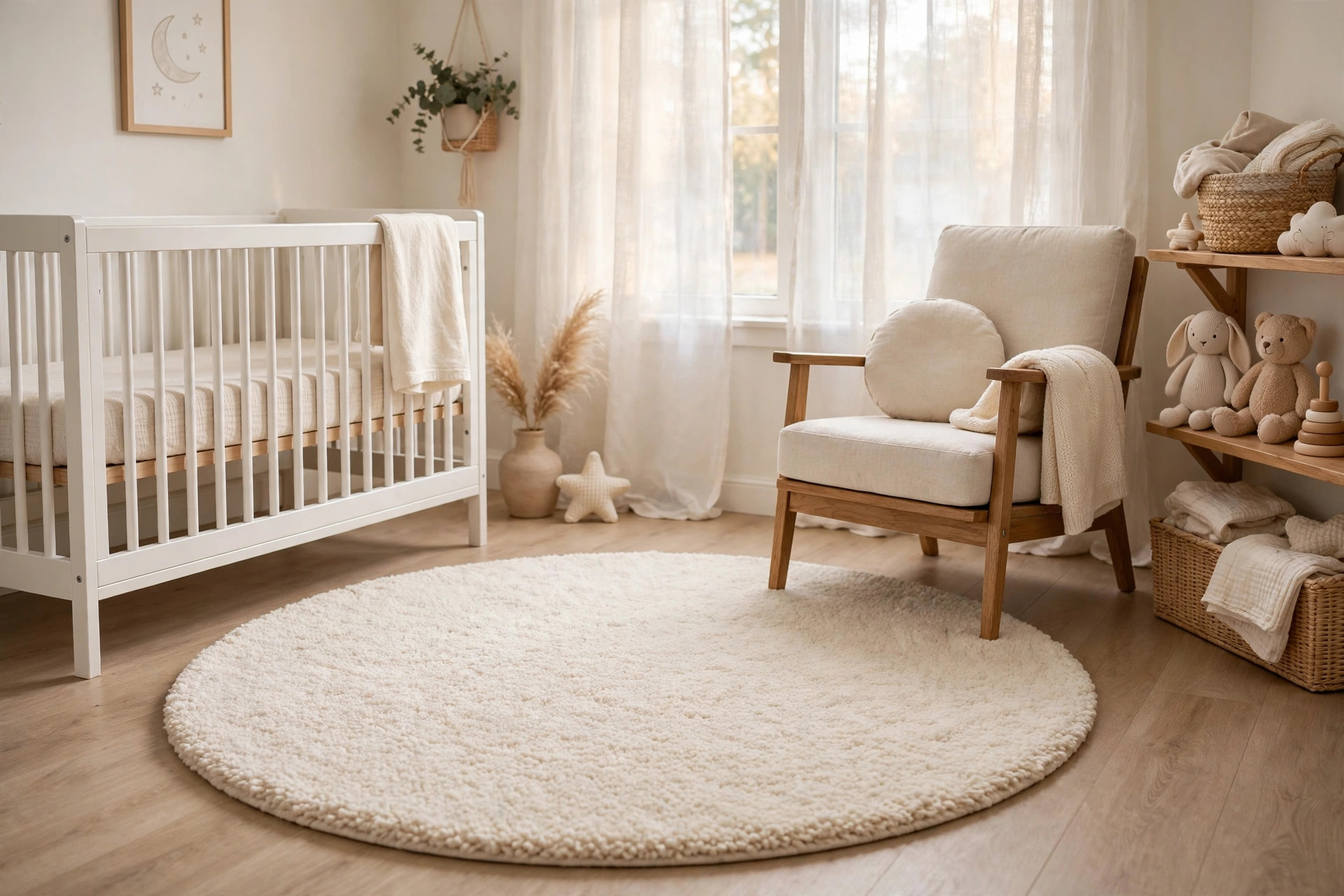
For most nurseries, a rug that measures five feet by seven feet works well. It covers the main play area and leaves a border of bare floor around it. Round rugs are also popular. A six foot round rug makes a clear play circle in the center of the room. Place the rug where the baby spends time, not where the crib stands. The area in front of the glider chair and near the toy shelf are the spots that matter most. If you use a nursery night light with dimmer for feeding, keep the rug clear of its cord and base so nothing can be pulled down.
Types of Nursery Rugs
Shoppers will find several types of rugs sold for nurseries. Each type has strengths and weak points.
Plush pile rugs. These are the softest to the touch. Thick fibers make them warm and comfortable. They cost more than flat rugs and they trap more dust. They need regular vacuuming.
Low pile flatweave rugs. These rugs have short, tight fibers. They are easy to clean and they do not tangle small fingers. They feel less soft than plush rugs, so many parents pair them with a thick pad.
Washable nursery rugs. A washable nursery rug for babies is a smart pick for a room that will see spit up, diaper leaks, and spilled milk. These rugs are made to go through a home washing machine. They are often made of cotton or thin synthetic blends. They may feel thinner than other rugs, but the ease of washing makes up for it.
Foam play mats styled as rugs. Some products look like rugs but are made of foam tiles or fold out mats. They give the most cushion of any option. They wipe clean with a damp cloth. The printed designs can fade over time, and cheap foam can tear under heavy use.
Round and shaped rugs. Round rugs, animal shaped rugs, and rugs printed with roads or letters add fun to the room. They work best as a second rug on top of a larger plain one. A single large rug does the real work of cushioning the floor.
When you plan the full room, remember that the rug should match the rest of the furniture in tone. A calm rug color pairs well with a rocking chair for a small nursery and soft bedding such as a nursery bedding set for a baby girl. Simple patterns hide stains better than solid light colors.
Cost and Price
Prices for nursery rugs vary widely. A small washable cotton rug may cost between thirty and eighty dollars. A medium size synthetic plush rug often runs between eighty and two hundred dollars. A large wool rug of good quality can cost three hundred dollars or more. Handmade rugs cost the most.
The rug pad is a separate cost in most cases. A good non slip pad for a five by seven rug costs between twenty and sixty dollars. Do not skip the pad to save money. The pad adds the cushion that makes the rug work for a crawling baby, and it keeps the rug from sliding.
Watch for sales at large home stores. Retailers such as IKEA and Wayfair often cut rug prices during spring and fall home events. Stores that focus on children, like Pottery Barn Kids, sell nursery rugs in set sizes and colors that match their crib bedding lines. Buying during a sale can cut the price by a third or more.
Care and Upkeep
A nursery rug takes more wear than a rug in any other room. Babies drool, spit up, and track in dirt from their hands. A simple care routine keeps the rug fresh.
Vacuum the rug two or three times a week. Use a vacuum with a gentle setting so the fibers are not pulled loose. For plush rugs, vacuum in more than one direction to lift the pile.
Treat spills at once. Blot, do not rub. Rubbing pushes the stain deeper into the fibers. A mix of mild soap and warm water handles most baby messes. Test any cleaner on a hidden corner first.
Washable rugs should go through the machine as often as the label allows. Most makers suggest cold water and a gentle cycle. Air dry when you can. Heat from a dryer can shrink cotton rugs and melt synthetic backings.
Once a year, take the rug outside on a dry day. Shake it out and let it air in the sun for a few hours. Sunlight freshens fibers and kills mild odors. Check the rug pad at the same time. Pads wear out faster than rugs. A pad that has gone flat or started to crumble should be replaced.
Practical cleaning advice for family homes is easy to find. The Spruce keeps updated guides on rug care, and What to Expect covers nursery setup from a parent’s point of view.
Safety Notes
Safety comes before style in a nursery. Keep these points in mind when you shop for and place the rug.
First, make sure the rug lies flat. Edges that curl up are a trip hazard for a baby who is learning to walk and for tired parents carrying the baby at night. A rug pad helps the rug lie flat. Heavy furniture on two edges also holds it down.
Second, avoid rugs with long fringe or tassels on the edges. A crawling baby can wrap fingers or toes in fringe. If you love a rug with fringe, tuck it under the rug or trim it short.
Third, think about what is under the rug. Place the rug on a clean, dry floor. Do not layer a rug over a thick carpet if the stack feels unstable. The baby needs a firm base under the soft top.
Fourth, keep the rug away from heat sources. Do not place it in front of a space heater or a floor vent that blows hot air. Check that floor vents under the rug are not blocked, since blocked vents can strain a heating system.
Fifth, choose low pile near the crib. The American Academy of Pediatrics notes that soft bedding and soft objects near a sleeping baby raise risk. The rug belongs in the play area, not bunched up against the crib. Guidance on safe sleep and safe nursery setup is published by HealthyChildren.org, which is run by the American Academy of Pediatrics, and by the AAP itself.
Frequently Asked Questions
What is the best nursery rug soft for crawling babies on a budget? A medium pile synthetic rug with a separate non slip pad is the best value for most families. It costs far less than wool, it resists stains, and the pad supplies the cushion the baby needs. Look for rugs labeled low VOC and wash the rug or air it out before first use.
What size rug should I buy for a small nursery? A four by six foot rug fits most small nurseries. It covers the play zone without crowding the room. If the room is very small, a five foot round rug marks a clear play circle and leaves corners open for storage. Measure the open floor space before you shop.
Are shag rugs safe for crawling babies? Shag rugs feel wonderful, but very long fibers can slow a new crawler and trap small fingers. If you choose a shag style, pick one with dense, short shag rather than long loose strands. Vacuum it often so dust does not build up deep in the pile.
Can I put a rug over carpet in the nursery? You can, but keep the stack stable. A thin flat rug over low pile carpet works fine and adds a soft top layer. Do not place a thick rug over thick carpet. The soft stack can shift under the baby and make pulling up to stand harder and less safe.
How often should I clean a nursery rug? Vacuum two or three times a week and treat spills the same day they happen. Washable rugs can go through the machine once a month or as needed. A deep clean once or twice a year keeps the rug fresh through the crawling stage and beyond.
When should I replace the nursery rug? Replace the rug when the pad goes flat, the backing cracks, or the fibers mat down and no longer spring back. Most nursery rugs last two to four years of daily baby use. A rug that still looks and feels good can move to a playroom or a sibling’s room.
A Final Word
The best nursery rug soft for crawling babies is not the most costly one on the shelf. It is the rug that fits your room, feels gentle under small knees, stays flat and still on the floor, and cleans up without a fight. Pick safe materials, add a good pad, keep the play zone clear, and the rug will serve your baby well from first scoots to first steps. For more ideas on soft floor options, browse the rug collections at Target and Ruggable, which both sell washable styles made for busy family homes.
References
American Academy of Pediatrics. (n.d.). HealthyChildren.org. https://www.healthychildren.org American Academy of Pediatrics. (n.d.). Child health resources. https://www.aap.org IKEA. (n.d.). Home furnishings. https://www.ikea.com Pottery Barn Kids. (n.d.). Kids furniture and decor. https://www.potterybarnkids.com Ruggable. (n.d.). Washable rugs. https://www.ruggable.com Target. (n.d.). Retail store. https://www.target.com The Spruce. (n.d.). Home and garden advice. https://www.thespruce.com U.S. Consumer Product Safety Commission. (n.d.). Product safety information. https://www.cpsc.gov Wayfair. (n.d.). Furniture and home goods. https://www.wayfair.com What to Expect. (n.d.). Pregnancy and parenting guidance. https://www.whattoexpect.com
Was this guide helpful?

About Jennifer Lee
The My Garden US editorial team writes practical, in-depth home and garden guides for American homeowners — tested advice, no fluff.
You May Also Like

Kids Nightstand Lamp for Bedtime Reading: How to Choose the Right One
April 27, 2026 0 views
A Nursery Rocking Horse for Toddler Playroom: A Simple Buying Guide
February 7, 2026 0 views
Nursery Night Light With Dimmer for Feeding: A Simple Guide
February 13, 2026 0 views