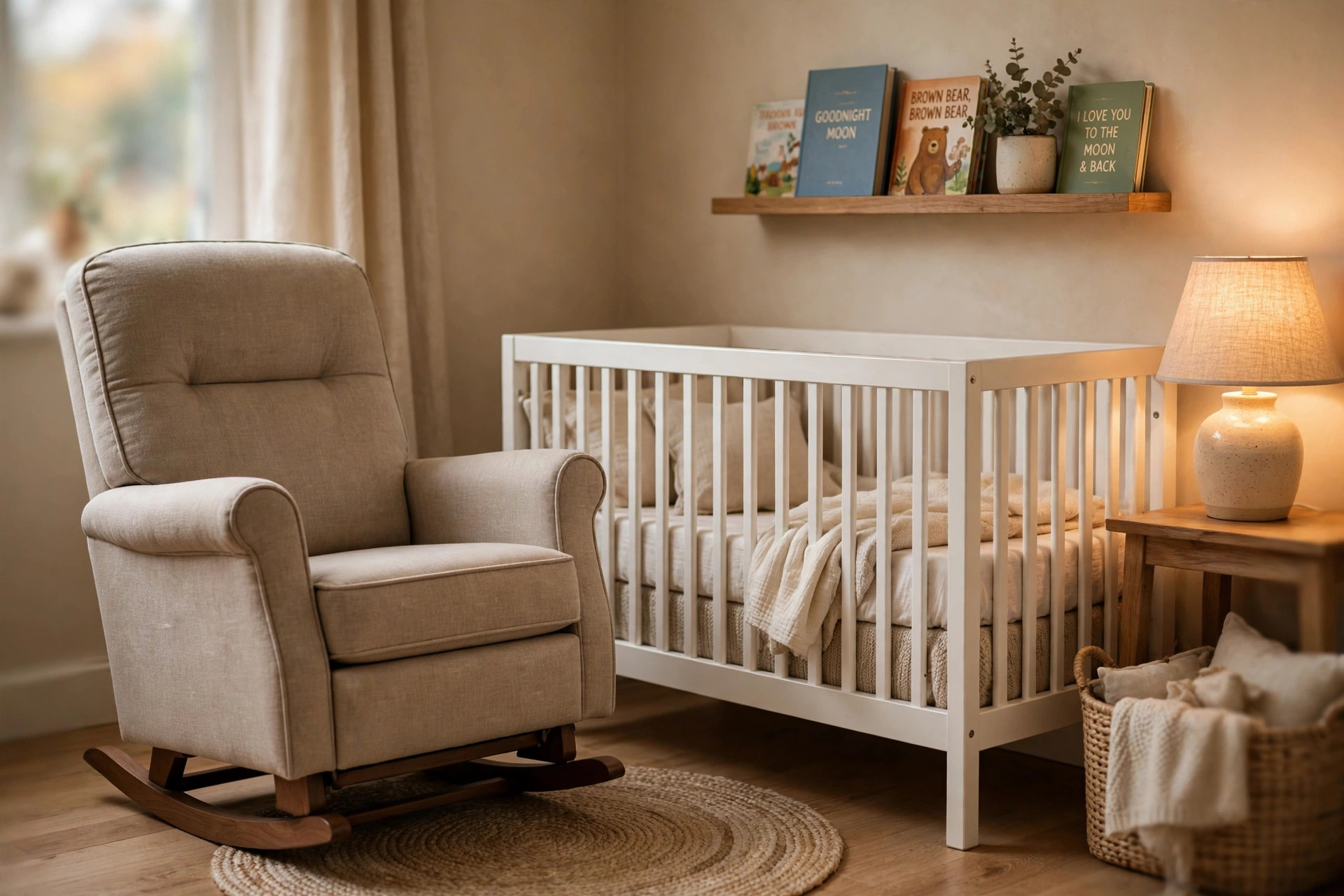

A small nursery does not mean you must give up comfort. Many American parents set up the baby’s room in a spare bedroom, a converted office, or the corner of their own bedroom. The room may measure only ten feet by ten feet. Yet there is still room for a chair. The best rocking chair for nursery small spaces is made for exactly this kind of room. It has a narrow frame. It needs only a few inches of clearance behind it. It still gives you a soft seat for night feeds, long cuddles, and quiet stories.
A rocking chair is often the heart of the nursery. It is where you sit at three in the morning when the baby will not sleep. It is where you rock a fussy infant back to calm. In a small room, every inch counts, so the chair you choose must earn its place. This guide explains what to look for, the main types of chairs, what they cost, how to keep them clean, and how to use them safely.
Why a Rocking Chair Matters
Newborns need to be held often. Feeding takes time. A breastfed baby may nurse for twenty or thirty minutes, several times a night. A bottle-fed baby also needs a calm, steady place for feeds. Sitting on a hard chair or the edge of a bed gets old fast. A good rocking chair supports your back, your arms, and your neck. It lets you hold the baby at the right height. It makes those long hours kinder on your body.
The rocking motion itself does real work. Pediatric health sources, including Healthychildren.org, note that gentle rhythmic motion helps soothe infants and can support healthy sleep habits. The slow back-and-forth of a chair calms the baby’s nervous system. It can shorten the time it takes for a crying infant to settle. For the parent, the motion has a calming effect too. Many mothers and fathers say the chair became their favorite spot in the whole house.
In a small nursery, the chair also shapes the room. Place it in a corner near the crib, add a soft lamp, and you have a feeding nook. Pair it with a nursery night light with dimmer for feeding and you can tend to the baby without waking the whole household. When the baby outgrows the nursery, a well-chosen rocker can move to the living room and serve the family for years.
How to Choose the Right Chair for a Small Room: Best Rocking Chair for Nursery Small Spaces
Shopping for a nursery chair is easier when you know what to measure and what to test. The points below come from years of parent reviews and guidance from home and family outlets such as The Spruce and What to Expect.
Measure Your Space First
Before you fall in love with a chair, take a tape measure to the nursery. Measure the corner or wall where the chair will go. Note the door swing. Note the space beside the crib. A compact rocker is often about twenty-six to thirty inches wide. A glider with a separate ottoman can need a footprint of nearly four feet. If the room is tight, skip the ottoman or pick a chair with a built-in footrest.
Also check the clearance behind the chair. A traditional wooden rocker needs several inches of room for the runners to move. A glider moves on a fixed base and needs almost no rear clearance, which makes it a strong pick for small rooms. Retailers such as IKEA and Wayfair list full dimensions on their product pages, so you can compare before you buy.
Seat Comfort and Support
You will sit in this chair for hours each week. The seat should be wide enough for you and the baby, usually at least twenty-one inches across. The back should reach your shoulders. Armrests should sit at a height that keeps your elbows relaxed while you hold the baby. Lumbar support matters. Some chairs include a small pillow for the lower back. If not, a rolled towel works well.
Test the seat firmness if you can. A seat that is too soft makes it hard to stand up while holding a sleeping baby. A seat that is too hard gets uncomfortable after twenty minutes. A medium-firm seat with a washable cushion is the sweet spot for most parents.
Fabric and Cleaning
Babies spit up. Milk spills. Diaper leaks happen at the worst moments. Choose a fabric that cleans easily. Performance fabrics, microfiber, and tightly woven cotton blends wipe clean with a damp cloth. Removable, machine-washable covers are a bonus. Stores like Target and Walmart carry many affordable chairs with wipeable upholstery.
Frame Strength and Weight Capacity
Check the weight limit before you buy. Most nursery rockers support two hundred to three hundred pounds. That is enough for a parent plus a growing toddler. Solid wood frames last the longest. Metal glider mechanisms should move smoothly and quietly.
Noise Level
A silent glide is worth paying for. Rockers with wooden runners on a hard floor can thump or creak. Felt pads on the runners cut the noise. Gliders are usually quieter than traditional rockers because the mechanism is enclosed. If you shop in a store, rock the floor model and listen.
Types of Nursery Rocking Chairs
Four main types suit small nurseries. Each has strengths and trade-offs.
Traditional Wooden Rocker
The classic rocker has curved runners and a simple frame. It is often the narrowest option, which helps in tight rooms. Wooden rockers last for decades and can become family keepsakes. The downside is the rear clearance the runners need, and the seat can feel hard without a thick cushion. Many parents add a padded seat cushion and a back pillow.
Glider with Ottoman
A glider moves on a track instead of runners, so it needs almost no space behind it. The motion is smooth and quiet. Most gliders come with a matching ottoman for your feet. The pair takes up more floor space, so measure carefully. In very small rooms, some parents use the glider without the ottoman.
Swivel Glider Recliner
This type combines gliding, swiveling, and a reclining back. It is the most comfortable option for long night feeds. The trade-off is size. Recliners are wider and deeper than other types, and they need room to lean back. They work best in a corner where the back can extend without hitting the wall or crib.
Compact or Folding Rocker
Some makers now sell rockers built for apartments and small nurseries. These chairs have slim arms, narrow seats, and light frames. A few fold flat for storage. They are easy to move from room to room. The seat may feel smaller than a full-size glider, so larger parents should test one before buying.
Planning the Rest of a Small Nursery
A chair is only one piece of the room. In a small nursery, every piece should do double duty. A best convertible crib for small nursery room saves space because it grows with the child, from crib to toddler bed to daybed. You avoid buying three separate beds over the years. A nursery dresser changing table combo for small space puts the changing station on top of the dresser, so one piece of furniture does two jobs.
Keep the floor clear around the chair. A small round rug softens the area and marks the feeding corner. Wall shelves hold books and supplies without taking floor space. A wall-mounted lamp frees up the side table. Big-box retailers and online marketplaces, from Amazon to specialty shops like Pottery Barn Kids, sell compact nursery furniture lines made for these exact rooms. Read the room dimensions on each product page and sketch a simple floor plan before you order.
Cost and Price
Nursery rocking chairs span a wide price range. Knowing the tiers helps you set a budget.
Budget chairs cost about one hundred fifty to three hundred dollars. These are often simple wooden rockers or basic upholstered gliders. They do the job. The fabric may be thinner, and the mechanism may be noisier, but many parents are happy with them.
Mid-range chairs cost about three hundred to six hundred dollars. This is where most parents shop. You get better foam, smoother gliders, sturdier frames, and nicer fabrics. Many chairs in this range include lumbar pillows and solid wood bases.
Premium chairs cost six hundred to over one thousand dollars. These offer top-grade upholstery, whisper-quiet mechanisms, and elegant design. Some convert into regular armchairs for the living room later. If you plan to use the chair for several children, the extra cost can pay off.
Watch for sales. Nursery furniture often goes on sale during holiday weekends and baby registry events. Buying a floor model can save money too. Just check it for wear and test the mechanism before you pay.
Care and Upkeep
A little care keeps the chair safe and clean for years. Vacuum the upholstery once a month to remove dust and crumbs. Treat spills at once with a damp cloth and mild soap. Always test a cleaner on a hidden spot first. If the covers are removable, wash them per the label.
Check the hardware twice a year. Rockers and gliders have bolts that can loosen with daily use. Tighten them with a wrench. Look at wooden runners for cracks or splinters. Oil a squeaky glider track with a silicone spray made for furniture. Keep the chair out of direct sun, which fades fabric and dries out wood.
When the baby becomes a toddler, the chair gets new use. Toddlers love to climb. Make sure the chair cannot tip. Place it where a climbing child cannot reach windows, cords, or shelves.
Safety Tips
Safety comes first with any nursery furniture. The U.S. Consumer Product Safety Commission, at CPSC.gov, offers guidance on nursery safety that every parent should read. Apply these rules to your rocking chair.
Keep the chair away from windows. Blind cords and curtain cords are a strangulation risk, so the chair should sit at least three feet from any cord. Never place the chair where a child could climb from it onto a windowsill.
Watch for pinch points. Glider mechanisms have moving parts that can catch small fingers. Teach older siblings to keep their hands clear. Some gliders include covers over the mechanism. If yours does not, check that little hands cannot reach the moving parts.
Lock or steady the chair when toddlers play. A light rocker can tip if a toddler climbs on the arm. Choose a chair with a wide, stable base. Never leave a baby or toddler alone in or near the chair.
Check for recalls. Before you buy, new or used, search the CPSC recall list for the brand and model. If you accept a used chair from a friend, inspect it closely. Make sure all bolts are present, the frame is solid, and the fabric has no tears that could expose foam.
Keep small items off the chair. Pillows, blankets, and stuffed animals are fine for decor photos, but they do not belong in a chair where a young baby sleeps. Follow safe sleep guidance and move the baby to a bare crib for sleep.
Frequently Asked Questions
Do I really need a rocking chair in a small nursery?
You do not need one, but most parents find it worth the space. Feeding, soothing, and reading all happen in the chair. A compact glider takes up about as much room as a laundry basket. Many parents say it was their most-used baby item.
What is the difference between a rocker and a glider?
A rocker moves on curved runners and needs clearance behind it. A glider moves on a fixed track and stays in place, so it needs less room. Gliders are usually quieter. Rockers are often narrower and simpler. For very small rooms, a glider is usually the better fit.
How much should I spend on a nursery rocking chair?
Plan on three hundred to six hundred dollars for a good mid-range chair. Cheaper chairs work, but the mechanism may be noisy. Expensive chairs add comfort and style. Buy the best you can afford, since you will use it daily for at least a year or two.
Can I use a regular armchair instead?
You can, but you will miss the motion. The rocking or gliding movement is what soothes the baby. A regular armchair also tends to be wider and deeper than a nursery glider, so it may actually take up more space.
What size chair fits a ten-by-ten nursery?
Look for a chair no wider than thirty inches and no deeper than thirty-four inches. A glider with a slim profile works well. Leave at least two feet of walking space in front of the chair so you can stand up while holding the baby.
Is a used rocking chair safe?
A used chair can be safe if you inspect it well. Check the frame, tighten all bolts, and look up the model on the CPSC recall list. Replace worn cushions. Avoid chairs with peeling paint made before 1978, since old paint may contain lead.
A Final Word
The best rocking chair for nursery small spaces is the one that fits your room, your body, and your budget. Measure first. Test the glide. Pick a fabric that forgives spills. Keep safety rules in mind. A small nursery can still hold a warm, calm corner where you and your baby spend some of the sweetest hours of these early years. Choose well, and the chair will serve your family long after the nursery years are done.
References
Amazon. (n.d.). Online shopping. https://www.amazon.com American Academy of Pediatrics. (n.d.). HealthyChildren.org. https://www.healthychildren.org IKEA. (n.d.). Home furnishings. https://www.ikea.com Pottery Barn Kids. (n.d.). Kids furniture and decor. https://www.potterybarnkids.com Target. (n.d.). Retail store. https://www.target.com The Spruce. (n.d.). Home and garden advice. https://www.thespruce.com U.S. Consumer Product Safety Commission. (n.d.). Product safety information. https://www.cpsc.gov Walmart. (n.d.). Everyday low prices. https://www.walmart.com Wayfair. (n.d.). Furniture and home goods. https://www.wayfair.com What to Expect. (n.d.). Pregnancy and parenting guidance. https://www.whattoexpect.com
Was this guide helpful?

About Michael Thompson
The My Garden US editorial team writes practical, in-depth home and garden guides for American homeowners — tested advice, no fluff.
You May Also Like
Kids Toy Chest with Safety Hinge Lid: A Parent’s Buying Guide
April 21, 2026 0 views
Toddler Step Up Stool for Sink Reaching: A Parent’s Guide
May 29, 2026 0 views
Nursery Hamper With Lid for Odor Control: What Parents Need to Know
June 16, 2026 0 views