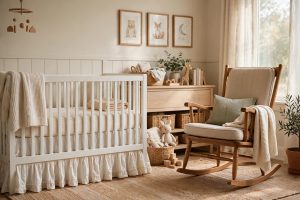

A nursery dresser changing table combo for small space solves a common problem for new parents. Most nurseries are not large. Many are spare bedrooms, corners of a master bedroom, or small rooms shared with an office. Space is tight. Yet a baby needs a safe place to be changed, plus storage for clothes, diapers, and blankets. A dresser with a changing top built in does both jobs in the space of one piece of furniture. It saves floor space. It saves money. And it grows with the child long after diaper days end.
This guide explains what this piece of furniture is, why it suits small rooms, what to look for when you shop, what it costs, and how to keep it safe and in good shape. If your nursery is short on square feet, the right combo dresser can make the whole room work.
Why This Piece Matters in a Small Nursery
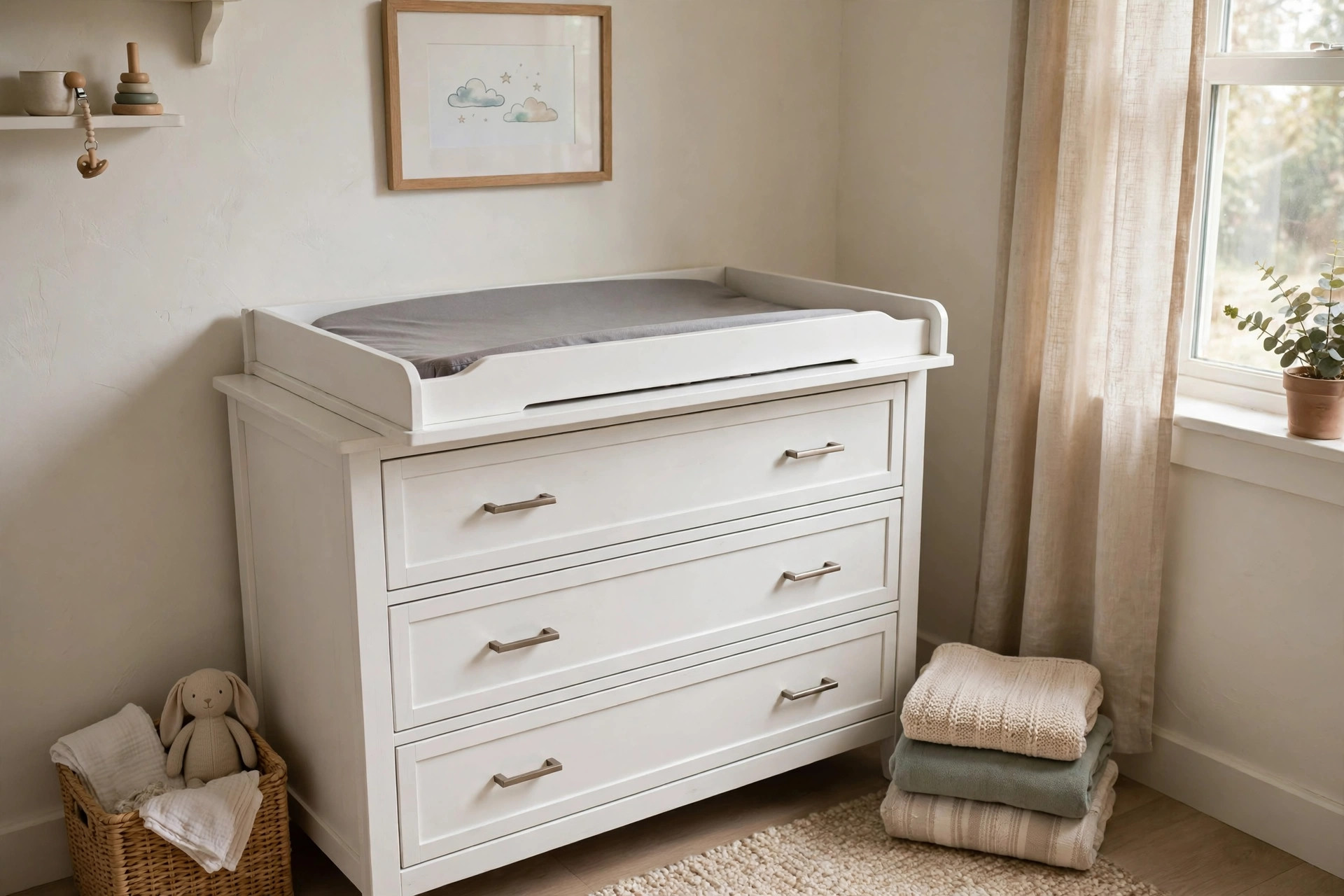
Every inch counts in a small nursery. A separate dresser and a separate changing table need two footprints on the floor. They also leave a gap between them that collects clutter. A nursery dresser changing table combo for small space folds both functions into one footprint, usually about the size of a standard dresser. The top tray holds a changing pad. The drawers below hold diapers, wipes, onesies, and burp cloths. Everything stays within arm’s reach during a change, which is safer and less stressful at three in the morning.
There is a second gain that many parents do not see at first. When the child outgrows diapers, the changing tray comes off. What is left is a plain dresser that serves the child for years. A good combo unit made of solid wood can follow a child from infancy to grade school. That long life makes it one of the most practical purchases in the whole nursery. Big retailers such as IKEA and Wayfair carry wide ranges of these combination units, and browsing their nursery sections gives a fair picture of the styles on the market.
A combo unit also keeps the room calm. Small rooms look messy fast when every wall holds a different piece of furniture. One well-chosen dresser with clean lines anchors the room and leaves space for a glider, a crib, and a rug. Parents who pair it with a compact glider often find the room feels twice as large.
What to Look For Before You Buy: Nursery Dresser Changing Table Combo for Small Space
Size and Fit
Measure the wall where the dresser will stand before you shop. A nursery dresser changing table combo for small space is usually 32 to 50 inches wide, 18 to 22 inches deep, and 36 to 44 inches tall at the changing surface. Height matters most. The changing surface should sit near your waist so you do not stoop. If both parents will use it, look for a height that suits the shorter parent, since tall parents can bend a little but short parents cannot reach up.
Depth matters too. The changing tray must be deep enough to hold a standard changing pad, which is about 16 by 32 inches. Check that the pad sits flat with no overhang. In a truly tiny room, a narrower unit of 32 to 36 inches wide can fit between a crib and a wall. Shoppers who want more pad options often read guides like the best nursery dresser changing pad combo at /best-nursery-dresser-changing-pad-combo/ to see which pads pair well with slim dressers.
Safety Rails and Sturdiness
The changing tray must have guardrails on all four sides, at least two inches high. These rails are the main line of defense against a roll or fall. Never change a baby on a flat dresser top with no rails. The Consumer Product Safety Commission publishes clear guidance on nursery furniture safety, and its recall pages are worth a look before any purchase.
Shake the unit in the store, or read reviews about wobble. A dresser used for changing must feel rock solid when you press on one corner. All drawers should have stops so a child cannot pull a drawer fully out onto themselves. Anti-tip straps or wall anchors are not optional. Every tall dresser should be anchored to the wall. Tip-over injuries are real and preventable, and the few minutes it takes to fit a strap are well spent.
Storage That Works
Count what you need to store. A newborn needs diapers in two sizes, wipes, diaper cream, several changes of clothes, blankets, and burp cloths. Three to six drawers is the usual range for a combo unit. Deep bottom drawers take folded blankets and bulk diaper packs. Shallow top drawers suit creams, thermometers, and nail clippers. Look for drawers that glide smoothly on metal slides and open fully. Soft-close slides are a gift during naps.
Some units add a small side shelf or a hutch top with cubbies. These are handy in a small room, but they add height and bulk. Decide whether the extra storage is worth the extra footprint. If the room also needs cleaner air for a sensitive baby, many parents research the best kids room air purifier for allergies at /best-kids-room-air-purifier-for-allergies/ to pair with their furniture choices.
Material and Finish
Solid wood costs more but lasts longer and takes refinishing well. Engineered wood and MDF cost less and look fine, but they chip more easily and cannot be sanded and repainted as many times. Whatever you choose, make sure the finish is non-toxic and low in volatile organic compounds. Painted white and soft gray are the most common finishes because they suit both boys’ and girls’ rooms and resell well. Water-based, lead-free paint is the standard to ask for. Pottery Barn Kids is known for Greenguard-certified nursery pieces if low-emission materials are a priority for your family.
Types and Options
Not all combo units are built the same. The most common type is the dresser with a removable changing tray that sits on top. The tray lifts off when diaper days end. This is the most flexible choice and the easiest to resell.
A second type bolts the tray to the dresser with screws or brackets. This is sturdier during the changing years but leaves screw holes when removed. Check whether the holes are plugged or hidden.
A third type is the hutch combo, with open shelves above the changing surface. It stores the most in the smallest footprint, but it can feel top-heavy, so wall anchoring is doubly important.
Some parents skip the tray entirely and place a contoured changing pad with safety straps directly on a sturdy dresser that has a back rail. This works if the dresser top is deep enough and has a raised back edge. It is not the safest choice for a wiggly baby, so most experts still favor a real tray with rails.
Style runs from simple Shaker fronts to mid-century tapered legs to ornate traditional carving. In a small room, simple fronts with small knobs look best. They catch less dust, wipe clean fast, and do not snag clothes. Families furnishing older siblings’ rooms at the same time sometimes browse pieces like a kids vanity table with stool for makeup at /kids-vanity-table-with-stool-for-makeup/ to keep the whole home’s style consistent.
Cost and Price
Prices for a nursery dresser changing table combo for small space run from about 150 dollars to over 1,000 dollars. The spread reflects material, brand, and finish.
Budget units, from 150 to 300 dollars, are usually MDF with a painted finish, three drawers, and a simple removable tray. They do the job for the diaper years. Mid-range units, from 300 to 600 dollars, often use pine or rubberwood, better drawer slides, and nicer hardware. This is where most parents find the best balance of price and life. Premium units, from 600 dollars up, use hardwoods like oak or maple, dovetail drawers, and low-emission finishes.
Watch for the changing pad in the price. Some bundles include a pad and a waterproof cover. Others sell the dresser alone, and a good pad adds 30 to 60 dollars. Also budget for a wall anchor kit if one is not included, usually under 15 dollars. Big-box stores such as Target and Walmart often price the budget end of the range, while specialty nursery shops hold the premium end. Buying during holiday sales can cut a mid-range unit to budget prices.
Do not forget the long view. A 450-dollar solid wood dresser that serves for ten years costs less per year than a 180-dollar MDF unit that must be replaced after three. What to Expect and The Spruce both run nursery buying guides that break down these trade-offs with current model picks.
Care and Upkeep
A nursery dresser takes hard daily use. Wipe the changing tray after every change with a damp cloth and a mild soap. Keep a waterproof pad cover on the changing pad and wash it often. Diaper cream, lotion, and milk leave marks that set if ignored.
Dust the dresser weekly and check the tray rails monthly. Tighten any screws that have worked loose. Wood expands and contracts with the seasons, so a twice-yearly check of all fasteners is good practice. If the finish chips, touch it up at once so moisture cannot reach the wood beneath. Keep the dresser out of direct sun if you can. Sun fades one side of the paint and dries out wood joints.
When the child is done with diapers, remove the tray, fill any screw holes with wood filler, sand lightly, and touch up the paint. The dresser then serves as ordinary bedroom storage. Store the tray in a dry place if you plan to use it for a second child. Label the hardware bag so you can find the screws years later.
Safety
Safety deserves its own section because a changing surface is high off the floor. Always keep one hand on the baby during a change. Never walk away, even for a second. Keep diapers, wipes, and cream within reach so you never step away mid-change.
Place the changing pad with its safety strap buckled and snug. The strap is a backup, not a substitute for your hand. Never let an older sibling lift or change the baby on the dresser. Anchor the dresser to the wall from the day it arrives, not someday later. The Consumer Product Safety Commission is blunt on this point, and pediatric guidance from HealthyChildren.org, the parent site of the American Academy of Pediatrics, says the same.
Check weight limits. Most trays are rated for babies up to 30 pounds, roughly the size of a large one-year-old. Once your child nears the limit or can climb, move changes to a floor mat or a low bed. A climbing toddler and a high dresser are a bad mix. Keep cords, blind strings, and small objects away from the changing area. A bored baby grabs whatever is near.
Frequently Asked Questions
What size dresser works best as a changing table in a small room? Look for a unit 32 to 44 inches wide and about 36 to 40 inches tall at the top surface. That height suits most adults, and that width fits a standard 16-by-32-inch changing pad with room to spare. Measure your wall first and leave a few inches of clearance on each side for cleaning.
Can I use any dresser as a changing table? Only if the top is the right height, the surface is flat and deep enough for a pad, and you add a proper changing tray with guardrails on all four sides. A bare dresser top with no rails is not safe for changing. A nursery dresser changing table combo for small space is built for this job, so it is the safer buy.
When should I take the changing tray off? Most parents remove it when the child is out of diapers or nears the tray’s weight limit, usually around 30 pounds. Many remove it earlier, once the toddler starts trying to climb onto it. After removal, the piece becomes a normal dresser.
Is a combo unit sturdy enough for a heavy toddler? A well-built combo unit holds a toddler fine up to its stated weight limit. Check the limit in the manual before you buy. Solid wood frames and bolted trays hold more than thin MDF with a loose tray. When in doubt, move changes to the floor.
How do I keep the drawers organized in a small nursery? Use drawer dividers or small bins. Give each drawer a job: top drawer for creams and small tools, middle drawers for diapers and wipes, bottom drawer for clothes and blankets. Restock weekly so you never run out mid-change.
Does the finish matter for a baby’s health? Yes. Choose low-VOC, lead-free, non-toxic finishes, and let a new dresser air out in a ventilated room for a few days before the baby uses it. Certifications like Greenguard Gold mark the strictest low-emission products.
A Final Word
A nursery dresser changing table combo for small space is one of the smartest buys a new parent can make. It turns one small footprint into two workstations, keeps every changing supply at hand, and stays useful for years after the tray comes off. Measure your room, insist on rails and wall anchoring, pick storage that fits your daily routine, and choose a finish that will age well. Do that, and the smallest nursery in the house can feel calm, safe, and fully equipped.
References
American Academy of Pediatrics. (n.d.). HealthyChildren.org. https://www.healthychildren.org IKEA. (n.d.). Home furnishings. https://www.ikea.com Pottery Barn Kids. (n.d.). Kids furniture and decor. https://www.potterybarnkids.com Target. (n.d.). Retail store. https://www.target.com The Spruce. (n.d.). Home and garden advice. https://www.thespruce.com U.S. Consumer Product Safety Commission. (n.d.). Product safety information. https://www.cpsc.gov Walmart. (n.d.). Everyday low prices. https://www.walmart.com Wayfair. (n.d.). Furniture and home goods. https://www.wayfair.com What to Expect. (n.d.). Pregnancy and parenting guidance. https://www.whattoexpect.com
Was this guide helpful?

About Lisa Anderson
The My Garden US editorial team writes practical, in-depth home and garden guides for American homeowners — tested advice, no fluff.
You May Also Like
Kids Dresser Knobs Replacement for Fun Decor: A Complete Guide
August 13, 2026 0 views
Nursery Wall Frame Gallery for Baby Photos
February 13, 2026 0 views
Toddler Bed Frame with Headboard for Style: A Buyer’s Guide
August 21, 2026 0 views