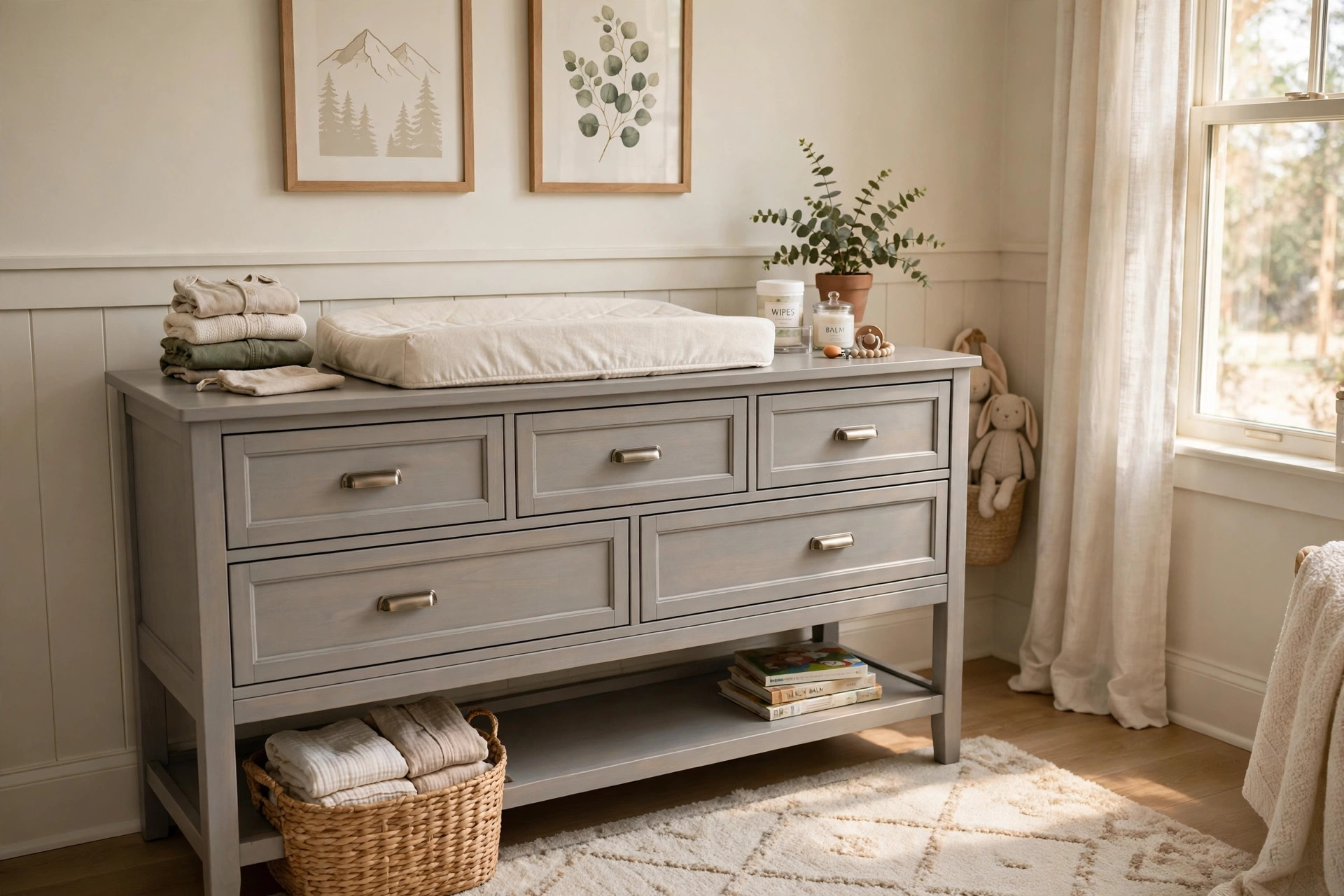

When you bring a baby home, you change diapers many times a day. New parents often change ten or more diapers in twenty-four hours. You need a safe, flat surface for this job. You also need a place to store diapers, wipes, creams, and clothes. The best nursery dresser changing pad combo gives you both in one piece of furniture. It is a dresser with drawers below and a padded changing surface on top. This guide explains what to look for, which types exist, what they cost, how to care for one, and how to keep it safe.
Why It Matters
A separate changing table takes up floor space. In a small nursery, every inch counts. A combo unit removes that problem. You get the storage of a dresser and the work surface of a changing table in the same footprint. That is the main reason so many parents search for the best nursery dresser changing pad combo before the baby arrives.
There is also a time reason. When the baby cries in the middle of the night, you do not want to walk across the room for a wipe. With a combo, the drawers sit right under the pad. You can reach a diaper, a wipe, and a clean shirt with one hand while the other hand stays on the baby. That keeps things calm and fast.
Money matters too. Buying one piece costs less than buying a dresser plus a separate changing table. You also save the cost of a second delivery or a second assembly. And when diaper days end, you remove the pad and keep the dresser. The furniture lasts for years as normal bedroom storage. For parents setting up a nursery dresser changing table combo for small space, this two-in-one design is often the only choice that fits.
What to Look For: Best Nursery Dresser Changing Pad Combo
Not all combos are equal. Check the following points before you buy.
Sturdy Build
The dresser must be solid. It will carry the weight of drawers full of clothes plus a baby who grows heavier each month. Look for hardwood or high-grade engineered wood. Press the sides and the back panel. They should not bend. The top should feel thick and flat. A wobbly unit is a bad unit. Read weight ratings when the maker gives them.
A Secure Pad Surface
The changing pad should have raised sides, often called contoured sides. These keep the baby from rolling sideways. Many pads have a safety strap. Use it every time. The pad should also fit the dresser top with no overhang. If the pad hangs past the edge, it can tip. Some dressers come with a matching topper tray that frames the pad. That is a good design. Retailers such as IKEA and Wayfair list the exact top dimensions, so you can match pad to dresser.
Drawer Quality
You will open these drawers a thousand times. Cheap drawer slides jam or pull out. Look for smooth glides, metal slides, and a stop that keeps the drawer from falling out. Deep bottom drawers hold bulk diapers. Shallow top drawers hold creams, nail clippers, and small items. A kids dresser with changing top for nursery works best when the drawers are divided well.
Safe Materials
Babies touch and mouth everything. Choose low-VOC or water-based finishes. Greenguard Gold certification is a trusted mark for low chemical emissions. Solid pine, birch, or rubberwood are common safe woods. Avoid sharp corners and rough edges. If you buy secondhand, check the paint for lead, since old paint can contain it.
Right Height
The top of the pad should sit near your waist or just below. You should not bend far or reach up. Standard combo tops run about 36 to 40 inches high once the pad is added. If you are very tall or short, measure before you buy. Comfort matters when you bend over the pad a dozen times a day.
Types and Options
Shops sell several styles. Each has a purpose.
Standard Combo Dresser
This is the common type. A wide dresser with three to six drawers and a contoured changing pad on top. It suits most rooms. It holds plenty and looks like normal furniture after the baby years. Many guides at The Spruce show how these blend into nursery decor.
Changing Topper Dresser
Here the dresser comes with a removable tray or rail set that sits on top. The pad drops inside the rails. When the child grows, you lift the topper off and keep a plain dresser. This type is neat because the topper holds diaper bottles upright. Stores like Pottery Barn Kids carry several topper styles.
Tall Narrow Combo
A tall chest with a small changing pad on top. It fits tight corners and narrow rooms. The trade-off is a smaller work surface. Make sure the pad still leaves room for a wipe case beside the baby. This style suits city apartments and shared rooms.
Convertible Crib-Mate Sets
Some brands sell the dresser as part of a nursery set with a matching crib. The look is uniform. The price per set is often lower than buying pieces alone. If you want the room to match, this is worth a look. Check big-box stores such as Target and Walmart for bundle pricing.
Budget Flat-Pack Units
Low-cost combos from flat-pack makers keep the price down. They can work well if you follow the build steps exactly and anchor them to the wall. Do not skip the wall anchor. Tall units can tip when a drawer is pulled out. More on that in the safety section below.
Cost and Price
Prices vary with wood type, brand, and features. Here is a fair picture of the United States market.
Entry-level combos cost about 150 to 250 dollars. These are usually engineered wood with simple slides. They do the job in a tight budget. Mid-range units run 250 to 450 dollars. You get better wood, softer drawer glides, and nicer finishes. This is the sweet spot for most families. High-end combos run 450 to 800 dollars or more. These use solid hardwood, dovetail drawers, and premium hardware. They often come from specialty nursery brands.
Remember the pad itself. Some combos include it. Many do not. A good contoured changing pad costs 25 to 60 dollars extra. A waterproof pad cover costs 10 to 20 dollars. Buy at least two covers so one can be in the wash. Sales at holidays and baby events can cut prices by a fifth or more. If you plan storage for a growing child, a best kids bed with storage drawers underneath may be your next buy, and bundling room furniture can save money.
Shipping is another cost. Flat-pack units ship cheap. Solid wood pieces may need freight delivery. Always check the delivery fee before you click buy.
Care and Upkeep
A combo lasts longer with simple care.
Wipe the top and pad area daily with a damp cloth. Diaper cream and lotion leave residue. Clean it before it builds up. Wash pad covers in warm water and dry on low heat. Keep a spare cover ready. Once a month, pull the drawers out and vacuum the tracks. Dust and lint slow the slides. Tighten the screws and bolts twice a year. Wood loosens with daily use. A quick check keeps the unit solid.
If the finish gets a scratch, touch it up with a matching furniture pen. Keep the dresser out of direct sun when you can. Strong sun fades stain and dries wood. For deep cleaning tips on nursery fabrics and wood, sites like What to Expect publish parent-tested routines.
When the child outgrows diapers, remove the pad and topper. Fill the top drawer with underwear and pajamas. The dresser now serves a toddler. Many families use the same piece into the teen years. That long life makes the combo one of the best values in nursery furniture.
Safety
Safety is the most serious part of this guide. Follow these rules without exception.
Always keep one hand on the baby. Never step away from the pad, even for a second. Babies roll without warning. Keep diapers and wipes within arm’s reach so you never need to turn away.
Anchor the dresser to the wall. Tip-over accidents injure children every year. Use the anti-tip kit that comes in the box. If your walls are plaster or brick, buy the right anchors. The U.S. Consumer Product Safety Commission gives clear guidance on anchoring dressers and chests. This step takes ten minutes. Do not skip it.
Use the safety strap. Buckle it snugly each time. It is not a substitute for your hand, but it adds a layer of protection.
Check the pad fit. The pad must not slide. Many pads have a grippy base or screw-down straps. If the pad shifts, replace it or fix it before the next change.
Mind weight limits. Most pads support babies up to 30 pounds. The dresser top has its own limit. Do not let an older child climb on the dresser. Teach toddlers that the dresser is not a ladder.
Keep hazards out of reach. Store diaper creams, powders, and medicines in a high drawer or a locked box. Small items are choking hazards. Keep cords from monitors and lamps away from the pad edge.
Health experts at HealthyChildren, a site run by the American Academy of Pediatrics, stress the same habits: constant contact, a firm flat surface, and supplies in reach. Build these habits from day one and they become second nature.
FAQ
How long can I use a nursery dresser changing pad combo? Most families use the changing top for two to three years, until the child is out of diapers. The dresser itself lasts much longer. Remove the pad and it becomes a normal dresser for a child’s room.
What size changing pad fits a standard dresser? Common pads measure about 32 by 16 inches. Measure your dresser top before you order. The pad should sit fully on the top with no overhang on any side.
Is a dresser combo better than a standalone changing table? For most homes, yes. It saves floor space, costs less than two pieces, and the dresser stays useful for years. A standalone table makes sense only if you already own a dresser you love and just need a changing surface.
Should the changing pad have a strap? Yes. A strap adds safety. Still, keep one hand on the baby at all times. The strap helps but does not replace you.
Can I use any dresser as a changing surface? You can, if it is sturdy, the right height, and the top is flat and wide enough for the pad. Add a topper with rails if the dresser was not made for this. Always anchor it to the wall.
How do I stop the drawers from pinching little fingers? Choose soft-close glides if you can. Teach toddlers not to play with drawers. Some parents add small drawer locks once the child starts to walk and explore.
A Short Final Word
The best nursery dresser changing pad combo is not the most costly one. It is the one that fits your room, holds your supplies, stands rock solid, and keeps the baby safe. Measure your space. Check the build. Anchor it to the wall. Keep one hand on the baby. Do these simple things and this single piece of furniture will serve your family well, from the first diaper to the teen years.
References
American Academy of Pediatrics. (n.d.). HealthyChildren.org. https://www.healthychildren.org IKEA. (n.d.). Home furnishings. https://www.ikea.com Pottery Barn Kids. (n.d.). Kids furniture and decor. https://www.potterybarnkids.com Target. (n.d.). Retail store. https://www.target.com The Spruce. (n.d.). Home and garden advice. https://www.thespruce.com U.S. Consumer Product Safety Commission. (n.d.). Product safety information. https://www.cpsc.gov Walmart. (n.d.). Everyday low prices. https://www.walmart.com Wayfair. (n.d.). Furniture and home goods. https://www.wayfair.com What to Expect. (n.d.). Pregnancy and parenting guidance. https://www.whattoexpect.com
Was this guide helpful?

About Lisa Anderson
The My Garden US editorial team writes practical, in-depth home and garden guides for American homeowners — tested advice, no fluff.
You May Also Like
The Best Kids Bed with Slide for a Playroom Bedroom
April 14, 2026 0 views
Kids Toy Organizer with Labeled Bins: A Practical Guide for Tidy Playrooms
September 6, 2026 0 views
Nursery Wall Art Set for Baby Boy Room: A Simple Buying Guide
August 26, 2026 0 views