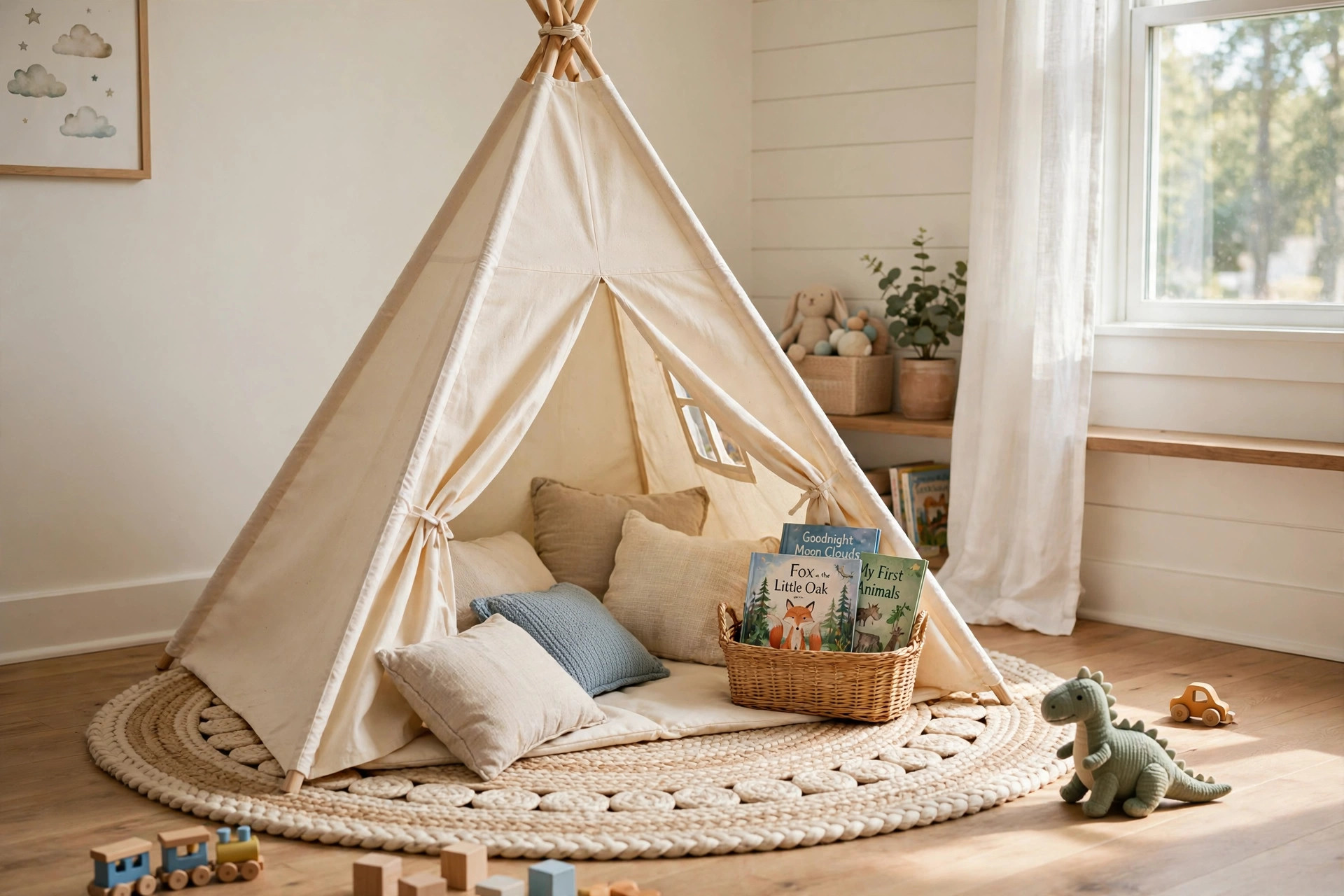

A kids teepee tent for indoor playroom decor does two jobs at once. It gives your child a small private world to play in, and it gives the room a warm, finished look. The tent becomes a reading spot, a puppet theater, a quiet corner for rest. Then it turns out the tent looks good too. A soft canvas teepee in the corner can pull a whole playroom together the way a lamp or a rug does. If you have never shopped for one, the choices can feel confusing. Sizes, fabrics, poles, price points, safety rules. This guide walks through all of it in plain terms so you can pick the right tent with confidence.
Why a Teepee Tent Matters in a Playroom
Children need small spaces. A playroom can feel large and open to a four-year-old, and a teepee tent gives that child a den. Inside, the world shrinks to a size that feels right. A teepee answers that need without any building required. It is a blanket fort that never falls down.
The play value is broad. One day the tent is a castle. The next day it is a camp in the woods. Children read in tents, nap in tents, and host stuffed animals in tents. Many parents report that the teepee becomes the spot where a child calms down after a long day. That alone makes it worth the price.
From a decor point of view, a kids teepee tent for indoor playroom decor is one of the easiest wins in a room. Most tents come in soft neutral fabrics like cream, gray, or natural canvas. They suit almost any color scheme. The triangle shape adds visual interest to a room full of squares and rectangles. Place it in an empty corner, add a round rug and two or three pillows, and you have a styled reading nook with very little effort. Design guides at sites like The Spruce often list tents and canopies among the simplest ways to give a child room character.
What to Look for When You Choose: Kids Teepee Tent for Indoor Playroom Decor
Start with size. Measure your floor space before you shop. Most indoor teepees are four, five, or six feet tall. A five-foot tent fits most playrooms and suits children from age two to age eight. Check the base width as well. A tent that is fifty inches wide at the bottom needs a clear circle of floor about that size, plus a little extra so the fabric does not press against furniture. If the room is small, a slimmer model or a pop-up style may fit better.
Look at the fabric next. Cotton canvas is the classic choice. It is soft, it breathes, and it looks warm and natural. Polyester blends cost less and resist stains, but they can feel slick and thin. If you plan to wash the tent often, read the care label first. Some canvas covers come off the poles and go in the washing machine. Others must be spot cleaned only. For a house with toddlers, machine washable is a real advantage.
The poles matter more than most buyers expect. Pine or other natural wood poles look the best and stand steady. Plastic or thin metal poles can wobble when a child leans on the tent. Check how the poles join at the top. A sturdy tie or wooden joint holds the frame together. Some tents also have a base rod that runs along the bottom edge. That rod adds stability and keeps the shape crisp.
Ventilation is easy to forget. A closed tent can get warm, so look for a window cutout or a door flap that ties back. Air flow and daylight keep the inside comfortable for longer play and reading sessions.
Finally, check the finish. Inside seams should be bound or hemmed so threads do not pull loose. Grommets where poles pass through should be metal, not plastic. A drawstring bag for storage is a nice extra. These small details separate a tent that lasts two years from one that tears in two months.
Types and Styles of Kids Teepee Tents
The classic five-pole teepee is the most common. Five wooden poles cross at the top and fan out at the base. A canvas cover slips over the frame. This style is stable, roomy, and looks the part. It takes five to ten minutes to set up the first time.
Four-pole models are a little narrower and lighter. They suit small rooms and younger children. Some come as all-in-one units where the fabric stays attached to the poles. You unfold them like an umbrella. Setup takes seconds. These are handy if you want to move the tent between rooms or take it to a grandparent house.
Decor styles vary widely. Plain natural canvas is the most flexible and matches farmhouse, coastal, boho, and modern rooms. Striped and printed tents suit themed rooms but limit choices when you redecorate. Removable lace and bunting trims dress a tent up for a party and come off for everyday play.
Size categories roughly follow age. Small tents around four feet tall suit toddlers. Medium tents near five feet suit ages three to eight. Large tents at six feet or more can fit two children and a pile of books. When in doubt, go one size up. Children grow, and siblings join in. A tent that feels roomy lasts longer than one a child outgrows in a year.
Cost and Price: What to Expect
Prices for a kids teepee tent for indoor playroom decor run from about twenty dollars to well over one hundred. The spread reflects fabric weight, pole quality, size, and brand.
Budget tents from twenty to forty dollars are usually polyester with light poles. They work fine as a starter tent for a toddler. Do not expect them to survive rough daily use by older children. Mid-range tents from forty to eighty dollars are the sweet spot for most families. You get cotton canvas, wood poles, and decent stitching. Many of the best-reviewed models sit in this band. Premium tents above eighty dollars offer heavier canvas, hardwood poles, window details, and extras like floor mats, string lights, or carrying bags.
Watch for what the price includes. Some listings show a low price for the tent shell only, with the poles or the mat sold apart. Read the listing fully. A complete set with poles, cover, and a padded mat is the best value. Shopping at large retailers like Target and Walmart makes price comparison easy, since you can see complete sets side by side. Specialty children stores such as Pottery Barn Kids and Land of Nod sell higher-end designs with matching decor pieces. Teepees often go on sale around holidays and back-to-school season, so waiting for a promotion can save real money.
Care and Upkeep
A teepee tent needs little care, but a small routine keeps it looking good. Shake out crumbs and small toys once a week. Vacuum the floor mat or rug inside with a hand vacuum. Wipe the poles with a damp cloth if they get dusty.
For the fabric cover, follow the label. Machine washable covers go in on a gentle cycle with cold water, and canvas can shrink in high heat, so keep the dryer setting low. Spot-clean-only covers need a soft cloth with mild soap and cool water. Do not rub hard, since rubbing pushes the stain deeper into the weave.
Sunlight fades fabric over time. If the tent sits near a sunny window, rotate it now and then so one side does not bleach. Keep the tent away from heating vents. Dry heat can make canvas brittle and can warp thin poles.
Storage is simple. Take the tent down, fold the cover loosely, and bundle the poles with a strap. Store the parts in a dry closet, since a damp basement or garage can lead to mildew on canvas. If the tent smells musty after storage, air it out in sunlight for a day before the children use it.
Check the tent every few months. Tighten any ties at the top. Look for loose threads or small tears and mend them early. A small stitch now prevents a big rip later. Replace cracked or splintered poles right away. Splinters and small hands do not mix.
Decor Ideas: Making the Teepee the Heart of the Room
The tent itself is only the start. A few simple additions turn it into the prettiest corner of the house. Start with the floor. A round braided rug or a soft shag rug under the tent marks the spot and gives children a warm place to sit. Layer a couple of floor cushions or a small bean bag inside. A kids bean bag chair for reading corner pairs well with a teepee for exactly this reason.
Light adds magic. A short string of warm white LED fairy lights draped inside the tent makes it glow in the evening. Battery packs keep cords out of the way. For daytime, the window cutout usually gives enough light for picture books.
Add a basket of books or a small shelf nearby so the tent works as a reading nook. A toddler table and chair set for playroom placed next to the tent gives children a place for drawing and crafts right beside their hideaway. The two pieces together define a play zone within a larger room.
Wall decor completes the scene. A few framed prints or kids bedroom wall decals removable for renters above and around the tent tie the corner into the rest of the room. Keep wall items light and out of reach so nothing can fall into the tent. Retailers like IKEA and Wayfair carry affordable cushions, rugs, and wall art that match well with canvas tents. Keep the styling simple. A tent buried under too many pillows and toys loses its charm and its play space. Three cushions, a rug, lights, and a book basket are plenty. Leave room inside for the child.
Safety: Read This Before You Buy
A teepee tent is safe when you buy right and set it up with care. Start with official guidance. The U.S. Consumer Product Safety Commission publishes general rules for nursery and play products. The same principles apply here: stable construction, no small parts that can break off, and fabrics that meet flammability standards for children products.
Anchor the tent. Place it on a flat floor, away from stairs, sharp furniture corners, and fireplaces. Keep it clear of windows with cords. A tent should never block a doorway or an exit path. If the tent tips, it should fall onto soft flooring, not onto a table edge.
Mind the poles. Wooden poles should be sanded smooth with no splinters. Ties and cords at the top should be short, since long cords are a strangulation risk for small children, and pediatric guidance from HealthyChildren.org stresses keeping cords and strings away from play areas.
Check age guidance. Most manufacturers rate teepees for ages three and up. Toddlers can use them with direct supervision. Never leave a baby or a sleeping infant alone in a tent. The enclosed fabric space is not a crib, and soft bedding inside raises suffocation risk. Parenting resources like What to Expect repeat this point for all soft play enclosures.
Fire safety counts. Keep the tent away from candles, space heaters, and fireplaces. If you add fairy lights, use cool LED lights only, and turn them off when playtime ends. Check the fabric label for a flammability notice. Most children products sold in the United States carry one.
Finally, inspect the tent on a schedule. Children climb, pull, and lean. A tent that was stable in January may wobble by June. Tighten ties, check poles, and retire the tent if the frame cracks or the fabric tears in a way you cannot mend safely.
Frequently Asked Questions
What age is a kids teepee tent best for? Most teepees suit children from age three to age eight. Toddlers can enjoy one with an adult nearby. Older children up to ten still use large tents as reading nooks. Check the maker age rating on the box before you buy.
Can a teepee tent stay up all the time? Yes. Most families leave the tent up as a permanent piece of playroom furniture. It becomes part of the room. If you need the floor space for a party or a visit, most models fold down in a few minutes.
Is canvas or polyester better for a kids tent? Canvas is the better fabric for most homes. It looks warmer, feels softer, and breathes. Polyester costs less and cleans with a wipe, which suits families who want a low-care option. Either works if the stitching and poles are sound.
How do I clean a teepee tent cover? Shake it out weekly and spot clean stains with mild soap and cool water. If the label allows machine washing, use a gentle cold cycle and dry on low heat. Air dry in sunlight when you can. It freshens the fabric and removes odors.
How much floor space does a teepee tent need? Plan on a clear circle about five feet wide for a medium tent. Measure the base width on the listing and add six inches on each side. Keep the area around the tent free of hard furniture edges.
Are teepee tents safe for toddlers? They are safe with supervision and proper setup. Keep cords short, place the tent on a flat floor away from hazards, and never leave a sleeping infant inside. Follow the maker age guidance and the safety rules above.
A Short Final Word
A kids teepee tent for indoor playroom decor earns its place. It gives a child a private world and gives a room a warm center. Buy for fabric, poles, and size first. Style comes free with almost any canvas tent. Set it up with safety in mind, add a rug and a few cushions, and let the children take it from there. The tent will pay for itself in quiet afternoons and happy games many times over.
References
American Academy of Pediatrics. (n.d.). HealthyChildren.org. https://www.healthychildren.org IKEA. (n.d.). Home furnishings. https://www.ikea.com Land of Nod. (n.d.). Kids furniture and decor. https://www.landofnod.com Pottery Barn Kids. (n.d.). Kids furniture and decor. https://www.potterybarnkids.com Target. (n.d.). Retail store. https://www.target.com The Spruce. (n.d.). Home and garden advice. https://www.thespruce.com U.S. Consumer Product Safety Commission. (n.d.). Product safety information. https://www.cpsc.gov Walmart. (n.d.). Everyday low prices. https://www.walmart.com Wayfair. (n.d.). Furniture and home goods. https://www.wayfair.com What to Expect. (n.d.). Pregnancy and parenting guidance. https://www.whattoexpect.com
Was this guide helpful?

About David Wilson
The My Garden US editorial team writes practical, in-depth home and garden guides for American homeowners — tested advice, no fluff.
You May Also Like

Best Nursery Storage for Small Apartment Living
January 18, 2026 0 views
Nursery Glider with Nursing Pillow Set: Comfort for New Parents
June 20, 2026 0 views
The Best Nursery Chair for Tall Parents Comfort: A Plain Guide for Long-Legged Mothers and Fathers
September 29, 2026 0 views