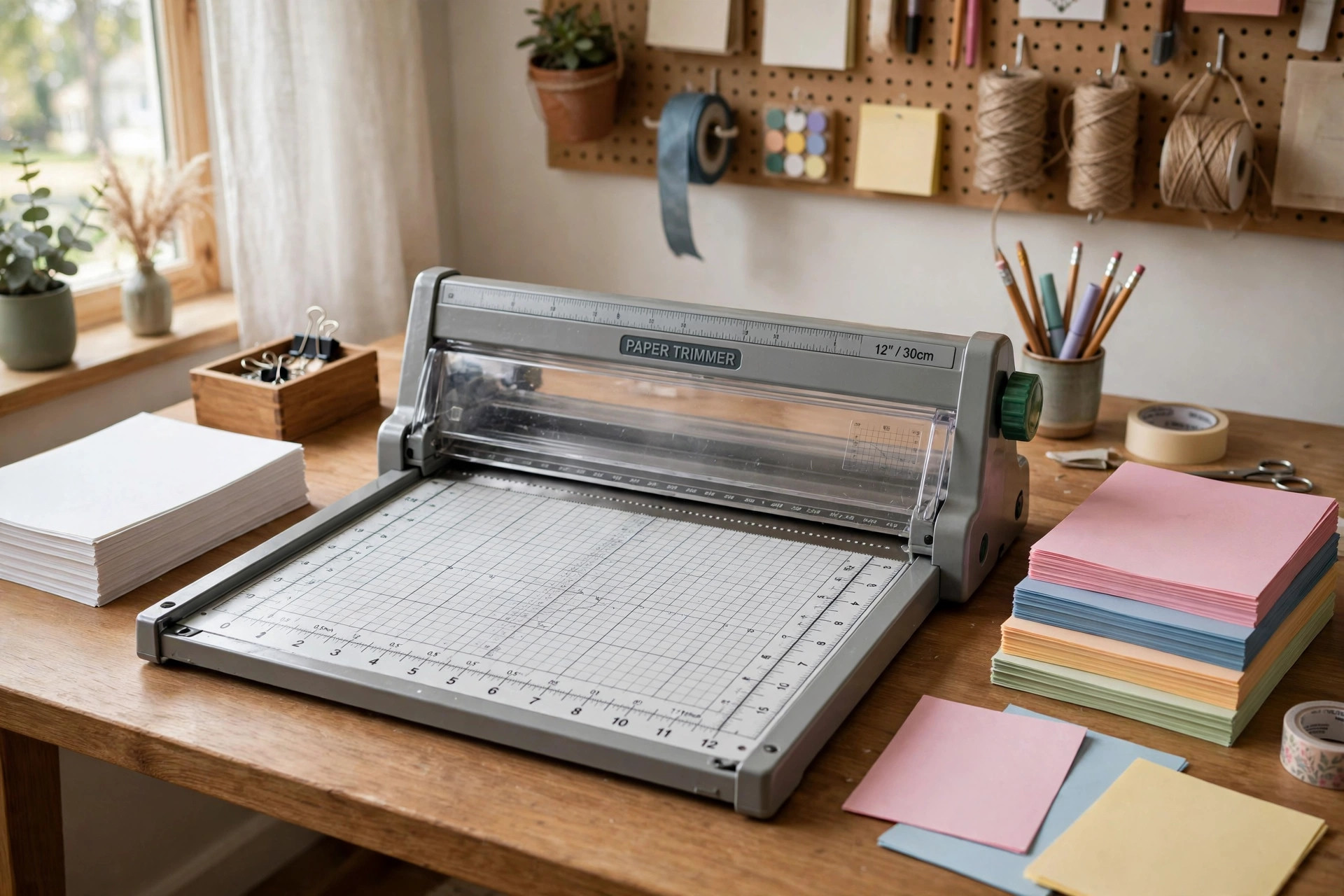

A clean edge is the quiet heart of a fine craft project. When you look for the best craft paper trimmer for precise cuts, you are looking for a tool that turns a ragged scrap into a sharp sheet in one smooth motion. Scissors can wobble. A knife can slip. A good trimmer does not guess. It holds the paper still, guides the blade straight, and leaves an edge that looks as if it came from a print shop.
The right trimmer saves time. It also saves paper, because you cut fewer sheets twice. Whether you make cards, scrapbooks, invitations, or school projects, a trimmer pays for itself in neat results. This guide explains what to look for, the main types, what they cost, how to care for one, and how to use it safely.
Why Precise Cuts Matter
A straight cut changes how a project feels in the hand. A photograph mounted on a square mat looks tidy and calm. A trimmer gives you that control because it measures and cuts in the same step. Precise cuts matter most when pieces must match. If you cut forty strips for a paper chain, small errors add up. One strip half a centimeter longer than the others shows at once. With a trimmer you line up the paper once, and every cut lands in the same place.
Clean cuts also protect your materials. Hand-cut edges often fray or tear the fibers. The blade of a trimmer shears the paper cleanly, so colored card stock keeps its sharp edge and the color stays even. For layered work, such as paper quilts or mini books, that crisp edge is what makes layers line up without gaps.
Many crafters pair a trimmer with a good cutting surface for the cleanest results, since a firm base under the paper keeps the sheet from sliding during the cut.
How to Choose a Paper Trimmer: Best Craft Paper Trimmer for Precise Cuts
Not every trimmer suits every desk. Think about the size of your projects, the thickness of your paper, and the space you have. The points below will guide you through the key features one by one.
Blade Type
The blade decides how the trimmer feels and what it can cut. A guillotine arm blade slices with one downward press and handles thick stacks well. A rotary blade runs in a small track and moves smoothly, which is kind to delicate papers that tear easily. A sliding blade sits in a rail and gives a very straight path, which is ideal for long cuts on posters and banners.
Sharpness is more important than brand. A dull blade crushes the paper instead of cutting it, and that leaves a white fuzzy line on dark stock. Look for trimmers that accept replacement blades or blade cartridges, since sharpness is more important than brand.
Base and Measuring Grid
The base is the bed where the paper lies. A firm, flat base keeps the sheet from bowing. Printed grids on the base should be easy to read, with marks in both inches and centimeters. The grid lines must be straight and evenly spaced. A base that is wide enough for your largest common sheet. A twelve inch base handles standard letter and A4 paper with room to spare. If you work with scrapbook paper, which is often twelve by twelve inches, choose a trimmer that can take the full square without folding.
Guides and Alignment
A paper guide, sometimes called a fence, is a raised edge that keeps the paper square to the blade. It should slide smoothly and lock in place. Test it if you can. A guide that drifts during the cut is worse than no guide at all.
Some trimmers add a swing-out arm for wider sheets. Others print diagonal lines for forty five degree cuts, which help when you cut miters for photo corners. These extras are worth the cost only if you will use them often.
Cutting Size and Capacity
Check the maximum cut length and the maximum sheet size separately. A trimmer may cut twelve inches but still not fit a twelve inch sheet if the rail blocks the base. Sheet capacity tells you how many pages the blade can cut at once. For home craft work, five to ten sheets at a time is plenty. Office style trimmers can cut many more, but they are heavy and harder to store.
Types of Craft Paper Trimmers
Crafters usually choose among four common designs. Each one has a home where it shines.
Guillotine trimmers. These have a long arm with a blade that comes down like a paper knife. They cut thick stacks fast and give a very clean edge on card stock. The open blade needs care, and most models include a latch to hold the arm down when not in use. A guillotine is a good pick for invitations and card makers who cut many pieces at once.
Rotary trimmers. A small round blade travels in a track across the paper. Rotary trimmers are safe because the blade stays inside the track, and they are gentle on thin papers that tear under a guillotine. Many scrapbookers prefer them for that reason. The trade off is that they cut fewer sheets at a time.
Sliding blade trimmers. These look like a rail over a base. You push a blade head along the rail, and the paper feeds under it. They are very accurate for long straight cuts, and the enclosed blade is safe. They suit crafters who work with large sheets and posters.
Laser guided trimmers. A thin beam of light shows the cut line before the blade moves. This helps when you need an exact trim on printed text or a photo border. The laser adds cost, and you still need a sharp blade for a clean result. Treat the laser as a helper, not as a substitute for skill.
For most home desks, a mid size rotary or sliding blade trimmer covers nearly all needs. If you cut heavy card stock often, a small guillotine may serve you better. Home improvement guides often stress choosing the tool to fit the job, and the same rule holds in the craft room — retailers like Michaels and JOANN stock all four types so you can compare them side by side.
Cost and Price
A basic trimmer for light paper costs little. Expect to pay about ten to twenty dollars for a small rotary trimmer that handles letter size sheets. These work well for school projects and simple cards.
Mid range trimmers run from twenty to fifty dollars. They have better grids, sturdier bases, and smoother guides. Most serious crafters land in this range. A forty dollar trimmer used twice a week will last for years, which makes the cost per project very low.
Heavy duty and large format trimmers can cost fifty to one hundred dollars or more. They cut wider sheets and thicker stacks, and they often include extension arms and better blade systems. Buy this level only if your projects truly need it. A large trimmer also takes up desk space, so measure your craft table before you order. Replacement blades are a running cost. A set of spare blades or cartridges usually costs five to fifteen dollars. Plan to replace the blade when cuts start to feather or the paper tears at the corner. Art supply retailers such as Dick Blick carry a wide range of replacement blades for common trimmer brands.
Remember that price alone does not set quality. A well made twenty five dollar trimmer with a sharp blade will beat a sixty dollar model with a dull one.
Care and Upkeep
A trimmer is a simple tool, and simple care keeps it accurate for a long time. Wipe the base clean after each session. Paper dust and small scraps gather in the blade track and can push the blade off its line. A soft dry cloth is enough.
Store the trimmer flat and dry. Do not lean it against a wall for months, because the base can warp. If your craft room has damp air, keep the trimmer away from windows so the metal parts do not rust.
Check the grid now and then. Hold a ruler against the printed lines and make sure they still match. If the markings wear off, you can mark your own with a fine pen, but a worn grid is a sign that the trimmer has given good service and may be due for replacement.
Change blades before they fail. A tired blade forces you to press harder, and hard pressure bends thin paper and dulls the cut. Keep a spare blade in the drawer so you never work with a blunt one. General project guidance from This Old House notes that sharp tools are safer tools, and that advice applies just as well to a craft trimmer.
Some crafters cut wood stain samples for small furniture projects on the same desk, so keep paper dust and stain rags far from the trimmer base — grit on the blade track can nick the blade and spoil future cuts.
Safety
Paper trimmers are safer than knives and scissors in many ways, but every blade deserves respect. Follow these plain rules and you will avoid the common injuries.
First, keep fingers away from the blade path. On a guillotine, hold the paper at the far edge, never near the arm. On a rotary or sliding trimmer, keep both hands on the outside of the track. Teach children this rule before they touch the tool.
Second, latch or cover the blade when the trimmer is idle. Guillotine arms should lock down. Rotary blades should rest at the end of the track. An open blade on a busy craft table is an accident waiting for a bumped elbow.
Third, cut only the materials the trimmer is rated for. Paper and card stock are safe. Fabric, foam, and plastic sheets can jam the blade or snap it. A jammed blade tempts the user to force it, and that is when slips happen.
Fourth, store the trimmer out of reach of small children. Even a small rotary blade can cut a finger if a child runs it across the track. Safety agencies like the U.S. Consumer Product Safety Commission — referenced by craft guides at HGTV — remind parents that craft tools are real tools, not toys.
Finally, work in good light. A bright lamp over the desk lets you see the grid lines clearly and keeps your hands where they should be.
Frequently Asked Questions
What is the best craft paper trimmer for precise cuts for a beginner? A mid size rotary trimmer is the best start. The blade runs inside a track, so it is safe, and it cuts thin paper cleanly. Choose one with a clear inch grid and a locking paper guide. You can move up to a guillotine later if you cut thick stacks.
Can a paper trimmer cut card stock? Yes, most craft trimmers cut card stock. Check the rated sheet capacity for your paper weight. Thick card stock, above about one hundred pound cover weight, may need two passes or a guillotine model. A fresh blade matters more than raw force.
How often should I replace the blade? Replace the blade when cuts begin to feather at the edge or the corner tears. For a crafter who trims paper weekly, a blade often lasts three to six months. Keep a spare on hand so you never work with a dull edge. Craft retailers like Fiskars and the JOANN supply pages list compatible blades by model number.
Guillotine or rotary — which gives the straighter cut? Both can cut perfectly straight. The guillotine is faster for thick stacks, while the rotary is gentler on thin paper and safer for shared craft tables. Straightness comes from a flat base, a true grid, and a sharp blade, not from the design alone.
Can I cut photographs with a paper trimmer? Yes. A trimmer is one of the best tools for photo edges because it shears cleanly without tearing the emulsion. Use a rotary trimmer for delicate prints, and make sure the blade is fresh so the photo edge does not feather.
What size trimmer do I need for scrapbooking? Choose a trimmer that fits a twelve by twelve inch sheet, the standard scrapbook size. Many models advertise a twelve inch cut but only fit the sheet when you feed it at an angle. Check the maximum sheet size in the specifications. Families who craft together for gifts or easy projects with kids often like a twelve inch rotary trimmer because it is safe enough for teens to use with guidance.
A Final Word
The best craft paper trimmer for precise cuts is the one that fits your paper, your projects, and your desk. Start with the size you cut most often, insist on a flat base and a true grid, and keep the blade sharp. Do that and your edges will come out clean, straight, and true every time. The tool is simple, the habit is simple, and the results will show in every card, page, and project you make. Home craft writers at The Spruce, Apartment Therapy, and Country Living all return to the same plain advice: match the tool to the task, keep it sharp, and let the guide do the work.
References
Apartment Therapy. (n.d.). Home design ideas and inspiration. https://www.apartmenttherapy.com Blick Art Materials. (n.d.). Art and craft supplies. https://www.dickblick.com Country Living. (n.d.). Country home and lifestyle. https://www.countryliving.com Fiskars. (n.d.). Garden and cutting tools. https://www.fiskars.com HGTV. (n.d.). Home and garden ideas. https://www.hgtv.com JOANN. (n.d.). Fabric and craft supplies. https://www.joann.com Michaels. (n.d.). Arts and crafts supplies. https://www.michaels.com The Spruce. (n.d.). Home and garden advice. https://www.thespruce.com This Old House. (n.d.). Home renovation guidance. https://www.thisoldhouse.com U.S. Consumer Product Safety Commission. (n.d.). Product safety information. https://www.cpsc.gov
Was this guide helpful?

About David Wilson
The My Garden US editorial team writes practical, in-depth home and garden guides for American homeowners — tested advice, no fluff.
You May Also Like

Best Dremel Tool for Wood Carving Crafts
February 28, 2026 0 views
A DIY Coasters Kit for Resin Art Beginners Is the Easiest Way to Start Crafting
January 27, 2026 0 views
DIY Ornament Kit for Christmas Tree Crafts
September 12, 2026 0 views