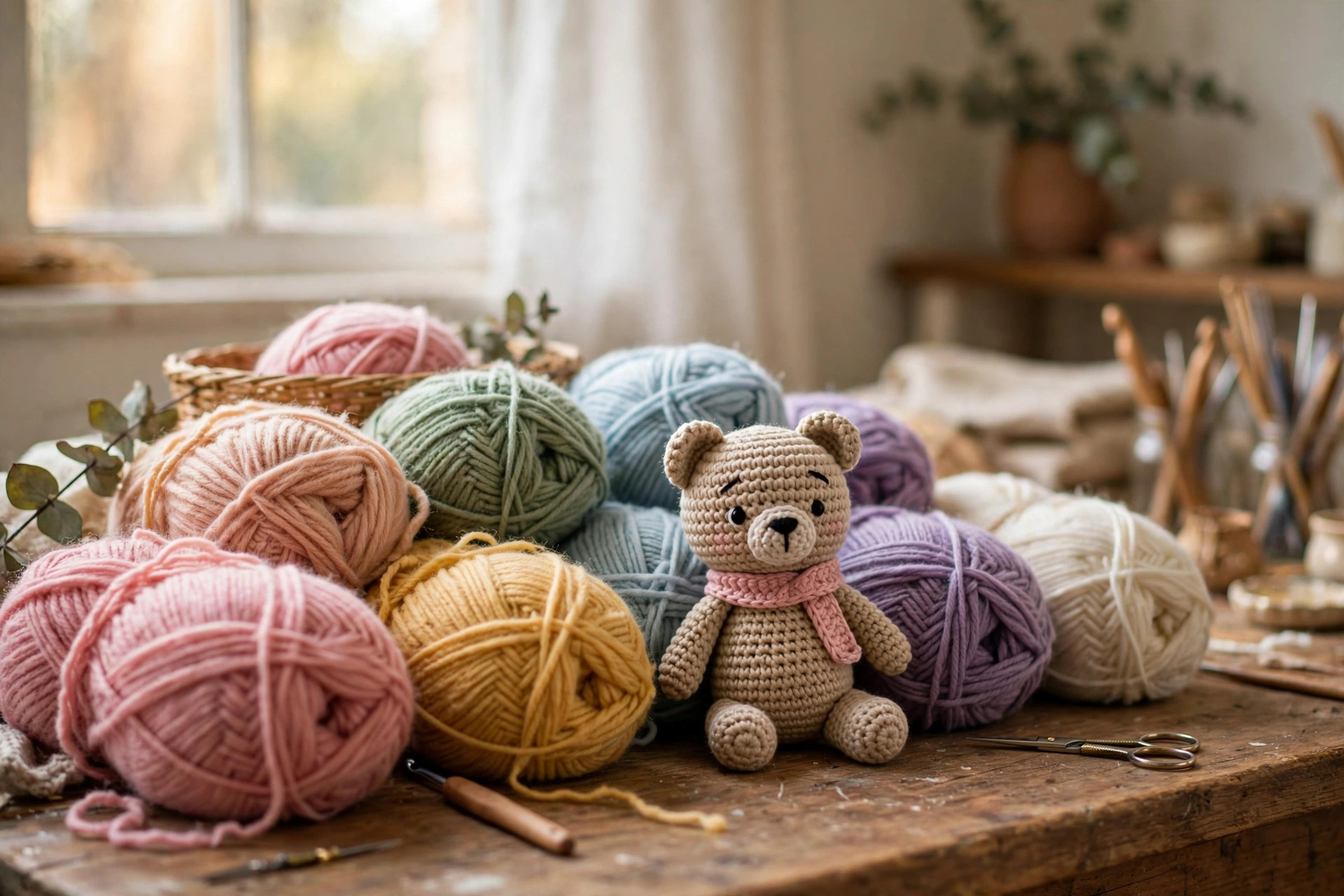

The best yarn for amigurumi toys soft USA crafters reach for is the yarn that holds tight stitches, keeps its shape, and feels gentle in small hands. Amigurumi are the small crocheted figures from Japan that have become a favorite craft across America. Bears, bunnies, cats, and round little monsters all begin with the same choice: which skein to buy. The wrong yarn will stretch, shed, or pill after a few weeks of hugs. The right yarn will keep a toy firm, round, and soft for years. This guide walks through the choices in plain terms. It covers the fibers that work, the weights that suit small toys, and the prices you can expect at American shops.
Why the Right Yarn Matters
Amigurumi is worked with very tight single crochet stitches. The fabric must be dense enough that the stuffing does not show through. Yarn that is too soft and slippery will let the stitches open. Yarn that is rough will hurt little fingers. The ideal yarn sits in the middle: firm enough to hold a shape, yet soft enough to hug.
Stitch clarity matters as well. Each row of an amigurumi pattern is counted. A yarn with a clear, even strand lets you see where the hook should go. Fuzzy novelty yarns hide the stitches and turn a simple bear into a puzzle. For that reason, most experienced makers reach for smooth, even plies.
Durability is the third reason. Toys are washed, chewed, dragged across floors, and loved hard. A yarn that pills or fades will make the toy look tired long before its time. Acrylic and cotton blends are popular for exactly this reason. They take the wear and still look neat.
What to Look for When You Choose: Best Yarn for Amigurumi Toys Soft Usa
Weight
Weight is the thickness of the yarn. Most amigurumi is made with worsted weight, which is marked as medium 4 on the label, or with a lighter sport weight marked as fine 2. A handy reference is the standard yarn weight chart from the Craft Yarn Council. Worsted weight is the most forgiving choice for beginners. The stitches are easy to count, and the toy grows fast. Sport weight gives finer detail on small faces and tiny paws. Bulky yarn works for large plush animals but eats through skeins quickly.
Fiber
Fiber is what the yarn is made of. Acrylic, cotton, and blends are the three main groups for amigurumi. Each has its strengths. Acrylic is springy and cheap. Cotton is firm and gives crisp stitch detail. Blends try to take the best of both. Wool is warm and elastic, but it is less common for toys because it can felt in the wash and may bother sensitive skin.
Softness
Softness is not only how the skein feels in the shop. Some yarns feel soft in the ball and turn stiff in tight stitches. Others feel plain in the ball and soften after one wash. Cotton yarns are the most likely to soften with washing. If a toy is meant for a baby, test the feel by crocheting a small swatch and washing it before you commit to a full project.
Color range
Amigurumi lives on color. You may need six or eight colors for one small creature. Lines like those from Lion Brand Yarn and Red Heart offer wide ranges at low prices, so you can buy many colors without much cost. Shops such as Michaels and Joann carry these lines, and they often run sales on basic yarn.
Types of Yarn for Amigurumi
Acrylic yarn
Acrylic is the workhorse of amigurumi. It is made from man-made fiber, which makes it springy and resistant to moths and mildew. It holds its shape well in tight stitches, and it comes in every color you can name. For beginners, acrylic is often the best first buy. It is cheap, it forgives small mistakes, and it washes well. The main drawback is that cheap acrylic can feel a little rough in the skein. Look for premium acrylic lines that are made for baby items. Those are spun softer and still cost little. If you are choosing between basic lines, a soft yarn made for crochet blankets is often spun to the same gentle standard and works well for toys too.
Cotton yarn
Cotton is the favorite of makers who want crisp detail. It does not stretch the way acrylic does, so the toy keeps its round shape for a long time. Stitches sit neatly on the surface, which makes counting easy and faces look tidy. Mercerized cotton has a slight sheen and a smooth hand. Unmercerized cotton is matte and a little softer. The main drawback is that cotton is less springy, so your hands may tire on a large toy. It can also shrink a little in hot water. Wash cotton toys in cool water to keep them true to size.
Cotton and acrylic blends
Blends give you a middle path. A common mix is about half cotton and half acrylic. These yarns keep the firm stitch look of cotton with a touch of the softness and bounce of acrylic. They wash well and dry faster than pure cotton. For many makers, a blend is the best yarn for amigurumi toys soft USA buyers can find without paying a high price. They sit in the middle of the price range and perform well in every area that matters.
Bamboo and other plant fibers
Bamboo yarn is very soft with a light sheen. It drapes more than cotton, which suits floppy ears and soft bodies. Blends of bamboo with cotton or acrylic hold shape better than pure bamboo. Tencel, made from wood pulp, is another smooth option. These fibers cost more than basic acrylic. They are a good choice for a special gift when softness is the first goal.
Chenille and velvet yarn
Chenille and velvet yarns are the plush, fuzzy yarns that look like velvet ribbon. They make very soft toys with almost no visible stitches. They are also harder to work with. The stitches are difficult to see, and the yarn can shed or worm, which means loops of yarn pull free from the surface. These yarns suit makers with some experience. Work them with a slightly larger hook, keep your tension even, and weave in the ends with extra care.
How Hook Size and Tension Fit In
The yarn is only half the story. The hook and your tension do the rest. Most amigurumi is worked with a hook one or two sizes smaller than the label suggests. If a worsted yarn calls for a 5.5 mm hook, an amigurumi maker will reach for 3.5 mm or 4 mm. The smaller hook pulls the stitches tight so no stuffing shows. An ergonomic hook set for beginners can save your wrists, since tight stitching asks more of your hands than loose fabric. Keep your tension even from round to round. Uneven tension makes one side of the toy looser than the other, and the stuffing will find the weak spot.
Cost and Price
Amigurumi is one of the cheaper crafts to start. A basic acrylic skein at an American craft shop costs only a few dollars. One skein of worsted weight acrylic is often enough for a small toy, and the leftover can start the next one. Cotton costs a little more per skein, usually in the low to middle single digits. Premium cotton and bamboo blends can run higher, but you still need only one or two skeins per toy.
Buying in bulk brings the price down. Value packs of acrylic from large retailers give you many colors at a low cost per skein. This Old House and Bob Vila both carry craft and home project guides, and the big home centers like Home Depot stock basic craft supplies alongside their project aisles. Online shops such as Knit Picks sell yarn in larger quantities, which suits makers who sell finished toys. As a rough rule, a small amigurumi animal costs between three and eight dollars in yarn. A large plush made with chenille may cost fifteen dollars or more in materials.
Care and Upkeep
Hand washing is the safest way to clean an amigurumi toy. Fill a basin with cool water and a little mild soap. Press the toy gently in the water. Do not wring it, since wringing stretches the stitches and mats the stuffing. Rinse in clean cool water and press out the extra water with a towel. Let the toy dry flat in the air, away from direct heat.
Machine washing is possible for sturdy toys made with acrylic or cotton blends. Use a mesh laundry bag and the gentle cycle with cool water. Skip the dryer or use the lowest heat setting. Dryers can shrink cotton and melt the fuzz on chenille. If the toy has safety eyes or a sewn face, check them after each wash and tighten or repair any loose part.
Store finished toys in a dry place out of strong sun. Sunlight fades bright colors over time. A shelf or a basket lined with clean cloth is enough. If you keep a large stock of yarn, note that moths rarely touch acrylic but can find wool. Cedar blocks and sealed bins keep all fibers safe. You can find simple storage ideas for craft supplies and Blick Art Materials for bins, organizers, and craft room furniture.
Safety Notes for Toys
Toys for small children must be made to a higher standard. Use yarn that is colorfast so dyes do not bleed when the toy is washed or chewed. Avoid yarns with metallic threads, sequins, or long loose fibers for toys meant for babies and toddlers. Long fibers can wrap around small fingers.
Safety eyes are the plastic eyes made for plush toys. They lock in place with a washer on the inside. They are safe when fitted well, but they can still come loose with hard use. For babies under three, many makers sew or embroider the eyes and face instead. Embroidered faces can never fall off.
Check each finished toy before you give it away or sell it. Pull gently on every part. If a seam opens, restitch it. If the stuffing shows through any spot, add a round of tighter stitches over it. Keep small parts away from the work area while you sew. A dropped needle or a loose safety eye on the floor is a hazard for pets and small children.
Frequently Asked Questions
What is the best yarn weight for amigurumi?
Worsted weight, marked medium 4, is the most popular choice. It is easy to count, works up fast, and gives a firm fabric with a small hook. Sport weight, marked fine 2, gives finer detail on small toys. Either one works well when paired with a hook that is smaller than the label suggests.
Is cotton or acrylic better for amigurumi?
Both work well, and the choice comes down to what you value. Cotton gives crisp stitch detail and holds its shape for a long time. Acrylic is softer out of the skein, cheaper, and very durable. A cotton-acrylic blend gives you much of both. If the toy is for a baby, choose a soft washable yarn for baby blankets, since those yarns meet the same gentle standards toys need.
How much yarn do I need for one amigurumi toy?
A small toy, about six inches tall, usually takes less than one skein of worsted weight yarn for the main color. Small amounts of other colors finish the details. A large plush, twelve inches or more, may take two or three skeins of the main color. Chenille yarn is thicker, so a large toy may still need only one or two skeins.
Can I use any soft yarn for amigurumi?
Not every soft yarn suits tight toy stitches. Very fuzzy yarns hide the stitches and make counting hard. Very stretchy yarns let the stuffing show through. Smooth, even yarns with a firm twist work best. If you love a fuzzy yarn, use it for your second or third toy, after your tension is steady.
How do I keep the stuffing from showing through?
Use a hook one or two sizes smaller than the yarn label suggests. Keep your tension tight and even. Choose a stuffing color close to your yarn color for light-colored toys, so any tiny gaps are less visible. Some makers work an inner lining in a matching color for white or pastel toys.
Will amigurumi yarn soften after washing?
Yes, most yarns soften with washing. Cotton softens the most. Acrylic softens a little. Blends sit in between. Wash a small swatch first if softness is your main goal. The change from one wash is small, but it is real, and repeated washes keep improving the feel.
A Short Final Word
The best yarn for amigurumi toys soft USA makers trust is the one that fits the toy, the child, and the budget. Start with a smooth acrylic or a cotton blend in worsted weight. Work it with a small hook and even tension. Wash it gently and check it often. With those habits, your small creatures will stay soft, round, and loved for a very long time.
References
Blick Art Materials. (n.d.). Art and craft supplies. https://www.dickblick.com Bob Vila. (n.d.). Home improvement advice. https://www.bobvila.com Craft Yarn Council. (n.d.). Yarn standards and craft resources. https://www.craftyarncouncil.com JOANN. (n.d.). Fabric and craft supplies. https://www.joann.com KnitPicks. (n.d.). Yarn and knitting supplies. https://www.knitpicks.com Lion Brand Yarn. (n.d.). Yarn and knitting supplies. https://www.lionbrand.com Michaels. (n.d.). Arts and crafts supplies. https://www.michaels.com Red Heart. (n.d.). Yarn for knitting and crochet. https://www.redheart.com The Home Depot. (n.d.). Home improvement products. https://www.homedepot.com This Old House. (n.d.). Home renovation guidance. https://www.thisoldhouse.com
Was this guide helpful?

About Lisa Anderson
The My Garden US editorial team writes practical, in-depth home and garden guides for American homeowners — tested advice, no fluff.
You May Also Like
Best Spray Paint for Furniture DIY Makeover
September 19, 2026 0 views
Best Craft Wire for Jewelry and Sculptures: A Plain Guide for Makers
April 12, 2026 0 views
Best Yarn Bowl for Knitting and Crochet: A Simple Guide
February 20, 2026 0 views