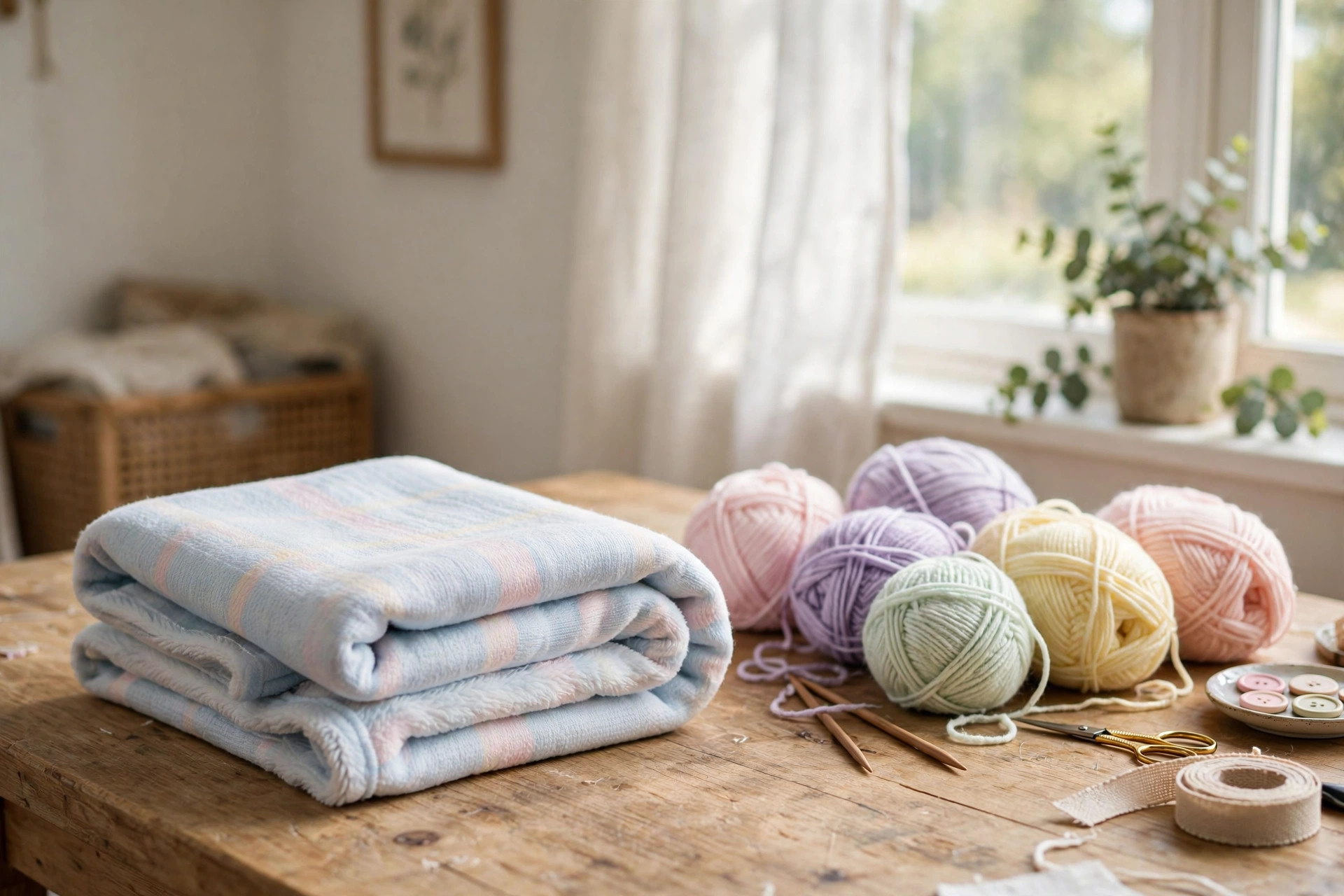

A baby blanket is one of the first handmade gifts most crafters ever make. It wraps a newborn in warmth. It becomes the favorite object in the crib. It gets dragged through the kitchen, the park, and the car seat. That is why finding the best yarn for baby blankets soft washable matters so much. A baby blanket must feel gentle against new skin. It must also survive the washing machine, week after week, without falling apart or turning stiff. This guide walks through the fibers, the safety rules, the costs, and the care steps that help you choose well and make a blanket that lasts for years.
Why the Right Yarn Matters for a Baby Blanket
Babies have skin that is far thinner and more tender than adult skin. A yarn that feels fine to an adult hand can scratch a newborn. The wrong fiber can also trap too much heat, which is a real concern for infants who cannot regulate their body temperature well. A soft yarn solves the first problem. A breathable yarn helps with the second.
Then there is the question of washing. A baby blanket will be washed often. Spit-up, milk, and diaper leaks are part of daily life. If the yarn is not machine washable, the blanket will spend its life folded on a shelf instead of in the arms of the child. Washable yarn keeps the blanket in daily use. That is the point of making it.
Durability counts as well. Babies pull, chew, and rub blankets. A loose or fragile yarn can break and leave threads that wrap around small fingers or toes. A strong, smooth yarn holds its shape and keeps long loose strands from forming. Choosing the right yarn is not only about comfort. It is also about safety.
What to Look for in a Soft Washable Baby Yarn: Best Yarn for Baby Blankets Soft Washable
Softness That Holds Up
Run the yarn across the inside of your wrist or your cheek. This skin is closer in tenderness to a baby’s skin than the palm of your hand. Good baby yarns feel smooth and silky from the start. Some yarns feel soft in the store but grow rough after one wash. Acrylic yarns made for babies are usually treated to stay soft. Cotton yarns tend to get softer with each wash.
True Machine Washability
Read the yarn label. Look for words like “machine wash and dry.” Some yarns say “machine wash” but mean a gentle cold cycle only. For a baby blanket, you want a yarn that can take warm water and the dryer without shrinking or felting. Superwash wool meets this test. Most baby-weight acrylics and cottons do too.
Fiber Safety
Choose yarns free from rough fibers like mohair, which can shed fine hairs that irritate a baby’s nose and throat. Avoid yarns with metallic threads or beads for a blanket meant for an infant. If you use wool, pick superwash wool from a known brand, since some babies react to untreated animal fibers.
Weight and Warmth
Baby blankets are usually made with DK or worsted weight yarn. These weights work up at a steady pace and give a fabric that is warm but not heavy. Fine lace-weight yarns take a very long time to finish and can make a blanket too delicate for daily use. Bulky yarns make a thick fabric that may be too warm for a sleeping baby.
Types of Yarn That Work Well
Acrylic Yarn
Acrylic is the most common choice for baby blankets, and for good reason. It is soft, light, and fully machine washable. It resists shrinking and holds color well through many washes. Baby-weight acrylics are made with a fine, smooth texture designed for infant skin. Acrylic is also the most affordable option, which matters when a blanket takes several skeins. For many makers, acrylic is simply the best yarn for baby blankets soft washable, because it asks for so little care and keeps its softness year after year. A crafter planning a soft crochet blanket project will find acrylic a reliable starting point too.
Cotton Yarn
Cotton is natural, breathable, and gentle. It absorbs moisture, which keeps a baby comfortable in warm weather. Cotton yarn softens with washing, and it can be washed and dried without harm. It is heavier than acrylic, so cotton blankets drape well and feel cool in summer. One drawback is that cotton has less stretch, which can make stitches feel firm. Blended cotton yarns, such as cotton mixed with acrylic, give the softness of cotton with more bounce.
Superwash Wool and Wool Blends
Wool has natural warmth and elasticity. Untreated wool felts in the washing machine, which ruins a blanket. Superwash wool is treated so it can be machine washed and dried safely. It stays soft and keeps its shape. Some babies are sensitive to wool, so test a small piece against the child’s skin if you can. Wool blends, often wool with acrylic or nylon, bring the comfort of wool at a lower cost and with greater wash ease.
Bamboo and Rayon Blends
Yarns made from bamboo or other plant cellulose are very smooth and drape nicely. They are gentle on skin and wash well. They are often blended with cotton or acrylic to add strength. These yarns cost more than plain acrylic but give a blanket a soft, silky feel that many parents love.
How to Choose: A Simple Decision Guide
Start with the season. For a winter baby, a warm acrylic or wool blend gives the most comfort. For a summer baby, cotton or a cotton blend stays cool. Next, think about who will wash the blanket. If it goes to a busy parent, choose the most wash-proof yarn you can find: acrylic or superwash wool. If the blanket stays with you, cotton becomes a fine choice.
Check the yardage on the label. A standard receiving blanket, about 30 by 36 inches, takes roughly 800 to 1,200 yards of worsted weight yarn. Buying all skeins from the same dye lot keeps the color even across the whole blanket. Dye lot numbers are printed on the label.
Color matters more than many makers expect. Light pastel yarns show stains quickly. Medium tones and gentle variegated yarns hide the marks of daily use. If the blanket will see heavy use, a forgiving color keeps it looking fresh longer.
For related fiber crafts, a good yarn winder keeps skeins tidy during long blanket projects, and a knitting machine can speed up larger pieces for experienced makers.
Cost and Price Expectations
Acrylic baby yarn is the least costly choice. Expect to pay about 3 to 6 dollars per skein at a craft store, and a full blanket may need 4 to 6 skeins. Cotton yarn runs a little higher, often 5 to 10 dollars per skein, with similar yardage needs. Superwash wool is the dearest option, commonly 10 to 20 dollars per skein, and a blanket may need 5 or more skeins.
Total cost for a handmade baby blanket usually falls between 20 and 100 dollars in yarn alone. Acrylic projects stay near the low end. Wool projects sit at the high end. Sales at large craft retailers can cut these prices by a third or more, so it pays to watch the weekly ads. Hand-dyed or small-batch yarns cost the most and are better saved for special keepsake pieces than for everyday blankets.
Care and Upkeep
Wash a new blanket before the first use. This step removes sizing and factory dust from the yarn. Use a mild detergent with no added scent or dye, since scented products can bother a baby’s skin. Warm water works well for acrylic and cotton. Follow the label for wool.
Dry the blanket on a medium or low setting. High heat can shrink cotton and weaken some fibers. Take the blanket out while it is still slightly damp and lay it flat to finish drying. This step keeps the shape true and the edges straight.
Store the blanket folded, not hung, so the fabric does not stretch out of shape. Keep it away from direct sun during long storage, since sunlight fades color. If the blanket picks up a small stain, treat it at once with cool water and mild soap rather than waiting for the next full wash.
Safety Notes
Safety is the first duty of anyone making an item for a baby. Keep these rules in mind.
– Weave in all yarn ends with care, at least two inches through the stitches, so nothing unravels into long strands. – Avoid fringe, tassels, or long decorative cords on a baby blanket. These can wrap around a baby’s neck or fingers. – Skip buttons, beads, and sewn-on shapes for infant blankets. They can come loose and become choking hazards. – Crochet and knit fabrics should have even, firm tension. Very loose, open stitches can catch tiny fingers and toes. – Check the finished blanket often. Pull gently on stitches to test for weak spots, and repair any break at once. – The U.S. Consumer Product Safety Commission offers guidance on safe nursery products, and its homepage is a useful reference for any crafter making items for children (https://www.cpsc.gov).
Frequently Asked Questions
Is acrylic yarn safe for babies?
Yes. Standard craft acrylic yarn is widely used for baby items and is safe for infant skin. Choose yarns labeled for baby use or marked as soft and smooth. Wash the finished blanket once before use to remove any factory residue.
How many skeins do I need for a baby blanket?
For a 30 by 36 inch blanket in worsted weight yarn, plan on 4 to 6 skeins, or about 800 to 1,200 yards total. Larger blankets, such as 36 by 48 inches, may need 6 to 8 skeins. Always buy one extra skein beyond your estimate, in the same dye lot.
Can I mix yarn types in one blanket?
You can, but keep the care rules in mind. If one yarn needs hand washing and another goes in the machine, the whole blanket must be treated by the stricter rule. For a washable baby blanket, mix only yarns that share the same washing instructions.
Does cotton or acrylic hold up better over time?
Acrylic resists shrinking and holds color through more wash cycles, which is why many crafters call it the best yarn for baby blankets soft washable. Cotton softens with washing but may shrink slightly and fade a bit faster. Both last for years with normal care.
Should I use wool for a baby blanket?
Superwash wool works well for a baby blanket because it is soft, warm, and machine washable. Test for skin sensitivity first. Untreated wool is a poor choice because it felts in the wash and can irritate delicate skin.
What is the softest washable yarn for a newborn?
Baby-weight acrylics from well-known yarn brands are made to be extra smooth and are a safe first choice. Bamboo blends are also very soft. Touch the yarn against your cheek in the store; if it feels rough there, it will feel rough to the baby.
A Final Word
The best yarn for baby blankets soft washable is the one that stays gentle against newborn skin and stands up to the washing machine without complaint. Acrylic leads the field for most families because it is soft, cheap, and nearly indestructible. Cotton serves warm climates well. Superwash wool suits cold winters. Whichever fiber you choose, check the label for true machine washability, buy enough skeins in one dye lot, weave in your ends, and skip the decorations that could harm a small child. A well-made baby blanket becomes a family treasure, and it all starts with the right yarn. Craft supply stores such as Michaels and Joann carry wide baby-yarn ranges, while dedicated yarn makers like Lion Brand, Yarnspirations, Red Heart, and LoveCrafts offer full fiber guides. General craft help is easy to find at Dick Blick, Home Depot, and Bob Vila.
References
Blick Art Materials. (n.d.). Art and craft supplies. https://www.dickblick.com Bob Vila. (n.d.). Home improvement advice. https://www.bobvila.com JOANN. (n.d.). Fabric and craft supplies. https://www.joann.com Lion Brand Yarn. (n.d.). Yarn and knitting supplies. https://www.lionbrand.com LoveCrafts. (n.d.). Yarn and crafting supplies. https://www.lovecrafts.com Michaels. (n.d.). Arts and crafts supplies. https://www.michaels.com Red Heart. (n.d.). Yarn for knitting and crochet. https://www.redheart.com The Home Depot. (n.d.). Home improvement products. https://www.homedepot.com Yarnspirations. (n.d.). Yarn and free patterns. https://www.yarnspirations.com
Was this guide helpful?

About James Carter
The My Garden US editorial team writes practical, in-depth home and garden guides for American homeowners — tested advice, no fluff.
You May Also Like
Best Craft Scissors for Left Handed Kids: How to Choose the Right Pair
August 31, 2026 0 views
DIY Tote Bag Kit for Painting and Crafts: A Complete Buying Guide
August 5, 2026 0 views
How to Make Wood Slice Ornaments for Christmas Crafts DIY
July 6, 2026 0 views