Every blanket starts with a choice. Before the first stitch, before the hook, there is the yarn. The best yarn for crochet blankets soft usa makers reach for again and again is the kind that feels good in the hand, holds its shape in the wash, and stays soft for years. A blanket is not a small project. It takes weeks of work. The yarn you choose will live with you through every row. Choose well, and the hours feel like rest. Choose poorly, and the hours feel like a chore. This guide walks through the whole decision in plain terms: what soft really means, which fibers serve best, what weights suit which blankets, what prices look like at American craft stores, and how to care for the finished work.
Why Softness Matters Most
A crochet blanket is a thing of comfort. It is draped over a lap on a cold night. It wraps a baby in the first weeks of life. It sits at the foot of a guest bed. No one keeps a scratchy blanket. The test is simple: press the skein to your neck, where skin is tender. If it prickles, it will not do for a blanket. Many crafters at JOANN are seen doing exactly this, rubbing skeins between their fingers and against their cheeks.
Softness comes from the fiber. Wool can be soft, but not all wool is soft. Some wools are rugged and made for coats. Acrylic has changed a great deal over the years. The acrylic of decades past was stiff and squeaky. Modern premium acrylics are smooth and silky. Cotton is firm and crisp, lovely for summer throws but not the softest choice. Blends often win: a mix of acrylic and nylon, or acrylic with a touch of wool, gives warmth plus washability plus softness. When you shop for the best yarn for crochet blankets soft usa crafters recommend, read the fiber content first. It tells you more than the picture on the label.
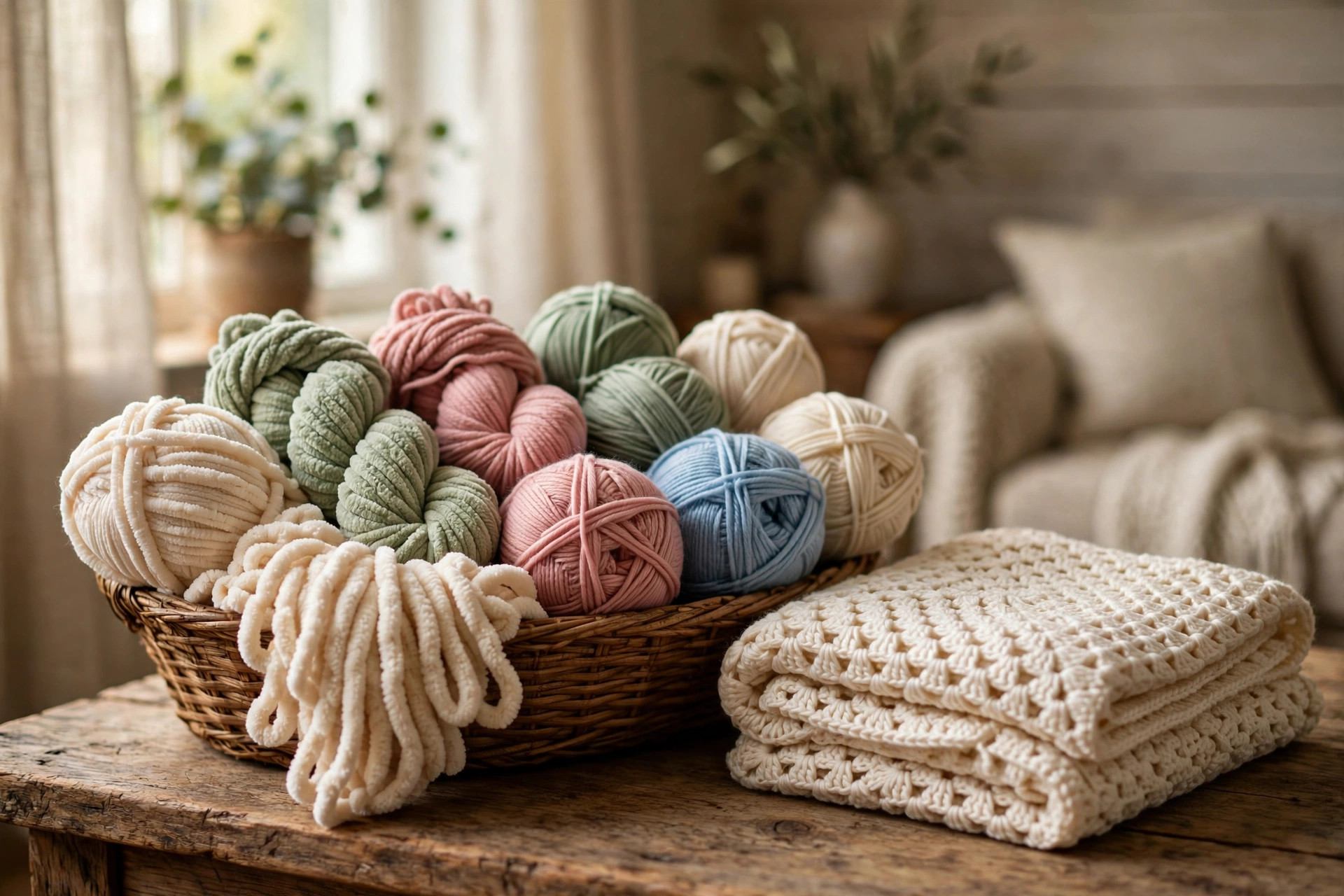
Softness also comes from how the yarn is spun. Chenille-style yarns, with their velvet tubes of fiber, feel like crushed velvet. They are some of the softest options on the shelf. Brushed yarns have a halo of fine fibers that mimic wool. Smooth worsted yarns with a tight twist hold up longest but feel firmer. There is a trade-off everywhere in yarn, and softness is no exception.
What to Look for When You Choose: Best Yarn for Crochet Blankets Soft Usa
Keep five points in mind as you read labels.
Fiber content. Acrylic, wool, cotton, bamboo, or a blend. Each has a place. Acrylic is machine washable and low cost. Wool is warm and natural but often needs hand washing. Cotton is cool and sturdy. Blends aim for the best of each.
Yarn weight. The number on the label, from 0 (lace) to 7 (jumbo), tells how thick the yarn is. For blankets, weight 4 (medium or worsted) is the classic pick. Weight 5 (bulky) and weight 6 (super bulky) make fast, chunky blankets. Weight 3 (light) suits baby blankets with fine stitch work.
Yardage per skein. Blankets eat yarn. A baby blanket may need 800 to 1,200 yards. A full afghan may need 2,000 yards or more. Check the yards on the label, not just the ounces. Two skeins of the same weight can hold very different lengths.
Washability. A blanket that cannot be washed is a blanket that will live in a closet. Baby blankets and throws should be machine washable and dryable. Read the care symbols. If you plan to give the blanket as a gift, choose easy care so the recipient can actually use it.
Dye lot. Buy all the yarn for one blanket at once, from the same dye lot. The number is printed on the label. Skeins from different lots can vary in shade enough to show in the finished piece.
Types of Soft Yarn for Crochet Blankets
Premium Acrylic
The workhorse of the blanket world. Premium acrylics are soft, light, washable, and kind to a budget. They do not felt in the wash. They hold color for years. For a first blanket, or a big afghan, premium acrylic is the sensible choice. Many long-time crocheters keep returning to it because the results are reliable. You can find wide selections at large craft retailers and online shops like LoveCrafts.
Chenille and Velvet Yarns
These are the softest yarns you can buy. A chenille blanket feels like a hug. The velvet tube of the yarn makes every stitch plump and cozy. The trade-off is real: chenille can be hard to see stitches in, and cheap versions shed or worm (loops pulling loose). Buy good quality, work with a larger hook, and keep your tension even. A chunky chenille throw can be finished in a weekend.
Wool and Wool Blends
Wool brings warmth that no other fiber quite matches. A wool afghan is heavy in the best way, draping like a proper winter cover. Pure wool needs gentle washing, which rules it out for baby gifts in most cases. Superwash wool, treated to survive the machine, solves that problem at a higher price. Wool-acrylic blends split the difference: the warmth and spring of wool, the easy care of acrylic. Shops such as KnitPicks carry a fine range of both.
Cotton and Cotton Blends
Cotton makes crisp, cool blankets for warm climates and summer nights. It is not as soft as chenille, but it breathes and it washes like a dream. Cotton-acrylic blends add softness and lightness. A cotton blend throw is a fine gift for someone in a hot part of the country.
Bamboo and Other Plant Blends
Bamboo yarn is silky, with a soft drape and a slight sheen. It blends well with cotton and acrylic. It costs more than basic acrylic but less than fine wool. If you want a blanket with a little luxury, bamboo blends are worth a look.
How to Match Yarn to the Blanket
Not every blanket wants the same yarn. Think first about who will use it.
Baby blankets. Softness is everything, and washability is a close second. Choose machine-washable yarn in weight 3 or 4. Pastel and neutral shades are classic. Avoid novelty yarns with loops or fringe that tiny fingers can catch. A smooth acrylic or an acrylic-bamboo blend is ideal. When you search the best yarn for crochet blankets soft usa parents praise, baby-safe washable acrylics top nearly every list.
Throws for the couch. This is where chenille shines. A super-bulky chenille throw in a neutral tone looks rich and feels wonderful. It works up fast, which matters when you want a finished piece before the season changes.
Afghans and bed covers. These are long projects, so cost per yard matters. Worsted-weight premium acrylic in a color you love, bought in one dye lot, is the classic afghan formula. Stripes and granny squares hide dye-lot worries and use up partial skeins.
Gifts. Choose easy care above all. The recipient will wash it in a normal machine on a normal day. Acrylic or superwash blends only. Include the care notes with the gift so it gets used, not stored.
A good ergonomic hook also matters more than most beginners expect, and pairing your yarn with the right hook is half the craft. If you are new to hooks, see our guide to the best crochet hook set ergonomic for beginners. And once your yarn stash starts to grow, a craft storage organizer for small rooms keeps skeins tidy and dye lots together.
Cost and Price: What Blankets Really Take
Yarn is sold by the skein, but blankets are priced by the project. A baby blanket in premium acrylic might take six to eight skeins at a few dollars each, for a total in the range of twenty to forty dollars. A full-size afghan can take fifteen to twenty skeins, running forty to eighty dollars in acrylic, or well over a hundred in wool blends. Chenille throws look costly per skein, but a throw may need only three or four jumbo skeins.
Watch for sales. Big craft chains run yarn sales often, and buying the whole project at once during a sale is the oldest trick in the book. Online sellers like Mary Maxim and Yarnspirations also run regular discounts and carry free blanket patterns matched to their yarns, which saves the cost of a pattern book. Brand sites such as Lion Brand publish hundreds of free patterns with exact yardage, so you can buy precisely what you need.
Count the true cost before you start. Multiply the yards your pattern needs by the price per yard of your chosen yarn. If the number shocks you, scale down the blanket or choose a thriftier fiber. A finished smaller blanket beats an abandoned large one.
Care and Upkeep
The first wash sets the tone. Wash the finished blanket the way the label says, and it will keep its shape for years. Machine-washable acrylics can go in on gentle with mild soap. Use a laundry bag for extra safety. Tumble dry low or lay flat. Wool, unless marked superwash, should be hand washed in cool water and dried flat, never wrung.
Pilling happens. Even good yarn pills where it rubs. A fabric shaver or a sweater comb removes pills in minutes and makes an old blanket look new. Store blankets folded, not hung, so they do not stretch. Cedar blocks or lavender sachets keep moths away from wool. Keep finished pieces out of long, direct sun, which fades even the best dyes. These are small habits, and they are the difference between a blanket that lasts five years and one that lasts twenty.
Safety Notes
A few cautions belong in every yarn guide. Keep yarn and works-in-progress away from open flame; most craft yarns will melt or burn. Babies and small pets can tangle in loose strands, so store your project in a bag between sessions. If anyone in the home has a wool allergy, choose acrylic, cotton, or bamboo instead. Check family craft safety resources and general home project guidance when little ones share the crafting space. For fine needlework supplies beyond yarn, art supply stores carry the small tools that make finishing work easier.
FAQ
What is the softest yarn for a crochet baby blanket? A smooth premium acrylic or an acrylic-bamboo blend in weight 3 or 4. It is soft against newborn skin, fully machine washable, and low cost. Chenille is softer still, but its texture can be too warm and too hard to stitch neatly for a first baby blanket.
How much yarn do I need for a throw blanket? A standard throw, about 50 by 60 inches, takes roughly 1,200 to 1,800 yards in worsted weight, or 600 to 900 yards in super bulky chenille. Always check your pattern’s yardage and buy one extra skein beyond it.
Is acrylic yarn good for crochet blankets? Yes. Modern premium acrylics are soft, washable, colorfast, and affordable. They are the most common choice for blankets in the United States for good reason. Look for the word “premium” on the label, and feel the skein before you buy.
What yarn weight is best for a beginner blanket? Weight 4, medium or worsted. It is thick enough to see your stitches clearly and thin enough to keep the blanket from getting too heavy too fast. Pair it with the hook size printed on the label.
Can I mix different brands in one blanket? You can, if the fiber content and weight match. Stick to the same weight number and similar fibers, and wash a small swatch of each first to check they behave the same. Striped blankets are the natural home for mixed brands.
How do I keep a crochet blanket soft after washing? Wash gentle, dry low, and skip harsh detergents. A little white vinegar in the rinse can soften acrylic. Never use high heat, which roughens fibers over time.
A Final Word
The search for the best yarn for crochet blankets soft usa shoppers trust ends where it began: at the skein in your hand. Feel it. Read the label. Picture the blanket in use. The right yarn makes the work a pleasure and the result a keepsake. Start with a fiber you trust, buy enough in one dye lot, and give the finished blanket the simple care it deserves. Years from now, someone will still be reaching for it on a cold night. That is the whole point of the craft.
If your next project leans toward machine crafts instead of hooks, our look at the embroidery machine for home business beginners covers what to know before you buy.
References
Blick Art Materials. (n.d.). Art and craft supplies. https://www.dickblick.com Bob Vila. (n.d.). Home improvement advice. https://www.bobvila.com Family Handyman. (n.d.). DIY home repair and maintenance. https://www.familyhandyman.com JOANN. (n.d.). Fabric and craft supplies. https://www.joann.com KnitPicks. (n.d.). Yarn and knitting supplies. https://www.knitpicks.com Lion Brand Yarn. (n.d.). Yarn and knitting supplies. https://www.lionbrand.com LoveCrafts. (n.d.). Yarn and crafting supplies. https://www.lovecrafts.com Mary Maxim. (n.d.). Yarn and craft kits. https://www.marymaxim.com Michaels. (n.d.). Arts and crafts supplies. https://www.michaels.com Yarnspirations. (n.d.). Yarn and free patterns. https://www.yarnspirations.com
Was this guide helpful?

About Jennifer Lee
The My Garden US editorial team writes practical, in-depth home and garden guides for American homeowners — tested advice, no fluff.