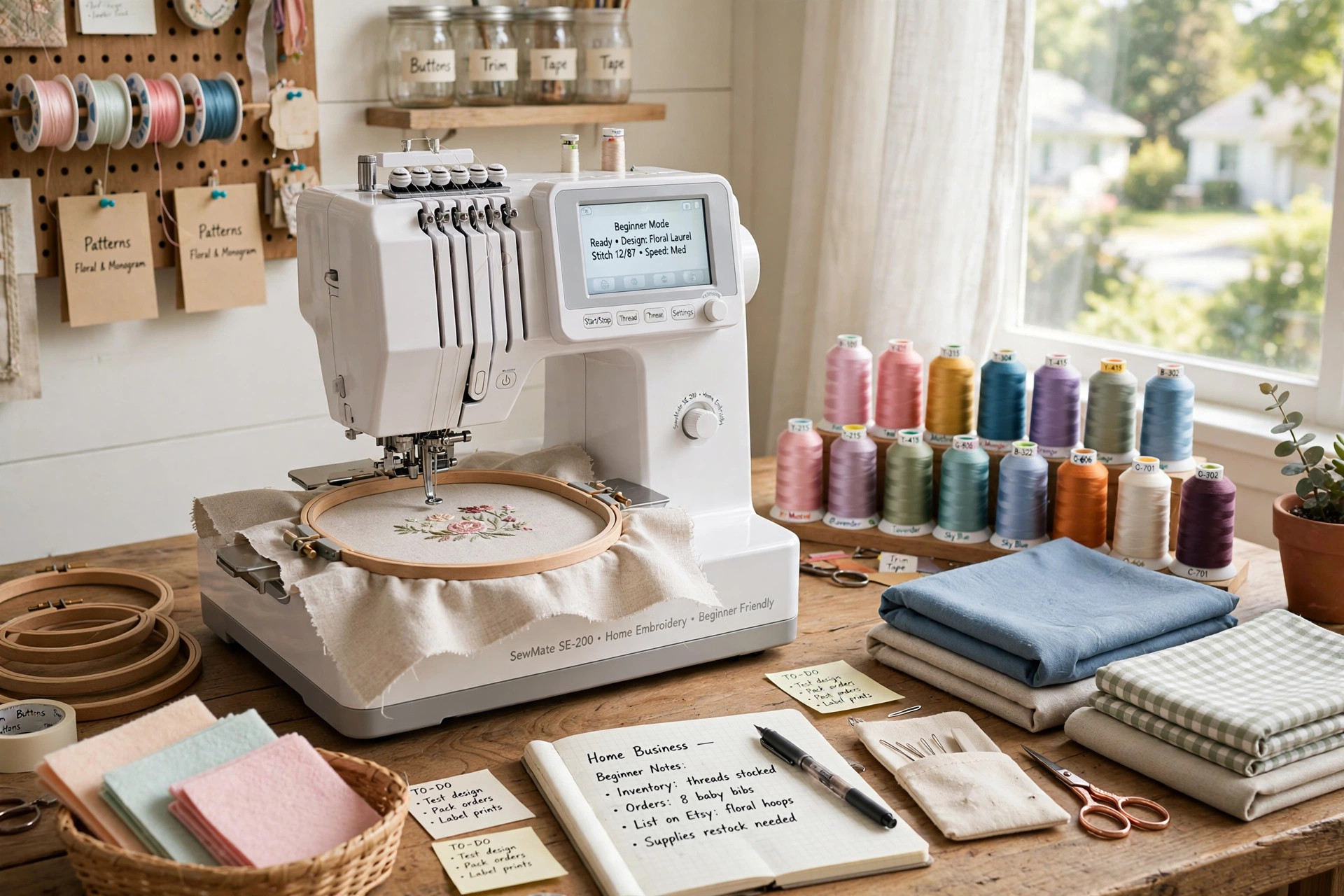

An embroidery machine for home business beginners is a tool that can turn a small home into a small factory. It stitches names, logos, and pictures onto shirts, caps, towels, and bags. You load a design, place the fabric in a frame, and press a button. The machine does the sewing. Many people start this work with no training in the garment trade. They learn as they go. This guide explains what a beginner needs to know before buying a first machine and how to build a small business on it.
Why It Matters
A home embroidery business has low cost to start. You do not need a shop. You do not need staff. You need a machine, thread, fabric, and a table. Many owners start at the kitchen table and move to a spare room as orders grow.
The market for custom embroidery is steady. Schools need team logos. Clubs need names on shirts. Small firms need caps with their mark. Weddings bring orders for monogram gifts. These are jobs that large shops may turn down when the order is small. A home business can take them with pleasure.
Embroidery also has a high margin. The cost of thread and backing for one logo is often under one dollar. The charge for the work can be ten to twenty dollars. The gap between cost and price is what makes the work pay.
Learning the craft takes time, but the path is clear. You learn the machine. You learn a small set of designs. You practice on old cloth. Then you take paid work. Online forums and craft stores carry guides for every step, and sellers like Michaels keep beginner supplies on the shelf. An embroidery machine for home business beginners is therefore a fair first step into a trade that rewards patience and care.
How to Choose Your First Machine: Embroidery Machine for Home Business Beginners
Start With One Needle or Many
Home machines have one needle. Commercial machines have many needles, often four to sixteen. One needle means you change thread by hand each time a color ends. That is fine when you sew ten shirts. It is slow when you sew one hundred.
Beginners should start with a one needle home machine. It is cheaper. It is smaller. It is simpler to learn. Many good designs use only two or three colors, and a one needle machine handles them well. You can move to a multi needle machine later, when orders grow and you know your trade.
Hoop Size Sets Your Limit
The hoop is the frame that holds the fabric. Home machines take hoops of four by four inches or five by seven inches. That fits chest logos, caps, and small pictures. If you want large back designs, you will need a bigger machine. Most home business orders are small logos and names. A five by seven hoop covers most of them.
Look for Easy Design Transfer
Modern machines read designs from a USB stick or a Wi-Fi link. Older machines read cards. Choose a machine that reads USB or Wi-Fi. You will download designs from the web or buy design files. Easy transfer saves time and removes one more thing to learn.
Check the Built In Designs and Lettering
A good beginner machine comes with built in letters and border designs. This matters because many early orders are simple text: a name, a school, a year. You should not have to buy design software in the first month. Letters in several styles will carry you through the first jobs.
Test the Warranty and Service
Buy from a dealer who will answer questions. A local dealer who services the brand is worth more than a small saving on price. The machine has many moving parts. It will need service once a year. Know where to take it before you buy. Chain stores such as Home Depot stock many small craft machines, and craft suppliers like JOANN carry thread, stabilizer, and beginner kits that fit home machines.
Try Before You Buy When You Can
Many dealers let you sew a test design in the shop. Bring your own shirt. Sew a name. Watch how the machine moves. If the shop is far, watch full reviews online before you order. A few hours of research can save years of regret.
Types of Embroidery Machines
Combination Sewing and Embroidery Machines
These machines sew seams and also embroider. They suit beginners who want one machine for many crafts. If you already sew clothes or quilts, a combination machine adds embroidery to your skill. The trade off is size. The embroidery area is small, and the machine costs more than a sewing machine alone.
Embroidery Only Machines
These do nothing but embroider. They often have a larger hoop than a combination machine at the same price. If your goal is a home business and you do not sew clothes, an embroidery only machine gives you more for your money.
Multi Needle Machines
These have four or more needles and a free arm. They change colors on their own. They are built for steady work. They cost several thousand dollars and take up real space. They are the second machine, not the first. Buy one when your home business needs it.
Cost and Price
What a Beginner Machine Costs
A good beginner embroidery machine costs between 300 and 1,200 dollars. Machines under 300 dollars often have weak motors and small hoops. They break down under daily use. Machines above 1,200 dollars add features a beginner will not use in the first year.
Set aside another 200 to 400 dollars for the start up kit: thread in many colors, stabilizer, extra hoops, bobbins, needles, and a few blank shirts for practice. Do not skip the practice cloth. Every mistake on a customer shirt costs you money and time.
What to Charge
Price by stitch count and by piece. A common base is one dollar per thousand stitches, plus a set up fee for a new design. A five thousand stitch logo then costs five dollars plus set up. Many shops charge a flat rate for common jobs: eight dollars for a name on a cap, twelve dollars for a chest logo. Look at what other small shops in your area charge and stay close to them.
Do not under price to win work. Cheap prices bring cheap customers and hard jobs. A fair price for good work is the best plan for a home business.
When the Machine Pays for Itself
A 600 dollar machine that earns twenty dollars of profit a day pays for itself in one month of steady work. That is a fair goal for the first year. Track every order in a simple book: date, job, price, cost of goods. You will see the break even point come. The handyman press at Family Handyman and the project guides at This Old House also cover how to set up a clean home work room, which helps keep the machine in good shape.
Care and Upkeep
Clean After Every Job
Lint builds up under the needle plate. Brush it out after each job with the small brush that came with the machine. A can of air is too strong for some machines and can push lint deeper. Read your manual first.
Oil Where the Manual Says
Some machines need oil at marked points. Some are self oiling. Follow the manual, not a rumor. Too much oil is as bad as too little. It can stain a white shirt with one drop.
Use Fresh Needles
A dull needle breaks thread and punches holes in fabric. Change the needle after eight to ten hours of sewing, or at the start of a large order. Needles are cheap. Ruined shirts are not.
Store Thread Away From Light
Thread fades in sun and weakens in heat. Keep it in a box or a drawer. Good thread sews clean lines. Old thread breaks and frays. Buy small spools of many colors at first. You will learn which colors you use most, and you can buy large cones of those later.
Service Once a Year
Take the machine to a dealer once a year for a full clean and check. This is the cost of doing business. A serviced machine runs fast and sews clean. An unserviced machine fails in the middle of an order.
Safety
Keep Fingers Clear of the Needle
The needle moves fast. It will pierce skin. Keep your fingers away from the needle bar while the machine runs. Do not reach across the arm to pull thread while it sews.
Unplug for Thread Changes Under the Plate
When you change the bobbin or clear a jam under the plate, turn the machine off. A bumped foot pedal can start the machine at the worst moment.
Mind Children and Pets
A home business invites small hands and paws. Thread can wrap around fingers. Scissors and needles lie on the table. Keep the work room closed when you are not there. Teach children that the machine is a tool, not a toy.
Ventilate Your Iron and Sprays
Embroidery work often uses iron on backing and spray adhesive. Use them near an open window or with a fan. Some sprays are strong. Read the labels and follow the rules on the can.
FAQ
How long does it take to learn?
Most beginners sew clean designs within two weeks of daily practice. Running a small business well takes three to six months. You must learn pricing, customer care, and design basics. Give yourself time. The first month is for practice, not for profit.
Do I need design software?
Not at first. Buy designs as files and use the built in lettering. When you want to change a logo or make your own designs, look at entry level software. Many sellers offer a free trial. Learn one program well before you buy another.
Can I embroider caps and bags on a beginner machine?
Caps need a cap frame or a curved hoop. Many beginner machines have a small cap attachment or a third party hoop. Bags are easy because they lie flat. Ask the dealer what your machine can hold before you promise caps to a customer.
What fabric should I practice on?
Start with plain cotton broadcloth and old T shirts. They are cheap and sew well. Then try fleece, denim, and towels. Each fabric needs a different stabilizer. Keep notes on what works. Your notes will become your own guidebook.
How do I find my first customers?
Start with people you know. Sew a sample cap for a local team coach. Sew a sample tote for a church group. Post clear photos of real work, not stock images. Small orders lead to repeat orders. Repeat orders are the base of a home business.
Should I buy new or used?
New machines carry a full warranty and a dealer who will teach you. Used machines are cheaper but may hide problems. If you buy used, buy from a dealer who has serviced the machine, not from a stranger online. For a first machine in a business, new is the safer choice.
A Final Word
An embroidery machine for home business beginners is not a magic box. It is a tool that rewards steady hands and a clear head. Learn it well. Price your work with care. Treat every order, large or small, as if your name were sewn on it. The machine will pay for itself, and the skill will stay with you for life.
Crafters who start with embroidery often grow into related work. Some add a vinyl cutter for a home shirt business to make heat transfer designs. Others study sewing patterns for beginners to make their own garments to embroider. Still others branch into macrame cord kits for wall hangings and sell handmade decor beside their stitched goods. One small machine can open many doors.
Buying guides are also published by Bob Vila and Blick Art Materials. See also Target for further detail.
References
Blick Art Materials. (n.d.). Art and craft supplies. https://www.dickblick.com Bob Vila. (n.d.). Home improvement advice. https://www.bobvila.com Family Handyman. (n.d.). DIY home repair and maintenance. https://www.familyhandyman.com JOANN. (n.d.). Fabric and craft supplies. https://www.joann.com Michaels. (n.d.). Arts and crafts supplies. https://www.michaels.com Target. (n.d.). Retail store. https://www.target.com The Home Depot. (n.d.). Home improvement products. https://www.homedepot.com This Old House. (n.d.). Home renovation guidance. https://www.thisoldhouse.com
Was this guide helpful?

About Robert Taylor
The My Garden US editorial team writes practical, in-depth home and garden guides for American homeowners — tested advice, no fluff.
You May Also Like
Best Embroidery Machine for Small Business USA: A Plain Guide for New Owners
January 1, 2026 0 views
The Best Yarn for Amigurumi Toys Soft USA Makers Trust
March 27, 2026 0 views
Best Craft Apron With Pockets for Adults: A Complete Buying Guide
January 29, 2026 0 views