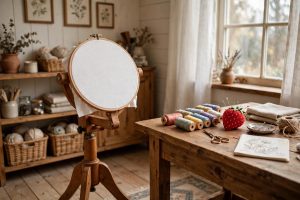

A diy dreamcatcher kit for bedroom decor crafts is a box with all the parts you need to make your own dreamcatcher. The box holds a metal or wood hoop, cord for the web, feathers, beads, and string for hanging. You do not need to buy each part on its own. You open the box and start work at once.
Many people hang dreamcatchers in bedrooms. The round web and the soft feathers give the room a calm, handmade look. A kit makes the craft easy for a first try. The guide inside shows each step in plain order. Even a child with an adult helper can finish one in an afternoon.
Why a Dreamcatcher Kit Matters
Dreamcatchers have a long story. They come from the Ojibwe people of North America. The round hoop stands for the circle of life. The web was said to catch bad dreams, while good dreams slipped through to the sleeper. Today most buyers make them for home decor. The old meaning still adds depth to the craft.
A diy dreamcatcher kit for bedroom decor crafts matters because it takes the guesswork out. Buying parts one by one takes time. You may pick a hoop that is too small. You may buy cord that is too thick for the beads. A kit solves this. The parts are sized to fit each other.
The kit also saves money. A bag of beads, a spool of cord, and a hoop can cost more than the kit itself when bought apart. Craft shops put the parts together in one box and sell it for less. For a bedroom project, that is good value.
What Is Inside the Box: Diy Dreamcatcher Kit for Bedroom Decor Crafts
Most kits hold the same basic parts. The hoop is the frame. It is often made of metal or bent wood, five to eight inches wide. Some kits add a second small hoop for a double design.
The web cord is a thin waxed thread or faux sinew. It wraps around the hoop and then loops across the open space to form the web. Kits also include long strands for the hanging tails.
Beads are the bright part of the kit. Most kits hold glass, wood, or plastic pony beads in many colors. Some kits add metal spacer beads. A bead needle may be in the box to help push the cord through small holes.
Feathers hang from the tails. Kits often use dyed feathers in white, brown, or bright colors. A few kits use faux leather strips instead of feathers. Glue or a small hook for hanging may also be inside.
The guide is the most useful part. It shows pictures of each step. Read it once before you start. Lay all parts on a table so you can see them. Good craft guides and craft blogs can also help a new maker.
How to Choose the Right Kit
First, think about skill level. Some kits say “beginner” on the box. These have large beads with big holes and a pre-notched hoop. They are the best pick for a first try. Kits marked “advanced” may ask you to tie small knots with thin cord. Save those for later.
Second, look at the size. A five-inch hoop suits a small wall or a headboard corner. An eight-inch hoop makes a bold piece over a bed. Measure your wall space before you buy. A kit for a large hoop also uses more cord, so check that the box holds enough.
Third, check the colors. Kits come in themes. A natural kit holds wood beads and brown feathers. A boho kit holds bright beads and dyed feathers. Pick a theme that fits your bedroom. If you want to match a wall hanging kit for boho home decor, a bright kit works well.
Fourth, read the parts list on the box. A good kit lists every part and its count. The list should name the hoop size, cord length, bead count, and feather count. Boxes with no list may be missing parts.
Types of Dreamcatcher Kits
The classic single-hoop kit is the most common. It makes one round dreamcatcher. It is the best choice for a first project.
A double or triple hoop kit makes layered dreamcatchers. Two or three hoops hang in a row or a triangle. These kits take more time but look rich on a wide wall.
A mini kit makes small dreamcatchers, two to three inches wide. These suit key chains, car mirrors, or a child’s room. They are also good practice before a large web.
Some kits have a theme. A moon and star kit holds beads shaped like the night sky. A nature kit holds wood beads and plain feathers. Theme kits help you match a room style without hunting for parts.
A few kits skip feathers and use ribbons or yarn tails. These are a good pick for homes where feathers shed or cause allergies. The finished piece still has the classic web look.
Step by Step: Weaving Your Dreamcatcher
Clear a table and lay out the parts. Tie the web cord to the hoop with a firm knot. Wrap the cord around the hoop in a tight spiral, close to the last wrap, until the hoop is covered. Tie the end with a knot and trim it short.
Now make the web. Tie the cord near the top of the hoop. Stretch it to a point a few inches along the hoop and loop it around the hoop, not through it. Keep the cord a little loose. Move around the hoop in this way until you reach the start. This makes the first ring.
For the next ring, loop the cord around the middle of each loop of the last ring instead of the hoop. Pull each loop a little snug. Add a bead to the cord every few loops if you wish. Keep going ring by ring. The web will grow toward the center. End with a knot in the middle and trim the cord.
Now add the tails. Cut three or four long strands of cord. Tie them to the bottom of the hoop. Slide beads onto each strand and tie a knot below each bead to hold it. Tie a feather to the end of each strand with a small knot. Use a drop of craft glue on the knot if you want extra hold.
Tie a loop at the top of the hoop for hanging. Your dreamcatcher is done. It should take one to two hours for a first try. Craft technique guides can give you more ideas for neat knots.
Cost and Price
A basic diy dreamcatcher kit for bedroom decor crafts costs about six to twelve dollars in the United States. These kits hold a small hoop, cord, beads, and feathers. They are fine for a first project.
A mid-range kit costs about twelve to twenty dollars. These kits hold a larger hoop, more beads, and better feathers. Some add a second hoop or a wood bead set.
A deluxe kit costs about twenty to thirty-five dollars. These may hold three hoops, glass beads, and a full-color guide. Some deluxe kits also add a wall hook and hanging nails.
Watch for extra costs. If the kit has no glue, you may need a small bottle. If the beads have tiny holes, you may need a bead needle. These extras add a few dollars. Buying from a big craft retailer or a craft supply store often means fair prices and easy returns.
Care and Upkeep
A dreamcatcher is light decor, but it still needs care. Dust it once a month with a soft brush or a hair dryer on cool air. Do not use water. Water can stain feathers and weaken cord.
Keep it out of bright sun. Sun fades dyed feathers and beads over time. A wall beside the bed, away from the window, is a good spot.
Keep it away from damp air. Bathrooms and damp basements can make the cord sag and the feathers clump. A dry bedroom is the right home for it.
Check the knots once a year. Lift the dreamcatcher and look at the tails. If a feather hangs loose, tie it again or add a drop of glue. If a bead slips, add a knot below it. Small fixes keep it looking new.
Safety Notes
Feathers and small beads can be a choke risk for small children and pets. Keep loose beads in the box until you use them. Hang the finished dreamcatcher where a toddler cannot reach it.
Some dyed feathers have a strong smell when new. Air the kit parts on a table for a day before you start. If the smell is strong, work near an open window.
Craft glue can irritate skin and eyes. Use a small amount and keep the tube capped when not in use. Wash hands after the craft. The consumer safety site lists craft product safety rules worth a read.
Keep scissors and bead needles away from young children. Let an adult cut cord and trim feathers. A child can do the weaving and bead sliding with help.
Where to Buy
Craft stores are the easiest place to buy. Big chains carry many kits in the craft aisle. You can see the box, read the parts list, and compare colors. Staff can answer simple questions.
Online shops carry a wider range. Online marketplaces sell handmade-style kits from small sellers. Large online retailers carry many brands at low prices. Check buyer reviews before you order. Reviews often say if parts were missing.
Discount stores and big box stores sometimes carry kits in the craft section for less money. The range is smaller, but the price is good. An art supply shop like Blick can be a good source for better cord and beads if you want to upgrade a kit.
Matching Your Bedroom Style
A dreamcatcher should fit the room. In a plain room with white walls, a bright kit adds color. Pick beads that match your bed cover or curtains. The piece will look planned, not random.
In a boho room, a natural kit with wood beads fits best. Pair it with a macrame plant hanger or a woven wall piece. The textures work well together.
In a child’s room, a mini kit in bright colors is a sweet pick. Hang it near the bed where the child can see it. Let the child pick the bead colors. The craft becomes a memory, not just decor.
For a calm look, pick a kit with white or cream feathers and soft beads. These blend with light walls and do not draw the eye too much. They add texture without noise.
FAQ
How long does it take to make a dreamcatcher from a kit? A first try takes one to two hours. Wrapping the hoop takes about twenty minutes. Weaving the web takes thirty to forty minutes. Adding tails, beads, and feathers takes the rest of the time. A second dreamcatcher goes faster.
What age is a dreamcatcher kit good for? Most kits suit ages eight and up with adult help. The weaving needs some finger skill. Small beads and needles need adult care. Teens and adults can work alone. Always check the age mark on the box.
Can I make a dreamcatcher without a kit? Yes. You need a hoop, cord, beads, feathers, and string. But buying each part takes time and can cost more. A kit is the easy path for a first try. Later, you can buy parts in bulk and design your own.
Do dreamcatchers really catch bad dreams? That is the old story from Ojibwe tradition. Today most people make them for decor and craft joy. The story adds meaning, but there is no proof either way. Many makers enjoy the craft for its calm, slow pace.
How do I hang a dreamcatcher on the wall? Use a small nail, hook, or adhesive wall hook. Tie a loop of cord at the top of the hoop. Hang the loop on the hook. Keep it level. For heavy triple-hoop pieces, use a nail in a wall stud or a strong anchor.
Can I wash a dreamcatcher? No. Do not wash it. Water ruins feathers and weakens cord. Dust it with a soft brush or cool air from a hair dryer. If one feather is stained, you can snip it off and tie on a new one.
A Final Word
A diy dreamcatcher kit for bedroom decor crafts is a small box with a big reward. It holds every part you need. It teaches a calm hand skill. It ends with a handmade piece on your wall. Pick a kit that fits your skill and your room. Take your time with the web. Add beads where they please your eye. Hang it where you will see it each night. The craft is simple, and the result is yours alone. For more home craft ideas, see craft project ideas and try a suncatcher kit for your windows next.
References
Amazon. (n.d.). Online shopping. https://www.amazon.com Blick Art Materials. (n.d.). Art and craft supplies. https://www.dickblick.com Bob Vila. (n.d.). Home improvement advice. https://www.bobvila.com Etsy. (n.d.). Handmade and craft marketplace. https://www.etsy.com Family Handyman. (n.d.). DIY home repair and maintenance. https://www.familyhandyman.com JOANN. (n.d.). Fabric and craft supplies. https://www.joann.com Michaels. (n.d.). Arts and crafts supplies. https://www.michaels.com This Old House. (n.d.). Home renovation guidance. https://www.thisoldhouse.com U.S. Consumer Product Safety Commission. (n.d.). Product safety information. https://www.cpsc.gov Walmart. (n.d.). Everyday low prices. https://www.walmart.com
Was this guide helpful?

About James Carter
The My Garden US editorial team writes practical, in-depth home and garden guides for American homeowners — tested advice, no fluff.
You May Also Like

DIY Terrarium Kit for Succulents and Plants: A Complete Beginner Guide
July 21, 2026 0 views
Best Fabric Paint for Shoes and Clothes DIY: A Complete Guide
March 28, 2026 0 views
Pom Pom Maker Kit for Yarn Crafts Kids: A Simple Guide for Parents
May 27, 2026 0 views