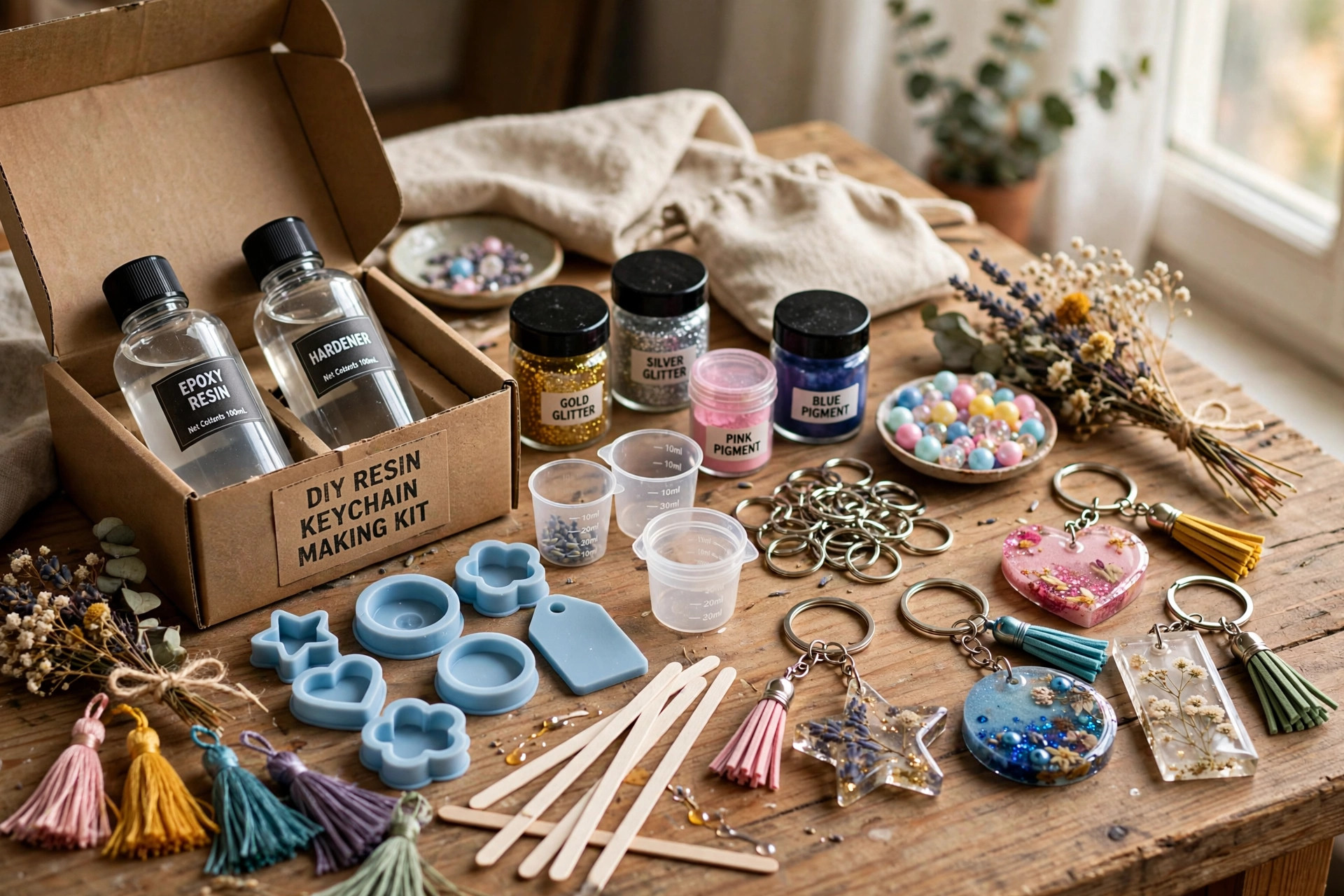

A DIY keychain kit for resin and crafts gifts brings everything a beginner needs into one box. It lets a new crafter mix clear resin, pour it into small molds, and turn the result into keychains that look made by hand because they are. The work takes some patience. It takes some care with the fumes and the cure time. But the learning curve is gentle, and the results make fine gifts for birthdays, holidays, and school friends. This guide explains why such a kit matters, what to look for when you buy one, the types on the market, the cost, the care of the tools, the safety rules, and the questions most first-time buyers ask.
Why It Matters
A good DIY keychain kit for resin and crafts gifts matters because it removes the guesswork. A person new to resin craft can feel lost when each item must be bought apart. The resin needs a hardener in the right ratio. The molds need a release agent or they stick. The key rings need jump rings of the right size to connect them. A kit puts these parts together in one place, and the enclosed instructions give a beginner a path to follow from the first mix to the last polish.
Gifts made by hand carry a weight that store-bought goods do not. A small resin keychain with a pressed flower or a swirl of blue dye shows thought. It shows time. For a parent making gifts with a child, or for a teen making party favors, the kit keeps the cost low and the fun high. A single kit can yield twenty or thirty pieces. That is enough for a classroom, a team, or a holiday table.
A DIY keychain kit for resin and crafts gifts also matters because it teaches a real skill. Resin casting is the base of a wider craft. Once a maker learns to mix, pour, and cure small keychains, the same skill extends to coasters, trays, and jewelry. The kit is a doorway. It costs little and asks little, and it gives back a sense of what resin can do.
For many buyers the kit is also a test. Before they spend more on large molds or casting resin in bulk, they want to know if they enjoy the work. A small kit answers that question without a big outlay. If the work pleases them, they buy more resin. If it does not, the box can be passed to a friend.
What to Look for When You Choose a Kit: Diy Keychain Kit for Resin and Crafts Gifts
Not every kit suits every buyer. The shelves of Michaels and Joann carry many options, and the listings on Amazon and Etsy run into the hundreds. The points below show what to weigh before you buy a DIY keychain kit for resin and crafts gifts.
Resin Type and Safety Rating
Most keychain kits use epoxy resin, which comes as two parts that mix in a one-to-one ratio. Check the label for a non-toxic claim and for ASTM or art-material safety marks. Food-safe claims do not matter for keychains, but low-odor resin does. A beginner kit with low fumes is far more pleasant to use in a home room.
Mold Variety
Count the molds and study their shapes. A good starter kit has at least ten mold shapes: circles, hearts, stars, letters, and simple tags. Letter molds are prized for gift making because they let the maker cast a name initial. Avoid kits whose molds look cloudy or thin, as they tear after a few pours. Thick silicone molds last through many batches.
Hardware Quality
The metal parts decide how long the finished keychain lasts. Look for split rings and chain links made of stainless steel or sturdy iron. Thin rings bend open in a pocket and the keychain is lost. A kit with at least twenty sets of hardware gives the maker room to learn and to fix mistakes.
Tools and Extras
A full kit should hold mixing cups, wood or plastic sticks, gloves, pipettes or droppers, tweezers, and a small drill for touch-ups. Extras like gold foil flakes, dried flowers, glitter, mica powder, and color pigments turn a plain pour into something bright. Kits that skip gloves and cups force a separate trip to the store, which defeats the purpose of a kit.
Clear Instructions
The best kits enclose a printed guide with mix ratios, pour tips, cure times, and bubble-removal tricks. A short video link can help too. Buyers on sites like Etsy often praise kits whose instructions feel written by a real crafter rather than a factory. If the listing shows no picture of the guide, treat the kit with caution.
Types of DIY Keychain Kits
Kits for resin keychains fall into a few clear types. Each suits a different buyer.
The starter box is the most common type. It holds a small resin set, about eight to twelve molds, one set of tools, and a modest pack of decorations. It suits a first-timer or a child working with an adult. It costs the least and asks for no extra supplies.
The gift-grade kit steps up. It holds more molds, letter molds for names, better hardware, and a wider color range. Some include small display cards or gift bags so the finished pieces can be wrapped at once. This type suits buyers who plan to give the keychains away at weddings, showers, or holidays.
The craft-fair kit is built for volume. It holds larger resin bottles, many molds, and hardware in bulk. A maker who sells at markets or online will outgrow a starter box fast, and this type saves repeat orders. It costs more up front but lowers the cost per piece.
The kids’ safe kit deserves its own note. Some makers sell resin-style keychains made with air-dry clay or shrink plastic instead of true epoxy resin. These kits avoid fumes and sharp drills, so they suit young children. They do not produce the glass-clear look of real resin, but they keep the activity safe for a family table.
Beyond these, themed kits appear each season. A Christmas kit may hold red and green pigment with tree and snowflake molds. A Halloween kit may hold orange dye and ghost shapes. These are fun for holiday gifts, though a general starter kit can make the same shapes with the right pigment.
Cost and Price
The price of a DIY keychain kit for resin and crafts gifts runs from about twelve dollars to about sixty dollars. A basic starter box sits near the low end. A gift-grade kit with letter molds and gift bags sits near thirty-five dollars. A craft-fair kit with bulk resin and molds can reach sixty dollars or more.
The cost per keychain stays low. A mid-range kit that yields twenty-five keychains costs about one dollar per piece in materials. Gift bags and cards add a little more. Compared with shop-bought resin keychains, which often sell for six to ten dollars each, the home-made piece is a bargain.
Buyers should watch for hidden costs. A kit without gloves or mixing cups forces extra purchases. Resin that needs a heat gun to remove bubbles adds another tool. And a maker who falls in love with the craft will soon buy extra pigment, molds, and resin. The kit is the start, not the end, of the spending for many hobbyists.
Sales cycles help. Craft stores run sales on kits near holidays and back-to-school season. Online marketplaces often cut prices in January when sellers clear stock. A buyer in no rush can save ten to twenty percent by waiting for a sale. Checking reviews at Dick Blick or the craft sections of The Home Depot before buying can also flag kits whose resin arrives cloudy or whose molds tear early.
Care and Upkeep
Resin tools last long if they are cleaned at once. Wash mixing cups and sticks with soap and warm water before the resin sets. Once resin cures in a cup, the cup is scrap. Silicone molds wipe clean with a damp cloth. A thin film of cured resin inside a mold can be peeled out with care, but rough scraping tears the silicone.
Store resin bottles upright in a cool, dark place. Heat and sunlight shorten the life of uncured resin. Most epoxy resins stay good for about one year after opening. Write the date on the bottle when you open it. Pigment jars and glitter vials need no special care beyond tight lids.
Keep metal hardware dry. Split rings can rust in damp craft boxes. A small zip bag with a silica packet keeps them bright. Finished keychains store well in a drawer, but keep them out of long sun exposure. Strong sun can yellow clear resin over time.
Clean-up after each session matters more than anything. Resin that drips on a table cures hard and will not come off without sanding. Cover the work table with a plastic sheet or a silicone mat before you pour. Wipe tools the moment the work ends. These small habits keep the kit ready for the next batch.
Safety
Resin work is safe when a few plain rules are followed. They matter most for a beginner using a DIY keychain kit for resin and crafts gifts for the first time.
Work in a room with moving air. Open a window or run a fan. Epoxy resin gives off fumes while it mixes and while it cures. Low-odor resin is still resin, and a steady supply of fresh air keeps the head clear. Never mix resin in a small closed room.
Wear gloves every time. Nitrile gloves protect the skin from the resin and the hardener. Some people grow sensitive to resin after repeated skin contact, and the rash can be lasting. Gloves are cheap. Wear them.
Keep resin away from eyes and mouth. Safety glasses cost little and stop a splash. Do not eat or drink at the work table. Keep small children and pets out of the room while resin is open. Cured resin is inert and safe to handle, but liquid resin is not.
Read the cure time on the bottle and honor it. Most epoxy resins need twenty-four hours to cure fully. A keychain that feels dry on top may still be soft inside. Handle it too soon and fingerprints set into the surface forever.
If a spill lands on skin, wash it with soap and water at once. Do not use harsh solvents on skin. If resin lands in an eye, rinse with water and seek care. The guidance from Bob Vila and This Old House on home workshop safety applies here too: treat the craft table like a small workshop and keep a tidy, lit, and aired space.
FAQ
How long does a resin keychain take to make? Active work takes about thirty minutes per batch: mixing, adding color, pouring, and placing decorations. The cure takes about twenty-four hours. A maker who plans ahead can pour one batch in the evening and pop it from the mold the next night.
Can children use a DIY keychain kit for resin and crafts gifts? Older children can help with an adult close by. The adult should mix and pour the resin while the child adds glitter, flowers, and color choices. Kits made for kids that use air-dry materials instead of resin suit younger children better.
Why does my resin keychain have bubbles? Bubbles form when the mix is stirred too fast or when the resin is too cold. Stir slowly with a flat stick and warm the resin bottles in a bowl of warm water first. A quick pass with a heat gun or a straw-blown breath of air pops surface bubbles before the pour sets.
How many keychains does one kit make? A starter kit makes about fifteen to twenty-five keychains. A gift-grade kit makes thirty to fifty. The true number depends on mold size and how thick each piece is poured. Letter molds use less resin than large shapes.
Can I use the kit to make other resin crafts? Yes, with limits. The resin in the kit works for coasters, pendants, and small tray pours too. But keychain molds are small, so large projects need bigger molds and more resin. Many makers who start with keychains move on to jewelry and coasters with their next order, much like the path from a DIY soap dispenser kit for bathroom crafts to full bath projects.
Where can I find more craft kit ideas? Craft stores and marketplaces carry kits for many small gifts. A DIY bath bomb kit for gifts and crafts pairs well with keychains in a gift set, and an embroidery pattern transfer pen for fabric crafts opens the door to stitched gifts.
A Short Final Word
A DIY keychain kit for resin and crafts gifts is one of the friendliest starts in the craft world. It costs little, teaches a real skill, and turns out gifts that people keep on their keys for years. Choose a kit with good resin, sturdy molds, and real hardware. Work with fresh air, gloves, and patience. The first pour may not be perfect. The fifth will be good. By the tenth, the maker will be teaching friends how to do it.
References
Amazon. (n.d.). Online shopping. https://www.amazon.com Blick Art Materials. (n.d.). Art and craft supplies. https://www.dickblick.com Bob Vila. (n.d.). Home improvement advice. https://www.bobvila.com Etsy. (n.d.). Handmade and craft marketplace. https://www.etsy.com JOANN. (n.d.). Fabric and craft supplies. https://www.joann.com Michaels. (n.d.). Arts and crafts supplies. https://www.michaels.com The Home Depot. (n.d.). Home improvement products. https://www.homedepot.com This Old House. (n.d.). Home renovation guidance. https://www.thisoldhouse.com
Was this guide helpful?

About James Carter
The My Garden US editorial team writes practical, in-depth home and garden guides for American homeowners — tested advice, no fluff.
You May Also Like

Best Craft Storage Bins for Yarn and Fabric
April 15, 2026 0 views
DIY Mosaic Tile Kit for Garden Art Projects: A Plain Guide for Home Crafters
April 9, 2026 0 views
DIY Plant Hanger Kit Macrame for Beginners: A Complete Guide
June 12, 2026 0 views