Introduction
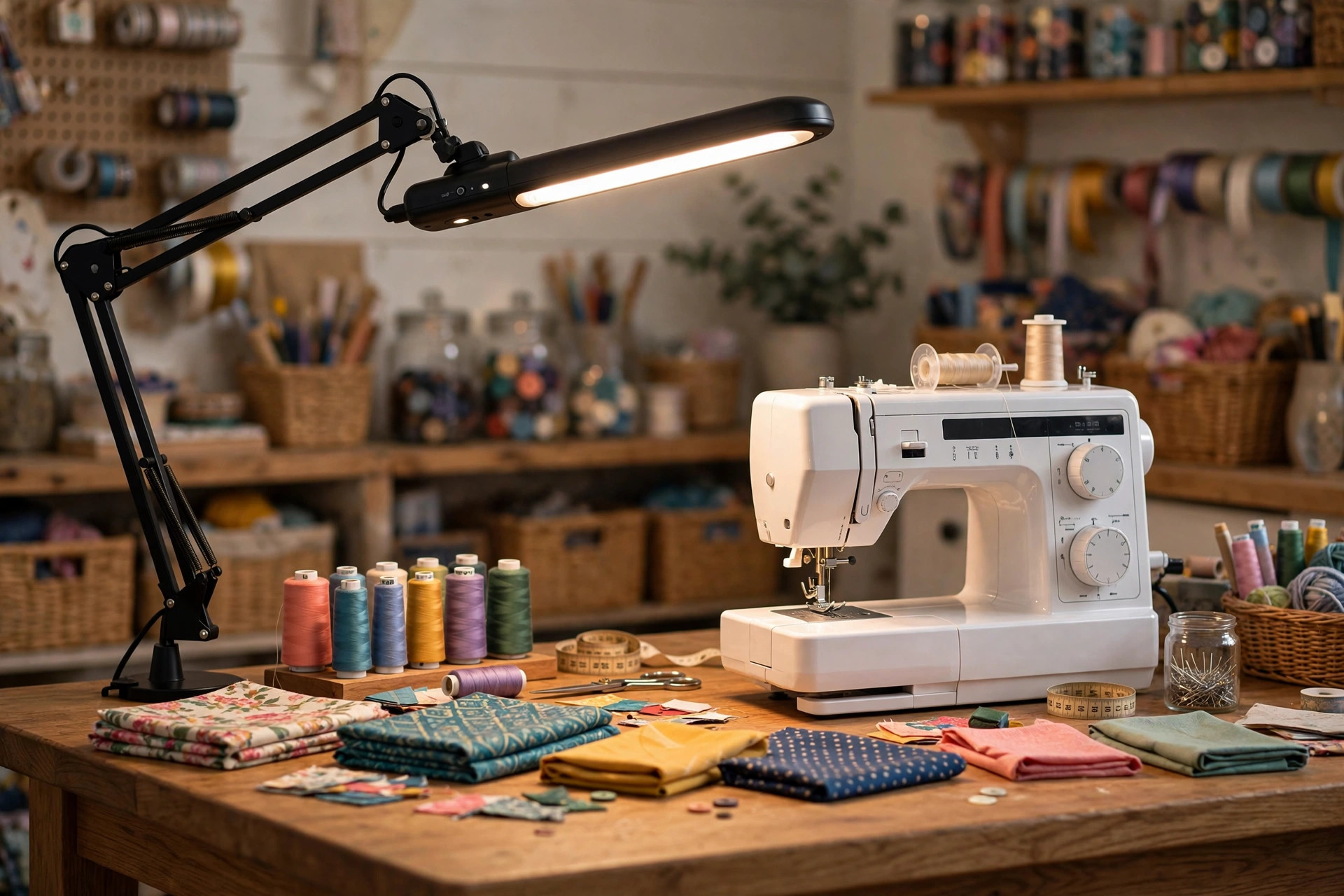
The best craft light for sewing and detailed work is the lamp that shows every stitch, thread, and grain of fabric in clear, honest color. Many people try to sew or do fine craft work under a single ceiling light. The result is tired eyes, bent posture, and mistakes that only show up the next morning. A proper craft lamp changes all of that. It puts bright, even light exactly where your hands are working, and it lets you see true colors instead of guessing them. This guide explains how to pick a lamp for sewing, quilting, embroidery, and other small-scale work, what features matter most, and how to keep your lamp working well for years.
Why Good Light Matters for Sewing and Fine Crafts: Best Craft Light for Sewing and Detailed Work
Sewing is exact work. A seam is sewn one eighth of an inch from the edge. A thread must match the fabric. A needle must find the eye of a button. None of this can be done well in dim light. Studies of workplace lighting have shown that fine manual tasks need much more light than reading a newspaper. When you sew by hand or guide fabric under a machine needle, your eyes are working hard. Poor light makes them work harder, and the strain shows up as headaches and sore eyes after an evening at the craft table.
Color is the second reason. Cloth and thread look different under warm kitchen light than they do by a window at noon. Many sewers have bought thread that seemed to match in the store, only to find at home that it was two shades off. A craft lamp with a high color rendering rating shows colors close to how they appear in daylight. This matters for quilting, where many fabrics must sit side by side, and for mending, where the patch should disappear into the garment. If you have a sewing machine for your home crafts, good light over the needle plate is just as important as the machine itself.
Good light also helps your body. When the work area is dim, people lean forward and hunch their shoulders. Over time this leads to neck and back pain. A bright, well-placed lamp lets you sit upright and keep a comfortable distance from the work. The craft room stays a pleasure instead of a source of aches.
What to Look for When Choosing a Craft Lamp
Brightness
Brightness is measured in lumens. For close sewing work, look for a lamp that puts out at least 800 to 1,000 lumens at the work surface. Some lamps list only the bulb wattage, but with LED lamps the wattage tells you little about the light output. Compare lumens instead. A lamp that seems bright across the room may still leave your stitching in shadow, so check how the light is aimed as well as how strong it is.
Color Temperature
Color temperature is measured in Kelvin, written as K. Lower numbers look warm and yellow, like an old kitchen bulb. Higher numbers look cool and blue-white, like a hospital hallway. For sewing and detailed craft work, a neutral range of 4,000 to 5,000 K works best for most people. It is close to daylight without the harsh feel of very cool light. Many modern craft lamps let you switch between warm, neutral, and cool settings. If you sew mostly in the evening, a neutral setting keeps colors true. Some crafters prefer warm light for relaxed hand sewing, then switch to cool light for matching thread and fabric. Retailers such as Michaels and Joann carry lamps with this feature, and home centers like Home Depot stock a wide range of LED desk lamps as well.
Color Rendering
The color rendering index, or CRI, rates how truly a lamp shows colors. It runs from 0 to 100. Ordinary bulbs may score in the 70s. For craft work, look for a CRI of 90 or above. This makes reds, greens, and blues show up as they really are. Cheap lamps often hide this number, which usually means it is low. A high CRI lamp costs a little more, but it pays for itself the first time you match a button or pick out embroidery floss under it. Product testing groups such as Consumer Reports publish ratings that sometimes include lighting products, and they can help you compare real performance.
Size and Coverage
A small sewing table needs a lamp that lights about two feet square without spilling harsh glare across the room. Ring lamps and wide bar lamps give even coverage with few shadows. A single narrow bulb can throw shadows from your hands and the sewing machine arm. If you quilt large pieces, you may need two lamps, one on each side of the machine, to remove shadows from both directions.
Adjustability
The head and arm of the lamp should move and stay where you put them. A lamp that slowly droops back to one position is useless for angled work. Look for firm hinges or a gooseneck that holds its shape. Clamp-style lamps grip the edge of the table and save space, which helps in a small room with a craft organizer. Floor lamps with an adjustable arm work well beside a foldable craft table when desk space is tight.
Extra Features Worth Having
A built-in magnifier helps with threading needles and counted cross-stitch. Dimmable controls let you lower the light for cutting fabric and raise it for hand sewing. A USB charging port on the base is a small bonus. Touch controls are easier to use with thread on your fingers than tiny knobs.
Types of Craft Lamps and Which Suits Your Work
Desk and Clamp Lamps
These sit on the table or grip its edge. They are the most common choice for sewing machines because they put light right at the needle. A gooseneck arm lets you aim the light at an angle that skips glare off the fabric. Clamp lamps free the table surface for fabric and patterns. They suit renters and anyone whose craft table doubles as a desk.
Floor Lamps With Task Arms
A tall floor lamp stands beside your chair and bends over your shoulder. It lights the lap for hand sewing, knitting, and embroidery. Because it does not sit on the table, it never gets in the way of large quilt tops or cutting mats. Many models have a heavy base that will not tip when you adjust the arm.
Ring and Bar Lights
A ring light is a circle of LEDs around a center opening. It gives shadow-free light because the light comes from all sides at once. It is popular with people who film their crafts, but it also serves plain hand work well. A bar light is a long strip of LEDs that spreads light evenly across a wide area. Both types suit painters, bead workers, and anyone whose work covers a broad surface. Art supply stores like Blick carry several designs aimed at fine detail work.
Lighted Magnifiers
These combine a lamp with a magnifying lens on an arm. They are made for the very smallest work: hand embroidery, bead stringing, miniature painting, and needle threading. The lens flips up when you do not need it. If your eyes are not what they used to be, a lighted magnifier can add years of comfortable crafting. For tips on setting up a comfortable work area, home guides from This Old House and Family Handyman cover workshop and craft-room lighting plans.
Cost and Price: What to Expect
A basic LED desk lamp for crafts sells for about 20 to 40 dollars. It will give decent light and last several years. Mid-range lamps with adjustable color temperature, dimming, and a sturdy arm run 50 to 90 dollars. These are the sweet spot for most sewers. High-end craft lamps with built-in magnifiers, daylight color, and heavy-duty arms cost 100 to 200 dollars or more.
Price is not the whole story. LED lamps use little electricity, often under 15 watts, so running costs are tiny. A lamp that lasts ten years at a modest price costs less per year than replacing cheap lamps that break. Check the warranty. A lamp with a two-year warranty from a known brand is usually a safer buy than a bargain lamp with no warranty at all. Price guides and project advice from Bob Vila can help you judge what a fair price looks like for home lighting upgrades.
Watch for hidden costs. Some lamps need special bulbs that cost 15 dollars to replace. Built-in LED panels cannot be replaced at all, so the whole lamp is scrap when the panel dies. A lamp that takes a standard LED bulb can be fixed cheaply and kept in service for decades. Reviews on Good Housekeeping and The Spruce often note which models use replaceable bulbs.
Care and Upkeep of Your Craft Lamp
A craft lamp needs little care, but a few habits will keep it bright. Dust the shade and the LED panel once a month with a dry cloth. Dust on the lens can cut light output by a surprising amount. Sewing rooms collect thread lint, so wipe the lamp head when you clean your machine.
Keep the lamp dry and away from iron steam. Moisture can damage the electronics in the base. Do not coil the cord tightly around the arm, because repeated bending wears the wires inside. Leave some slack so the arm can move freely.
If the lamp uses a replaceable bulb, note the bulb type and keep a spare on hand. LED bulbs fade slowly over years rather than burning out at once. When your sewing area starts to feel dimmer than it used to, the bulb may be aging. Government energy guides at Energy.gov explain how LED lifespan and brightness are rated, which helps you read the numbers on the box.
Check the hinges and joints twice a year. Tighten any screws that have worked loose. A lamp that will not stay aimed is a lamp you will stop using. With simple care, a good craft lamp should serve you for many years of projects.
Safety Notes
A craft lamp is a small appliance, and it should be treated like one. Buy lamps that carry a safety mark from a testing lab, such as UL or ETL. These marks mean the wiring and materials were checked against safety standards. Unmarked bargain lamps sometimes use thin cords and poor insulation.
Place the lamp where it cannot fall onto fabric or into a wastebasket of scraps. Fabric piled against a hot halogen lamp can scorch, though this is rare with modern LEDs, which run cool. Still, keep a few inches of air around the lamp head so heat can escape.
Do not overload the outlet. A craft room may hold a sewing machine, an iron, a lamp, and a phone charger on one strip. The iron draws the most power by far. If the breaker trips, move the iron to its own outlet. Keep cords off walkways where they can be tripped over, and unplug the lamp when you leave the house for a long trip.
For households with children or pets, a clamp lamp mounted high on a shelf, or a floor lamp with a heavy base, is safer than a lamp that sits at the edge of a low table. A pulled-down lamp can break a bulb and startle a small child. Choose stability over style in a busy family room.
Frequently Asked Questions
How bright should a sewing lamp be?
For hand sewing and machine work, aim for 800 to 1,000 lumens at the work surface. This is roughly what a 60-watt old-style bulb produced, but a modern LED makes that much light on about 10 watts. If you share the lamp with general room light, the higher end of the range is better.
Is warm or cool light better for sewing?
Neutral light around 4,000 to 5,000 K suits most sewing. It shows thread and fabric colors honestly. Warm light feels cozy but can make blues and greens look muddy. Very cool light can feel harsh and make reds look washed out. A lamp with switchable color temperature lets you pick what fits each task.
Do I need a magnifying lamp for embroidery?
Not every embroiderer needs one, but many find it helpful. A lighted magnifier makes counted stitches, fine silk thread, and needle threading much easier. If you embroider for long sessions or your eyes tire quickly, a magnifier is worth trying. Many craft stores let you test display models before you buy.
Can I use a regular desk lamp for crafts?
You can, but a lamp made for task work usually aims light better and offers truer color. A plain desk lamp with a wide shade may light the room nicely while leaving your stitching in shadow. If you use a regular lamp, add a bright, daylight-balanced LED bulb and aim the shade directly at the work.
Where should I place the lamp?
Place the main lamp on the opposite side from your writing hand, so your hand does not cast a shadow on the work. Right-handed sewers usually put the lamp on the left, and left-handed sewers on the right. For machine sewing, the lamp should also light the needle plate and the feed area, not just the table behind the machine.
How do I match thread color under a lamp?
Hold the thread against the fabric under the lamp and step back a few feet. Colors that match at arm’s length will match in daylight. Check the match again near a window if you can. A lamp with a CRI of 90 or higher makes this test much more reliable.
A Final Word
Choosing the best craft light for sewing and detailed work comes down to three things: enough brightness, true color, and light aimed where your hands are. You do not need the most expensive lamp on the shelf. You need one that shows every stitch clearly, lets you sit comfortably, and lasts through years of projects. Take the time to compare a few models, read the brightness and color numbers on the box, and test the lamp at your own table if the store allows it. Your eyes, your posture, and your finished work will all be better for it.
References
Blick Art Materials. (n.d.). Art and craft supplies. https://www.dickblick.com Bob Vila. (n.d.). Home improvement advice. https://www.bobvila.com Consumer Reports. (n.d.). Product reviews and ratings. https://www.consumerreports.org Family Handyman. (n.d.). DIY home repair and maintenance. https://www.familyhandyman.com Good Housekeeping. (n.d.). Product reviews and home advice. https://www.goodhousekeeping.com JOANN. (n.d.). Fabric and craft supplies. https://www.joann.com Michaels. (n.d.). Arts and crafts supplies. https://www.michaels.com The Home Depot. (n.d.). Home improvement products. https://www.homedepot.com The Spruce. (n.d.). Home and garden advice. https://www.thespruce.com This Old House. (n.d.). Home renovation guidance. https://www.thisoldhouse.com U.S. Department of Energy. (n.d.). Energy efficiency and renewable energy. https://www.energy.gov
Was this guide helpful?

About David Wilson
The My Garden US editorial team writes practical, in-depth home and garden guides for American homeowners — tested advice, no fluff.