
A Good First Machine
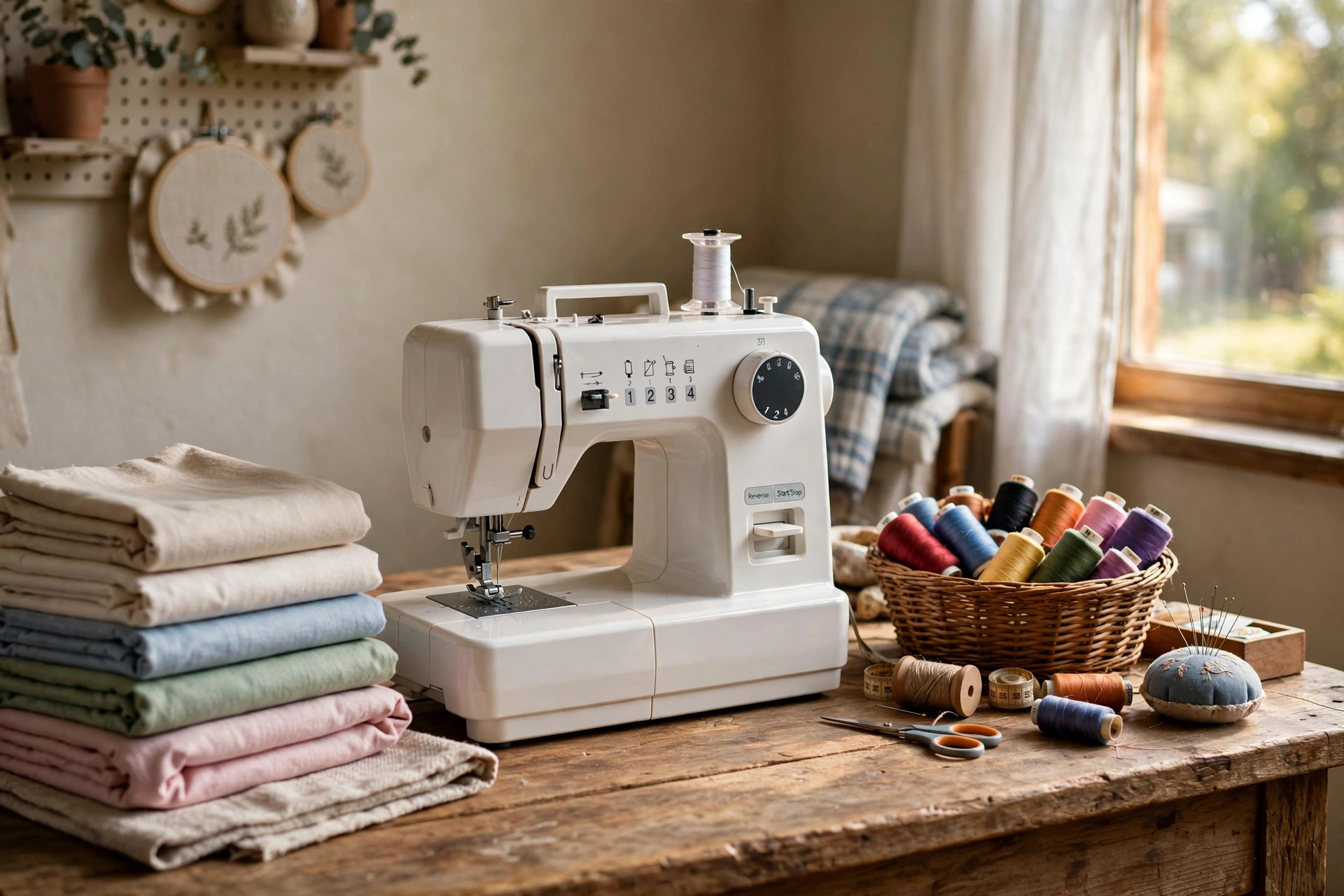
A sewing machine opens the door to a quiet and happy craft. With one small machine on a table, a person can mend a torn shirt, sew a pillow cover, or make a simple quilt square. The best beginner sewing machine for home crafts does not need to be grand or costly. It needs to be simple, strong, and easy to learn.
Many people buy their first machine with worry. They fear they will pick the wrong one. They fear it will be too hard to use. This guide walks through the choice step by step. It covers what matters, what to skip, what to pay, and how to care for the machine once it is home.
Sewing has a long and honest history in American homes. In the years before ready-made goods filled every shelf, families sewed their own clothes and household goods. The machines of that time were heavy and plain. The machines of today are lighter and kinder to new hands. A beginner in a small apartment or a farmhouse kitchen can learn the basics in a single weekend.
Why a Good First Machine Matters: Best Beginner Sewing Machine for Home Crafts
The first machine sets the tone for the whole craft. A machine that jams and tangles will turn a new sewer away from the work. A machine that runs smooth will invite practice. When practice feels good, skill grows fast.
Home crafts come in many shapes. Some people sew gifts for family. Some mend and alter their own clothes. Some make curtains, table runners, or simple toys. All of these jobs ask for the same thing from a machine: straight seams, even stitches, and a motor that does not strain on thick cloth.
A beginner machine is not a lesser machine. It is a machine built for learning. The controls are plain. The parts are few. The manual speaks in clear steps. That is all a new sewer needs, and it is enough.
What to Look for When You Choose
A Short List of Stitches
A new sewer does not need fifty stitch patterns. Six to twelve stitches will serve for years. The two that matter most are the straight stitch and the zigzag stitch. The straight stitch joins seams. The zigzag stitch finishes raw edges and sews stretch cloth. A buttonhole stitch is a nice extra. A blind hem stitch helps with curtains.
Look for a stitch dial or a simple screen that shows each stitch plainly. The best machines mark the dial with small pictures. A picture is easier to read than a number when one is learning.
Ease of Threading and Winding
Threading is the first task every sewer learns. On a good beginner machine, the thread path is marked with arrows or numbers printed on the body. One can follow them in order: spool, guide, tension discs, take-up lever, needle. Some machines have a small needle threader that pushes the thread through the eye. This saves much time and much strain on the eyes.
The bobbin sits under the needle plate and holds the lower thread. A drop-in bobbin sits in a clear cover on top. A beginner can see when the thread runs low. A front-loading bobbin hides in a case under the plate. It takes more steps to change. For a first machine, a drop-in bobbin is the friendlier choice.
Build, Weight, and Size
A sewing machine should feel solid on the table. A metal frame under a plastic cover gives a good balance of strength and light weight. Most beginner machines weigh between twelve and sixteen pounds. That is light enough to carry from a closet to a table, yet heavy enough to sit still while sewing.
A flat bed with a small work area is fine for home crafts. Quilters may later want a wider throat space, which is the gap between the needle and the body. For pillows, mending, and small gifts, the standard size serves well.
Presser Feet and Simple Extras
The presser foot holds cloth flat under the needle. Most machines ship with a general foot and a zipper foot. A buttonhole foot is often in the box as well. These three feet cover most home craft jobs. Extra feet can wait until the sewer knows what she or he truly needs.
A small light above the needle area helps tired eyes. A free arm, made by removing a slide-off tray, lets one sew cuffs and small tubes. A storage tray in the arm holds bobbins, extra needles, and a seam ripper. These plain extras make daily sewing easier.
Types of Beginner Machines
Mechanical Machines
A mechanical machine uses dials and levers. There is no screen. Each dial sets one thing: stitch type, stitch length, or stitch width. Many teachers call these the best first machines. The controls are plain. The sewer learns what each part does. Mechanical machines also tend to cost less. Shops like Michaels and JOANN often stock simple mechanical models near their fabric aisles, and a clerk can show how the dials work.
Computerized Machines
A computerized machine has a small screen and push buttons. It may hold dozens of stitches and sew a buttonhole in one step. The speed can be set slow for learning. These machines cost more. A careful beginner who plans to sew for years may enjoy one. But the extra features do not teach the basics any faster. For home crafts, a mechanical machine is enough.
Mini and Portable Machines
Small mini machines sell at low prices in many stores. They look tempting. Most of them are too weak for real sewing. The motor strains on denim. The stitches skip. A beginner grows tired of fighting the tool. It is better to buy one full-size machine of fair quality than a tiny machine that will sit unused.
Cost and Price
A fair beginner sewing machine for home crafts costs between one hundred and two hundred and fifty dollars in most American stores. Machines at the low end of this range sew well enough for mending and simple crafts. Machines near the high end add a metal frame, more feet, and a better light.
Below one hundred dollars, quality drops fast. The parts wear soon. The tension slips. Above three hundred dollars, the machine starts to serve an intermediate sewer, with features a beginner may not touch for a year or more.
It pays to compare prices across a few sellers. Big home stores such as The Home Depot carry basic models online. Craft chains hold sales near holidays. Two well-known makers of home machines, Brother and Janome, list their full lines on their own sites so a buyer can read the facts before choosing.
Used machines can be a good buy if they have been checked. A local repair shop may sell a serviced machine with a short promise to fix faults. Church sales and estate sales often hold old all-metal machines that still run strong after forty years. A used machine should be tested on two layers of cotton and two layers of denim before money changes hands.
Care and Upkeep
A sewing machine asks for little care, but it asks for it steady. Dust and lint gather under the needle plate with every hour of sewing. Once a month, lift the plate with the small screwdriver from the box and brush the lint out with the soft brush. A clean machine runs quiet and even.
Oil is needed only where the manual names a spot. Many new machines need no oil at all in the first years. When oil is called for, one small drop of clear sewing machine oil is enough. Cooking oil and heavy oils will gum the parts and should never be used.
Needles wear out faster than most beginners think. A dull needle pushes cloth instead of piercing it. The stitches look loose. The machine may skip. Change the needle after every eight hours of sewing, or sooner when it strikes a pin. A pack of universal needles in size 80/12 covers most home craft cloth.
Thread matters more than price suggests. Old thread from a thrift box may snap and shed lint. Fresh all-purpose polyester thread from a craft store sews smooth and holds seams well. Keep the machine covered when it rests. A simple cloth cover keeps dust off the moving parts.
When the machine needs a repair beyond a jam, take it to a trained repair person. A good shop can time the needle and clean the inner parts in under an hour. Advice sites such as Family Handyman, This Old House, and Bob Vila publish plain home repair guides that help a new owner learn which small fixes are safe to try and which belong to a shop.
Safety in the Home
A sewing machine is a safe tool when it is treated with respect. The needle moves fast. Fingers must stay behind the presser foot, never under it. Guide the cloth with a light touch and let the feed dogs, the small teeth under the plate, move it along. Pushing or pulling the cloth bends the needle and can snap it.
Unplug the machine before changing the needle, the presser foot, or the light bulb. Keep the foot pedal on the floor where it cannot be stepped on by mistake. Small children should not run a machine alone. A grown person can sit beside a child, keep hands clear, and turn the hand wheel by hand for the first slow stitches.
Pins and needles belong in a cushion or a magnetic dish, never loose on the table. A stray pin in the carpet can find a bare foot. Good habits learned early keep the craft safe for years.
Frequently Asked Questions
How long does it take to learn to sew?
Most people sew a straight seam on scrap cloth within the first hour. A simple pillow cover can be finished in the first weekend. Neat and even work takes a few weeks of steady practice. An hour of sewing twice a week builds skill faster than one long session a month.
Can a beginner machine sew denim and canvas?
Light and medium cloth is the true home of a beginner machine. Cotton, linen, and light denim sew well. Heavy canvas, leather, and many layers of thick denim will strain a small motor. For thick work, sew slow, use a heavy-duty needle, and never force the cloth through.
Do I need an expensive machine for home crafts?
No. Home crafts like pillow covers, curtains, simple quilts, and mending ask little of a machine. A one-hundred-and-fifty-dollar machine with a straight stitch and a zigzag stitch will serve for years. Money is better spent on good cloth, sharp scissors, and fresh thread.
What is the hardest part for a beginner?
Threading and tension cause the most early trouble. The thread must follow the printed path exactly, and the presser foot must be up while threading so the thread seats in the tension discs. Nine out of ten tangles come from a small miss in this path. When the sewing looks bad underneath, rethread the top thread first. That one step fixes most problems.
Should I buy extra presser feet right away?
No. Use the feet that come in the box for the first months. A general foot, a zipper foot, and a buttonhole foot cover most home craft jobs. When a project truly needs a special foot, such as a walking foot for quilts, buy it then. The craft grows one tool at a time.
Where can I learn simple first projects?
Craft stores and their sites are full of free first projects. Blick Art Materials carries supplies for mixed craft work that pairs well with sewn goods, and simple ideas like paper mache kits for kids art projects or a resin art kit for beginners sit nicely beside a first sewing table. Many sewers also keep craft wire for jewelry on hand to add small handmade details to sewn gifts.
A Final Word
The best beginner sewing machine for home crafts is the one that gets used. Pick a plain and sturdy machine. Learn to thread it with care. Practice on scrap cloth before cutting good cloth. Keep it clean, change the needle on time, and let the machine do the work.
Sewing rewards patience. The first seams will wave and wander. The tenth seam will run straight. By the end of the first month, the machine will feel like an old friend on the table. That is when the true joy of home crafts begins, one quiet stitch at a time.
References
Blick Art Materials. (n.d.). Art and craft supplies. https://www.dickblick.com Bob Vila. (n.d.). Home improvement advice. https://www.bobvila.com Brother. (n.d.). Sewing and embroidery machines. https://www.brother-usa.com Family Handyman. (n.d.). DIY home repair and maintenance. https://www.familyhandyman.com Janome. (n.d.). Sewing machines for home use. https://www.janome.com JOANN. (n.d.). Fabric and craft supplies. https://www.joann.com Michaels. (n.d.). Arts and crafts supplies. https://www.michaels.com The Home Depot. (n.d.). Home improvement products. https://www.homedepot.com This Old House. (n.d.). Home renovation guidance. https://www.thisoldhouse.com
Was this guide helpful?

About Jennifer Lee
The My Garden US editorial team writes practical, in-depth home and garden guides for American homeowners — tested advice, no fluff.
You May Also Like
Best Craft Paint Brushes Set for Acrylics: A Simple Guide for Buyers
January 20, 2026 0 views
DIY Lantern Kit for Patio Decor Crafts USA: A Simple Guide
January 21, 2026 0 views
Best Polymer Clay for Jewelry Making Crafts
February 7, 2026 0 views