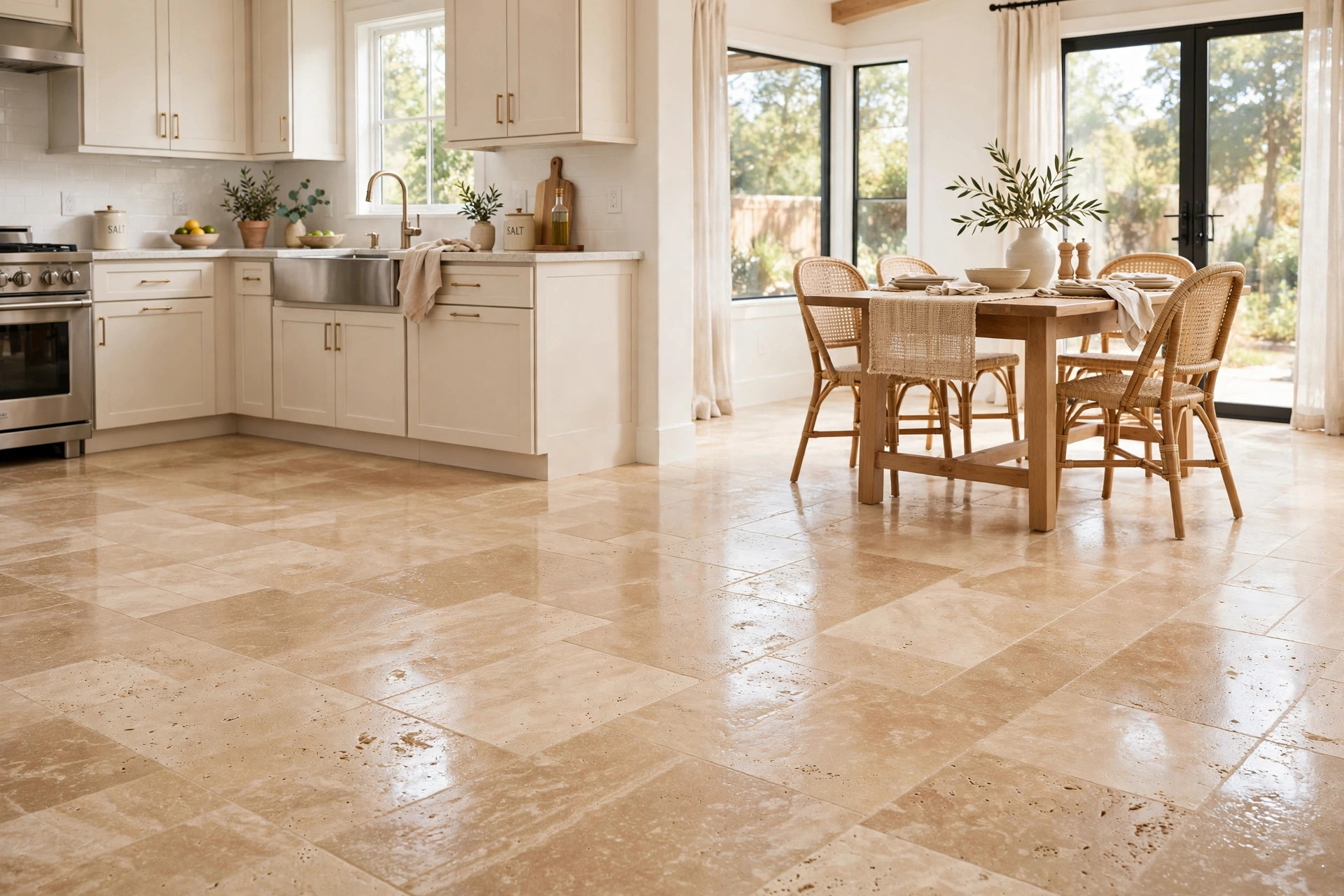

Travertine is a soft natural stone. It looks warm and rich. It also soaks up water and stains. That is why a sealer matters. This guide brings together the best sealer for travertine floors reviews in plain words. It covers what to buy, how to choose, what it costs, and how to keep the floor safe for years.
Why Sealing Travertine Matters
Travertine is full of tiny holes. Water sinks in fast. Spilled juice, oil, or pet urine can leave a mark in minutes. A sealer fills those holes. It gives you time to wipe up a spill. Without it, the stone stains and wears down.
What Reviews Keep Saying
Most travertine sealer reviews agree on one point. A sealed floor is easier to live on. The color stays deep. The stone resists spots. The grout holds up better too. Many reviewers wish they had sealed sooner. Some had to strip old stains before they could start. A first coat at the time of install is best.
What Happens Without a Sealer
An unsealed floor dulls fast. Kitchens see grease spots. Entryways see dark wear paths. Bathrooms see water rings. Once a stain sets deep, no cleaner removes it. A sealer is the cheap guard against all of that. Stone pros at places like Daltile stress care rules for natural stone. Their care pages remind owners that sealing is part of normal upkeep.
How to Read Sealer Reviews Like a Pro: Best Sealer for Travertine Floors Reviews
Reviews help. But not all of them tell the full story. Read them with care.
First, look for reviews on travertine. Sealers for granite or slate do not always suit travertine. Second, note the age of the review. Old formulas change. Third, watch for the look the reviewer wanted. Some want a wet look. Some want no change at all. A five star review means little if the goal was different from yours.
Sites such as Consumer Reports teach a useful habit. They test products side by side under the same rules. Sealer reviews on retail sites are less strict. Still, patterns matter. When ten reviewers praise one brand for beading water, trust the pattern. When five warn that a sealer turned white in the grout, trust that too.
The Home Depot review pages let you sort by rating. Read the low ratings first. They show the real flaws. Then read the middle ratings. They show fair tradeoffs. Skip reviews that only say “great product.” They add nothing.
What to Look for When You Choose
A good sealer does a few clear things. Know the list before you shop.
Penetrating power. The best sealers sink below the surface. They block stains from inside. Surface coatings peel and scratch. Penetrating sealers do not peel.
Water beading. After curing, water should bead on the stone. This is the easy home test. Drip water on the floor. If it beads, the sealer works. If it soaks in dark, you need a new coat.
No color change. Most buyers want the stone to look the same. Many sealers promise this. Some add a slight gloss or a wet look. Pick the look you want on purpose.
Stain resistance. Check that the sealer lists oil and water based stains. Kitchens need both. Entries need both too, since shoes bring in dirt and grease.
Low odor and low VOC. You apply sealer indoors. Strong fumes are a problem. Water based sealers smell less. They are kinder to homes with kids and pets.
Coverage. A gallon covers a set number of square feet. Measure your floor first. Buy enough for two coats. Running out mid job leaves weak spots.
The Spruce home guides are a good place to learn stone care basics. Their articles explain how porous stone behaves. That knowledge helps you judge claims on a sealer label.
Types of Travertine Sealers
Two main types exist. Reviews compare them often. Each fits a different need.
Penetrating Sealers
Penetrating sealers soak into the stone. They leave the surface natural. The floor looks the same as before. You feel no film under your shoes.
Silicone and silane based types lead this group. They repel water well. Fluoropolymer types add oil resistance. This is the top pick in most best sealer for travertine floors reviews. The reason is simple. They last for years. They do not peel. They do not yellow.
Water based penetrating sealers are the safest for indoor use. Solvent based types may bond deeper in dense stone. They smell stronger. Read the label for indoor approval.
Topical Sealers
Topical sealers sit on top of the stone. They form a film. Some add shine. Some give a wet look that darkens the color. They are cheaper up front.
The tradeoffs are real. The film can scratch. It can wear in traffic lanes. It may need stripping before you reapply. Reviews often praise the look at first. Then they complain about upkeep. Topical sealers suit walls or low traffic spots. For floors, most pros pick penetrating.
Enhancer Sealers
Enhancer sealers are a third option. They deepen the color. They make the stone look richer, like it is slightly wet. They still penetrate. Some floors look plain without one. Test a small hidden spot first. The color change is hard to undo.
Home repair guides at This Old House often cover natural stone. Their writers remind readers that stone work rewards slow prep. Sealing is no exception.
Cost and Price
Travertine sealer is not cheap. But the floor beneath it costs far more. Plan the budget with care.
Product cost. A quart of good penetrating sealer runs from about fifteen to forty dollars. A gallon runs from about forty to ninety dollars. One gallon covers roughly one hundred to two hundred square feet per coat. Two coats are the norm. A four hundred square foot floor may need two to four gallons.
Labor cost. A stone care pro charges by the square foot. Typical rates run from one to three dollars per square foot for cleaning and sealing. A four hundred square foot job may cost four hundred to twelve hundred dollars. Reviews from DIY buyers stress that their own labor saved real money.
Value over time. A sealed floor lasts longer. Refinishing a damaged travertine floor costs far more than sealing. Most reviewers call sealer the cheapest insurance for stone.
Retailers like LL Flooring publish care advice for hard surface floors. Their pages show that upkeep is part of the real cost of any floor. Travertine is no different.
If your budget is tight, compare with related projects. A best flooring for home gym basement usa plan has its own costs. Stone sealing keeps the floor you already own. That is usually the cheaper path.
How to Apply Sealer the Right Way
Good reviews often praise easy use. But ease comes from prep. Follow these steps.
First, clean the floor well. Sweep and mop. Use a stone safe cleaner. Let the floor dry for at least twenty four hours. Sealers fail on damp stone.
Second, test a hidden area. Apply a small amount. Wait the full cure time. Check the look and the water bead. This test prevents big regrets.
Third, apply a thin coat. Use a paint pad, a foam roller, or a pump sprayer. Work in small sections. Wipe up extra after five to ten minutes. Puddles turn white or sticky.
Fourth, wait. Then apply a second coat. Most labels give a wait time between coats. Two thin coats beat one thick coat every time.
Fifth, let it cure. Keep foot traffic off for the time the label says. Full cure can take up to seventy two hours. Rushing this step ruins the job.
The Family Handyman site offers step by step project guides. Their floor project articles stress the same rule. Prep is most of the work.
Care and Upkeep After Sealing
Sealing is not a one time job. Keep up with it and the floor stays beautiful.
Test yearly. Drip water on the floor in a few spots. If it beads, the sealer holds. If it soaks in, plan a new coat. Kitchens and entries may need sealing every two to three years. Bathrooms last longer.
Clean with care. Use a pH neutral stone cleaner. Never use vinegar, bleach, or harsh scrubs. Acid etches travertine. It leaves dull spots that no sealer can fix.
Wipe spills fast. The sealer gives you time. It does not make the stone stain proof. Wine, oil, and pet accidents need quick action.
Use mats and pads. Put mats at entries. A good best doormat for rainy climates usa stops dirt at the door. Dirt scratches stone. Put felt pads under furniture legs.
Stone and tile makers agree on gentle care. Shaw Floors publishes care guides for many hard surfaces. The rules match. Soft cleaners, soft tools, quick spill pickup.
If you are planning a bath remodel too, read up on costs first. A curbless shower pan installation cost usa guide shows how tile projects stack up. Sealed travertine in the bath needs the same yearly water test.
Safety
Sealer work is safe when you follow the label. Take these steps.
Open windows and run fans. Wear gloves. Wear a respirator if the label asks for one. Keep kids and pets off the floor until it cures. Store leftovers away from heat.
Slip risk matters. Some sealers add gloss. Wet travertine can be slick. Use a sealer made for floors, not walls. In baths, add bath mats with rubber backs.
Bob Vila home safety articles cover slips and falls. Their advice fits here. Good lighting, dry floors, and the right finish keep a home safe.
Frequently Asked Questions
How often should I seal travertine floors? Most floors need a new coat every two to three years. Test with water each year. High traffic areas wear faster. Low traffic rooms can go longer.
Can I seal over an old sealer? You can recoat with the same type if it bonds well. If the old layer peels or turns white, strip it first. Test in a hidden spot. Reviews warn that mixed types cause haze.
Will sealer change the color of my travertine? Natural look sealers change almost nothing. Enhancer sealers deepen the color. Topical gloss sealers add shine. Read the label. Test first.
Is a wet look sealer bad for travertine? Not bad, but it changes the look a lot. The wet look stays. It may show footprints more. Most reviewers prefer the natural look for floors.
Can I use the sealer on travertine in the shower? Yes, if the label approves wet areas. Shower floors and walls need full cure before use. Test the water bead often. Steam and soap wear sealer faster.
What is the best sealer for travertine floors according to reviews? Reviews most often praise water based penetrating sealers with oil and water stain guards. They last, they look natural, and they are easy to live with. Your floor size, traffic, and desired look decide the final pick.
A Short Final Word
The best sealer for travertine floors reviews point one way. Buy a penetrating sealer. Match it to your look. Prep the floor well. Apply two thin coats. Test with water each year. The job takes a weekend. The payoff lasts for years. Travertine is too pretty to let stains win.
References
Bob Vila. (n.d.). Home improvement advice. https://www.bobvila.com Consumer Reports. (n.d.). Product reviews and ratings. https://www.consumerreports.org Daltile. (n.d.). Ceramic and porcelain tile. https://www.daltile.com Family Handyman. (n.d.). DIY home repair and maintenance. https://www.familyhandyman.com LL Flooring. (n.d.). Hardwood, vinyl, and tile flooring. https://www.llflooring.com Shaw Floors. (n.d.). Flooring products. https://www.shawfloors.com The Home Depot. (n.d.). Home improvement products. https://www.homedepot.com The Spruce. (n.d.). Home and garden advice. https://www.thespruce.com This Old House. (n.d.). Home renovation guidance. https://www.thisoldhouse.com
Was this guide helpful?

About Emily Rodriguez
The My Garden US editorial team writes practical, in-depth home and garden guides for American homeowners — tested advice, no fluff.
You May Also Like
Berber vs Frieze Carpet: A Full Comparison for USA Homes
September 9, 2026 0 views
Best Tile Saw for DIY Homeowners: A Complete Buying Guide
March 2, 2026 0 views
Cork Flooring Pros and Cons for Kitchens
August 14, 2026 0 views