A large dog needs to go outside many times each day. You cannot always be there to open the door. A flap that never locks lets strays and cold air in. That is why many owners now look for the best automatic pet door for large dogs electronic models can offer. These doors open only for your dog. They lock when your dog is inside. They save you many trips to the back door each day.
This guide walks you through the whole subject in plain words. You will learn how electronic pet doors work, what size a big dog needs, what they cost, and how to keep them safe. You will also find answers to the questions owners ask most often.
Why an Electronic Pet Door Matters for a Large Dog
A large dog is strong. A simple flap can swing open in the wind. Raccoons, stray cats, and even small wild animals can push through a plain flap. An electronic door reads a signal from your dog and opens only for that signal. Your home stays closed to the rest of the yard.
An electronic door also helps with house training. Puppies and young dogs learn fast that the door opens for them alone. Older dogs that wake at night can go out on their own. You sleep through the night instead of waking at three in the morning.
Large breeds such as Labrador Retrievers, German Shepherds, and Golden Retrievers need more room at the door than small breeds. The flap on a cheap door may be too narrow. Your dog will rub its shoulders or refuse to use the door at all. The American Kennel Club notes that breed size guides every gear choice you make for a big dog, and the door is no exception.
What to Look for When You Choose: Best Automatic Pet Door for Large Dogs Electronic
Size and Fit
Measure your dog before you buy. Have your dog stand straight. Measure from the floor to the top of its shoulders. Add two inches. That is the height your flap must clear. Measure across the widest part of the chest and add two inches for width.
Most electronic doors made for large dogs have flaps about fifteen to eighteen inches high and ten to twelve inches wide. If your dog is near the top of that range, buy the next size up. A door that is too small can injure a large dog or teach it to fear the door. Guides on The Spruce Pets often remind readers to measure twice and buy once, which is sound advice here.
How It Opens: Chips, Tags, and Sensors
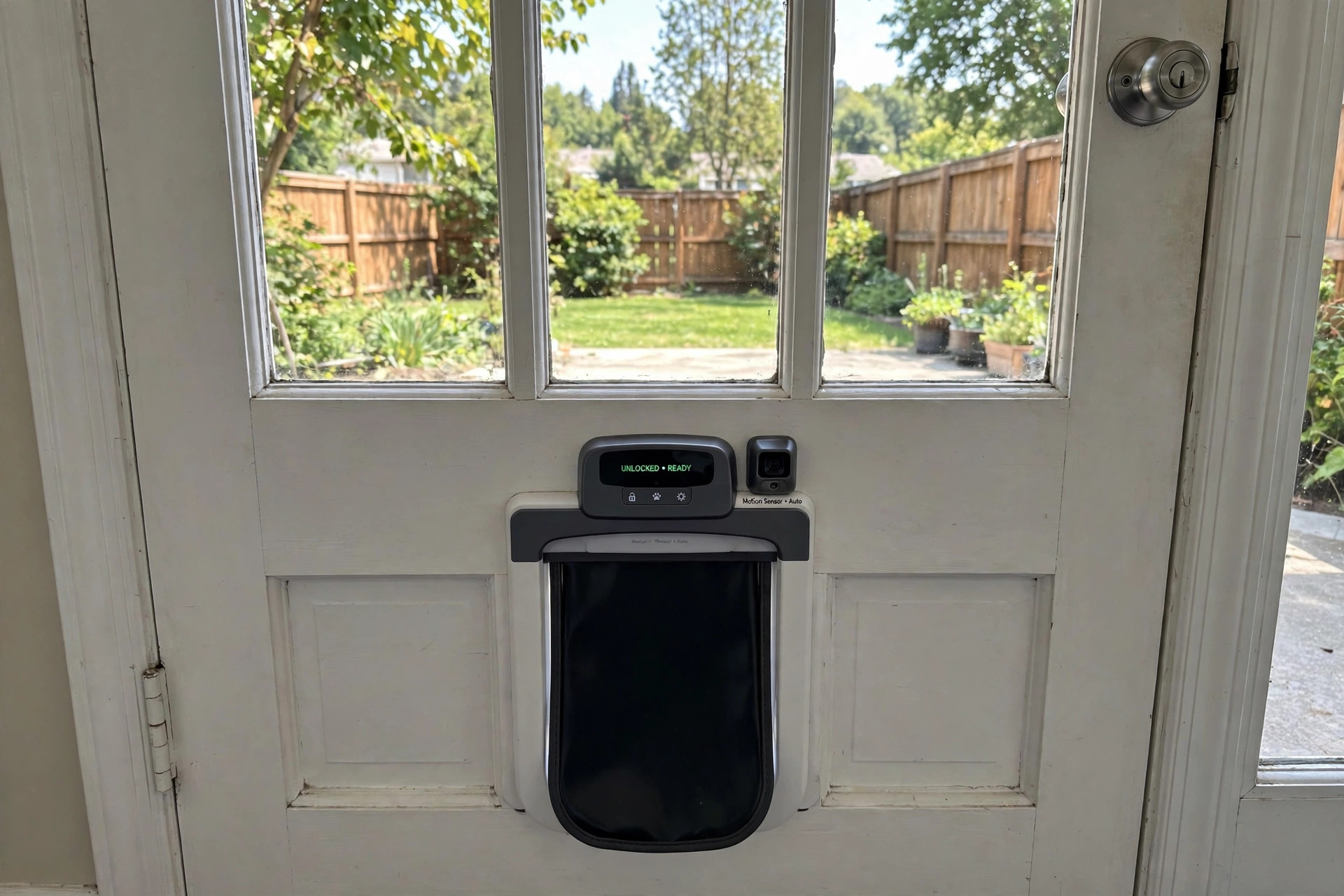
Electronic pet doors open in three main ways. First, microchip doors read the chip your vet placed under your dog’s skin. Nothing hangs on the collar. This is clean and simple. Second, collar-tag doors read a small tag on the collar. You must keep the tag on the collar and change its battery from time to time. Third, some doors use a motion sensor. These open for anything that moves, so they do not keep strays out as well as the first two types.
For a large dog, microchip or collar-tag doors are the safer picks. PetMD explains that microchip doors are popular because the key is built into the pet and cannot be lost in the yard.
Power and Battery Life
Most electronic doors run on batteries. Some plug into the wall. Battery models usually last six to twelve months per set. Plug-in models never need new batteries, but you must run a cord to the door. In a storm or power cut, a plug-in door may stop working unless it has a battery backup. Check this point before you buy. Reviews at Consumer Reports often test how long battery doors last in daily use.
Weather Sealing
A big flap is a big hole in your door when it is open. Good doors close fast and seal tight. Look for a flap with a magnetic seal or a brush seal around the edges. In cold states, a double flap keeps out the wind far better than a single flap. If you live where winters are hard, read advice on The Spruce about sealing drafts around doors and windows, because a pet door is one more place where heat can leak.
Types of Electronic Pet Doors for Large Dogs
Door-mounted models. These fit into a wooden, fiberglass, or metal door. You cut a hole and set the frame in place. This is the most common type and the easiest to fit.
Wall-mounted models. These fit through an exterior wall. They need a tunnel section that runs through the wall. If your door is glass or rented, a wall unit may be the better choice. Our guide to best pet door for wall installation large dogs covers tunnels and framing in more detail.
Sliding glass door models. These are panels that sit in the track of a sliding patio door. No cutting is needed. They suit renters and owners of full glass doors. See best dog door for sliding glass door installation if this matches your home.
Smart doors with apps. Some newer doors link to a phone app. The app shows when your dog goes in or out and lets you lock the door from your phone. These cost more. They suit owners who want a record of the dog’s day.
If you want more connected gear for your dog, our look at the automatic pet feeder for dogs with camera shows how cameras and feeders pair with smart doors.
Cost and Price
Prices vary by size, brand, and features. As a rough guide for 2026:
– Basic electronic flap for large dogs: about 120 to 200 dollars. – Microchip door for large dogs: about 180 to 350 dollars. – Wall-mount electronic door with tunnel: about 250 to 450 dollars. – Smart door with app control: about 350 to 600 dollars.
Fitting adds to the cost. A handyman may charge 100 to 250 dollars to cut a wooden door. Wall fitting through brick or siding can cost 300 to 600 dollars. Retailers such as Home Depot and Lowe’s sell fitting kits and list local installers.
It is worth comparing prices before you buy. Prices can differ by fifty dollars or more between stores. Some makers sell direct from their own sites and offer longer warranties than the store shelf version. A longer warranty matters for electronics, since a failed sensor can cost half the price of the door to replace. Consumer Reports advises buyers to read the warranty terms on any powered product before paying.
Do not forget running costs. Plan for batteries once or twice a year, plus a new flap every few years if your dog is rough on it. Chewy lists replacement flaps and tags for most popular brands.
Care and Upkeep
An electronic pet door needs little care, but small habits keep it working for years.
Wipe the flap with a damp cloth once a week. Dirt on the seal can stop it closing tight. Check the batteries every month, and change them on a fixed date, such as the first of January and the first of July, so you never forget.
Keep the sensor eye clean. Dust on the sensor can make the door miss your dog’s chip. A soft cloth is all you need. If the door uses a collar tag, check the tag battery when you change the door batteries.
In winter, check the seal for ice. Ice can hold the flap open and let cold air pour in. A light coat of silicone spray on the frame edges, as many home guides suggest, stops ice from sticking. Family Handyman publishes simple seasonal checklists that include pet doors among the winter jobs.
Once a year, take the frame out and check the screws. A large dog pushes hard. Loose screws let the frame rock, and a rocking frame wears out the seal faster.
Keep the collar tag dry. Tags are water resistant, not always waterproof. If your dog swims often, take the tag off before the swim and put it back on after. A soaked tag may stop reading until it dries out. If the door starts missing your dog, change the tag battery first, since that is the cause most of the time. Store spare batteries away from heat, and keep them where children and pets cannot reach them.
Safety
Electronic doors are safe when you set them up right, but a few points matter.
Lock the door at night. Most models have a manual lock or a night mode in the app. The CPSC advises owners to check any powered home product for pinch points, and a pet door is no different: watch the closing flap while your dog learns to use it.
A door sized for a large dog is also sized for a small person. Never rely on the pet door as your only security. Lock the main house doors, and use the night lock on the pet door. The ASPCA reminds owners that a secure home protects both pets and people.
Teach your dog with treats. Hold the flap open, let the dog walk through, and give a treat. Most large dogs learn in a few days. Do not push or force the dog through the flap. A scared dog may never trust the door.
Frequently Asked Questions
Will an electronic pet door work for a very large breed such as a Great Dane? Yes, but you must buy the extra-large size. Measure your dog first. Flaps up to about twenty inches high exist. If your dog is taller than that at the shoulder, a custom door may be needed.
Can a stray animal follow my dog in? With microchip or collar-tag doors, no. The door reads the signal and opens only for it. Motion-sensor doors are less safe, since they open for anything that moves.
What happens in a power cut? Battery doors keep working. Plug-in doors stop unless they have a battery backup. Keep a set of spare batteries in the house.
Can I fit the door myself? Many owners fit door-mounted models with a jigsaw and a drill. The makers include a paper template. Wall models are harder and often need a professional. If you rent your home, ask your landlord first, or use a sliding door panel that needs no cutting.
Will the door let cold air in? A good door seals tight when closed. Magnetic seals and double flaps cut drafts. Some heat loss is normal in winter, but it should be small if the seal is clean and the flap closes fully.
How long does an electronic pet door last? With simple care, five to ten years is normal. The flap may need replacing after three to five years with a heavy dog. The electronics usually outlast the flap.
A Final Word
The best automatic pet door for large dogs electronic buyers can choose is the one that fits the dog, fits the home, and locks tight against the world outside. Measure your dog. Pick a microchip or collar-tag lock. Fit it well and keep the seal clean. Do that, and the door will serve your dog for years while you stay warm inside.
References
American Kennel Club. (n.d.). Dog care and training resources. https://www.akc.org ASPCA. (n.d.). Pet care and animal welfare resources. https://www.aspca.org Chewy. (n.d.). Pet supplies. https://www.chewy.com Consumer Reports. (n.d.). Product reviews and ratings. https://www.consumerreports.org Family Handyman. (n.d.). DIY home repair and maintenance. https://www.familyhandyman.com Lowe’s. (n.d.). Home improvement products. https://www.lowes.com PetMD. (n.d.). Pet health information. https://www.petmd.com The Home Depot. (n.d.). Home improvement products. https://www.homedepot.com The Spruce. (n.d.). Home and garden advice. https://www.thespruce.com The Spruce Pets. (n.d.). Pet care guides and product reviews. https://www.thesprucepets.com U.S. Consumer Product Safety Commission. (n.d.). Product safety information. https://www.cpsc.gov
Was this guide helpful?

About James Carter
The My Garden US editorial team writes practical, in-depth home and garden guides for American homeowners — tested advice, no fluff.