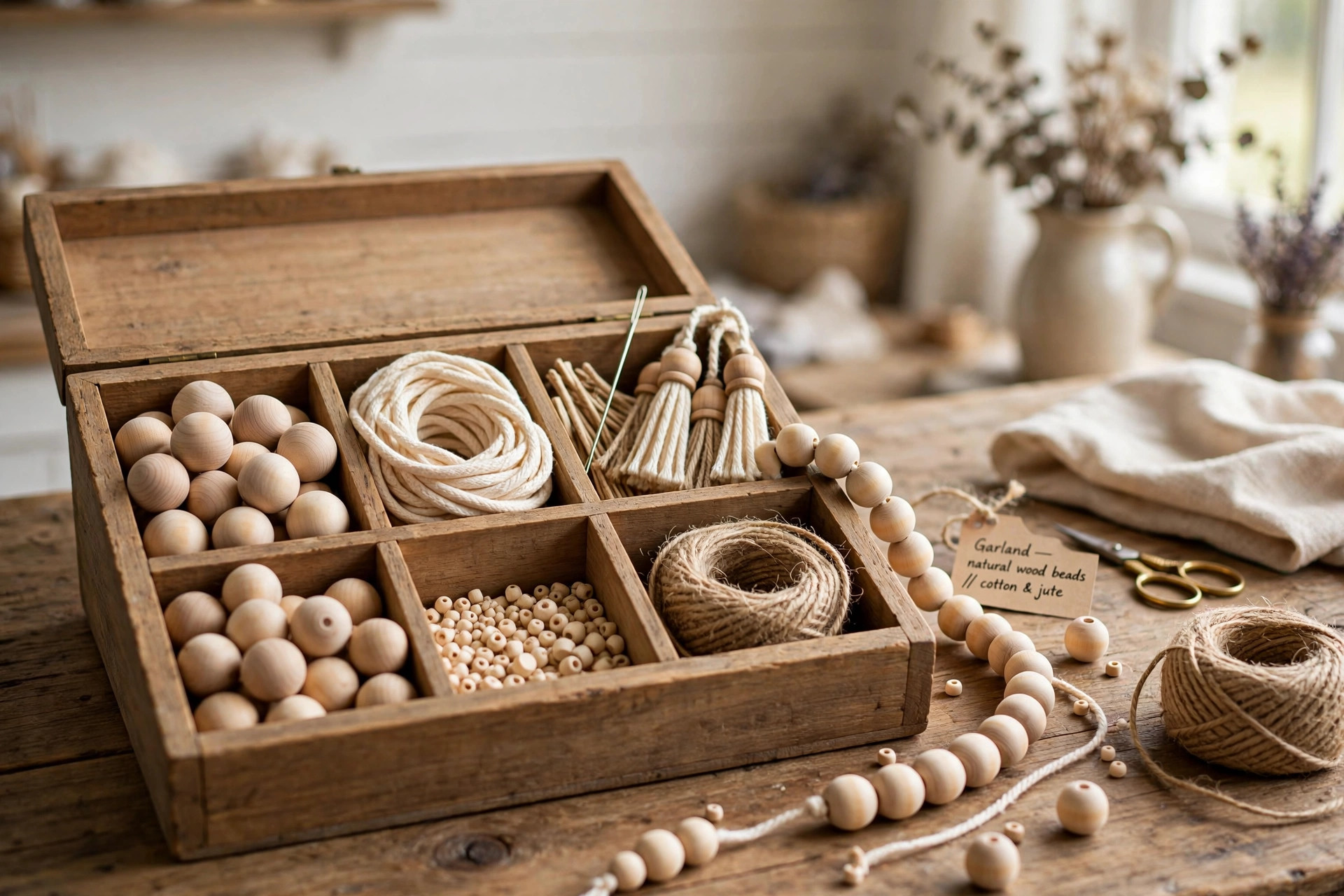

A wooden bead kit for garland and crafts DIY work is one of the simplest ways to start a home project. The kit holds round wooden beads, string or cord, and small extras like tassels and metal rings. With these parts, you can string a garland for a mantel, a window frame, or a holiday tree. You can also make gift tags, napkin rings, curtain tiebacks, and small wall hangings.
The appeal is easy to see. The parts cost little. The work needs no special skill. A child can help with the easy steps, and an adult can finish the neat details. Many crafters keep a kit on hand for birthdays, holidays, and last-minute gifts. Craft stores such as Michaels stock these kits in the craft aisle, and idea sites like The Spruce Crafts show fresh ways to use them.
This guide explains what the kits contain, how to pick one, and what to pay. It also covers care, safety, and the most common questions from new crafters.
Why Wooden Bead Garlands Matter in Home Decor
Wood has a warmth that plastic and glass do not. A strand of wooden beads softens a plain shelf and adds texture to a room. Designers use them in farmhouse, boho, and Scandinavian styles. The natural grain of each bead catches the light in a quiet way.
Garlands are the most popular use. A long strand can drape across a mantel or frame a doorway. It can also wrap around a Christmas tree or hang in a nursery. The look is calm and handmade. That is why so many home magazines still show wooden bead garlands in their seasonal photo spreads, year after year.
The crafts go beyond garlands. Large beads become curtain tiebacks. Small beads become bracelets and keychains. Flat discs become gift tags. Crafters who like painted wood often pair beads with wood craft blanks for painting and signs to make matching sets for a whole room.
The trend has steady roots. Wooden beads have been part of folk craft for centuries. The modern kit simply packs the tradition into a tidy box that anyone can open and use the same day.
What to Look For When You Buy: Wooden Bead Kit for Garland and Crafts Diy
Not all kits are the same. The details below will help you pick a kit that fits your project and your budget.
Bead Size
Bead size is given in millimeters. Small beads, around 10 mm, suit bracelets and gift tags. Standard beads, from 12 mm to 16 mm, suit most garlands. Large beads, from 20 mm to 25 mm, make bold mantel garlands with a chunky look.
Hole size matters just as much. A thin cord needs a hole of about 2 mm. A thick jute cord needs a hole of 4 mm or 5 mm. Check the kit label for both numbers before you buy. A bead that will not take your cord will only cause frustration at the table.
Wood Type
Most kits use beech, birch, or pine. These woods are light in color and take paint well. Bamboo beads are harder and darker. They suit a modern look.
Unfinished beads are best if you plan to paint or stain them yourself. Pre-painted beads save time but limit your color choice. Read the label to see which type you are getting.
Cord and Extras
A good kit includes more than beads. Look for cotton cord, jute twine, or elastic string. A long beading needle makes the work far easier. Some kits add tassels, wooden rings, or spacer beads. These small extras can turn a plain garland into a finished piece.
Kit Size
Small kits hold 100 to 200 beads. They suit one or two projects. Medium kits hold 300 to 500 beads. They suit a long garland plus a few small crafts. Large kits hold 800 beads or more. They suit craft groups, classrooms, and sellers who make gifts in batches.
Art suppliers such as Blick Art Materials carry professional-grade options, while large craft chains like JOANN carry wide ranges of colors and sizes for home crafters.
Types of Kits and Bead Options
Shops group their kits in a few common ways. It helps to know the types before you order.
Natural unfinished kits hold plain wood beads in round, oval, or cube shapes. They are the best choice for painters and stainers. You control the final color.
Painted color kits hold beads in set palettes, such as white and gray, or red and green for Christmas. They are the best choice when you want a fast result with no drying time.
Mixed shape kits hold round beads, flat discs, faceted beads, and small cubes in one box. They are the best choice for crafters who like variety in a single garland.
Garland-specific kits are built for one purpose. They hold large beads, long cord, and tassels, with instructions for a standard strand. General bead kits are built for many small crafts. They hold smaller beads in many colors.
If you want something unique, Etsy sellers offer handmade and small-batch wooden bead kits with unusual stains and shapes. Big-box stores like Walmart carry budget kits that are fine for first projects.
Crafters who enjoy stringing wooden beads often move on to wooden beads for macrame plant hangers as a next project, since the skills carry over well.
How to String a Basic Garland
A basic garland takes about one hour. Work on a clean table with good light. Keep a small bowl nearby for beads that roll.
Start by cutting the cord. For a six-foot garland, cut about eight feet of cord. The extra length gives you room for knots and tassels at each end. Seal the cut end of cotton cord with a drop of glue or a short wrap of tape. This keeps the end from fraying as you thread it.
Thread the beading needle onto the cord. Then slide beads on in your chosen pattern. Many crafters use a simple repeat, such as three natural beads and one painted bead. Others group beads in clusters of five with a small gap of bare cord between groups. Either pattern looks neat.
Pull the cord snug but not tight. A garland that is too tight will curl. A garland that is too loose will show bare cord in clumps. Find the middle ground by laying the strand flat as you work.
When the strand is the right length, tie a firm knot past the last bead on each end. Add a tassel or a wooden ring over the knot to hide it. Trim the cord ends to the same length. Hang the garland and step back to check the drape before you call it done.
Guides from Family Handyman and Bob Vila offer extra tips on hanging garlands straight and securing them without damage to walls and mantels.
Cost and Price
Wooden bead kits are one of the cheapest crafts to start. Prices have stayed stable for years, and most households can afford a kit without much thought.
Small kits with 100 to 200 beads cost about five to ten dollars. These are fine for a single garland or a few small gifts. Medium kits with 300 to 500 beads cost about ten to twenty dollars. These are the best value for most home crafters. Large kits with 800 beads or more cost about twenty to thirty-five dollars. Premium kits with hand-stained beads or hardwood species cost a bit more.
Watch for hidden costs. Paint, brushes, and extra cord add to the total if you finish the beads yourself. A simple set of craft acrylics costs a few dollars and covers many projects. Check The Home Depot for bulk cord and basic tools if you plan to make garlands often.
Compared with other hobbies, this one is gentle on the wallet. A twenty-dollar kit can yield a garland, a set of napkin rings, and a handful of gift tags, which would cost far more if bought ready-made.
Care and Upkeep
Wooden beads need little care, but a few habits will keep them looking good for years.
Dust the garland with a dry cloth or a soft brush once a month. Do not wash wooden beads in water. Water swells the wood and lifts paint. If a bead gets dirty, wipe it with a barely damp cloth and let it dry at once.
Keep finished garlands out of direct sun when they are stored. Sunlight fades painted beads over time. Store spare beads in a dry box with a lid. A bead organizer box for jewelry making storage works well for craft beads too, since the small compartments keep sizes and colors apart.
Check the cord once a year. Cotton and jute weaken with age, especially near sunny windows. If the cord looks thin or frayed, restring the beads onto fresh cord before the strand breaks. Restringing takes less time than the first build, since the pattern is already set.
Safety
A few safety points deserve attention, especially in homes with small children.
Wooden beads are a choking hazard for children under three. Keep small beads and finished garlands out of their reach. Work on craft projects with young children only under direct adult watch, and put the kit away when the session ends.
Check paint labels. Use non-toxic, water-based paints on beads that children will handle. Let paint cure fully before use. Strong fumes from oil-based stains belong in a garage or workshop, not at the kitchen table.
Tie knots with care. A garland hung over a crib or a small bed should use knots that cannot slip, and the strand should hang well out of reach. Keep garlands away from open flames. Wooden beads and cotton cord can catch fire near candles.
When you hang a heavy garland, use proper hooks and anchors. A falling strand can pull down frames and small decor with it. This Old House publishes solid guidance on safe hanging hardware for home decor of all kinds.
Frequently Asked Questions
How many beads do I need for a six-foot garland? It depends on bead size. With 12 mm beads, you need about 25 beads per foot, or about 150 beads for six feet. With 20 mm beads, you need about 15 beads per foot, or about 90 beads for six feet. Buy a kit with extra beads so you can replace any that are flawed.
Can I paint the beads myself? Yes. Lightly sand unfinished beads with fine sandpaper, wipe off the dust, and apply thin coats of craft acrylic paint. Let each coat dry fully. Seal with a clear water-based finish for a longer life. This is the main reason many crafters choose unfinished kits.
What cord works best for garlands? Cotton cord and jute twine are the most common choices. Cotton gives a soft look. Jute gives a rustic look. Elastic cord suits bracelets but stretches too much for long garlands. Match the cord thickness to the bead holes.
Are wooden bead kits safe for kids to use? Older children can use them with adult supervision. The main risks are small parts and long cords. Keep beads larger than 20 mm for young crafters, cut cord to short lengths, and never leave a child alone with the kit.
Can a wooden bead garland go outside? A covered porch is fine for a season. Full rain and sun will wear the beads fast. If you want outdoor use, choose beads sealed with outdoor-grade finish and bring the garland in during storms.
How do I fix a broken garland? Save every bead. Cut away the broken cord, thread a needle onto fresh cord, and restring the beads in the same pattern. The repair usually takes less than half an hour.
A Short Final Word
A wooden bead kit for garland and crafts DIY projects earns its place in the craft closet. It is cheap, simple, and forgiving of mistakes. One kit can decorate a mantel, dress up gifts, and fill a quiet afternoon with pleasant work. Pick a kit with the right bead size and good cord, follow the basic steps, and you will have a handmade piece that looks far richer than its cost.
References
Blick Art Materials. (n.d.). Art and craft supplies. https://www.dickblick.com Bob Vila. (n.d.). Home improvement advice. https://www.bobvila.com Etsy. (n.d.). Handmade and craft marketplace. https://www.etsy.com Family Handyman. (n.d.). DIY home repair and maintenance. https://www.familyhandyman.com JOANN. (n.d.). Fabric and craft supplies. https://www.joann.com Michaels. (n.d.). Arts and crafts supplies. https://www.michaels.com The Home Depot. (n.d.). Home improvement products. https://www.homedepot.com The Spruce Crafts. (n.d.). Craft projects and tutorials. https://www.thesprucecrafts.com This Old House. (n.d.). Home renovation guidance. https://www.thisoldhouse.com Walmart. (n.d.). Everyday low prices. https://www.walmart.com
Was this guide helpful?

About Robert Taylor
The My Garden US editorial team writes practical, in-depth home and garden guides for American homeowners — tested advice, no fluff.
You May Also Like
Macrame Wall Hanging Kit Large for Living Room: A Complete Guide to Handmade Wall Art
May 18, 2026 0 views
DIY Mirror Frame Kit for Home Decor Crafts: A Plain Guide
May 17, 2026 0 views
DIY Soap Mold Kit for Handmade Gifts: A Complete Guide
August 1, 2026 0 views