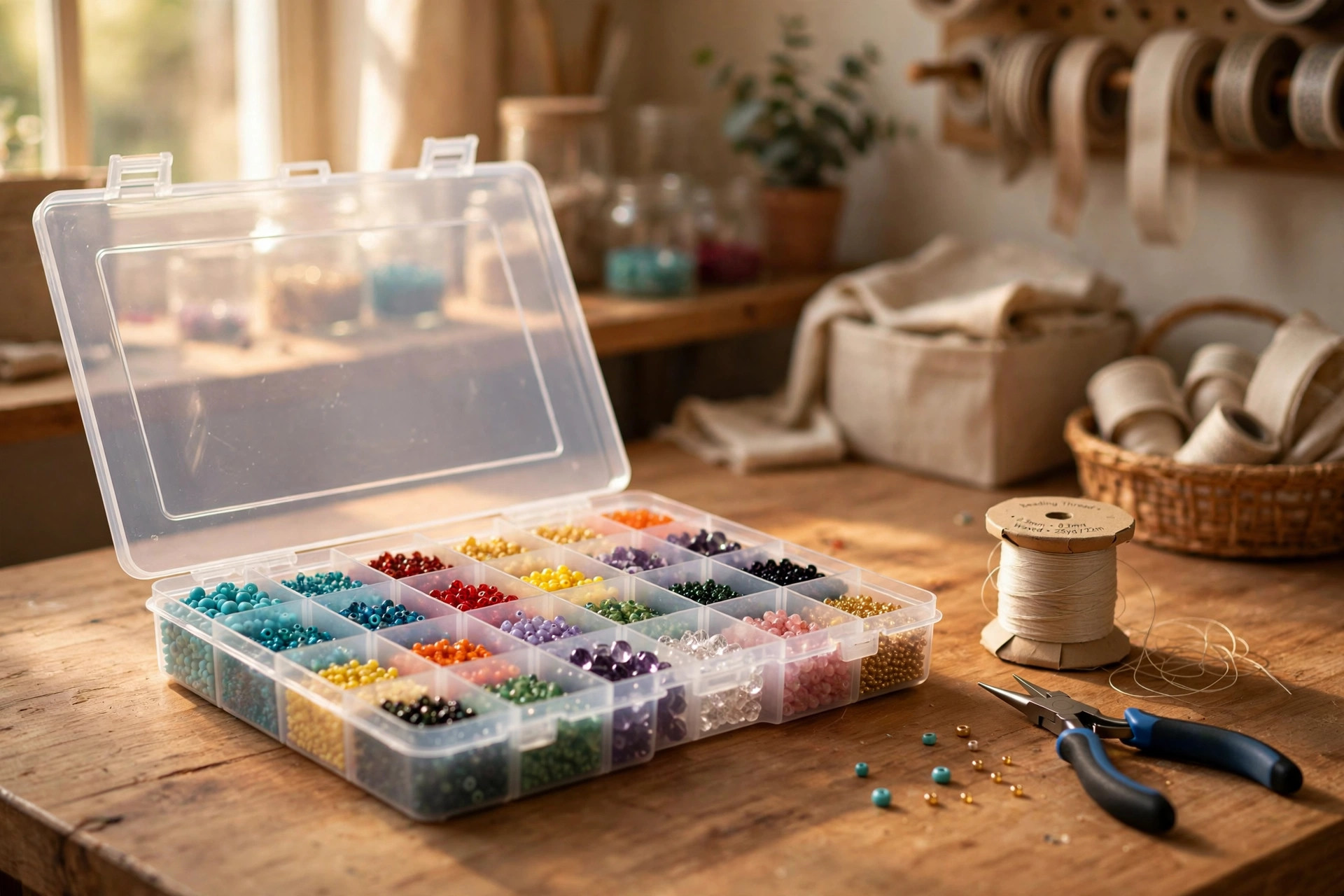

A bead organizer box for jewelry making storage is one of the most useful tools a bead worker can own. Beads are small. They roll. They mix. One dropped bag can scatter a thousand tiny pieces across a floor. A good organizer box stops that trouble before it starts. It gives each color, size, and type a fixed home. You can see your whole supply at a glance. You can pick up the box, carry it to a table or a friend’s house, and nothing spills. For people who make necklaces, bracelets, and earrings by hand, this simple box saves time and protects an investment in materials. This guide explains why it matters, what to look for, the main types on the market, what you should expect to pay, and how to keep your box in good shape for years.
Why a Bead Organizer Box Matters
Jewelry making begins with sorting. A single bracelet may use six bead colors. A full necklace may use twenty. When beads sit loose in bags, finding the right one takes time. It also invites mistakes. Similar shades get mixed up. Seed beads slide under furniture. Glass beads crack when they knock together in a pouch. A bead organizer box for jewelry making storage solves each of these problems in a plain way. Each compartment holds one kind of bead. Clear lids let you scan the contents without opening a thing. Snug latches keep beads apart even when the box tips.
There is a money side to this as well. Quality beads cost real money. Gemstone beads, sterling findings, and hand-cut glass pieces add up fast. Losing them to spills or mix-ups is waste. A solid box guards that investment. It also helps you plan. When you can see what you have, you stop buying beads you already own. Many crafters say their buying habits changed once they could view their full stock in one set of boxes.
Crafting also feels better with order. A tidy work table invites longer sessions. You spend your hour on design instead of on search. That is the quiet benefit of a bead organizer box for jewelry making storage. It turns a drawer of tangled bags into a small library of color.
What to Look for When You Choose: Bead Organizer Box for Jewelry Making Storage
Not all bead boxes work the same. The right one depends on your bead sizes, your projects, and how you work. Start with the compartment count and size. Seed beads need small, shallow wells. Large lampwork beads need tall, wide ones. Many boxes offer between 12 and 36 compartments. A beader who works mostly with tiny seed beads should favor more small sections. One who mixes charms and pendants needs fewer but deeper spaces.
Look closely at the dividers. Fixed dividers give strength. They cannot shift, so beads stay put. Removable dividers give freedom. You can make large spaces for tools or strands and small spaces for seed beads. The best small bead storage containers for crafts often pair both ideas: a firm base grid with some movable walls.
Lid quality matters more than many shoppers think. Each compartment should have its own lid or seal when the main lid closes. Otherwise beads slip under the lid edge and migrate into the next well. Cheaper boxes have one flat lid over all sections. Better boxes give each well a raised rim that meets the lid. Shake the box in the store before you buy it. If beads travel, put it back.
Material is next. Clear plastic is the most common choice. It is light and lets you see inside. Look for sturdy, thick plastic that resists cracks. Some boxes use polypropylene, which holds up well over time. Acrylic looks elegant but can break if dropped. Wooden bead boxes suit display and gift use but cost more and hide the contents.
Think about portability too. A locking latch keeps the lid shut in a bag. A handle helps when you carry several boxes. Some bead organizer boxes stack neatly. If you plan to teach classes or craft at a friend’s home, a bead organizer box with secure snap latches for jewelry work is worth the extra cost. Shoppers browsing craft stores such as Michaels will find many such portable designs on the shelf.
Types and Options on the Market
Several styles serve different habits. Knowing them helps you match the box to your craft.
Fixed-compartment trays. These are flat cases with set sections. They suit beaders who keep one bead type per box. Many jewelry makers own several: one for seed beads, one for glass, one for metal findings. The simple design lasts long and costs little.
Adjustable grid boxes. Removable dividers let you resize each space. These are popular among makers who change projects often. One week the box holds fine seed beads. The next week it holds chunky wooden beads and cord spools. A bead organizer with removable compartments for jewelry projects adapts to both.
Stackable mini jars and cases. Some systems use small round jars that screw together or snap into a tray. Each jar holds one color. You can pull out a single jar for a project and set it by your work mat. These suit crafters who buy beads in bulk and portion them out.
Travel rolls and fold-out cases. A soft roll with clear pockets or a case that opens like a book suits makers who bead on the go. Pockets unzip. Beads pour back in with ease. These are less rigid than hard boxes, so pair them with a flat surface when you work.
Cabinet-style drawer units. For large collections, a small cabinet with many pull-out drawers acts as a home base. Each drawer can hold a labeled box or loose strands. Large bead collections can be organized with stackable craft storage from home organization retailers, which pair well with drawer cabinets for bigger studios.
Many makers mix styles. A drawer cabinet sits at home. A travel case goes to class. Two or three tray boxes hold the current projects. There is no single right answer. Start with one sturdy tray box and add as your collection grows.
Cost and Price Ranges
Prices for a bead organizer box for jewelry making storage vary widely. A basic single tray box with fixed compartments often costs between five and twelve dollars. These are sold at craft chains such as Joann and work well for beginners. Mid-range boxes with adjustable dividers, stronger latches, and more compartments usually run between twelve and twenty-five dollars. They suit regular makers who value durability.
Premium options go higher. Wooden bead boxes, leather-trimmed cases, and large multi-tray systems can cost thirty to eighty dollars or more. These are often bought as gifts or by makers who sell their jewelry and want a polished kit. Specialty art suppliers like Blick Art Materials carry some of the higher-end storage lines.
Price alone does not tell you quality. Read reviews and check the lid fit. A ten-dollar box with sealed wells beats a forty-dollar box that lets beads wander. Watch for sales at big craft stores, and consider buying a second box when prices drop. Many experienced beaders keep a spare empty box for sorting new purchases.
If you plan to store findings such as clasps, crimps, and ear wires, you may want a second, smaller box. Findings are metal. They scratch bead surfaces if they share a compartment. A dedicated findings box costs little and protects your beads.
Care and Upkeep
A bead organizer box needs little care, but a few habits keep it working well. Wipe the box with a dry cloth now and then. Dust settles in the wells and can dull bead finishes. If a well gets sticky from tape labels or spilled glue, wash that section with warm soapy water and dry it fully before refilling. Water left in a compartment can harm metal findings and cloud some bead coatings.
Check the latches every few months. Plastic hinges wear with use. If a latch stops catching, the box should be replaced or used only for stationary storage. A failing latch on a travel box means spilled beads. Labeling helps too. Small stickers on the lid edge can mark bead type, size, or color number. Painters tape works well and peels off clean.
Store the box away from heat. Hot cars and sunny windows can warp thin plastic. Keep beads out of long direct sun, since some colors fade. A cool, dry craft shelf is ideal. Makers who share a room with painting or sewing supplies often place their bead boxes on the same shelf as their yarn bowl for knitting or near a craft corner that holds watercolor brush pens and other tools. Home improvement guides from This Old House show simple shelf builds that hold craft boxes neatly.
Once a year, do a full sort. Empty each well. Toss cracked or chipped beads. Return stray beads to the right homes. This yearly reset keeps your stock honest and your projects smooth.
Safety Notes for Homes With Children and Pets
Beads are a choking hazard for small children. A bead organizer box for jewelry making storage helps, but only if the box stays closed and out of reach. Store your bead boxes on a high shelf or in a locked cabinet when toddlers or curious pets live in the home. Never leave an open box on a low table where a child or dog can reach it.
Some beads contain metal parts or coatings that small hands should not mouth. Glass beads can break into sharp bits if crushed. Wire cutters, pliers, and beading needles are sharp and belong in a separate closed case. Teach older children to ask before touching your craft supplies. Family handymen and craft safety articles at Family Handyman and Bob Vila offer further guidance on setting up safe craft areas at home.
If a bead spills on the floor, clean it up at once. Tiny beads hide in carpet and roll under furniture. A quick sweep with a damp paper towel picks up most strays. Keeping the box latched between uses prevents most spills before they happen.
Frequently Asked Questions
How many bead organizer boxes do I need as a beginner? One sturdy box with 18 to 24 compartments is enough to start. Sort your most-used beads into it and keep the rest in their bags. As your collection grows, add a second box rather than overfilling the first.
Can I store findings and tools in the same box as my beads? It is better to keep them apart. Metal clasps and sharp tools can scratch bead surfaces. Use a small separate box for findings such as crimps, ear wires, and jump rings. Your beads will stay clean and unmarked.
Are wooden bead boxes better than plastic ones? Each has its place. Plastic boxes are light, cheap, and let you see the contents. Wooden boxes look fine and suit display, but they cost more and hide what is inside. Most daily beaders use plastic and keep a wooden box for gifts or finished pieces.
How do I stop tiny seed beads from mixing between compartments? Choose a box where each well has its own raised rim and the lid seals each section. Test it by shaking the closed box gently. If beads travel, the lid fit is poor. Also fill each well only to about three-quarters full, since overfull wells spill over the rims.
Can I take my bead box on a plane or a trip? Yes. Pick a box with strong snap latches and keep it inside a padded bag. Place it flat in your luggage. For air travel, check the rules of your airline and the Transportation Security Administration guidelines for craft tools, since cutters and needles may need to go in checked bags. A makers who also carry stitching gear, such as an embroidery stand for hands-free stitching, should pack bead boxes separately so nothing crushes the lids.
Where should I buy my first bead organizer box? Large craft retailers carry a wide range at fair prices. Home Depot and IKEA also sell storage systems that many crafters adapt for beads. Compare lid fit and latch quality in person when you can, since photos online cannot show how well a box seals.
A Short Final Word
A bead organizer box for jewelry making storage is a small purchase with a large effect. It protects your beads. It speeds your work. It keeps your craft room calm. Choose a box with a sealing lid, the right compartment sizes, and sturdy latches. Care for it with simple habits. Sort it once a year. With that, your beads will be ready whenever an idea strikes.
References
Blick Art Materials. (n.d.). Art and craft supplies. https://www.dickblick.com Bob Vila. (n.d.). Home improvement advice. https://www.bobvila.com Family Handyman. (n.d.). DIY home repair and maintenance. https://www.familyhandyman.com IKEA. (n.d.). Home furnishings. https://www.ikea.com JOANN. (n.d.). Fabric and craft supplies. https://www.joann.com Michaels. (n.d.). Arts and crafts supplies. https://www.michaels.com The Container Store. (n.d.). Storage and organization products. https://www.containerstore.com The Home Depot. (n.d.). Home improvement products. https://www.homedepot.com This Old House. (n.d.). Home renovation guidance. https://www.thisoldhouse.com Transportation Security Administration. (n.d.). Travel security guidance. https://www.tsa.gov
Was this guide helpful?

About Lisa Anderson
The My Garden US editorial team writes practical, in-depth home and garden guides for American homeowners — tested advice, no fluff.
You May Also Like

DIY Wreath Making Kit for Front Door Decor: A Complete Guide
January 25, 2026 0 views
DIY Succulent Planter Kit for Home Decor: A Complete Guide
April 12, 2026 0 views
Best Watercolor Brushes Set for Beginners Art: A Plain Guide
August 7, 2026 0 views