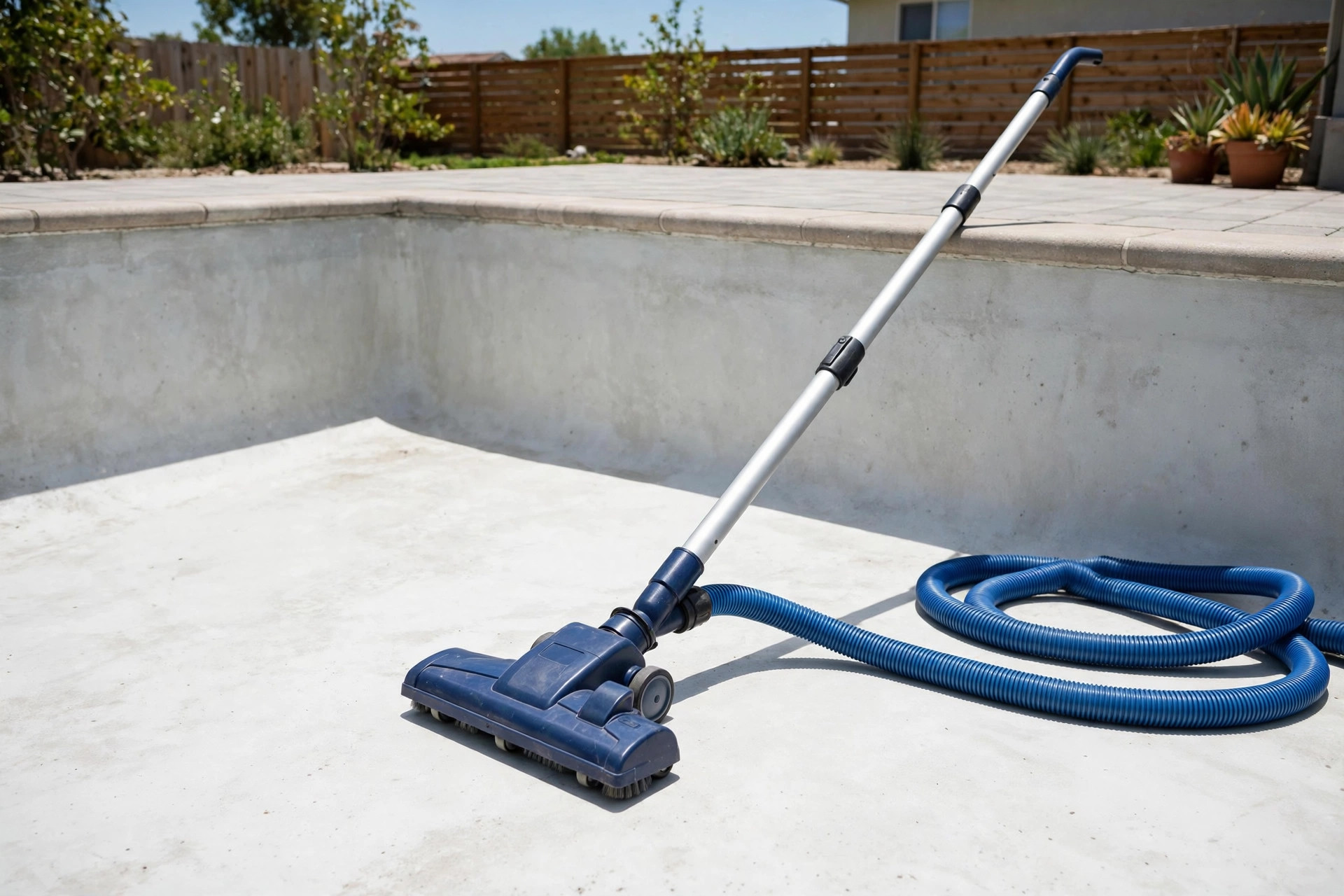
A clean concrete pool starts with the right tool. The best pool vacuum for concrete pools is not the same as one made for a vinyl liner. Concrete has a rough face. Plaster can wear down if you use harsh parts. A good vacuum must lift dirt and leaves without harming the finish.
This guide will help you choose. It explains why pool vacuums matter, what to look for, and how much they cost. It also covers care and safety. By the end, you will know how to keep your concrete pool clean all year.
Why a Pool Vacuum Matters
Concrete pools trap dirt in tiny pores. Brushing alone cannot remove all of it. A brush moves dirt into the water. A vacuum pulls dirt out of the pool. This keeps the water clear and safe to swim in.
Without a vacuum, algae can grow in the rough surface. Leaves can break down and stain the plaster. Sand and grit can wear the finish over time. A good vacuum cuts down on all of these problems. It also helps your filter last longer, since less dirt reaches it.
Many pool owners clean by hand with a manual vacuum head on a pole. Others use an automatic cleaner that runs on its own. Both kinds work on concrete. The key is to match the vacuum to the pool surface. You need parts that are tough enough for concrete but gentle enough for plaster. For more pool cleaning tips, start with the basics of skimming, brushing, and testing water each week.
What to Look for in a Pool Vacuum for Concrete Pools: Best Pool Vacuum for Concrete Pools
Concrete pools often have a plaster, quartz, or pebble finish. These surfaces are harder than vinyl liners, but they still need care. Here are the main things to look for before you buy.
Brushes and Wheels
Look for soft bristles. Stiff metal brushes can scratch plaster. Nylon or soft poly bristles lift dirt without damage. Wide wheels help the vacuum head roll over the rough surface. Small wheels can get stuck in the texture and stop the head from moving.
Suction Power
Strong suction pulls dirt from the pores of the concrete. A vacuum with good suction cleans faster. If the suction is weak, dirt will be left behind. Check that the head seals well against the floor. A poor seal means lost suction and a longer job.
Hose and Pole
The hose must reach all parts of the pool. Measure your pool before you buy. The pole should be long and light. Heavy poles make cleaning hard work. Locking poles are best, since they do not twist loose while you push.
Weight and Balance
A vacuum head that is too light may float up off the floor. One that is too heavy may drag and tire you out. Look for a head with balanced weight. Side brushes on the head help catch dirt along walls and corners.
Power and Cord for Automatic Models
If you choose a robotic model, check the cord length and the power supply. The cord must reach from a safe outlet to the far end of the pool. Look for a unit with a tangle-free swivel cord. A weekly timer can help you set a routine.
A pool supply store can show you how different heads feel in hand. Many owners also shop pool equipment online to compare specs side by side.
Types of Pool Vacuums
There are four main types of pool vacuums. Each has strong points and weak points for concrete pools. The right choice depends on your budget, your pool size, and how much time you want to spend.
Manual Vacuums
A manual vacuum has a head, a hose, and a pole. You push it across the pool floor yourself. These are the most common and the least costly. They give you full control. You can spend extra time on dirty spots and steps.
The trade-off is effort. A large pool can take an hour or more to clean by hand. Still, many owners keep a manual vacuum even after they buy an automatic one. It is the best tool for spot cleaning after a storm.
Heads made for concrete differ from heads made for soft liners. If you also service a vinyl pool, read our guide to the best pool vacuum head for vinyl to see how the parts differ.
Suction-Side Automatic Cleaners
A suction-side cleaner plugs into your skimmer or a suction port. It uses your pool pump to move around the floor on its own. These cleaners are common and low in cost. They do a fair job on concrete floors.
The weak point is that they rely on your pump. If your pump is weak, the cleaner will move slowly. The hose must also stay free of tangles. You will need to clean your pump basket more often, since all the dirt goes through your filter.
Pressure-Side Automatic Cleaners
A pressure-side cleaner uses a booster pump to push water through it. This makes it move with more force than a suction-side model. It is good at picking up leaves and large trash. A bag on the cleaner catches the dirt, so your main filter stays cleaner.
The cost is higher, since many need a separate booster pump. That adds to the price and to your power bill. But for a concrete pool under trees, the extra power is worth it. You can find these models at most home stores and pool shops.
Robotic Cleaners
A robotic pool vacuum runs on its own motor and power supply. It does not use your pool pump at all. Many models climb walls and scrub the waterline. They give the deepest clean of any type, which suits the rough face of concrete.
Robotic cleaners cost the most, but they save time and cut pump run hours. Look for models with soft brushes made for plaster or pebble. A fine filter basket will catch the small dust that settles into concrete pores. Read pool maintenance guides to learn how often to run a robotic cleaner in your climate.
Cost and Price
Prices vary by type. A manual vacuum head, hose, and pole often cost between 30 and 80 dollars in total. A suction-side automatic cleaner runs from 150 to 400 dollars. A pressure-side cleaner with a booster pump can cost 300 to 700 dollars. Robotic cleaners range from 400 to over 1,500 dollars for top models.
Think about running costs too. Suction-side and pressure-side cleaners use your pump, which adds to the power bill. Robotic cleaners use their own low-voltage power and often cost less per hour to run. Bags, filters, and worn brushes add small costs over the years.
Do not buy on price alone. Measure your pool first. Check the return policy. Read the warranty terms. A good warranty can save you money if the motor fails in year two.
How to Use Your Pool Vacuum
Good method matters as much as good gear. Follow these steps each time you vacuum a concrete pool.
First, skim the surface. Remove leaves and bugs with a net. This keeps large trash out of your vacuum hose. Next, brush the walls and steps down toward the floor. This pushes stuck dirt where the vacuum can reach it.
Then set up the hose. Fill it with water before you connect it. A hose full of air will make the pump lose prime. Push the vacuum head down slowly. Move in slow, straight lines, like mowing a lawn. Move too fast and dirt will swirl away before the head can catch it.
Overlap each pass a little. Go slowly in corners and near steps. When you finish, clean the skimmer basket and the pump basket. Check the filter pressure. A rise in pressure means the filter caught a lot of dirt.
A clean solar cover also means less dirt in the water. Learn how to clean a pool solar cover so the cover does not dump dust back into the pool.
Care and Upkeep of the Vacuum
Take care of your vacuum and it will last for years. Rinse the head, hose, and pole with fresh water after each use. Pool chemicals can wear down plastic and rubber over time.
Store the gear out of the sun. UV light makes hoses brittle. Coil the hose in wide loops. Tight coils cause kinks that hurt suction. Hang the pole on hooks so it does not bend.
Check brushes and wheels each month. Replace them when they wear thin. Worn brushes clean poorly and can mark the plaster. Empty cleaner bags or baskets after each run. A full bag cuts suction in half.
Water care goes hand in hand with vacuuming. Test and balance your water each week. The same test-and-balance habit applies to spas, as shown in our guide to how to maintain hot tub water chemistry. Balanced water protects both the pool finish and the vacuum parts.
Safety
Pool safety comes first. The Consumer Product Safety Commission sets rules for pool and spa safety in the United States. One key rule covers drain covers. Never use a pool with a broken or missing drain cover. Suction from a drain can trap a swimmer.
Keep these points in mind. Do not let anyone swim while you run a manual vacuum hose through the skimmer. Turn off the pump before you work near main drains. For robotic cleaners, plug the power supply into a GFCI outlet. Do not swim while the robot is in the water.
Handle pool chemicals with care. Wear gloves and eye cover. Never mix chemicals. Store them in a cool, dry place away from children and pets. Spa makers such as Hot Spring and Bullfrog Spas stress the same safe water habits for their owners.
FAQ
Can I use a vinyl pool vacuum head on a concrete pool?
You can, but it is not ideal. Vinyl heads have soft parts made for a smooth liner. They may wear out fast on rough concrete. They also clean less well on a textured face. For best results, use a head made for plaster or pebble.
How often should I vacuum a concrete pool?
Most pools need a full vacuum once a week. If your pool sits under trees, you may need it twice a week. Automatic cleaners can run two or three times a week on a timer. Spot clean with a manual head after storms.
Will a pool vacuum damage plaster?
A proper vacuum will not damage sound plaster. Use soft brushes and check wheels for rough edges. Do not use wire brushes on plaster. If your plaster is old and flaking, go gently and plan for a re-plaster job.
Do I need a booster pump for a pressure-side cleaner?
Many pressure-side models need one. Some work with the return line alone, but they clean more slowly. Check the specs before you buy. A booster pump adds cost but gives much better push.
Can I leave a robotic cleaner in the pool all the time?
It is best to take it out after each cycle. Long soaks in chlorinated water wear out seals and cords. Rinse the unit, empty the basket, and store it in the shade.
A Final Word
The best pool vacuum for concrete pools is the one that fits your pool, your budget, and your routine. A manual vacuum gives control at low cost. An automatic cleaner saves time. A robotic model gives the deepest clean. Match the brushes to your finish, keep up with water care, and follow basic safety rules. Do these things and your concrete pool will stay clean, clear, and ready to swim in all season.
References
Bullfrog Spas. (n.d.). Hot tubs and spas. https://www.bullfrogspas.com Hot Spring Spas. (n.d.). Hot tubs and spas. https://www.hotspring.com Leslie’s Pool Supplies. (n.d.). Pool supplies and equipment. https://www.lesliespool.com Pool Warehouse. (n.d.). Pool equipment and supplies. https://www.poolwarehouse.com Swim University. (n.d.). Pool and hot tub care guides. https://www.swimuniversity.com The Home Depot. (n.d.). Home improvement products. https://www.homedepot.com The Spruce. (n.d.). Home and garden advice. https://www.thespruce.com U.S. Consumer Product Safety Commission. (n.d.). Product safety information. https://www.cpsc.gov
Was this guide helpful?

About Sarah Mitchell
The My Garden US editorial team writes practical, in-depth home and garden guides for American homeowners — tested advice, no fluff.