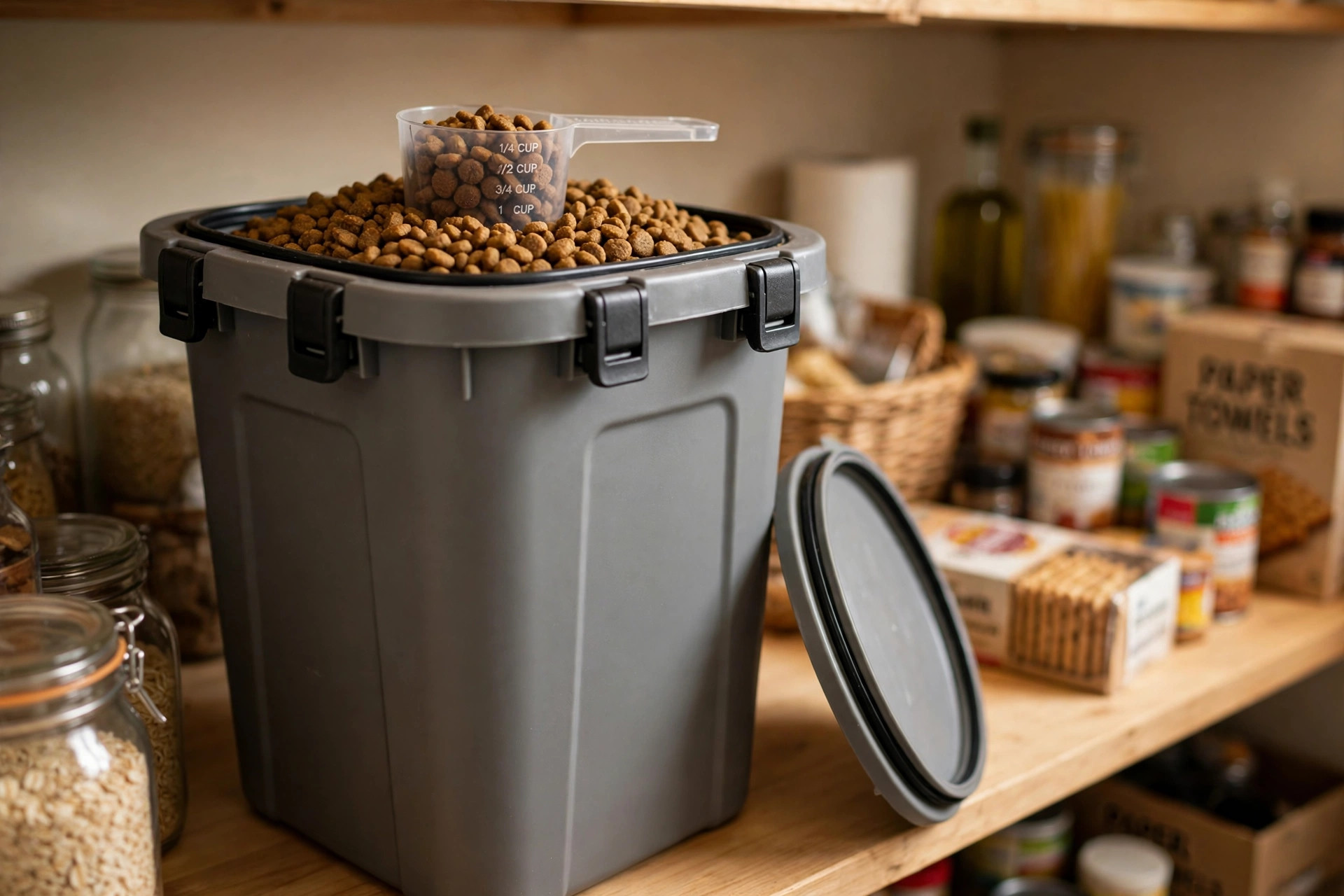

Dog owners open a bag of kibble every day. The bag tears after a few weeks. The kibble turns stale. Bugs find their way in. A dog food storage bin with scoop airtight solves this plain problem. It keeps food fresh for a long time. It locks out air, moisture, and pests. It also gives you a scoop so every meal is clean and exact.
Many owners buy large bags to save money. A big bag can last a month or more. Each time you open the bag, air rushes in. Air makes the fat in the kibble go bad. Spoiled fat tastes bitter and smells off. Dogs notice this and may refuse their food. Worse, rancid fat can upset a dog’s stomach. An airtight bin with a tight lid slows this process down. It is a small step that protects a large investment in your dog’s health.
This guide covers all you need to know. It explains why airtight storage matters, what to look for when you buy, the main types on the market, what they cost, how to clean them, and how to keep the food safe. Read it before you make a choice.
Why an Airtight Bin Matters
Dry dog food starts to change the moment the bag is opened. Oxygen and light break down the fats and vitamins. Within a few weeks, an open bag loses much of its fresh taste. Groups such as the ASPCA note that proper food storage is part of basic pet care. Stale food is not just a taste issue. It is a health issue.
Moisture is a second enemy. A small spill near the bag, a damp garage floor, or humid summer air can soften the kibble. Soft kibble grows mold. Mold can produce toxins that harm dogs. An airtight seal keeps humidity out. This matters most in warm states, where heat and dampness are constant. It also matters in winter, when food stored near a door may meet snow and rain.
Pests are the third problem. Ants, pantry moths, mice, and even raccoons love dry kibble. A paper or thin plastic bag will not stop them. A hard bin with a locking lid will.
Freshness also saves money. A large bag is cheap per pound. That savings disappears if half the bag goes stale. A good bin lets you buy the large bag with confidence. The American Kennel Club stresses steady, correct portions, and a bin with a scoop makes steady portions easy.
What to Look for When You Buy: Dog Food Storage Bin with Scoop Airtight
Not every bin is worth the price. Look at four things: size, material, seal, and the scoop itself.
Size
Buy a bin that fits the bag you buy. A 40-pound bag of kibble fills about 50 to 55 quarts. A 30-pound bag needs about 40 quarts. A 15-pound bag needs about 20 quarts. Pick a bin that is a little larger than your bag. A tight fit makes pouring hard. Extra space makes pouring easy.
Think about where the bin will sit. Measure the pantry shelf or the kitchen corner before you shop. Tall slim bins fit narrow spaces. Wide square bins use floor space well. If you feed two dogs, or a very large dog, you may want large airtight pet food storage containers instead of the small ones. Buying too small means you store half the bag outside the bin, which defeats the purpose.
Material
Most bins are made of food-grade plastic. Look for thick walls. Thick walls resist dents and cracks. Thin walls warp over time, and a warped bin loses its seal. Some bins are made of stainless steel. Steel costs more, but it resists odors and looks neat in a kitchen. Steel also blocks light, which helps keep the kibble fresh.
Avoid bins with a strong chemical smell when new. Wash the bin before first use. If the smell stays after washing, return it.
Seal
The seal is the heart of the product. A true airtight bin has a rubber or silicone gasket around the lid. When you close the lid, the gasket presses down and blocks air. Test the seal in the store if you can. Close the lid and press on it. It should feel firm with no gaps. Flip the bin over if it is empty. No light should pass through the seam.
Some lids snap on. Some twist on. Both can work. Snap lids are fast. Twist lids often seal tighter. Pick the style you will actually close every time. A seal only works if the lid goes back on after each meal.
The Scoop
The scoop matters more than most buyers think. A good scoop holds one cup and has marks for half cups and quarter cups. Marks let you measure without a second tool. The scoop should have a long handle. A long handle keeps your hand out of the food. Many bins include a clip so the scoop rests on the bin or on the lid. A loose scoop ends up lost in the kibble, which is messy and unsanitary.
Some scoops are shaped to pour cleanly. A narrow spout shape reduces spills. If you have a small dog, a small scoop with clear marks is best. For a large dog, a two-cup scoop saves time.
Types of Dog Food Storage Bins
Stores sell four main types. Home improvement stores such as Home Depot stock several of them, so you can see each type in person.
Stackable bins sit one on top of another. They save floor space. They are good for small kitchens. They are also good if you store dry food and treats in two bins. Check the weight limit before stacking. A full 50-quart bin is heavy.
Rolling bins have wheels on the bottom. They move easily from pantry to counter. This helps older owners and anyone with back trouble. The wheels should lock.
Vault-style bins are tall and slim. They often have a twist lid and a wide mouth. The wide mouth makes pouring a heavy bag easy. Pet supply retailers such as Chewy carry a wide range of these styles.
Decorative bins look like furniture. They come in colors and finishes that match a kitchen. They cost more, but they blend in. If the bin sits in a visible spot, a decorative model may be worth the price. The Spruce Pets site shows how owners match bins to kitchen decor.
Whatever type you pick, the rules stay the same. The seal must be tight. The plastic must be food grade. The size must fit your bag. Fancy extras mean nothing without these basics.
Cost and Price
Prices vary with size, material, and brand. Small bins of 10 to 15 quarts often cost 12 to 25 dollars. Mid-size bins of 25 to 40 quarts often cost 25 to 50 dollars. Large bins of 50 quarts or more often cost 50 to 90 dollars. Stainless steel models run higher, often 60 to 120 dollars.
A scoop is usually included. If it is not, a good measuring scoop costs 5 to 10 dollars. Do not pay extra for a scoop that lacks measurement marks. A plain cup works the same and costs less.
Shop with care. Consumer Reports tests many home products and notes that price does not always track quality.
A bin is a long-term buy. A good one lasts five to ten years. Spread over that time, even a 70-dollar bin costs pennies per week.
Care and Upkeep
A clean bin keeps food safe. Wash the bin between bags. This sounds like extra work, but it takes ten minutes. Old crumbs at the bottom turn rancid. New kibble poured on top picks up the old taste. Empty the bin fully when the bag runs out. Wash it with warm water and mild dish soap. Rinse well. Let it air dry with the lid off. Do not seal a wet bin. Trapped water breeds mold.
Wash the scoop too. Oil from the kibble builds up on it. A greasy scoop spreads old oil into each fresh meal. Hand wash the scoop with the bin.
Many owners keep the original bag inside the bin. This is a smart habit. The bag carries the brand, the formula name, and the expiration date. It also carries the lot number. If the maker recalls the food, you will need that number. Fold the top of the bag over so it fits. Place the whole bag in the bin. You get the bag’s liner plus the bin’s seal.
Store the bin in a cool, dry place. A pantry is ideal. A garage works if it stays cool and dry. Avoid spots near the stove or the water heater. Heat speeds up spoilage. PetMD explains how fat in kibble can spoil faster in warm storage. Keep the bin off the floor if the floor gets damp. A small stand or a shelf helps.
Check the kibble now and then. Smell it when you open the bin. Fresh kibble smells like the day you bought it. If it smells sharp or sour, it may be stale. When in doubt, throw it out. A bag of kibble costs far less than a vet visit.
Safety
Food safety rules apply to pet food too. Keep dry food at room temperature or cooler. Do not store kibble in direct sun. Sun heats the bin and breaks down vitamins. Do not store kibble in a car trunk for days. Summer heat can ruin a bag in a single afternoon.
The Food and Drug Administration oversees pet food safety in the United States. It advises owners to buy food in good condition, check expiration dates, and store food as the label says. Follow the label. Some foods need special care. Freeze-dried and raw foods have their own rules and do not belong in a standard dry-food bin. Reviewers at Good Housekeeping also test pet storage products for ease of use.
Keep the bin out of reach of the dog. A determined dog can chew through plastic. A dog that eats too much at once can bloat, which is a serious emergency. A locking lid slows the dog down. A bin inside a closed pantry is better still. Teach children to close the lid after feeding. An open bin invites pests and curious pets alike.
If your dog eats too fast, food storage is only half the answer. A slow feeder dog bowl for fast eaters can slow down meals and aid digestion. Good storage and good feeding habits go hand in hand.
Frequently Asked Questions
How long does kibble stay fresh in an airtight bin?
Most kibble stays fresh for four to six weeks after the bag is opened, if stored in an airtight bin in a cool place. Check the expiration date on the bag. The expiration date assumes the bag stays sealed. Once opened, use the food well before that date. Buy bag sizes you can finish in a month for best results.
Should I pour the kibble in or keep it in the bag?
Both methods work. Pouring kibble straight into the bin is easy and tidy. Keeping the bag inside the bin keeps the lot number and date handy. Many experts prefer the bag-in-bin method for this reason. If you pour the food in, cut out the label with the lot number and tape it to the bin lid.
Can I use the bin for treats or wet food?
Use the bin for dry kibble and dry treats. Do not store wet food in it. Wet food needs the refrigerator once opened. An airtight bin at room temperature will not keep wet food safe. Keep wet food cans and pouches in the fridge and use them within two to three days.
How do I get rid of a stale smell in the bin?
Wash the bin with warm water, mild soap, and a spoon of baking soda. Let it soak for 15 minutes. Rinse well and air dry in the sun. Sunlight helps kill odors. If the smell stays after two washes, the plastic may have absorbed too much oil. In that case, replace the bin.
What size bin do I need for a 50-pound bag?
A 50-pound bag holds about 60 to 65 quarts of kibble. Few bins are that large. Most owners buy two 33-quart bins or one 65-quart bin. Two smaller bins are easier to lift and move. One large bin takes up less space. Pick what fits your strength and your storage spot.
Is a bin with a scoop better than buying a scoop alone?
Yes, in most cases. A bin with a matched scoop means the scoop always has a home. Many included scoops have measurement marks made for that bin. A separate scoop works fine too, but it is easier to lose. Either way, use a scoop with clear marks so portions stay correct.
A Final Word
A dog food storage bin with scoop airtight is one of the simplest upgrades a dog owner can make. It keeps kibble fresh. It keeps pests out. It makes measuring easy. It pays for itself by cutting waste. Choose a bin with a true gasket seal, food-grade walls, and a marked scoop. Keep the bag inside for the lot number. Wash the bin between bags. Store it cool and dry.
Feeding is a daily act of care. Clean food in the right amount keeps a dog healthy and happy. A good bin helps you do that, meal after meal, year after year. Cat owners may also want a pet water fountain for multiple cats to keep their cats’ water as fresh as the dog’s food.
References
American Kennel Club. (n.d.). Dog care and training resources. https://www.akc.org ASPCA. (n.d.). Pet care and animal welfare resources. https://www.aspca.org Chewy. (n.d.). Pet supplies. https://www.chewy.com Consumer Reports. (n.d.). Product reviews and ratings. https://www.consumerreports.org Good Housekeeping. (n.d.). Product reviews and home advice. https://www.goodhousekeeping.com PetMD. (n.d.). Pet health information. https://www.petmd.com The Home Depot. (n.d.). Home improvement products. https://www.homedepot.com The Spruce Pets. (n.d.). Pet care guides and product reviews. https://www.thesprucepets.com U.S. Food and Drug Administration. (n.d.). Antibacterial product information. https://www.fda.gov
Was this guide helpful?

About Jennifer Lee
The My Garden US editorial team writes practical, in-depth home and garden guides for American homeowners — tested advice, no fluff.
You May Also Like

A Practical Guide to a Heated Dog Bed for Garage and Outdoor Use
August 4, 2026 0 views
Dog Crate Furniture End Table for Living Room: A Practical Guide
August 14, 2026 0 views
Best Cat Scratching Post Tall for Large Cats
March 20, 2026 0 views