
Why Fast Eating Is a Real Problem
Many dogs finish their food in seconds. The best slow feeder dog bowl for fast eaters exists because eating too fast is not just bad manners. It can harm a dog’s health in serious ways.
When a dog gulps food, it swallows a lot of air along with each bite. This can lead to gas, bloating, and an upset stomach. In large deep-chested breeds, fast eating is linked to a dangerous condition in which the stomach twists. That condition can be fatal. Even in small dogs, eating too fast often leads to vomiting right after the meal. The dog throws up undigested food, and the owner must clean up the mess.
Fast eaters also tend to choke. A dog that inhales its food does not chew. Large pieces of kibble can lodge in the throat. A slow feeder bowl solves this by forcing the dog to work for each bite.
Many owners first learn about this problem from their veterinarian. A vet sees the signs again and again. The dog gains weight too fast. It has poor digestion. It may develop behavior problems around food, such as guarding the bowl. Slowing the meal down is one of the simplest changes an owner can make, and it often brings quick results.
What a Slow Feeder Bowl Does: Best Slow Feeder Dog Bowl for Fast Eaters
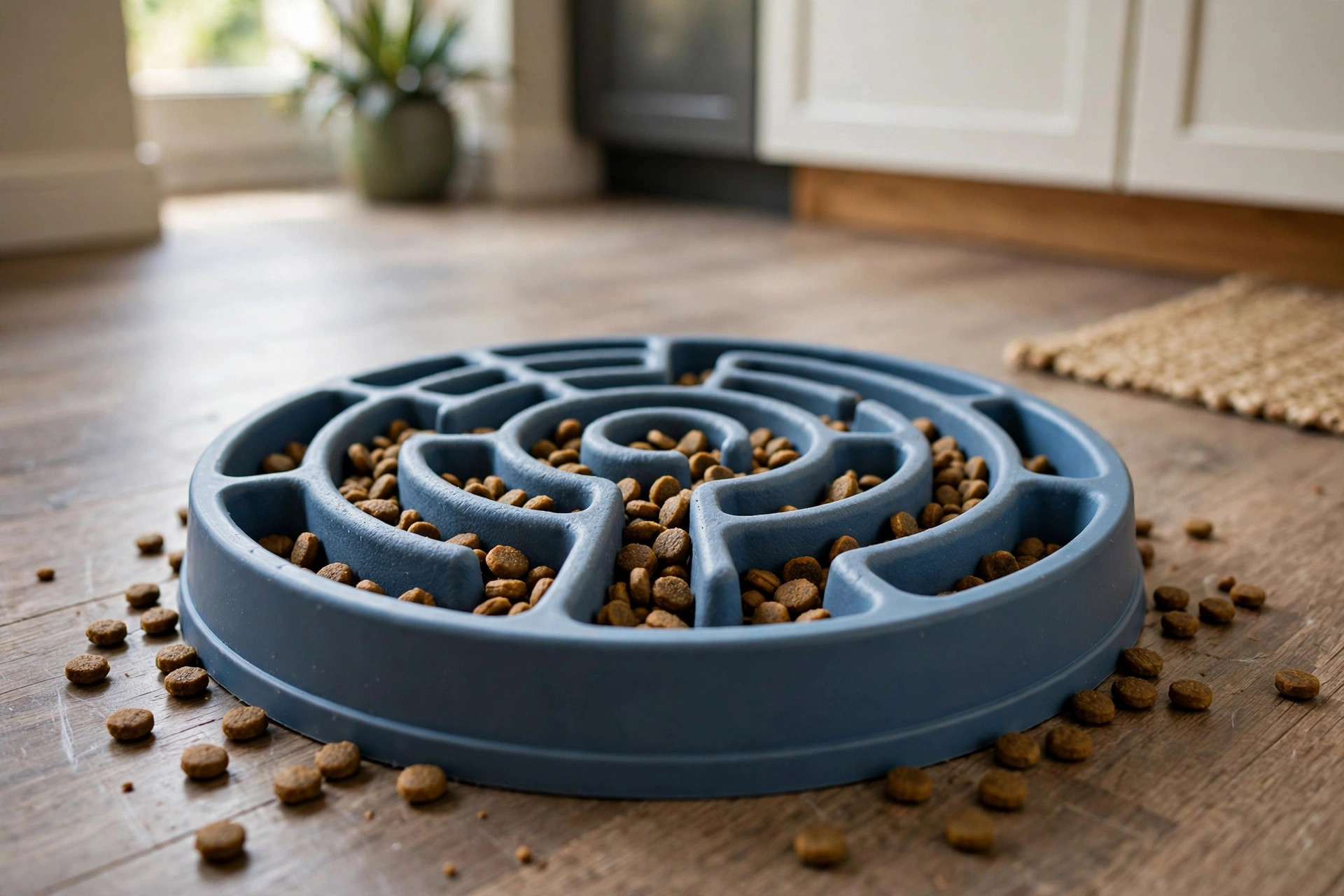
A slow feeder dog bowl has ridges, bumps, or maze-like walls inside the bowl. These raised parts break the food surface into small areas. The dog cannot take a big mouthful. It must move its tongue around the ridges to pick up one piece at a time.
This simple design changes the whole meal. A dog that once ate in thirty seconds may now take ten minutes. The slower pace gives the stomach time to signal the brain that it is full. The dog swallows less air. Digestion improves.
Most slow feeder bowls work with dry kibble. Many also work with wet food. Some owners smear soft food or peanut butter into the maze. This turns the bowl into a puzzle toy. The dog stays busy and calm. The design keeps the mind active too. Dogs that eat from puzzle-style bowls often seem more content after a meal.
How to Choose the Right Bowl
Match the Bowl to Your Dog’s Size
Size matters most. A small bowl will not hold enough food for a large dog. A large bowl with a shallow maze will not slow down a small dog much. Look at the capacity in cups. Most bowls list how much kibble they hold. Choose a bowl that fits your dog’s full meal with a little room to spare.
For toy breeds, look for a small bowl with shallow ridges. Deep maze walls can frustrate a small dog with a short nose. For large breeds, choose a wide bowl with tall ridges. The wider base also keeps the bowl from sliding while the dog eats.
Look at the Maze Pattern
Not all maze patterns are equal. Simple patterns with a few bumps slow a dog down a little. Complex maze walls slow a dog down a lot. A very clever dog may learn a simple pattern in a few days and return to fast eating. A deep maze stays challenging longer.
If your dog is new to slow feeders, start with a simple design. A dog that is scared of a hard puzzle may refuse to eat. You can move to a harder pattern later. Many owners keep two or three bowls of different difficulty and rotate them.
Pick a Safe Material
Most slow feeder bowls are made from plastic, silicone, or stainless steel. Each has pros and cons.
Food-grade plastic is light and cheap. It comes in many colors and maze shapes. But cheap plastic can crack. A strong chewer may bite off pieces. Look for thick BPA-free plastic from a trusted maker.
Silicone bowls are soft and quiet. They do not slide on hard floors. They are easy to wash. But silicone can tear if a dog chews it, and deep mazes are rare in silicone.
Stainless steel bowls last the longest. They do not absorb smells. But the maze shapes in steel bowls tend to be simpler because metal is hard to shape. Some dogs do not like the feel of metal on their teeth.
Whatever you choose, make sure the bowl has a non-slip base. A bowl that slides across the kitchen floor will frustrate your dog and spill food everywhere. Sites like Chewy and PetSmart list many models with grip bottoms, so you can compare designs and read owner reviews before you buy.
Check That It Is Easy to Clean
Mazes have many corners. Food and saliva collect in those corners. A bowl that is hard to wash will grow bacteria. Look for a bowl that is dishwasher safe. Wide shallow mazes are easier to clean by hand than tight deep ones. Removable inner maze inserts make cleaning even simpler.
The ASPCA reminds pet owners that clean feeding dishes help prevent illness. Wash the bowl after every meal or at least once a day. Old food left in the ridges can spoil and make your dog sick.
Types and Options
The Maze Bowl
This is the most common type. It looks like a small labyrinth built into the bottom of the bowl. Kibble falls into the channels between the walls. The dog must follow the paths with its tongue. Maze bowls slow eating by five to ten times compared with a flat bowl. They work well for most dogs.
The Bump Bowl
Instead of walls, this bowl has raised bumps or cones. Food sits in the gaps between the bumps. The dog noses the food out from around each bump. This design is gentler. It suits small dogs, flat-faced breeds, and older dogs with sensitive teeth.
The Interactive Lick Mat Combo
Some feeders combine a shallow maze with a textured lick surface. The owner spreads wet food across it. The dog licks rather than chews. This is the slowest option of all. It works well for raw food, canned food, and toppers. Because the dog must lick, the meal can take twenty minutes or more.
The Elevated Slow Feeder
Large dogs sometimes eat from raised stands. A few stands now come with slow feeder inserts. Raised eating can reduce neck strain in tall dogs. Ask your vet whether a raised bowl suits your dog. Some vets advise against raised bowls for breeds at risk of stomach twist. The American Kennel Club offers breed-specific feeding guidance that can help you decide.
The Puzzle Feeder Toy
Strictly speaking, these are toys, not bowls. The dog rolls a ball or slides panels to release kibble. They slow eating a great deal and give mental exercise. But they hold less food than a bowl. Many owners use a puzzle toy for part of the meal and a maze bowl for the rest. In a home with cats too, a cat stroller for two cats jogging walks can keep the cats calm and separated while the dog works on its meal.
You can find all these styles at large pet stores. Petco and Home Depot both carry feeding supplies, and The Spruce Pets publishes buying guides that explain the differences between models in plain terms.
Cost and Price
Slow feeder bowls are not expensive. Most cost between 8 and 30 dollars. Simple plastic maze bowls sit at the low end. Silicone models cost a little more. Stainless steel slow feeders cost the most, often 25 to 40 dollars, but they last for years.
Puzzle feeder toys cost more, usually 15 to 45 dollars. Elevated stands with slow feeder tops are the priciest option, from 30 to 80 dollars.
Price is not always a sign of quality. A cheap maze bowl with the right size and a non-slip base can work as well as a costly one. Read reviews from other dog owners. Look for comments about the same breed and size as your dog. A bowl that works for a Labrador may not suit a Chihuahua.
Care and Upkeep
A slow feeder bowl needs regular cleaning. The maze traps saliva, bits of food, and oils from wet food. If you skip washing, the bowl will start to smell. Worse, it can grow harmful germs.
Wash the bowl after each meal with hot water and dish soap. Use a small brush to reach into the maze corners. A baby bottle brush works well. Once a week, soak the bowl in hot water with a little baking soda. This removes deep odors.
If the bowl is dishwasher safe, place it on the top rack. Check the maker’s instructions first. High heat can warp cheap plastic. Warped mazes lose their shape and may no longer slow the dog down. For kibble that scatters across the floor or the couch, a best pet vacuum attachment for upholstery cleaning makes quick work of the cleanup.
Inspect the bowl each month. Look for cracks, sharp edges, and loose pieces. A dog that chews its bowl can break off bits of plastic and swallow them. Replace the bowl at once if you see damage. PetMD notes that damaged dishes are a common source of mouth cuts in dogs, so regular checks are worth the few seconds they take.
Store dry food in a sealed container, not in the bowl. Food left out all day loses its smell and taste. It can also attract insects. Measure each meal with a cup so you know exactly how much your dog eats. Good portion control pairs well with a slow feeder. Together they help keep your dog at a healthy weight.
Safety Tips
Slow feeder bowls are safe for most dogs, but a few rules keep them fully safe.
First, watch your dog during the first few meals. Some dogs get angry at the maze. They may try to flip the bowl or chew it. If your dog chews hard plastic, switch to a tougher model or a steel one.
Second, choose the right difficulty. A puzzle that is too hard can stress a nervous dog. A dog that gives up may skip meals. That is worse than fast eating. Start easy and increase the challenge step by step.
Third, never leave a puppy alone with a new feeder until you know it is safe. Puppies chew everything. Make sure the bowl cannot break into swallowable pieces.
Fourth, keep the bowl away from small children when the dog eats. A dog working hard for food may snap if a child reaches into the maze. Feed the dog in a quiet corner. This simple habit prevents many bites each year.
Vetstreet and the ASPCA both advise owners to supervise feeding time with any new dish. A few calm minutes of watching will tell you whether the bowl suits your dog.
Frequently Asked Questions
Will a slow feeder bowl really stop my dog from vomiting after meals?
In many cases, yes. Most post-meal vomiting in fast eaters comes from gulping food and air. A slow feeder cuts both. Owners often see fewer messes within a week. If vomiting continues after two weeks of slow feeding, see your vet. The problem may be a food allergy or another health issue.
How long should a meal take with a slow feeder?
A good target is five to fifteen minutes. Before the bowl, many dogs finish in under a minute. You do not need to time it exactly. If the dog eats calmly and does not gulp, the bowl is doing its job.
Can I use a slow feeder for wet food?
Yes. Maze bowls work with canned food, though cleaning takes more effort. Lick mat style feeders are best for wet food. Spread a thin layer so the dog must lick it off. Avoid very sticky foods in deep mazes. They are hard to wash out.
Is a slow feeder good for puppies?
Yes, with care. Puppies learn fast, and early slow feeding builds good habits for life. Use a shallow, simple maze. Watch the puppy while it eats. A best dog playpen for puppies indoor outdoor gives the puppy a calm, contained eating space away from foot traffic. Puppies chew, so check the bowl for damage often.
What if my dog refuses to eat from the slow feeder?
Start with a very easy pattern and put a high-value treat in the maze. Let the dog explore the bowl without pressure. Some dogs need three or four days to accept it. If refusal lasts more than a few days, try a different shape. A bump design feels less strange to many dogs than a deep maze.
Can slow feeders help with weight loss?
They can help. Slow eating lets fullness signals reach the brain before the dog overeats. But the bowl alone will not cause weight loss. You must also measure portions and follow your vet’s feeding plan. The best slow feeder dog bowl for fast eaters is a tool, not a diet.
A Short Final Word
The best slow feeder dog bowl for fast eaters is a small purchase with a big payoff. It turns a rushed, risky meal into a calm daily ritual. Your dog digests food better, swallows less air, and stays busy. You get fewer vet visits, fewer messes, and a happier pet.
Take time to pick the right size, a safe material, and a maze that fits your dog’s skill. Clean it well, watch the first meals, and pair it with measured portions. Within a few weeks, slow eating will feel normal to your dog. That is good news for its health and for your peace of mind.
References
American Kennel Club. (n.d.). Dog care and training resources. https://www.akc.org ASPCA. (n.d.). Pet care and animal welfare resources. https://www.aspca.org Chewy. (n.d.). Pet supplies. https://www.chewy.com Petco. (n.d.). Pet supplies and services. https://www.petco.com PetMD. (n.d.). Pet health information. https://www.petmd.com PetSmart. (n.d.). Pet supplies and services. https://www.petsmart.com The Home Depot. (n.d.). Home improvement products. https://www.homedepot.com The Spruce Pets. (n.d.). Pet care guides and product reviews. https://www.thesprucepets.com Vetstreet. (n.d.). Veterinary advice for pet owners. https://www.vetstreet.com
Was this guide helpful?

About Michael Thompson
The My Garden US editorial team writes practical, in-depth home and garden guides for American homeowners — tested advice, no fluff.
You May Also Like
Cat Door for Interior Door Installation Easy: A Simple Guide for Pet Owners
June 2, 2026 0 views
Pet Water Bowl Stand for Large Breed Dogs: A Complete Guide
July 3, 2026 0 views
Best Dog Ear Wipes for Weekly Cleaning Routine
August 22, 2026 0 views