
A new puppy brings joy to a home. It also brings work. The best dog playpen for puppies indoor outdoor use gives the young dog a safe space of its own. It keeps the puppy out of trouble. It also keeps the house safe from sharp little teeth. This guide explains what a playpen is, why it matters, and how to pick the right one for both indoor and outdoor use.
Why a Playpen Matters for Puppies
Puppies explore with their mouths. They chew shoes, cords, and table legs. A playpen gives them a place to stay when you cannot watch them. It is not a cage. It is a small fenced area where the puppy can play, sleep, and feel safe.
The best dog playpen for puppies indoor outdoor setups works in two places. Indoors, it guards the living room. Outdoors, it guards the yard. A puppy can breathe fresh air without running into the street. The owner gets peace of mind in both places.
A playpen also helps with house training. Dogs like a clean den. They do not like to soil where they sleep. A playpen of the right size teaches the puppy to hold it until it goes outside. This is why many trainers suggest a pen for the first months of a dog’s life.
What to Look for When Choosing a Playpen: Best Dog Playpen for Puppies Indoor Outdoor
Size and Height
The pen should give the puppy room to stand, turn, stretch, and lie down flat. A very small breed needs less space. A large breed puppy grows fast. Plan for the adult size, or buy a pen you can expand later.
Height matters too. Many puppies can jump higher than people think. A pen wall of 24 inches suits small breeds. Medium and large breeds need 30 to 36 inches. Tall walls stop escapes.
Material and Strength
Most playpens come in three kinds of material. Wire pens are strong and easy to see through. Plastic pens are light and easy to clean. Fabric pens are soft and fold flat, but strong chewers can tear them.
The best dog playpen for puppies indoor outdoor use often uses coated metal wire. Wire stands up to rain and sun. It also stands up to chewing. Plastic works well indoors but may crack in cold weather.
Portability and Setup
Look for a pen that folds flat. Folding pens are easy to carry from the living room to the yard. They are also easy to store. Tool-free setup saves time. Hinges and latches should open and close with one hand.
Indoor and Outdoor Fit
Not every pen works in both places. Check for rust-proof coating if you plan to use it outside. Rubber feet protect indoor floors from scratches. A pen with a floor pan keeps indoor carpets clean. Outdoors, a pen with ground stakes will not tip in the wind.
Pet experts at the American Society for the Prevention of Cruelty to Animals remind owners that young dogs need a safe, confined rest area. Their guidance on puppy care is a good starting point for any new owner.
Types of Dog Playpens
Wire Exercise Pens
Wire pens are the most common choice. They come in panels that link together. Many shapes are possible: square, rectangle, or octagon. The open wire lets air move through. It also lets the puppy see the family. This cuts down on barking and worry.
Wire pens suit the best dog playpen for puppies indoor outdoor role well. The metal coating resists rust. They are heavy enough to stay put on grass. Many models divide into two pens or join to a crate.
Plastic Panel Pens
Plastic pens use snap-together panels. They are light and easy to wash. They come in bright colors. They work best indoors or on a calm patio. Strong chewers may gnaw the plastic. Heavy rain and sun can wear plastic down over time.
Fabric and Mesh Pens
Fabric pens are soft-sided. They fold into a small bag. They are best for travel and short indoor use. They are not a good pick for puppies that chew. One determined puppy can claw through mesh in minutes.
Wooden Pens
Wooden pens look nice in a home. They match furniture. They cost more. They are heavy to move. Wood can soak up urine and stains. For this reason, wooden pens suit calm, older puppies more than young chewers.
Veterinary articles on PetMD explain how confinement tools like pens support healthy routines for young dogs. Their library covers house training and safe spaces in plain terms.
How to Set Up the Pen Indoors
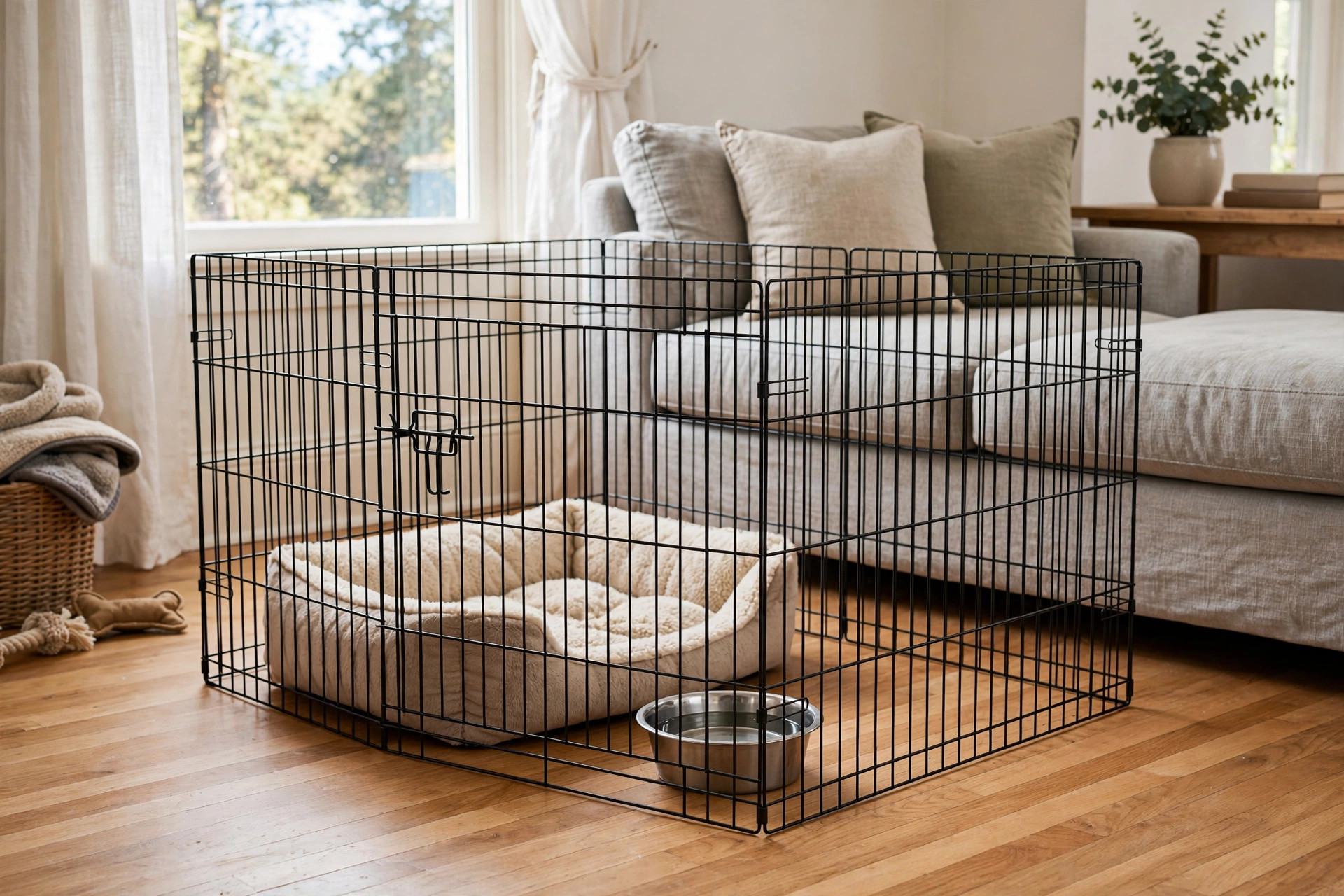
Place the pen in a room where the family spends time. Puppies are pack animals. They rest better near people. A corner of the living room or kitchen works well.
Put a soft bed or blanket on one side. Put water and a safe chew toy on the other side. Leave the middle clear for play. If the pen has a floor pan, use it to guard the carpet.
Do not place the pen near stairs, open windows, or hot vents. Keep cords and small objects out of reach. The puppy will try to pull anything it can touch through the bars.
Some owners link the pen to a crate. This makes a small home: bed in the crate, play space in the pen. If you are weighing a crate instead, our guide to the best dog crate for anxious dogs escape proof covers the key points.
How to Set Up the Pen Outdoors
Pick a flat spot with some shade. Puppies can overheat fast in direct sun. A spot under a tree or near a patio cover is best. The ground should be dry and free of sharp stones.
Use the ground stakes if your pen came with them. Stakes keep the pen from sliding or tipping. Place a water bowl in the shade. Do not leave the puppy outside alone for long. The best dog playpen for puppies indoor outdoor use is a safe space, not a place to store the dog all day.
Watch the weather. Bring the pen or the puppy inside during storms, high heat, or freezing cold. Check the pen after strong wind. Wire panels can shift on soft ground.
For owners who want a more fixed yard space, our article on the outdoor dog run with roof for backyard looks at larger fenced options.
Cost and Price
Playpen prices vary by size and material. Small plastic pens start around 40 dollars. Mid-size wire pens cost 60 to 100 dollars. Large or heavy-duty wire pens run 100 to 180 dollars. Wooden pens can cost 150 dollars or more.
Outdoor-rated pens cost a bit more than indoor-only models. The rust-proof coating and stakes add to the price. This is money well spent. A cheap pen that rusts in one season costs more in the long run.
Check what comes in the box. Some pens include a sunshade top or a floor mat. Others sell these parts apart. Add the cost of extras before you compare prices.
Retailers such as Chewy and PetSmart carry a wide range of pens in many sizes. Comparing a few models side by side makes the choice easier.
Care and Upkeep
Clean the pen each week. Wash wire panels with warm soapy water. Rinse and dry them fully to stop rust. Wash plastic panels the same way. Machine-wash blankets and beds often.
Check latches and hinges each month. Tighten loose bolts. Look for bent wires that could catch a paw. Replace a damaged panel before the puppy finds the weak spot.
Outdoor pens need more care. Hose off mud and grass. Dry the pen before folding it. Store it in a dry shed or garage during winter. A little care adds years to the life of a pen.
The American Kennel Club offers plain advice on puppy supplies and daily care. Their puppy section is worth a read for first-time owners.
Safety Tips
Safety comes first with any puppy product. Follow these rules.
Never leave a young puppy in a pen for more than a few hours at a time. Puppies need food, water, bathroom breaks, and company. A pen is a tool, not a substitute for care.
Remove collars and harnesses inside the pen. Tags and buckles can catch on wire and choke a puppy. This is one of the most common pen injuries.
Keep the pen away from pools, ponds, and busy roads. Even a strong pen cannot guard against every danger. Watch the puppy when it is outside.
Do not use a pen with sharp edges or peeling paint. Lead paint is a real danger in old or cheap pens. Buy from a known maker. The Humane Society of the United States lists safe housing tips for dogs on its site.
Check the pen for chew damage often. A puppy that chews through a panel can swallow sharp bits. Switch to a stronger pen if chewing is heavy.
For homes with both dogs and cats, our guide to a pet gate with cat door for stairway safety shows how to keep spaces safe for every pet.
Training Your Puppy to Love the Pen
Do not force the puppy into the pen. Let it explore on its own. Leave the door open at first. Toss treats inside. Let the puppy walk in and out freely.
Feed meals in the pen. This builds good feelings about the space. Add a favorite toy. Keep early stays short. Five or ten minutes is enough at first. Slowly make the stays longer.
Stay calm when the puppy whines. If you rush over each time, the puppy learns that crying works. Wait for a quiet moment, then praise the puppy. Patience pays off.
The American Veterinary Medical Association supports positive, reward-based training for young dogs. Short, kind sessions work better than long, harsh ones.
Indoor Versus Outdoor Use: What Changes
Indoors, the main risks are floors and furniture. Use a pen with rubber feet or a floor pan. Keep the pen on tile or wood where you can. Carpet stains are hard to remove.
Outdoors, the main risks are weather and escape. Use a rust-proof pen with stakes. Add a shade top in summer. Bring the puppy in when the weather turns.
Some owners keep two pens: one indoors and one outdoors. This saves daily carrying. Others buy one strong wire pen and move it. Both plans work. Pick the one that fits your home and your budget.
Review sites such as The Spruce Pets compare indoor and outdoor pens side by side. Their guides can help you weigh the trade-offs.
Common Mistakes to Avoid
Many owners buy a pen that is too small. The puppy grows fast. A pen that fits at eight weeks may be tight at four months. Buy with growth in mind.
Some owners skip the shade top outdoors. Puppies can overheat in less than an hour in strong sun. A simple shade cloth makes a big difference.
Others leave the puppy in the pen all day while at work. This is too long for a young dog. Puppies need breaks every few hours. Plan for a midday visit or a dog sitter.
Do not place the pen on a slope outdoors. Panels can shift and gaps can open. Flat ground is safer.
Home improvement stores like Home Depot sell ground stakes, shade cloth, and other extras that make outdoor pen setups safer and sturdier.
FAQ
What size playpen is best for a puppy?
It depends on the breed. Small breeds do well with a 24-inch tall pen. Medium breeds need 30 inches. Large breeds need 36 inches. The floor space should let the puppy stand, turn, and lie flat with room to spare. When in doubt, go one size up.
Can a dog playpen be used both indoors and outdoors?
Yes. The best dog playpen for puppies indoor outdoor use is made for both. Look for rust-proof wire, rubber feet for indoor floors, and ground stakes for outdoor use. Clean and dry the pen when you move it between places.
How long can a puppy stay in a playpen?
Keep stays short for young puppies. Two hours is a good limit for an eight-week-old puppy. Older puppies can stay three to four hours. The puppy needs bathroom breaks, food, water, play, and company between pen sessions.
Is a playpen better than a crate?
They serve different jobs. A crate is a small den for sleep. A pen is a larger space for play and rest. Many owners use both. The pen links to the crate to make one safe home base.
What should I put inside the puppy playpen?
Put a soft bed on one side and water on the other. Add one or two safe chew toys. Leave space in the middle for play. Do not crowd the pen. A simple setup is best.
How do I stop my puppy from climbing out of the pen?
Use a taller pen. Add a top panel or shade cover if the maker sells one. Make sure the puppy gets enough play and rest. A tired puppy climbs less. A bored puppy climbs more.
A Final Word
The best dog playpen for puppies indoor outdoor use is a simple tool with a big job. It keeps the puppy safe. It guards the home. It helps with training. Pick the right size, the right material, and the right setup for your space. Clean it often. Check it for damage. Use it with kindness and patience. Do these things, and the pen will serve your puppy well through its first months and beyond.
References
American Kennel Club. (n.d.). Dog care and training resources. https://www.akc.org American Veterinary Medical Association. (n.d.). Pet care resources. https://www.avma.org ASPCA. (n.d.). Pet care and animal welfare resources. https://www.aspca.org Chewy. (n.d.). Pet supplies. https://www.chewy.com PetMD. (n.d.). Pet health information. https://www.petmd.com PetSmart. (n.d.). Pet supplies and services. https://www.petsmart.com The Home Depot. (n.d.). Home improvement products. https://www.homedepot.com The Humane Society of the United States. (n.d.). Animal protection and care. https://www.humanesociety.org The Spruce Pets. (n.d.). Pet care guides and product reviews. https://www.thesprucepets.com
Was this guide helpful?

About James Carter
The My Garden US editorial team writes practical, in-depth home and garden guides for American homeowners — tested advice, no fluff.
You May Also Like
Best Dog Paw Balm for Winter Salt Protection: A Complete Guide
June 15, 2026 0 views
Best Dog Door for Sliding Glass Door Installation
September 5, 2026 0 views
Outdoor Cat Shelter for Stray Cats Winter USA: A Complete Guide
August 31, 2026 0 views