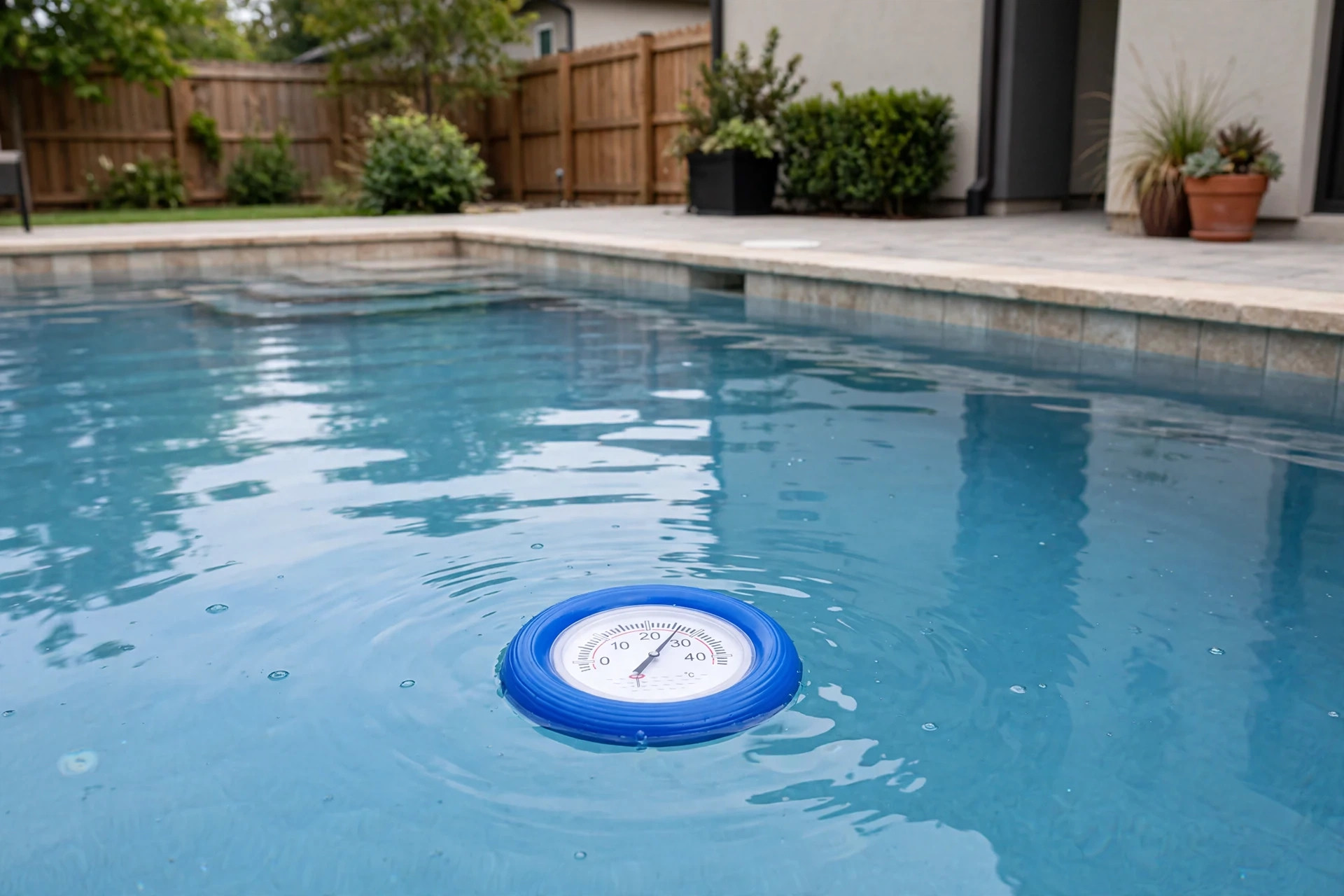

A swimming pool that is too cold makes for a short swim. A pool that is too warm can feel stale and make the water hard to keep clear. The only way to know for sure is to measure. This is why best pool thermometer floating reviews get read so often by pool owners. A floating thermometer sits on the water day and night and tells you the temperature at a glance.
This guide explains how these small tools work, what to look for when you buy one, how much they cost, and how to keep yours in good shape. It is written in plain terms for people who own a home pool, an above ground pool, or a spa.
Why Water Temperature Matters
Temperature shapes almost every part of pool care. Sanitizer works at a certain pace. Algae grows faster in warm water. Swimmers feel at ease only inside a small range. When you guess the temperature, you guess at all of these things too.
Most home pools feel best between 78 and 82 degrees Fahrenheit. Small children and older swimmers often like it a degree or two warmer. Water above 86 degrees can feel heavy, and it can tire swimmers faster. In a spa, the safe range is lower than many new owners expect. The United States Consumer Product Safety Commission advises keeping spa water at or below 104 degrees, and it warns that higher heat brings real risk for young children and for women who are pregnant (Consumer Product Safety Commission).
Temperature also changes how you treat the water. Chlorine and other sanitizers break down and get used up faster in warm water. A pool that sits at 90 degrees through a heat wave may need closer watching than the same pool at 78 degrees. Pool care writers at Swim University note that steady testing goes hand in hand with temperature checks, because both tell you how the water is doing on any given day (Swim University).
A floating thermometer makes this simple. It stays in the water, so it always reads the real temperature of the pool, not the air. You glance at it before anyone swims. That one habit can keep swim time pleasant and keep your chemical use on track. For a wider look at water balance, our accurate pool test strips reviews cover the strips many owners pair with a thermometer.
How a Floating Thermometer Works: Best Pool Thermometer Floating Reviews
The idea is old and simple. A sealed tube holds a column of liquid that rises and falls with heat. The tube sits inside a float that keeps it at the surface. Most models read in both Fahrenheit and Celsius, printed on a card or dial behind the tube.
The float often takes a friendly shape. Round balls are common. Animal shapes are common too. The shape does not change how well it reads. What matters is that the tube is easy to see and the float is sealed so no water gets in.
Digital floating models exist as well. They use a small battery and a sensor, and they show the number on a small screen. They can be easier to read at a glance, but they cost more, and the battery will need changing in time. For most backyard pools, the old-style liquid tube is enough.
What to Look for When You Buy
Reviews of floating thermometers tend to circle the same few points. The points below are what careful buyers check.
Accuracy
A thermometer that reads two or three degrees off is worse than no thermometer at all. It gives you false trust. Good reviews often test accuracy by placing several models side by side in the same water. Look for models whose reviewers report that the reading held steady and matched a known good thermometer.
One honest trick is to test a new thermometer when it arrives. Fill a bucket with cool tap water, let the thermometer float for five minutes, then compare it with a kitchen thermometer you trust. If the two agree within a degree, the pool thermometer is sound. Pool supply writers at Leslie’s Pool Supplies remind owners that small tools earn trust only when checked against something known (Leslie’s Pool Supplies).
Readability
You will read this tool from the deck, sometimes from ten feet away. The numbers must be large and dark. The tube must sit near the top of the float, not buried under thick plastic. Frosted or yellowed plastic is the most common complaint in bad reviews, because it makes the reading a guess.
Build Quality
The body should be one sealed piece with no seams that can leak. Cheap floats crack after one season of sun. Look for models with a sturdy plastic shell. The cord hole, if there is one, should be strong. A thermometer that takes in water will sink or fog, and then it is trash.
A Cord or Tether
Many floats come with a string so you can tie them off near the ladder. This keeps the thermometer from drifting into the skimmer, where it can get knocked or trapped. A tether also keeps it in one place for quick daily checks. If the model you like has no cord, a short piece of nylon line tied through the float works fine.
Style
Shape and color are personal. Bright colors are easier to spot in the water. Some owners like a model that blends in. Style will not change the reading, so let the practical points above decide, and let style break the tie.
Shoppers at large home stores often compare several models on the shelf before they pick. Home Depot stocks a range of pool thermometers, and its listings show how widely build and price can differ between models (Home Depot).
Types of Floating Thermometers
There are three broad kinds on the market. Each suits a different owner.
Standard float thermometers. These are the simple round or shaped floats with a liquid tube. They cost little, need no battery, and last for years if the sun does not break them down. They suit most backyard pools and above ground pools.
Digital floating thermometers. These show the temperature on a small screen. They are easier to read from a distance, and some claim tighter accuracy. They need a battery, and the electronics can fail sooner than a simple tube. They suit owners who want the fastest reading and do not mind changing a battery now and then.
Wireless pool temperature monitors. These have a floating sensor and a small indoor display. You read the pool temperature from inside the house. They cost the most of the three. They suit owners who heat their pool or spa and want to watch the temperature without walking out to the deck. Pool Warehouse lists this class of product alongside the simpler floats, which shows how far the market has grown (Pool Warehouse).
The best pool thermometer floating reviews usually land on the same advice. Buy the standard float unless you have a clear reason to want a screen or a wireless display.
Cost and Price
Price is one of the kinder parts of this buy. A standard floating thermometer costs about eight to twenty dollars at most stores. Digital models run about fifteen to forty dollars. Wireless monitor sets run about thirty to eighty dollars, sometimes more for sets with extra features.
There is little reason to spend at the top of the range for a basic pool. The cheapest models can read just as well as the costly ones if the tube is clear and the seal is sound. Spend more when you want a digital screen or a wireless display, not for the reading itself.
Watch for the hidden cost, which is replacement. A float left in the pool all year will break down faster than one stored indoors over winter. Buying one good model and storing it in the cold months costs less in the long run than buying a cheap one each spring.
Care and Upkeep
A floating thermometer needs little care, but a few habits will make it last.
Rinse it with fresh water now and then. Pool chemicals and sun are hard on plastic. A quick rinse after a heavy chlorine dose keeps the shell clear.
Store it indoors for the winter. If you close your pool in the fall, bring the thermometer inside. Freezing water can crack the float, and long months of ice do no good to the tube. Writers at The Spruce cover this kind of seasonal pool routine in their pool care guides, and the thermometer is part of it (The Spruce).
Check it each spring. Before the first swim, float it in a bucket next to a trusted thermometer and compare. If the reading has drifted, replace it. A tool you cannot trust is not worth keeping.
Keep it out of the skimmer. The pull of the skimmer can trap a float and bang it against the wall. A short tether tied to the ladder rail keeps it where you want it.
Temperature readings also help you time your chemical routine. Many owners check the thermometer and then test the water. Our hot tub water chemistry guide walks through that routine for spa owners, and buying pool chlorine tablets in bulk can lower the cost of keeping warm-water pools clear through summer.
Safety
A thermometer is a safety tool as much as a comfort tool. Water that is too hot can cause real harm, and the danger is greatest for the youngest swimmers.
Never let spa water rise above 104 degrees Fahrenheit. Children should use a spa only with care, for short soaks, and at lower heat. The federal safety guidance on pools and spas covers these limits in plain language, and every spa owner should read it once (Consumer Product Safety Commission).
Check the temperature before children enter. A floating thermometer makes this check take five seconds. If the reading is high, wait. Heat builds in a covered spa fast on a sunny day.
Keep the thermometer itself safe from small children. Some floats are shaped like toys and can tempt a toddler to grab and mouth them. Choose a plain model for homes with very young children, and keep the float where little hands cannot reach it when it is not in the water.
A thermometer does not replace a fence, a cover, or adult watch. It is one small part of a safe pool. Treat it that way.
Frequently Asked Questions
How accurate are floating pool thermometers? Good ones read within one or two degrees of the true temperature. Test any new model against a kitchen thermometer in a bucket of water. If it agrees within a degree, it is sound.
Where should I place the thermometer in the pool? Let it float freely away from the skimmer, or tether it near the ladder. Keep it out of direct sun for the most honest reading, since a float baking in the sun can read warm.
Can I leave the thermometer in the pool all winter? It is better not to. Ice can crack the float and damage the tube. Bring it indoors when you close the pool. The same advice holds for spa thermometers in very cold climates. Spa makers such as Hot Spring Spas and Bullfrog Spas design their equipment for year-round use, but small floating tools still do best stored dry (Hot Spring Spas; Bullfrog Spas).
What temperature is best for a home pool? Most swimmers like 78 to 82 degrees Fahrenheit. Lap swimmers often like it a touch cooler. Small children and older adults often like it a touch warmer.
Do digital floating thermometers last as long as the simple kind? Usually not. The battery and the electronics add points of failure. A simple sealed tube has almost nothing to break. Buy digital for the easy screen, not for a longer life.
How often should I replace a floating thermometer? Replace it when the plastic yellows, the float takes in water, or a spring check shows the reading has drifted. With winter storage indoors, a good model can last three to five years.
A Final Word
A floating pool thermometer is one of the smallest buys a pool owner makes, and one of the most used. It costs little. It asks for no upkeep beyond a winter indoors. And it answers the one question every swimmer asks before getting in: how is the water today.
Read the reviews, check accuracy when the model arrives, tether it where you can see it, and store it dry in the off season. Do that, and this small float will serve you well for years.
References
Bullfrog Spas. (n.d.). Hot tubs and spas. https://www.bullfrogspas.com Hot Spring Spas. (n.d.). Hot tubs and spas. https://www.hotspring.com Leslie’s Pool Supplies. (n.d.). Pool supplies and equipment. https://www.lesliespool.com Pool Warehouse. (n.d.). Pool equipment and supplies. https://www.poolwarehouse.com Swim University. (n.d.). Pool and hot tub care guides. https://www.swimuniversity.com The Home Depot. (n.d.). Home improvement products. https://www.homedepot.com The Spruce. (n.d.). Home and garden advice. https://www.thespruce.com U.S. Consumer Product Safety Commission. (n.d.). Product safety information. https://www.cpsc.gov
Was this guide helpful?

About David Wilson
The My Garden US editorial team writes practical, in-depth home and garden guides for American homeowners — tested advice, no fluff.
You May Also Like
How to Prevent Pool Evaporation: Covers That Save Water and Heat
August 3, 2026 0 views
How to Install Inground Pool Lights: A Complete Step-by-Step Guide
April 26, 2026 0 views
Finding the Best Hot Tub for Hydrotherapy Benefits
January 18, 2026 0 views