Introduction
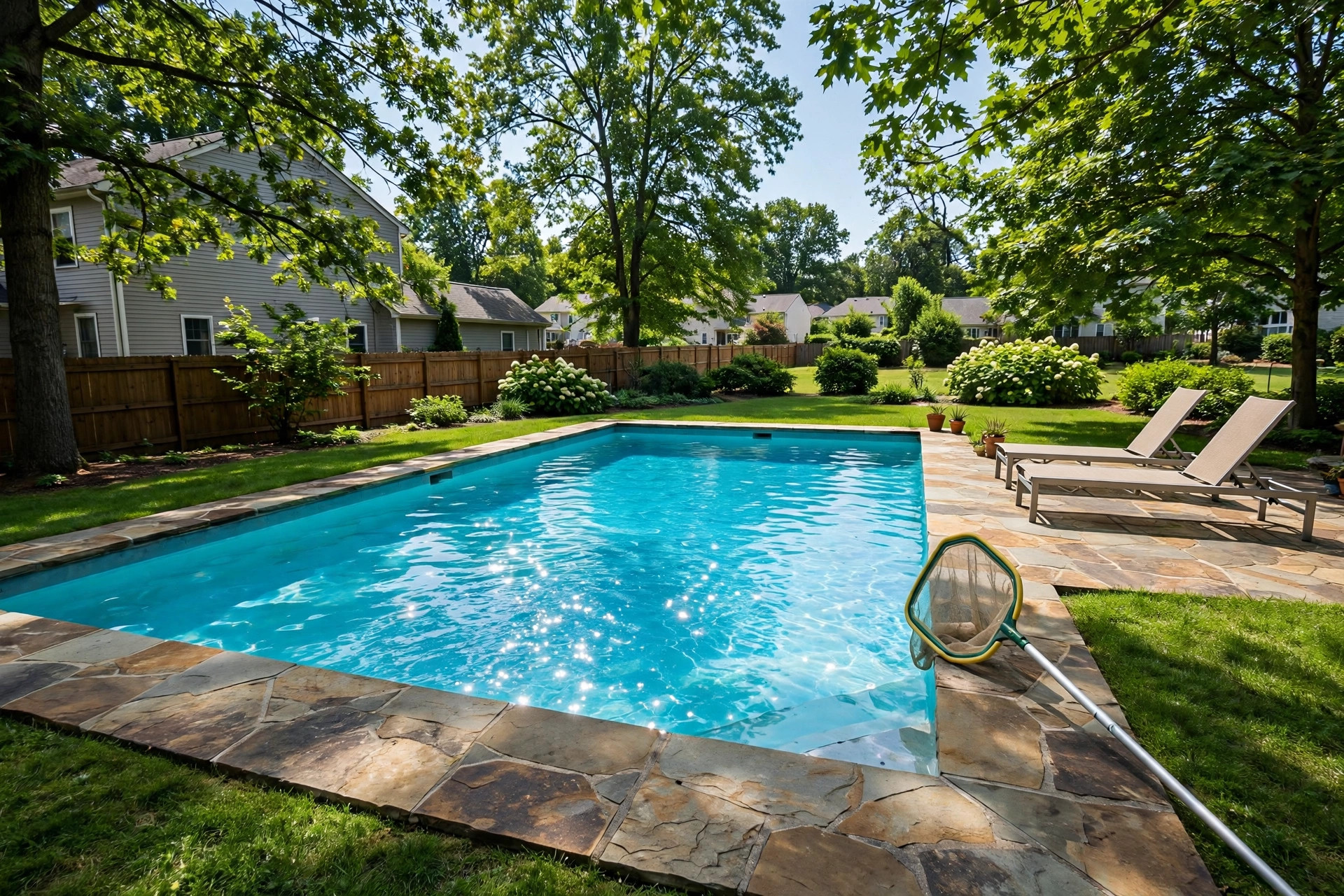
A clean inground pool does not happen by luck. It happens because someone keeps a steady plan. An inground pool maintenance schedule, weekly and simple, tells you what to do each week so the water stays clear and safe for every swimmer. Without a plan, jobs get skipped. Leaves build up. The water turns cloudy. Then one small problem grows into a large and costly one.
This guide gives you a full inground pool maintenance schedule weekly plan. It is written in plain words. You do not need to be a pool expert to follow it. Each task takes only a few minutes. Done week after week, these tasks add up to a pool that is always ready for a swim.
Why a Weekly Schedule Matters: Inground Pool Maintenance Schedule Weekly
Water is always changing. Sun, heat, rain, leaves, and swimmers all shift the chemistry of your pool every day. The U.S. Consumer Product Safety Commission reminds pool owners that safe water is part of a safe pool.
A weekly plan has three clear benefits. First, it protects health. Clean, well-balanced water keeps bacteria and algae from taking hold. Swimmers get fewer skin and eye problems. Second, it protects the pool itself. Water that stays in balance does not stain plaster, fade liners, or eat away at metal parts. Third, it saves money. A small weekly habit is far cheaper than a green-pool cleanup or a pump repair.
The Weekly Schedule at a Glance
Below is the full plan. Do these jobs once each week during swim season. Each takes a few minutes. Read through the whole list once, then make it a habit.
Jobs to Do Every Day (Quick Checks)
Even with a weekly plan, two quick daily habits help a lot.
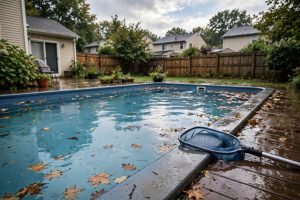
– Skim the surface. Use a leaf skimmer net each morning or evening. It takes two minutes. Catching leaves before they sink keeps them from rotting on the bottom. – Empty the skimmer baskets. Pull out the baskets, dump the debris, and put them back. Full baskets cut down water flow, and poor flow makes the pump work too hard. – Check the water level. It should sit at about the middle of the skimmer opening. If it is low after hot days, top it up with the garden hose.
These small steps keep the weekly jobs lighter. If you want help choosing good cleaning tools, the best pool vacuum for leaves reviews is a useful starting point for pool owners who need backup.
The Core Weekly Jobs
Pick one day each week for these tasks. Saturday morning works well for many families.
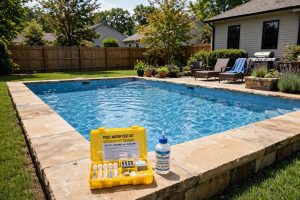
1. Test the water. Use a test kit or test strips. Check free chlorine, pH, total alkalinity, and cyanuric acid. Write the numbers down in a small notebook or on your phone. A written record shows trends. If chlorine keeps dropping fast, you may have too little stabilizer or too much organic matter in the water. Test kits are sold at pool supply shops and big home centers such as Home Depot.
2. Balance the chemistry. Add chemicals based on what the test says. Aim for free chlorine between 1 and 3 parts per million and pH between 7.2 and 7.8. Total alkalinity should sit near 80 to 120 parts per million. Add only one chemical at a time. Wait for it to mix before you test again. Keep all pool chemicals in a cool, dry, locked place away from children and pets.
3. Shock the pool. Once a week, give the pool a shock treatment, which is a stronger dose of chlorine that burns off waste from swimmers and the sun. Do it at dusk or after dark so the sun does not eat the chlorine. Do not swim until chlorine levels fall back to the normal range. Leslie’s Pool Supplies carries a full range of shock products and explains how to dose them at Leslie’s.
4. Brush the walls and floor. Use a good brush and work from the shallow end to the deep end. Brush the steps, ladders, and corners too. Algae loves still spots. Brushing once a week stops it from getting a hold. For stubborn spots, see our notes on how to remove stains from pool plaster.
5. Vacuum or run the cleaner. Vacuum the pool floor to pick up what brushing knocked loose. A manual vacuum, a suction cleaner, or a robotic cleaner all work. If you use a robotic cleaner, rinse its filter basket when you are done.
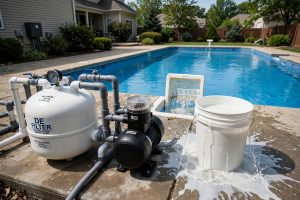
6. Check and clean the filter. Look at the pressure gauge. When it reads 8 to 10 psi above the clean starting pressure, clean or backwash the filter. Sand and D.E. filters get backwashed. Cartridge filters get hosed off. A clean filter catches fine dirt and keeps the water clear. Pool Warehouse stocks filters, parts, and cleaners for all three filter types at Pool Warehouse.
7. Clean around the pool. Sweep the deck. Check that the fence gate closes and latches by itself. Small deck repairs are cheap when caught early.
What to Look for When You Test the Water
Good testing is the heart of the weekly plan. A test strip is easy, but a drop kit with liquid reagents gives steadier results. Many owners use strips for the quick weekly check and a drop kit once a month.
Know what each reading means. Chlorine kills germs. If it is too low, the water is not safe. If it is too high, it stings eyes and fades swimsuits. The pH level tells you if the water is too sour or too sweet. Low pH burns eyes and damages equipment. High pH makes chlorine work poorly and can leave a cloudy look. Alkalinity steadies pH; without enough of it, pH swings up and down. Calcium hardness matters for plaster and concrete pools. Too little calcium eats into plaster. Too much leaves white scale. Cyanuric acid shields chlorine from the sun. Too little means chlorine burns off fast. Too much locks chlorine up so it cannot work. Swim University has clear guides on reading test results when a number looks strange two weeks in a row.
Types of Pool Equipment and What They Need
Your weekly schedule touches the main parts of the pool system. Here is what each part needs.
The pump and motor. The pump is the heart of the pool. It moves water through the filter and back. Run it long enough each day to turn the whole pool volume over once, usually 8 to 12 hours in summer. Listen for odd sounds. A loud whine can mean worn bearings. Check the pump basket each week and clear out leaves and hair.
The filter. Three kinds exist: sand, cartridge, and D.E. Sand filters are simple and cheap to run. Cartridge filters catch finer dirt and use less water. D.E. filters catch the finest dirt of all. No matter which kind you have, watch the pressure gauge. Clean it when the reading climbs. A dirty filter is the top cause of cloudy water.
The skimmers and returns. Skimmers pull floating debris off the surface. Returns push clean water back in. Keep both free of blocks. Point return jets slightly downward and in one direction. This helps water move in a circle and sends debris toward the skimmers.
Heaters and salt systems. If you have a heater, check that it fires up and shuts down as it should. If you have a salt chlorine generator, check the salt level each week and clean the cell as the maker directs. Salt pools still need weekly care. They make their own chlorine, but they still need testing, brushing, and balancing.
Automatic cleaners. Robotic and suction cleaners save time, but they are not set-and-forget tools. Empty their bags or baskets each week. Check hoses and cords for wear. Pull the cleaner out of the pool when you shock the water.
What Weekly Pool Care Costs
Pool care costs differ by pool size, region, and how much you do yourself. Here is a plain breakdown of the weekly cost of doing it yourself.
Chemical costs run about 15 to 40 dollars per week in swim season for a typical home inground pool. Chlorine or shock, pH adjusters, and alkalinity products make up most of it.
Electricity is the next big cost. Running the pump costs money every day. A single-speed pump on a big pool can add 30 to 80 dollars a month to the power bill. A variable-speed pump uses far less power.
The budget-friendly fact is this: a steady weekly plan is the cheapest plan. Green pool cleanups cost hundreds of dollars. A pump replaced early because of poor care costs far more than a weekly brush and test routine ever will.
Care and Upkeep Beyond the Week
Some jobs belong to a monthly or seasonal rhythm, not the weekly list.
Once a month, do a deeper review. Clean the salt cell if you have one. Check the pump and filter for small leaks. Test calcium hardness and cyanuric acid with a drop kit. Walk the deck for cracks that could trip bare feet.
Each season brings its own work. In spring, open the pool with a full clean and a fresh water balance. In summer, keep to the weekly plan and watch chlorine use during heat waves and heavy swim days. In fall, skim more often as leaves drop, and think about a leaf cover. In winter, close the pool properly: balance the water, add closing chemicals, lower the water level, and cover the pool tight. The Spruce keeps seasonal pool care guides that many owners bookmark.
Bullfrog Spas, known for hot tubs and backyard water care, keeps care guides some pool owners find useful at Bullfrog Spas. Hot Spring also publishes general water care advice at Hot Spring.
Pool Safety
A clean pool is only half the story. A safe pool is the other half. Safety needs to be part of your weekly routine, not a one-time thought.
Check the fence and gate every week. The fence should be at least four feet high with no gaps a child could slip through. The gate should close and latch on its own. If the latch sticks or the gate drags, fix it the same day.
Keep rescue gear in place. A reaching pole and a life ring should sit within easy reach of the pool. Make sure drain covers are tight and unbroken. Broken drain covers are a known hazard, and federal safety rules cover them. Read the pool safety guidance from CPSC once a year and keep it in mind.
Teach swimmers the rules. No diving in shallow water. No running on a wet deck. Children should never swim alone, and weak swimmers should wear life jackets. Store chemicals locked up, away from the pool deck. Never mix chemicals, and never add them while people are swimming.
For a lighter side of pool time, see the best pool floats for pool parties.
Frequently Asked Questions
How long does the weekly schedule take?
Most weeks take 30 to 60 minutes of hands-on work, not counting time you wait for chemicals to mix or the pump to run. Skimming and basket emptying take minutes. Testing, balancing, brushing, and vacuuming take longer. The first few weeks are slower while you learn. After a month, it feels like a normal chore, like mowing the lawn.
Can I skip a week?
You can, but the water will notice. In hot weather, one skipped week can mean low chlorine and an algae start. If you go on vacation, ask a neighbor to follow the simple parts, use a floating chlorinator, or hire a pool service for that week. A week of missed care costs more to fix than it takes to do.
Is a saltwater pool easier to maintain?
A salt system makes its own chlorine, so you buy less chlorine. But you still need the weekly plan: testing, brushing, vacuuming, and balancing. The salt cell needs cleaning, and salt levels need checks. Many owners like salt pools because the water feels softer, but it means different chores, not no chores.
Why is my pool cloudy even though I follow the schedule?
Cloudy water has a few common causes. The filter may be dirty, so check the pressure gauge first. Chlorine may be low if the sun burned it off or the stabilizer level is off. Dead algae after a shock can cloud the water for a day or two. Run the pump longer, clean the filter, and test again. If it stays cloudy for more than a couple of days, take a water sample to a pool shop for a full test.
How often should I shock the pool?
Once a week is the standard for home pools in swim season. Shock after heavy use, such as a party, or after a big rain. Always shock at dusk. Do not swim until chlorine returns to the safe range. If you use a lot of shock, you may need to adjust pH and alkalinity after.
What is the most skipped step?
Brushing. Many owners test and add chemicals but skip the brush. Algae clings to walls in a thin film that chemicals alone struggle to kill. Weekly brushing breaks that film and lets the chlorine do its job.
A Short Final Word
An inground pool is a joy when it is clean and a burden when it is not. The difference is rarely money or fancy gear. It is a simple plan, kept week after week. Skim, empty, test, balance, shock, brush, vacuum, and check the gear.
Start this week. Pick your day, save this checklist on your phone, and run through it once. Next week it will be faster. By the end of the season, it will be second nature.
References
Bullfrog Spas. (n.d.). Hot tubs and spas. https://www.bullfrogspas.com Hot Spring Spas. (n.d.). Hot tubs and spas. https://www.hotspring.com Leslie’s Pool Supplies. (n.d.). Pool supplies and equipment. https://www.lesliespool.com Pool Warehouse. (n.d.). Pool equipment and supplies. https://www.poolwarehouse.com Swim University. (n.d.). Pool and hot tub care guides. https://www.swimuniversity.com The Home Depot. (n.d.). Home improvement products. https://www.homedepot.com The Spruce. (n.d.). Home and garden advice. https://www.thespruce.com U.S. Consumer Product Safety Commission. (n.d.). Product safety information. https://www.cpsc.gov
Was this guide helpful?

About Lisa Anderson
The My Garden US editorial team writes practical, in-depth home and garden guides for American homeowners — tested advice, no fluff.