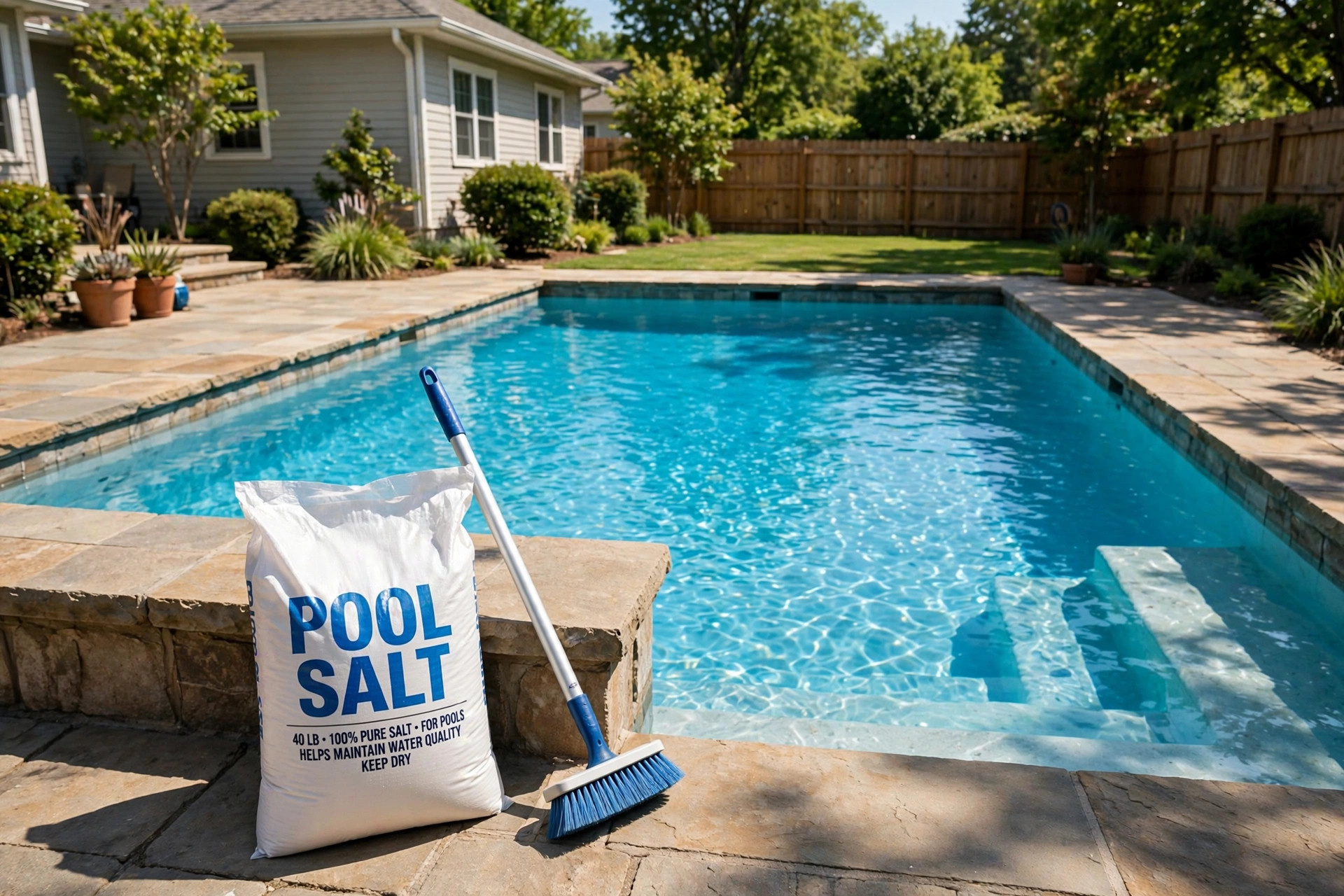

Saltwater pools have become a common sight in American backyards. The water feels softer on the skin. The eyes sting less. The sharp smell of chlorine fades. But these benefits only appear when the salt level is right. Too little salt and the chlorine generator cannot do its work. Too much salt and the water tastes bitter. That is why learning how to add salt to pool correctly is worth the time it takes. You test the water, you do a small sum, you pour the salt in the right place, and you let the pump run. This guide walks through each step in plain words.
Why Adding Salt the Right Way Matters
A saltwater pool is not a pool without chlorine. It uses a salt chlorine generator, a small cell plumbed into the pool system. When salty water passes through the cell, an electric charge turns the salt into chlorine. The chlorine cleans the water. Then the process starts again. For the generator to work, the salt level must sit inside a narrow band. Most systems ask for 2,700 to 3,400 parts per million. Some ask for up to 4,000.
When the level falls below the band, the generator produces too little chlorine. Algae can move in. The water may turn cloudy or green. When the level runs too high, the system may shut down to protect itself. Salt can also leave a white crust on the deck and the ladder. Adding salt the right way keeps the system in its working range. It saves money on chemicals. It keeps the water clear through the long summer.
There is another reason to be careful. Salt does not evaporate. Once it is in the pool, only splash-out, backwashing, and rain take it away. If you add too much today, you can only drain water and refill. A slow and careful hand is the whole secret of this job.
If you are still weighing the choice between systems, a look at the salt water vs chlorine pool pros cons debate can help you decide. And if your pool still runs on tablets, the salt water pool conversion cost guide explains what the change involves.
What You Need Before You Start: How to Add Salt to Pool Correctly
Gather your tools before you open the first bag. A calm, steady job beats a rushed one.
Pool Salt
Buy salt that is sold for pools. Pool salt is pure sodium chloride, ground into fine crystals, with no anti-caking agents and no iodine. Table salt and water softener salt with additives can cloud the water and stain the plaster. A 40-pound bag is the standard size. For a first dose, most pools need several bags. Later top-ups usually need one or two.
Guides at Leslie’s Pool Supplies and SwimUniversity both stress the same point: use salt made for swimming pools and nothing else.
A Salt Test Kit or Strips
You must know your starting salt level. Salt test strips work for a quick check. A digital salt meter gives a steadier reading. Many salt systems show a salt reading on the control panel, but pool owners often find that reading drifts. A separate test is the safer path.
A Pool Brush and a Running Pump
A stiff pool brush helps push the salt around so it dissolves fast. The pump must be on while you add salt. The moving water carries the salt through the whole pool and keeps it from settling in one spot.
A Simple Dose Chart
Before you pour, work out how many pounds you need. The common rule is this: to raise the salt level of 10,000 gallons of water by 1,000 parts per million, add about 85 pounds of salt. To use the rule, you need two numbers: your pool volume in gallons, and the gap between your current salt level and your target. Multiply the gap by 85 pounds per 10,000 gallons, then scale to your pool size.
An example makes it clear. Say your pool holds 20,000 gallons. Your test shows 2,000 parts per million. Your target is 3,200. The gap is 1,200 parts per million. The sum is 1,200 divided by 1,000, times 85 pounds, times two (because your pool is twice 10,000 gallons). That comes to about 204 pounds of salt, or roughly five 40-pound bags.
Round down when you are between numbers. You can always add more later. You cannot take salt out easily. Product guides at Hayward Pool Products give the same advice for their systems: dose in small steps and retest.
How to Add Salt to a Pool, Step by Step
Here is the heart of the matter. Take these steps in order, and do not rush.
Step 1: Test the Water
Start with a full water test. Check the salt level, but also check pH, free chlorine, alkalinity, and stabilizer. The salt system works best when the whole chemistry is balanced. If the pH is high, fix it first, since salt systems tend to push pH upward. The Spruce offers plain-language advice on pool water basics for beginners.
Step 2: Turn the Chlorinator Down or Off
Set the salt chlorine generator to a low output or switch it off while you add salt. Undissolved salt sitting on the cell plates is hard on the unit. Some manuals tell you to wait a full day after adding salt before you turn the system back up. Follow your own manual on this point.
Step 3: Keep the Pump Running
Run the pump on its normal or high speed. Moving water is what dissolves the salt. Never add salt with the pump off.
Step 4: Pour the Salt in the Shallow End
Open the bags and pour the salt slowly into the shallow end of the pool, in a thin stream. Walk along the edge as you pour so the salt spreads out. Do not dump the whole bag in one heap. Do not pour salt into the skimmer or near the main drain. Big piles of salt can sit on the plaster and leave marks, and a rush of salt through the skimmer can slam the filter and the pump with brine.
Pool care articles at Pool Warehouse describe this same method: shallow end, slow pour, wide spread.
Step 5: Brush the Pool Floor
Take the pool brush and sweep the areas where you poured. Move the salt crystals off the floor and into the water. Salt is heavy, and it sinks. Brushing lifts it into the moving water, where it dissolves much faster.
Step 6: Let the Pump Run for a Full Day
Keep the pump running for at least 24 hours after adding salt. This gives every crystal time to dissolve. Do not swim until the salt is fully gone from the floor. Crystals underfoot are rough, and a cloudy patch of brine can irritate the eyes.
Step 7: Retest and Adjust
After a day, test the salt level again. If it is still below your target, add the rest in a second round. Aim for the middle of your system’s range, not the top edge. Salt levels creep up from other sources over the season, such as muriatic acid and chlorine products, so landing in the middle leaves room.
When you buy more bags, the salt aisle at The Home Depot usually carries pool salt in season, and the staff there can point you to the right grade.
Types of Pool Salt and Which to Choose
Not all salt on the shelf is right for a pool. Here are the common kinds.
Pool salt is the right choice. It is finely ground sodium chloride with no additives. It dissolves fast and leaves the water clear.
Solar salt is made by evaporating seawater in the sun. It is fairly pure, but the crystals are coarse. They dissolve slowly. Some pool owners use it without trouble, but fine pool salt is the safer buy.
Water softener salt is cheap, but many brands add anti-caking chemicals or rust removers. These additives can stain the pool and cloud the water. Skip it.
Table salt is the wrong choice entirely. The iodine and anti-caking agents in table salt will foul the water.
Mined rock salt often carries dirt and minerals. It can stain plaster and feed algae. Skip it.
The rule is short: if the bag does not say it is for swimming pools, do not put it in your pool.
Cost and Price
Pool salt is one of the cheapest parts of pool care. A 40-pound bag of pool salt usually costs between 7 and 12 dollars at big stores, though prices move with the season and the region. A new saltwater pool of average size may need 200 to 400 pounds of salt for its first dose. That is five to ten bags, or roughly 50 to 100 dollars.
After that, the yearly cost is small. Most pools need one or two bags a year to replace salt lost to splash-out and backwashing. Compare that with the price of chlorine tablets over a season, and salt usually wins. The real cost of a saltwater system is the generator cell, which wears out every three to seven years and can cost several hundred dollars to replace. Salt itself is the least of your worries.
Keep an eye on your filter as well. Salt systems put a steady load on the filter, and the best pool filter for saltwater systems can make the whole setup run more smoothly.
Care and Upkeep After Adding Salt
Adding salt is not a one-time job. The level drifts down over the season, and a small routine keeps it steady.
Test the salt level once a month. Heavy rain, backwashing, and splash-out from active swimmers all pull salt out of the pool. A monthly test catches the drift early.
Top up in small doses. When the level falls a few hundred parts per million, add one bag at a time, brush it in, and retest the next day. Small steps keep you inside the band.
Watch the pH. Salt chlorine generators push pH upward. Many salt pool owners test pH weekly and add acid when needed. A guide on how to lower pool ph levels safely is worth keeping close by.
Clean the salt cell. Mineral scale builds up on the cell plates. Most makers tell owners to check the cell every three months and soak it in a mild acid bath when scale appears. A clean cell makes chlorine well and uses less salt to do it.
Keep a salt water pool maintenance schedule. A simple written schedule helps. Note the test dates, the doses, and the cell cleanings. Over a season, the notes show you how fast your pool loses salt, and next year you will know what to expect.
Safety
Salt itself is gentle, but the job still calls for care. Keep these points in mind.
Do not swim until the salt has fully dissolved. Give it the full 24 hours with the pump running. Solid crystals on the pool floor are rough on feet, and a thick layer of brine near the bottom can sting the eyes.
Store pool salt bags in a dry place, off the concrete. Salt pulls water from the air. A bag left open in a damp shed will turn into a hard block. Stack bags on a pallet or a shelf, and close opened bags tight.
Keep the salt away from metal tools and equipment that are not made for pool use. Salt speeds up rust. Do not store bags against the lawn mower or the garden tools.
Teach children that pool salt is not table salt. It looks much the same in the hand. Keep the bags out of reach, and keep the shed or storage area latched.
Electrical safety matters around the pool at all times. The U.S. Consumer Product Safety Commission publishes guidance on pool and spa safety that every pool owner should read. Bullfrog Spas, a maker of hot tubs, also notes that water chemistry and equipment care go hand in hand with safe soaking.
Frequently Asked Questions
How long does it take for pool salt to dissolve? With the pump running and a good brushing, most pool salt dissolves within 24 hours. Coarse salt takes longer. Do not swim until you can no longer see or feel crystals on the pool floor.
Can I add salt to my pool while people are swimming? No. Ask everyone to get out first. Add the salt, brush it in, and wait until it is fully dissolved before anyone swims again. This usually means waiting a full day.
What happens if I add too much salt? The water may taste salty, and the generator may flash a high-salt warning or shut down. The fix is to drain some pool water and refill with fresh water, then retest. To avoid the trouble, always round your dose down and add the rest later if needed.
Can I use water softener salt in my pool? It is not a good idea. Many water softener salts contain additives that stain plaster and cloud water. Pool salt costs only a little more and is made for the job.
Does salt damage the pool equipment? Salt is harder on some metals than fresh water is. That is why salt pools use salt-rated parts, from the cell to the ladder rails. Keep the salt level inside the maker’s range, rinse salty splash off the deck, and the equipment will last its normal life.
A Short Final Word
Adding salt to a pool is a quiet job, and that is the point. Test the water, work the small sum, pour the salt in the shallow end with the pump running, brush it in, and let the system run a full day. Retest and top up if you must. Do it this way, and the reward is the soft, clear water that makes salt pools so well liked. Do it in a hurry, and you will spend the weekend draining and refilling. Slow and careful wins, every time.
References
Bullfrog Spas. (n.d.). Hot tubs and spas. https://www.bullfrogspas.com Hayward. (n.d.). Pool equipment and automation. https://www.hayward-pool.com Leslie’s Pool Supplies. (n.d.). Pool supplies and equipment. https://www.lesliespool.com Pool Warehouse. (n.d.). Pool equipment and supplies. https://www.poolwarehouse.com Swim University. (n.d.). Pool and hot tub care guides. https://www.swimuniversity.com The Home Depot. (n.d.). Home improvement products. https://www.homedepot.com The Spruce. (n.d.). Home and garden advice. https://www.thespruce.com U.S. Consumer Product Safety Commission. (n.d.). Product safety information. https://www.cpsc.gov
Was this guide helpful?

About Lisa Anderson
The My Garden US editorial team writes practical, in-depth home and garden guides for American homeowners — tested advice, no fluff.
You May Also Like
Finding the Best Pool Cover for Safety Kids and Families
January 1, 2026 0 views
Best Hot Tub Insulation for Winter: A Complete Guide
January 18, 2026 0 views
Hot Tub Chemicals for Sensitive Skin: How to Soak Without the Itch
July 27, 2026 0 views