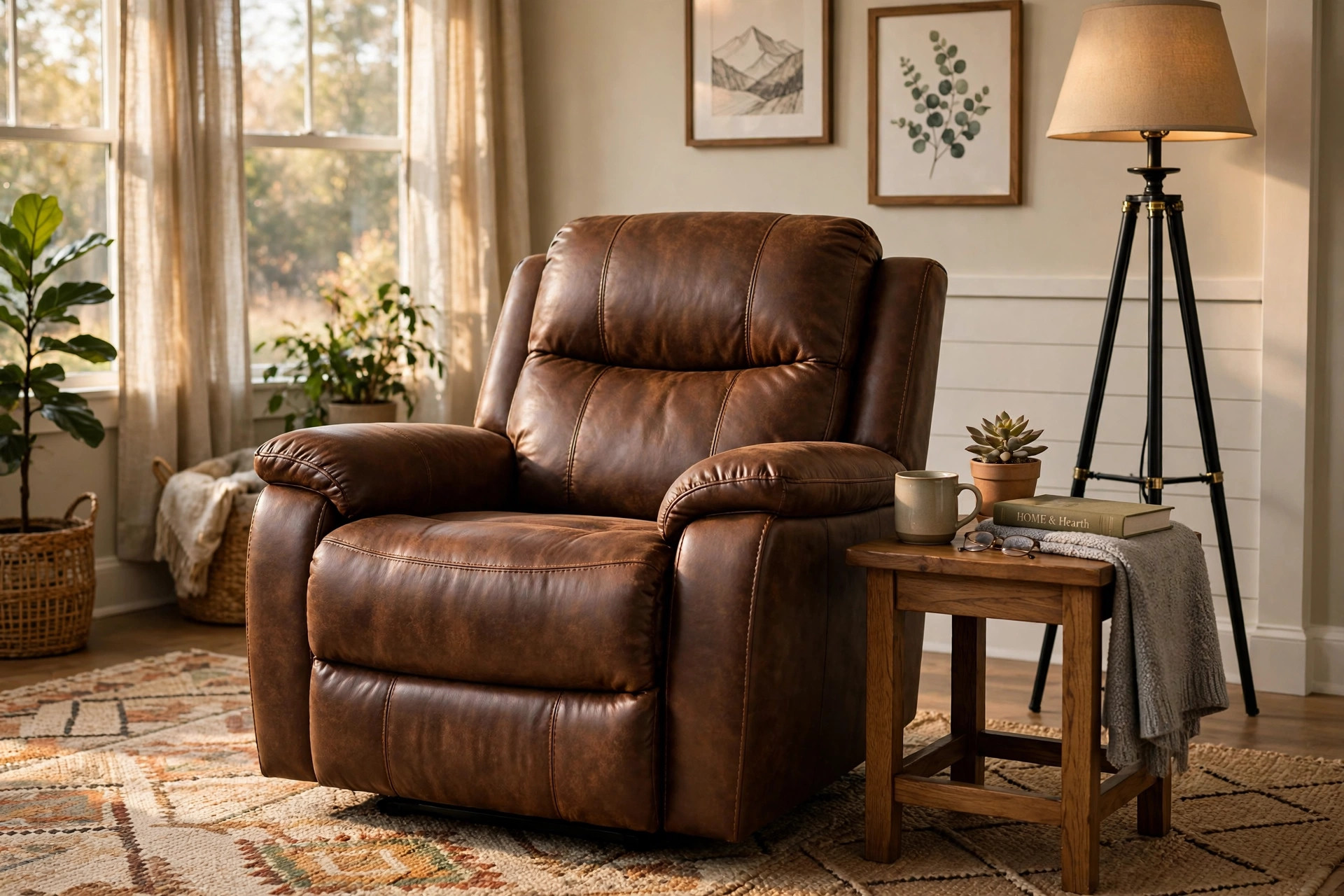

A leather recliner chair is one of the most loved seats in the American home. It serves the living room, the den, and the reading corner. This leather recliner chairs buying guide USA gives you the plain facts. It explains what matters, what the options cost, and how to keep the chair in good shape for years.
Why a Leather Recliner Matters
Few pieces of furniture earn their place the way a recliner does. A good chair supports the back, takes the weight off tired legs, and gives the body a place to rest after a long day. Leather adds more. It feels warm in winter and cool in summer. It wipes clean with a cloth. It gains a soft shine with age that fabric chairs never match.
Americans keep a recliner far longer than most furniture. Ten to twenty years is common for a well made leather model. That long life makes the choice worth some thought. A cheap chair that sags in three years costs more in the end than a good chair bought once.
How to Choose the Right Chair: Leather Recliner Chairs Buying Guide Usa
Fit comes first. Sit in the chair before you buy it if you can. Your feet should rest flat when the chair is upright. Your head should touch the headrest without strain. The seat should be deep enough to support the full thigh but not so deep that the lower back loses contact.
Check the Frame
The frame is the skeleton of the chair. Hardwood frames last longest. Plywood frames of high grade come next. Metal frames can be strong but may add noise over time. Stay away from frames made only of particle board. They break under repeated use.
Test the Recline Action
Work the recline handle or button several times. The footrest should rise smooth and lock firm. The back should tilt back without a jerk. A good action feels quiet. Clicks, grinds, and sticking parts are signs of cheap gears. Power recliners should move at a slow steady pace. Manual recliners need a firm but easy pull.
Look at the Leather
Real leather grades vary. Top grain leather sits near the surface of the hide. It is strong and looks rich. Full grain leather keeps the whole surface. It costs the most and ages best. Split grain and bonded leather sit at the low end. Bonded leather mixes leather scraps with plastic film. It peels within a few years. Read the tag. It should say full grain or top grain. Words like “leather match” mean only the front is real leather and the sides are vinyl.
Measure Your Space
A recliner needs room behind it to lean back. Most models need six to twelve inches of wall clearance. Some wall hugger models need only three or four inches. Measure the door too. A large chair may not pass through a narrow doorway. Note the chair width with the armrests. Wide models can block walk paths in small rooms.
Types and Options
Manual Recliners
Manual chairs use a side handle or a push back design. They cost less. They have no motor to fail. They suit buyers who want a simple chair that lasts. The pull force can be stiff for older users with weak arms.
Power Recliners
Power chairs use a small electric motor. A button on the side or a remote tilts the back and raises the footrest. Many add a power headrest and lumbar support. They cost more and need an outlet nearby. Look for a battery backup so the chair can close during a power cut.
Wall Hugger Recliners
Wall huggers slide forward as they lean back. They fit tight rooms and apartments. They trade some full lean angle for the saved space. They work well against a wall or in front of a window.
Rocker Recliners
Rocker models rock on a curved base. Parents like them for nurseries and family rooms. They need floor space for the rocking motion. Check that the base moves smooth and silent.
Swivel Recliners
Swivel chairs turn on a round base. They suit rooms where people face different directions, such as a television room that opens to a kitchen. The base should lock steady when seated.
Oversized and Lift Chairs
Oversized chairs fit tall or broad users. Lift chairs tilt forward to help a person stand. They help seniors and anyone with knee or hip trouble. Lift models cost the most. They are worth the price for the safety they give.
Cost and Price in the USA
Prices run wide. A budget bonded leather recliner sells for 300 to 600 dollars. These wear out in three to five years. A mid range top grain leather chair sells for 800 to 1,500 dollars. This is the sweet spot for most buyers. A full grain leather chair from a known maker sells for 1,800 to 3,500 dollars or more. These can last twenty years with care.
Power adds 200 to 500 dollars over a manual twin. Lift chairs run 1,000 to 2,500 dollars. Delivery fees range from free to 200 dollars. White glove delivery, where the crew brings the chair inside and takes the box away, often costs 100 to 150 dollars.
Watch for sales. Major sales fall near Labor Day, Black Friday, and Presidents Day. Floor models and clearance chairs can save 30 to 50 percent. Check the warranty before buying a floor model. It should match the new stock terms.
Care and Upkeep
Leather needs simple care, not hard care. Dust the chair once a week with a dry cloth. Wipe spills at once with a damp cloth. Use a leather cleaner made for furniture two to four times a year. Follow with a leather conditioner to keep the hide soft.
Keep the chair out of direct sun. Sun fades and dries leather. Keep it six feet or more from a fireplace or heat vent. Heat cracks the surface. Do not use harsh sprays, bleach, or furniture polish on leather. They strip the finish.
Tighten bolts and check the recline parts once a year. A loose bolt now saves a broken frame later. If the leather feels dry, condition it sooner. If the color starts to wear on the armrest, a leather dye kit from a trusted shop can renew it.
Pets add wear. Claws scratch leather fast. Place a throw over the seat if a dog or cat shares the chair. Many owners pair the chair with a footrest like the ones covered in our living room ottomans buying guide so pets have their own spot.
Safety in the Home
Recliners carry small risks worth knowing. The footrest trap can pinch fingers and toes. Teach children to keep hands clear of the moving parts. Power chairs should sit where the cord cannot trip a walker. Use a cord cover along the wall.
Do not stand on a recliner. The base is not built for it. Lock the swivel base before sitting if the chair has a lock. Check the weight limit on the tag. Most home chairs hold 250 to 350 pounds. Going past the limit bends the frame and voids the warranty.
For buyers with health concerns, a lift chair brings real safety. It rises to meet the body and lowers it back down. It cuts fall risk for seniors who stand up many times a day.
Where to Buy in the USA
Most buyers choose between stores and online sellers. Furniture stores let you sit in the chair and test the action. Sales staff can explain the leather grade and show the frame build. Delivery is often fast from local stock. Prices run higher, but haggling can cut ten to fifteen percent.
Online sellers offer a wider range and lower prices. Read the full product page before you order. Look for real leather grade in the specs. Check the return window. A thirty day return policy matters for a chair you cannot test. Read buyer reviews and skip listings with few reviews. Watch out for sellers who use the word leather on bonded or faux leather chairs.
Buying clubs and outlet centers sit between the two. They carry overstock from known brands at sharp cuts. Stock is limited, so act when you see a good model. Always sit in it first. Outlet chairs may be final sale.
Warranty and Returns
A strong warranty signals a strong chair. Look for at least a one year warranty on parts and labor. Frame warranties of three to five years are common on mid range chairs. Leather surface warranties often run one to three years. Read what the warranty excludes. Normal wear, fading from sun, and pet damage are rarely covered.
Ask about the return policy before you pay. Stores often allow seven to thirty days for returns. Some charge a restocking fee of ten to twenty five percent. Online sellers may offer free return shipping for large furniture. Others make you pay the freight both ways, which can cost 200 dollars or more.
Keep your receipt and the warranty card. Take a photo of the care tag on delivery day. If a seam splits or a motor fails inside the warranty term, call the seller first. Most handle the claim and send parts or a repair tech.
FAQ
How long does a leather recliner last?
A top grain or full grain leather recliner lasts ten to twenty years with normal care. Bonded leather chairs last three to five years before the surface peels.
Is top grain or full grain better?
Full grain is the strongest and ages best. Top grain is also very good and costs less. Both beat split grain and bonded leather by a wide margin.
What should I check before I buy?
Check the frame material, the leather grade on the tag, the smoothness of the recline action, the wall clearance needed, and the warranty length. Sit in the chair if a store is near.
Manual or power recliner, which is best?
Manual chairs are simple and cheaper. Power chairs are easier to use and offer more positions. Pick power if anyone in the home has weak arms, back pain, or trouble standing.
How much should I spend?
Most buyers do well in the 800 to 1,500 dollar range. That buys a top grain leather chair with a solid frame. Below 600 dollars you often get bonded leather that will not last.
Can I place a recliner against a wall?
Only wall hugger models sit close to a wall. Standard recliners need six to twelve inches behind them. Measure your room before you shop.
A Short Final Word
A leather recliner is a long term purchase. Take your time. Check the frame, read the leather tag, and test the action. Spend enough to buy real top grain leather. Care for it with simple steps each season. Do that and the chair will serve your home for many good years.
Shoppers who want to match the chair with other seating can read our mid century chairs buying guide and our velvet living sofas buying guide for ideas that pair well with leather.
For more guidance on furniture quality, the guides at Houzz and Apartment Therapy cover living room planning in depth. Product ranges from Wayfair, IKEA, Article, West Elm, and CB2 show current leather chair styles. Editorial reviews at The Spruce and HGTV explain material grades and care tips in plain terms.
References
Apartment Therapy. (n.d.). Home design ideas and inspiration. https://www.apartmenttherapy.com Article. (n.d.). Modern furniture. https://www.article.com CB2. (n.d.). Modern furniture and decor. https://www.cb2.com HGTV. (n.d.). Home and garden ideas. https://www.hgtv.com Houzz. (n.d.). Home design and remodeling. https://www.houzz.com IKEA. (n.d.). Home furnishings. https://www.ikea.com The Spruce. (n.d.). Home and garden advice. https://www.thespruce.com Wayfair. (n.d.). Furniture and home goods. https://www.wayfair.com West Elm. (n.d.). Modern furniture and home decor. https://www.westelm.com
Was this guide helpful?

About Michael Thompson
The My Garden US editorial team writes practical, in-depth home and garden guides for American homeowners — tested advice, no fluff.
You May Also Like

Velvet Living Sofas Florida Homes USA: What to Know Before You Buy
July 18, 2026 0 views
Modern Wall Bookshelves for California Homes: A Practical Buyer’s Guide
May 25, 2026 0 views
Luxury Area Rugs American Homes Guide
March 26, 2026 0 views