---
Table of Contents
Table of Contents
A sliding glass door is the biggest moving target in your home. It is tall, wide, and it opens every day. Get the curtain length wrong and the panels look stubby, drag on the floor, or catch in the door track. Get it right and the whole room looks taller and finished. Here is how to measure once and choose with confidence. Here is what to know about curtain length for sliding glass doors before you start.
Curtain Length for Sliding Glass Doors: Know the Standard Lengths First
When it comes to curtain length for sliding glass doors, getting the details right makes all the difference.
Many homeowners find that curtain length for sliding glass doors is easier than they expected once they know the basics.
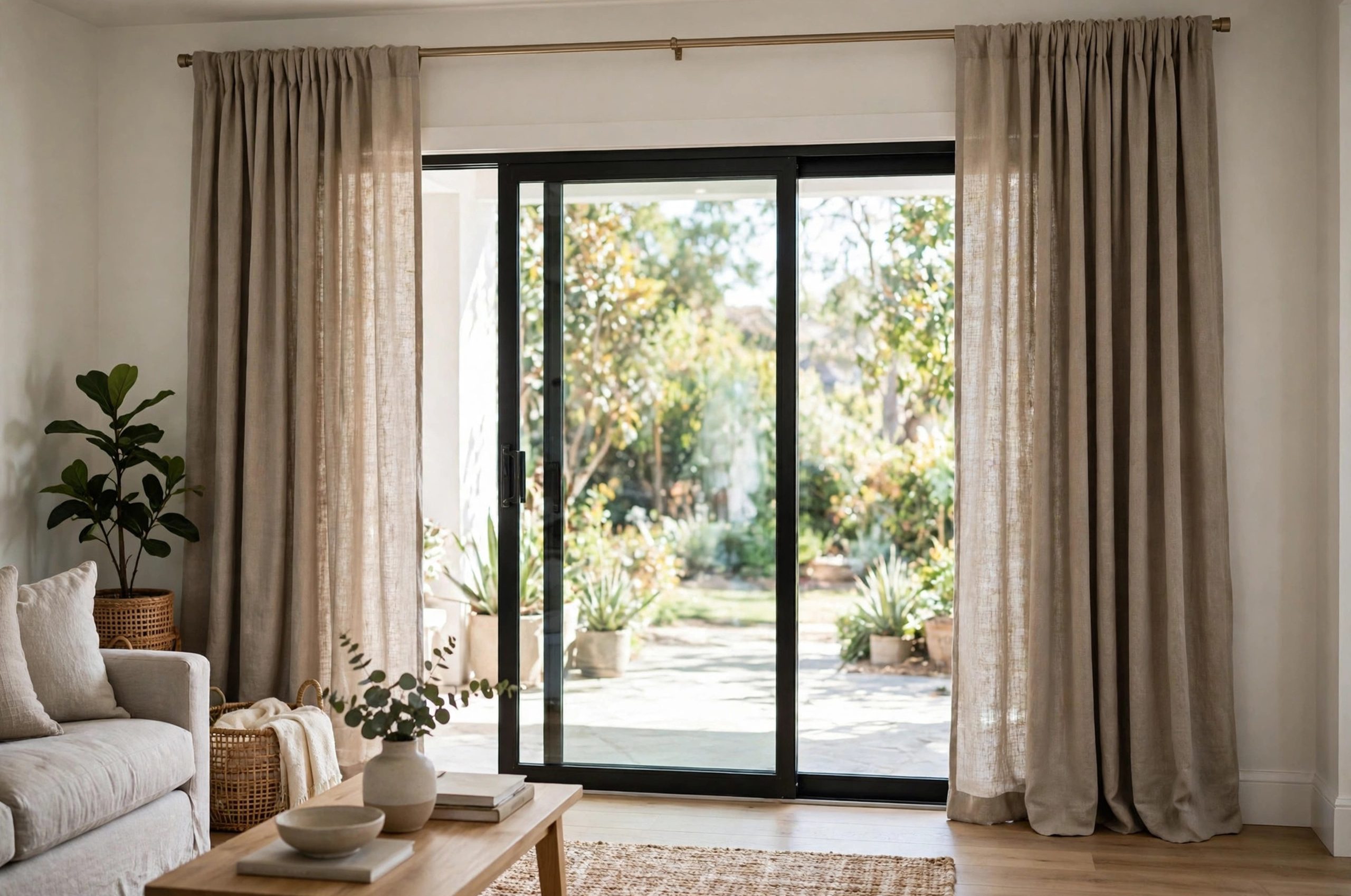
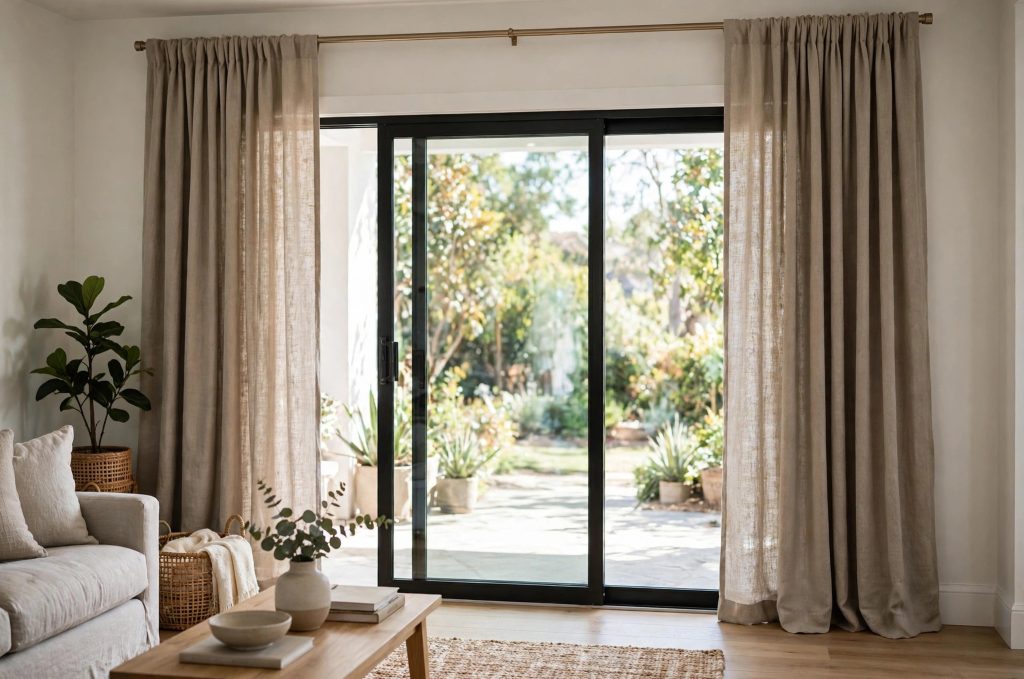
Ready-made curtain panels come in set lengths: 63, 84, 96, 108, and 120 inches. For most sliding glass doors in American homes, the sweet spot is 84 to 96 inches. A standard sliding door is about 80 inches tall. Mount the rod a few inches above the frame, and an 84-inch panel will just kiss the floor. If you mount the rod higher or your ceilings are tall, 96 or 108 inches will look better.
Deconovo notes that most sliding-door setups work best with panels between 84 and 96 inches for doors of typical height. Dolcewe gives the same range as a starting point before you measure your own door.
Do not buy the panels first and measure later. Buy the rod or track, mount it, measure down to the floor, and then buy the closest standard length. Custom panels exist for odd heights, but most homes can use a stock size with the rod set at the right height.
Mount the Rod Before You Measure
Many homeowners find that curtain length for sliding glass doors is easier than they expected once they know the basics.
The key to curtain length for sliding glass doors is choosing the right approach for your space and budget.
Here is the step most people skip, and it is the reason so many curtains end up too short. Curtain length is measured from the rod to the floor, not from the door frame to the floor. So the rod position decides everything.
The common rule: mount the rod four to six inches above the door frame. This lifts the eye upward and makes the ceiling look higher. On a standard 80-inch door with the rod five inches above the frame, the rod sits at about 85 inches off the floor. Measure straight down from the bottom of the rod to the floor, and that number minus half an inch is your ideal length.
If you have tall ceilings, go bolder. Mount the rod near the ceiling line. On a nine-foot ceiling, the rod can sit at 100 inches or more, which means a 108-inch panel hanging clean to the floor. Homes and Gardens advises measuring from the rod in several spots, since floors are rarely perfectly level.
Also plan the width now, because it affects which panels to buy. The rod should extend ten to fifteen inches past each side of the door frame. That extra space, called stack-back, lets the open panels rest on the wall instead of covering the glass. For a 72-inch door, plan on a rod around 96 inches wide. Curtarra lays out the full measuring method for sliding doors with a chart for common door widths.
Choose Your Hem Finish
The key to curtain length for sliding glass doors is choosing the right approach for your space and budget.
With a little planning, curtain length for sliding glass doors can fit even a busy schedule.
Curtains for sliding doors come down to three hem choices. Pick based on how often you use the door.
Float. The hem hovers half an inch to one inch above the floor. This is the smart choice for a door you open daily. Nothing drags, nothing catches in the track, and the dog will not pull a panel down. Panda Windows recommends a float or floor-skimming length for doors in daily use.
Kiss. The hem just touches the floor. This looks tailored and soft. It works on doors that open a few times a day, but every pass of the door can nudge the hem. Keep the fabric out of the sliding track path or the panels will catch.
Puddle. The hem spills two to four extra inches onto the floor. It looks romantic and formal, and it is a terrible choice for a working slider. Pooled fabric collects dust, pet hair, and footprints, and it will snag on the door. Save puddling for bedroom windows that never move.
For most families, float is the answer. It looks intentional, it works hard, and it keeps the hem out of trouble.
Match the Length to the Header Style
With a little planning, curtain length for sliding glass doors can fit even a busy schedule.
Before you start, it helps to understand how curtain length for sliding glass doors works in real homes.
How the curtain hangs changes where you measure from. A guide to curtain headers explains the differences, but here is the short version.
Grommet tops hang from the top of the rod, with the inner top of each grommet ring sitting about half an inch above the panel top. Measure from the top of the rod to the floor and add about half an inch. Grommets slide smoothly, which matters on a wide door you open often.
Rod pocket panels slide over the rod through a sewn pocket. Measure from the top of the rod to the floor. These do not slide well, so they suit doors you rarely open or decorative side panels that stay put.
Back-tab and pinch-pleat panels hang from rings or hooks. Measure from where the hooks sit, which is usually the bottom of the rod or the ring. Pinch pleats look formal and gather in neat folds. They need a rod strong enough to carry them, since sliding-door panels are wide and heavy.
Whatever style you pick, use grommet or back-tab for daily-use doors. Easy sliding means you will actually close the curtains at night instead of fighting them.
Get the Width Right Too
Before you start, it helps to understand how curtain length for sliding glass doors works in real homes.
A good plan for curtain length for sliding glass doors saves time, money, and frustration.
Length gets the attention, but width makes or breaks the look. A panel that just spans the door will look flat and stretched when closed. The fabric should total about twice the rod width for a full, pleated look. Bali explains how panel fullness changes the finished look and why skimping on width shows.
For a sliding door, most people use two panels, one per side, with a center draw or one-way draw. One-way draw stacks all the fabric to one side, which is handy when the door opens on the same side every time. Two panels that meet in the middle look classic.
Check the panel width on the package. A panel sold as 52 inches wide will give you about 52 inches of flat fabric. If your rod is 100 inches wide, two 52-inch panels give you 104 inches, which is barely full enough. Two 100-inch panels give you real fullness. For sheer fabric, go even wider, since sheers look best with generous gathers.
Pick Fabric That Behaves
A good plan for curtain length for sliding glass doors saves time, money, and frustration.
For most people, curtain length for sliding glass doors comes down to a few smart choices.
Sliding-door curtains get handled more than any window in the house. Fabric choice matters for how they hang and how they last.
Medium-weight cotton, linen blends, and polyester drapes hang in soft folds and survive daily pulling. Heavy velvet looks grand but is hard to push across a wide rod, especially for kids or older hands. Thin sheers slide like a dream but offer little privacy at night, when a glass door becomes a dark mirror.
For bedrooms and media rooms, consider blackout or thermal panels. A big glass door is the weakest link in your insulation and privacy. Deconovo explains when blackout, thermal, or sheer makes sense for sliding doors. Thermal panels also cut the heat gain that turns a sun-facing door into a furnace.
If you love the look of sheers, layer them. Hang a sheer on an inner rod and a heavier panel on an outer double rod. The sheer stays closed all day for soft light and daytime privacy, and the heavy panel closes at night. Thermal white linen panels and custom thermal insulated curtains are good starting points for this layered look.
Solve the Track Problem
For most people, curtain length for sliding glass doors comes down to a few smart choices.
If you are new to curtain length for sliding glass doors, start with the simplest option and build from there.
The one thing that makes sliding doors different from windows: the track. Curtains that hang too low or too far inward will catch on the door as it slides. Three fixes keep things moving.
First, keep the hem off the floor with a float length, as described above. Second, choose a rod with enough projection from the wall, usually three to four inches, so the fabric clears the door frame and handle. Third, when you open the curtains, stack them fully to the side of the door, not halfway across the track.
If your door has a handle that sticks out, test it before you finalize anything. Close the door, hang one panel, and slide the door open and shut. If the handle grabs the fabric, move the rod brackets out another inch or switch to a ceiling-mounted track, which sits flatter against the ceiling and gives the door more clearance.
Color and Pattern Tips
If you are new to curtain length for sliding glass doors, start with the simplest option and build from there.
Long curtains are a lot of fabric, so the color choice carries weight in the room. A solid neutral close to your wall color makes the wall of fabric disappear and the view take over. A bold pattern turns the door into the room's main event.
One caution: patterns with a strong horizontal rhythm can fight the vertical lines of a sliding door. Vertical or all-over patterns usually sit better. And remember that you will see the back of these curtains from outside at night. A lined panel looks finished from both sides.
For the rod hardware, match the finish to the other metals in the room, or at least stay in the same family. Bay window curtain rod guides cover hardware finishes that work across window types, and noise-reducing rod options help if the door sits near a busy street.
Common Mistakes to Avoid
When it comes to curtain length for sliding glass doors, getting the details right makes all the difference.
Forgetting ceiling-mounted tracks as an option. A wall-mounted rod is the default, but a ceiling track sits flatter, hides better behind a valance-free setup, and clears tall door handles with ease. If your rod hardware fights the door frame or the handle keeps snagging fabric, a track can solve in an afternoon what a wider rod cannot.
Buying panels before measuring. The rod position sets the length. Mount first, measure second, buy third.
Going too short. Panels that end at the door frame look like high-water pants. They shrink the whole wall.
Skimping on width. Flat, stretched panels look cheap no matter how nice the fabric is.
Puddling on a daily-use door. It looks good for a week and then collects everything.
Forgetting the stack-back. Panels that sit on the glass when open block your light and your view.
Ignoring the door handle. Test the slide with a panel hung before you commit.
A quick recap of the process, summarized nicely by Dolcewe: mount the rod high and wide, measure rod to floor, choose a float or kiss finish, buy enough width for fullness, and pick a fabric that slides and washes well. Once you try it, curtain length for sliding glass doors gets easier each time.
References
Many homeowners find that curtain length for sliding glass doors is easier than they expected once they know the basics.
Bali Blinds. (n.d.). How to measure for draperies. https://www.baliblinds.com/inspiration/design-blog/how-to-measure-for-draperies/
Curtarra. (n.d.). Curtains for sliding glass doors: Size and how to measure. https://www.curtarra.com/blogs/curtain-ideas/how-to-choose-and-measure-curtains-for-sliding-glass-doors-a-complete-guide
Curtarra. (n.d.). How to measure. https://www.curtarra.com/pages/how-to-measure
Deconovo. (n.d.). Best curtains for sliding glass doors. https://deconovo.com/blogs/news/best-curtains-for-sliding-glass-doors
Dolcewe. (n.d.). Standard curtain length for sliding glass doors. https://dolcewe.com/blogs/home-decor/standard-curtain-length-for-sliding-glass-doors
Dolcewe. (n.d.). Choose the perfect size of curtains for sliding doors. https://dolcewe.com/blogs/home-decor/choose-the-perfect-size-of-curtains-for-sliding-glass-doors
Dolcewe. (n.d.). Choosing curtains for sliding doors. https://dolcewe.com/en-us/blogs/home-decor/choose-the-perfect-size-of-curtains-for-sliding-glass-doors
Homes and Gardens. (n.d.). How long should curtains be? https://www.homesandgardens.com/interior-design/how-long-should-curtains-be
Panda Windows and Doors. (n.d.). How to hang curtains over sliding glass doors. https://www.panda-windows.com/blog/how-to-hang-curtains-over-sliding-glass-doors-homeowner-s-guide
The key to curtain length for sliding glass doors is choosing the right approach for your space and budget.
Was this guide helpful?

About My Garden US
The My Garden US editorial team writes practical, in-depth home and garden guides for American homeowners — tested advice, no fluff.
You May Also Like

Modern Farmhouse Tables: American Homes Guide
July 2, 2026 21 views
Window Curtain Panels for California Homes: A Plain Guide for American Buyers
August 7, 2026 16 views
How to Style a Small Living Room With a Sectional
November 12, 2026 7 views