
Why Custom Thermal Insulated Curtains Matter in Small Apartments
Custom thermal insulated curtains for small apartments solve a problem that many renters know well. Apartment windows are often old, thin, and poorly sealed. Cold air slips in during winter. Warm air pushes in during summer. The heating bill climbs, and the room never feels quite comfortable. A set of thermal curtains can change that at once.
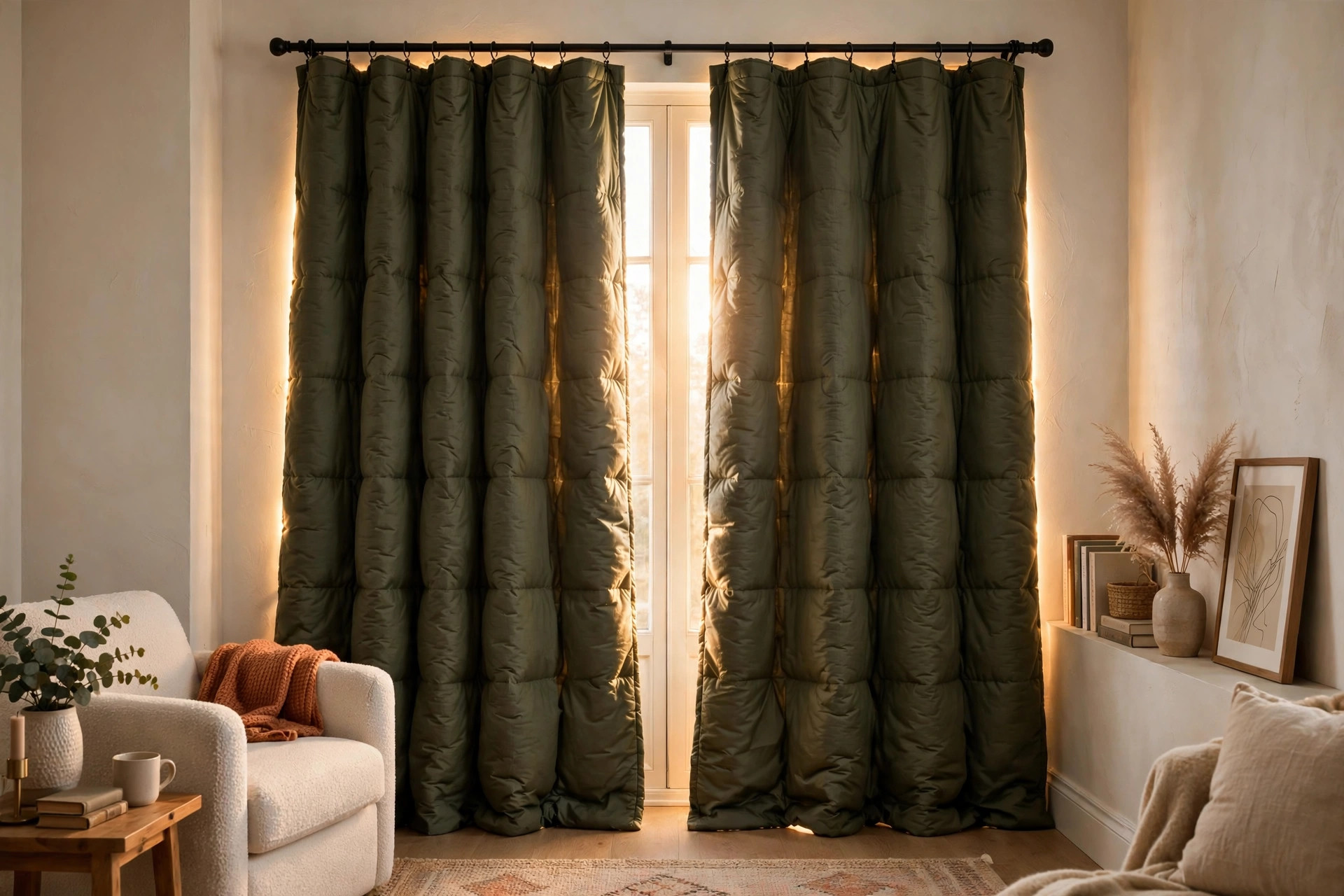
A thermal insulated curtain is a heavy drape with an extra inner layer. That layer may be foam, fleece, or a dense woven backing. It slows the movement of air through the fabric. When the curtains are closed, they form a pocket of still air between the glass and the room. Still air is a poor conductor of heat. This simple barrier cuts heat loss through the window by a clear margin. Guides from the U.S. Department of Energy explain that well-fitted window coverings can reduce energy bills, and heavy insulated drapes are among the most effective choices for renters who cannot replace the glass.
Small apartments gain even more from this upgrade. A small room has little space to absorb a cold draft. One leaky window can chill the whole living area. Thermal curtains let you close off that cold surface in the evening. The room holds its warmth longer. You may turn the thermostat down a degree or two and still feel comfortable. Over a winter season, the savings can be real.
Noise is another gain. City apartments sit near traffic, bars, and late-night streets. The dense lining that blocks heat also dulls sound. It will not make a room silent, but it softens sharp noises from outside. Many residents say their sleep improves after they hang thick insulated drapes over bedroom windows.
Privacy and light control come with the package. Most thermal curtains are lined so heavily that they block most daylight. Shift workers and light sleepers get a darker bedroom without drilling holes or buying blackout shades. And because the curtains are made to fit your exact window, custom panels cover the frame edge to edge. No gaps at the sides mean less light creep and less draft.
What to Look For When You Choose: Custom Thermal Insulated Curtains for Small Apartments
Fabric and Lining
The outer fabric decides how the curtain looks. The inner lining decides how well it works. Look for a lining of acrylic foam, thermal fleece, or triple-weave fabric. Triple-weave panels have three threads woven into one dense cloth. They block light without a separate white backing. Foam-backed linings tend to insulate best, but they can feel stiff. Choose a lining that hangs in clean folds and does not crack when bent.
Weight and Thickness
Pick the panel up before you buy. A true thermal curtain feels heavy in the hand. Weight matters because the dense fibers trap air. Thin panels that only claim a thermal label often perform poorly. Read the product details for a stated thermal or blackout rating. Reviews on home stores such as Wayfair and Home Depot often note whether a panel blocks cold air in real homes.
Size and Fit
Custom panels are cut to your window, so measure with care. The rod should sit at least four inches above the window frame, and the panels should reach the floor or sill with no gap at the bottom. For width, add at least four inches of extra fabric on each side of the frame. This overlap seals the edges where drafts enter. A panel that just covers the glass leaves the draft path open around the frame.
Types and Options
Grommet-Top Panels
Grommets are metal rings set into the top hem. They slide over a round rod and form deep, even folds. Grommet tops work well for heavy thermal panels because the wide rings glide with less effort. They suit modern rooms and are easy to open and close each day.
Rod-Pocket Panels
A rod-pocket panel has a sewn channel at the top. The rod slips through the channel. This style gives a gathered, traditional look. It can be harder to slide open, so it suits windows where the curtains stay closed most of the time.
Tab-Top Panels
Loops of fabric at the top hold the rod. Tab tops have a relaxed, country feel. They need a rod of modest thickness, and sturdy double curtain rod brackets help carry the extra weight of thermal fabric.
Blackout-Lined Panels
Many custom thermal curtains include a blackout lining. These panels block nearly all light and give the strongest draft seal. They are a good choice for bedrooms and street-level windows. If you want light during the day, pair a blackout panel with a sheer layer or consider window film for privacy as a daytime option.
Measuring and Fitting in Small Spaces
Measure twice before you order custom panels. Use a steel tape, not a cloth one. Record the width of the window frame first. Then decide how far past the frame you want the curtain to reach. In small rooms, hanging the rod wide makes the window look larger, which can make the whole room feel bigger.
Height matters just as much. Measure from the planned rod position down to the floor. Most custom makers add a small hem allowance. If your floors are uneven, which is common in older apartments, measure at three points and use the shortest reading. A panel that pools on the floor can look fine, but in a small apartment it gathers dust and trips feet. A clean break just at the floor is the safest look.
Mount the rod into studs or use wall anchors rated for the weight. Thermal panels are heavy. A cheap rod on drywall alone will sag or pull free. This is one place where spending a little more pays off. Sites like Blinds.com and IKEA sell rods and hardware matched to heavy drapes.
For renters, look for damage-free mounting. Tension rods fit inside the window frame and leave no holes. Adhesive hooks can hold light sheers but not heavy thermal panels. If your lease bans drilling, ask the landlord about a wall-mounted track in writing. Many landlords approve curtain rods because they are simple to patch when the tenant moves out.
Cost and Price
Custom thermal insulated curtains for small apartments cost more than ready-made panels, but the range is wide. Expect to pay roughly 60 to 200 dollars per panel for made-to-order thermal drapes in standard sizes. Unusual sizes, premium fabrics such as navy blue velvet curtains, and specialty linings push the price higher.
Ready-made thermal panels run 25 to 80 dollars each. They cost less because they come in fixed sizes. The trade is fit. A ready-made panel may leave gaps at the edges of an odd-sized apartment window. Those gaps let in drafts and light. If your windows are standard sizes, ready-made panels can still work well. If your windows are tall, narrow, or off-center, custom is worth the extra money.
Hardware adds to the bill. A sturdy rod costs 20 to 60 dollars. Heavy-duty brackets add 10 to 25 dollars. Finials and holdbacks are optional. Add them up before you order the fabric so the full project stays in budget.
Think of the curtains as an investment. Lower heating bills pay back the cost over one or two winters in cold climates. The Energy Star program and utility guides note that sealing drafts around windows is one of the cheapest ways to cut energy waste in a home. Thermal curtains do this without any change to the building itself.
Care and Upkeep
Thermal curtains need simple, steady care. Vacuum the panels with an upholstery brush every month or two. Dust collects in the folds, and dust dulls the insulating layer over time. A quick vacuum keeps the fabric fresh and the room cleaner.
Wash the panels as the label directs. Many thermal curtains are machine washable on a gentle cycle. Foam-backed linings should not go in a hot dryer. Heat can crack the foam and ruin the lining. Air dry or tumble on low heat. If the label says dry clean only, follow that advice. Replacing a ruined lining costs more than a dry cleaning bill.
Sunlight wears out linings too. A south-facing window bakes the backing all afternoon. Rotating which side faces the sun, when the design allows, spreads the wear. Lining sprays and fabric protectors sold at stores like Lowe’s can add a little extra life, but nothing replaces gentle handling.
Check the hems and hardware twice a year. Tighten loose screws. Look for fraying where the grommets meet the rod. A small repair with needle and thread now saves a torn panel later.
Safety
Curtains sit near glass, radiators, and cords, so safety deserves attention. Keep curtain panels away from baseboard heaters and radiators. Heavy fabric can trap heat and pose a fire risk. Leave at least several inches of space between the drape and any heat source.
Window cords are a serious hazard for children and pets. The Consumer Product Safety Commission warns that cords on blinds and shades have caused injuries in homes. Cordless curtain rods and wand-operated tracks avoid this danger entirely. If your windows have corded blinds behind the curtains, move cribs, beds, and pet beds away from the window and secure loose cords out of reach.
Weight safety matters as well. A heavy panel on a weak rod can fall in the night. Mount into studs or use proper anchors. In earthquake-prone areas, make sure wall-mounted hardware is rated to stay put. These are small steps, and they make the whole installation safer.
Frequently Asked Questions
Do thermal curtains really lower heating bills? Yes, in most cases. They reduce heat loss through the window glass, which is often the coldest surface in a room. The exact savings depend on your climate, your windows, and your heating system. Drafty single-pane windows show the biggest gain.
Can I hang thermal curtains if my lease bans drilling? Often yes. Tension rods inside the frame need no holes. Some landlords approve small screw holes for curtain rods because they are easy to fill at move-out. Ask in writing before you drill.
Will thermal curtains block all light? Thermal curtains with a blackout lining block nearly all light. Thermal curtains without that lining dim the room but still admit some glow around the edges. Check the product rating before you buy.
How much wider than the window should custom panels be? Plan for at least four extra inches of fabric on each side of the frame. This overlap seals the draft path around the edges. For a fuller look, add six to eight inches per side.
Can thermal curtains help in summer too? Yes. The same lining that slows heat loss in winter slows heat gain in summer. Close the curtains during hot afternoons on sun-facing windows. The room stays cooler, and the air conditioner runs less.
Do I need one panel or two per window? Two panels, one for each side, open and close more easily and look balanced. One wide panel works for narrow windows. Choose based on the window width and how often you will open the drapes.
A Final Word
Custom thermal insulated curtains for small apartments are a quiet upgrade with loud results. They fit the window exactly. They cut drafts, noise, and light. They cost less than new windows and install in an afternoon. For renters and small-space dwellers, they are one of the simplest ways to make a home feel warmer, calmer, and more private. Design guides from The Spruce and HGTV show how the right drape can also sharpen the look of a room. Measure well, buy honest weight, and hang the panels with care. The room will thank you all winter long.
References
Blinds.com. (n.d.). Window blinds, shades, and shutters. https://www.blinds.com ENERGY STAR. (n.d.). Energy efficient products. https://www.energystar.gov HGTV. (n.d.). Home and garden ideas. https://www.hgtv.com IKEA. (n.d.). Home furnishings. https://www.ikea.com Lowe’s. (n.d.). Home improvement products. https://www.lowes.com The Home Depot. (n.d.). Home improvement products. https://www.homedepot.com The Spruce. (n.d.). Home and garden advice. https://www.thespruce.com U.S. Consumer Product Safety Commission. (n.d.). Product safety information. https://www.cpsc.gov U.S. Department of Energy. (n.d.). Energy efficiency and renewable energy. https://www.energy.gov Wayfair. (n.d.). Furniture and home goods. https://www.wayfair.com
Was this guide helpful?

About Jennifer Lee
The My Garden US editorial team writes practical, in-depth home and garden guides for American homeowners — tested advice, no fluff.
You May Also Like

Waterproof Outdoor Shades Price Comparison USA: A Full Buyer’s Guide
April 21, 2026 0 views
How to Buy Custom Made Curtains Online Online in Colorado
March 9, 2026 0 views
Reliable Window Treatment Installation Services in California
March 3, 2026 0 views