
Why Dry Indoor Air Matters
The whole house humidifier installation cost in the USA is worth study because dry indoor air is a quiet problem in many homes. Cold outdoor air holds very little moisture. When that air enters a house and passes through a furnace, the relative humidity falls. In the northern states, indoor levels of 15 to 20 percent are common in January and February.
Low humidity causes real damage. Wood floors shrink and leave gaps. Doors swell and then loosen as seasons change. Fine furniture dries out and cracks along its joints. Paint and wallpaper age faster. Musical instruments lose their tone and can warp.
People feel the dryness too. The nose and throat become sore. Skin turns rough and itchy. Lips crack. Static shocks jump from light switches and door handles. Colds and flu also spread more easily in dry air, according to health researchers.
The United States Department of Energy advises homeowners to keep indoor humidity between 30 and 50 percent for comfort and health. You can read more on the U.S. Department of Energy website. A portable humidifier treats one room. A whole house unit treats every room through the duct system. That is why so many families in cold climates choose the full-house option.
What to Look for Before You Buy: Whole House Humidifier Installation Cost Usa
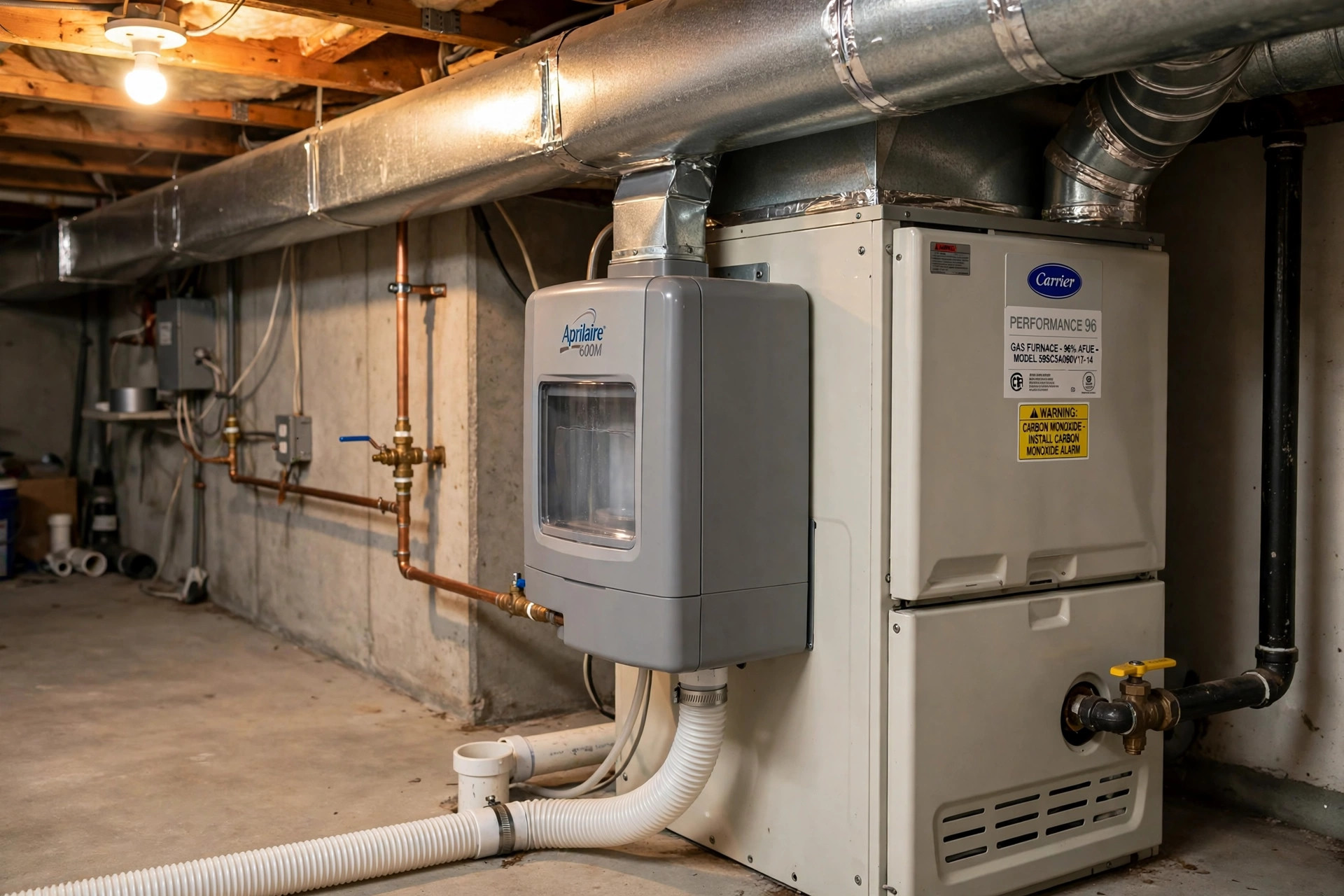
A whole house humidifier connects to your furnace and adds moisture to the heated air. Before you pick a model, check four facts about your home.
Size of the home. Units carry a capacity rating in gallons per day. A small ranch home may need a unit rated at 12 gallons per day. A large two-story home may need 18 gallons or more. An oversized unit wastes water and money. An undersized unit cannot keep up. Makers such as Carrier publish sizing charts that match unit capacity to square footage and climate.
Type of heating system. These units need forced warm air ducts. They do not work with radiators or baseboard heat. If you heat with hot water or steam radiators, a whole house humidifier is not an option for you.
Water quality. Hard water leaves mineral scale inside the unit. Homes with very hard water need a drain line or frequent pad changes. Some owners add a water softener first. Check with your local utility about the mineral level in your tap water.
Climate zone. Homes in the dry Mountain West face different needs than homes in the humid South. In mild southern climates, a whole house humidifier may be unnecessary. In the northern tier, from Maine to Montana, it is close to a must. The ENERGY STAR program lists efficiency information for heating equipment that can help you plan the full system.
Types of Whole House Humidifiers
Three main types are sold in the United States. Each type uses a different method to add moisture to the air.
Bypass Humidifiers
A bypass unit sits on the return duct and uses the furnace fan to push warm air through a wet pad. It has no fan of its own. It needs no extra electricity beyond a small control circuit. These units are the least costly to buy and install. They work best with single-speed furnaces that run long heating cycles.
Fan-Powered Humidifiers
A fan-powered unit has its own small fan that blows air through the water pad. It adds more moisture per hour than a bypass unit. It works well with shorter furnace cycles and with heat pumps. It costs more than a bypass unit but less than a steam unit. If you want a direct side-by-side of the two evaporative designs, read our bypass versus fan-powered humidifier comparison.
Steam Humidifiers
A steam unit boils water with electricity and sends pure steam into the ducts. It is the most powerful type and the most precise. It can hold an exact humidity level even on the coldest days. It is also the most costly to buy and run, since it uses electricity and needs a dedicated circuit. Specialized makers such as Aprilaire have built whole house humidifiers for decades, and major furnace brands such as Lennox also sell units that match their own equipment. Our roundup of the best whole house humidifier reviews for 2026 lists top models in each type, and steam humidifiers for whole homes are covered in a separate guide.
Cost and Price Breakdown
This section answers the main question: what is the whole house humidifier installation cost in the USA? Prices vary by unit type, home size, and region, but the ranges below reflect what most American homeowners pay.
Unit prices. A bypass humidifier usually costs 150 to 300 dollars for the equipment alone. A fan-powered unit runs 250 to 500 dollars. A steam unit runs 500 to 1,200 dollars or more, depending on capacity and controls. Digital humidistats add 50 to 150 dollars to any type.
Labor costs. Professional installation takes two to four hours for most homes. Contractors charge 150 to 400 dollars for labor on a standard install. The job includes mounting the unit, cutting into the duct, running a water line, adding a drain line, and wiring the control. Homes with hard-to-reach ducts or no nearby water line cost more.
Total installed cost. Adding unit and labor together, most homeowners pay 400 to 900 dollars for a bypass or fan-powered system, installed. Steam systems usually run 900 to 2,000 dollars installed. In high-cost cities such as Boston or San Francisco, totals can run 20 percent higher. In lower-cost markets in the Midwest and South, totals can run lower.
Regional factors. Northern states need larger units because winter air is so dry, which raises the price. Older homes with unusual duct layouts take more labor. New homes with easy duct access cost less to outfit.
Permits and extras. Some towns require a small plumbing or mechanical permit for the water line connection, which can add 25 to 100 dollars. A condensate pump adds 75 to 150 dollars if the nearest drain sits above the unit. An automatic humidity control with an outdoor sensor costs more than a basic manual dial but saves water by lowering the setting on mild days.
Ways to save. Get three written quotes and compare them line by line. Schedule the work in the fall before the heating season rush. Ask whether the contractor will service the unit each year for a flat fee. Brands sold through dealer networks, such as Trane and Goodman, sometimes include warranty registration that adds a year of coverage at no cost. Project guides on This Old House show what a standard install looks like, which helps you judge whether a quote is fair.
Care and Upkeep
A whole house humidifier needs regular care to stay clean and safe. The water pad is the heart of the unit. Replace it once a year, at the start of the heating season. A dirty pad grows mineral scale and slows moisture output.
Drain the unit and clean the housing each spring when you shut it down for the summer. Steam units need their canister or electrodes checked and replaced on the schedule in the manual. Makers such as Rheem recommend an annual inspection of the whole heating system, and the humidifier can be checked at the same visit.
Watch the water line for leaks. A small drip can rot wood or stain drywall over a season. Keep the area around the unit clear so air moves freely. Use a simple indoor hygrometer to check the humidity level in the house. If the reading stays below 30 percent while the unit runs, the pad may need replacement or the setting may need to go higher.
Turn the humidifier off when the heating season ends. Leave the control on a low setting through the winter. Many service companies sell yearly plans that cover the pad change and a system check for 100 to 200 dollars.
When you restart the unit in the fall, run your nose and eyes over it before you switch it on. A musty smell means the pad sat damp through the summer and grew mold. Replace the pad and wipe the housing with a mild disinfectant. Check that the humidistat still moves freely and that the drain line runs clear. These five minutes of attention prevent most midwinter failures.
Safety
Whole house humidifiers are safe when they are installed and kept clean, but they deserve respect. Water and electricity meet inside these units, so the wiring must be done correctly. A licensed contractor should make the electrical connections.
Mold is the main risk. If the humidity climbs above 50 percent, mold can grow in ducts, on window frames, and inside wall cavities. Keep the setting near 35 to 40 percent in the deep winter. If you see moisture on windows, turn the setting down.
Standing water breeds bacteria. Clean the unit as the manual directs. Never leave the humidifier running while the house sits empty for weeks. Step-by-step seasonal care guides on Family Handyman explain the cleaning routine in plain terms.
If anyone in the home has asthma or severe allergies, talk to a doctor before you install a unit. Proper humidity helps most people, but damp air makes some conditions worse.
Frequently Asked Questions
How long does installation take?
Most installs take two to four hours. The contractor mounts the unit, taps the duct, runs water and drain lines, and wires the control. Steam units take longer because they need a dedicated electrical circuit, often four to six hours in total.
Can I install a whole house humidifier myself?
A skilled homeowner can install a bypass unit in an afternoon. The job needs sheet metal work, a water line connection, and low-voltage wiring. Many owners choose a professional because a bad water connection can flood a basement. Check local codes before you start, since some towns require a permit or a licensed plumber for the water line.
How much does it cost to run each year?
Running costs are modest. Bypass and fan-powered units use little electricity and a few dollars of water per month. Steam units use more electricity, often 10 to 25 dollars per month in winter. Replacement pads cost 15 to 40 dollars each year.
Will it raise my water bill much?
Flow-through units send a steady trickle of water to the drain, which can add 5 to 15 dollars per month to the water bill during the heating season. Steam units use far less water. Drum-style units use the least but need more cleaning.
Do I need one if I have a heat pump?
Heat pumps produce cooler air than furnaces, so bypass units work poorly with them. A fan-powered or steam unit is the better match. If your winters are mild, the dryness problem may be small enough to skip the unit.
How is this different from a whole house dehumidifier?
A humidifier adds moisture in the dry winter. A dehumidifier removes moisture in the damp summer. Some humid-climate homes need both, one for each season. The whole house dehumidifier installation cost is a separate question, with its own price ranges.
A Short Final Word
A whole house humidifier is one of the quietest comfort upgrades a homeowner can buy. The cost is modest next to a new furnace or air conditioner. The payoff is steady: easier breathing, calmer skin, and woodwork that holds its shape through the cold months. Get a unit that matches your home size, have it installed by a licensed contractor, and keep it clean. Your house will thank you every winter.
References
Aprilaire. (n.d.). Whole-home humidifiers and indoor air quality products. https://www.aprilaire.com Carrier. (n.d.). Heating and cooling systems. https://www.carrier.com ENERGY STAR. (n.d.). Energy efficient products. https://www.energystar.gov Family Handyman. (n.d.). DIY home repair and maintenance. https://www.familyhandyman.com Goodman. (n.d.). Heating and cooling equipment. https://www.goodmanmfg.com Lennox. (n.d.). Heating and cooling systems. https://www.lennox.com Rheem. (n.d.). Heating, cooling, and water heating. https://www.rheem.com This Old House. (n.d.). Home renovation guidance. https://www.thisoldhouse.com Trane. (n.d.). Heating and air conditioning. https://www.trane.com U.S. Department of Energy. (n.d.). Energy efficiency and renewable energy. https://www.energy.gov
Was this guide helpful?

About Jennifer Lee
The My Garden US editorial team writes practical, in-depth home and garden guides for American homeowners — tested advice, no fluff.
You May Also Like

Kitchen Exhaust Fan for Island Cooktop USA: A Practical Buyer’s Guide
September 5, 2026 0 views
Best Mini Split for Cold Climates Reviews USA
April 13, 2026 0 views
Mini Split Maintenance Cost Per Year USA: A Plain Homeowner’s Guide
October 5, 2026 0 views