
Introduction
This bypass vs fan powered humidifier comparison explains the two most common types of whole-house humidifiers in plain terms. Both units add moisture to dry indoor air during the heating season. Both mount on the furnace or ductwork. Both protect your floors, furniture, and health from the damage of dry air. Yet they work in different ways, and those differences matter when you buy one.
A bypass humidifier has no motor of its own. It uses a duct connection between the warm and cool air sides of your furnace to push air through a wet pad. A fan-powered humidifier has a small built-in fan that blows warm air across the same kind of pad. The result is the same in principle: moist air flows into the ducts and out to the rooms. The path, the cost, and the output all differ.
This guide walks through how each type works, where each one shines, and what each one costs. By the end, you will know which type fits your home, your furnace, and your budget.
Why Indoor Humidity Matters in Winter: Bypass vs Fan Powered Humidifier Comparison
Cold air holds little water. When a furnace warms that air and sends it through the house, the relative humidity drops hard. Levels of 15 to 20 percent are common in heated homes, and that is far below the 30 to 50 percent range that most experts call ideal. The U.S. Department of Energy notes that proper humidity helps a home feel warmer at lower thermostat settings, which can trim energy use.
Dry air does real harm. Wood floors shrink and gap. Door frames and trim crack. Musical instruments fall out of tune or suffer damage. Your own body feels it too: dry skin, cracked lips, nosebleeds, and sore throats on winter mornings. People with asthma or allergies may feel worse when the air is too dry.
A whole-house humidifier answers this problem at the source. A single device treats the whole home through the ductwork. It runs with the furnace, needs a water line and a drain, and works without daily attention. Homeowners who want to compare models often start with our best whole house humidifier reviews 2026 usa roundup before narrowing the field.
Bypass Humidifiers: How They Work
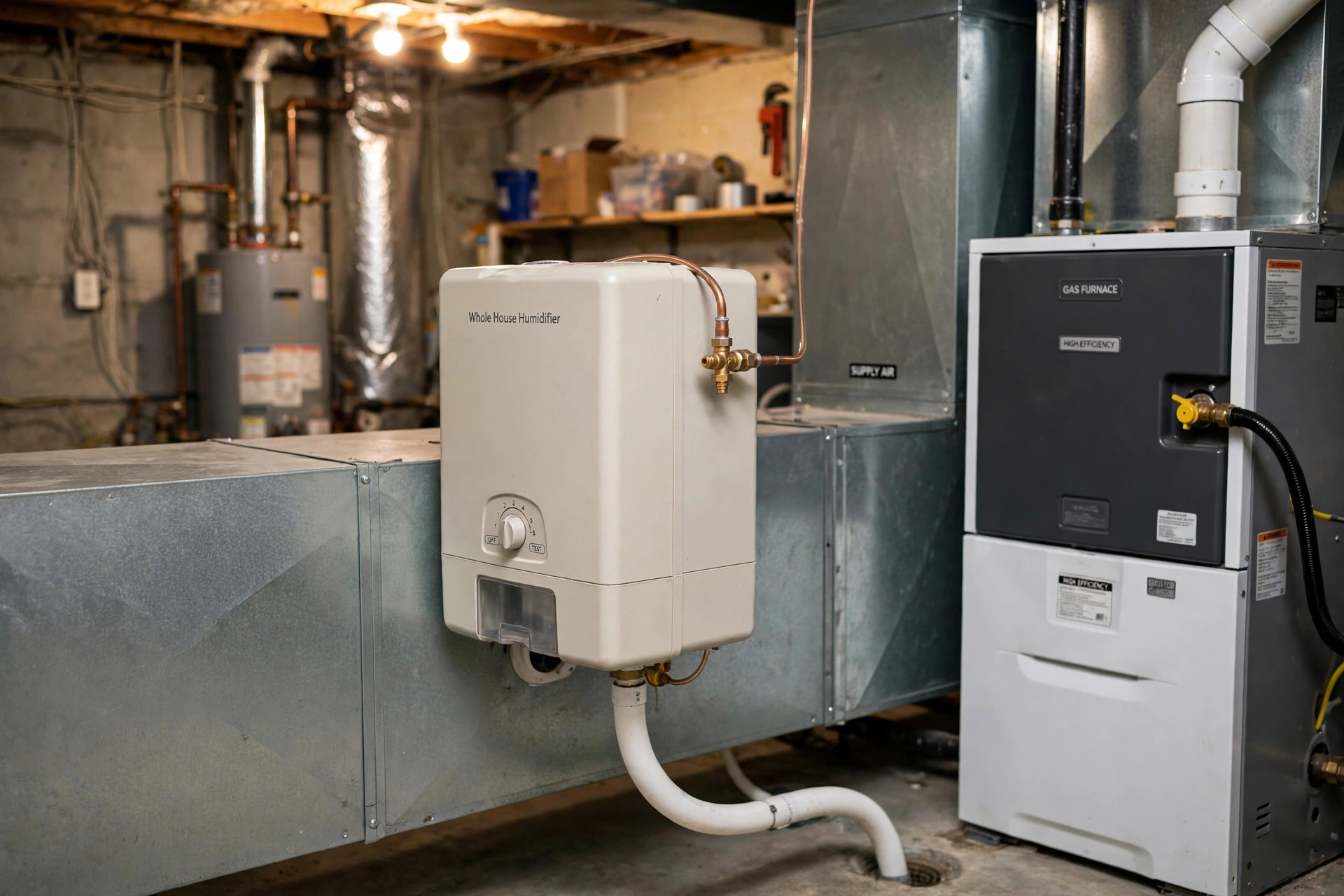
A bypass humidifier is the simpler machine. It mounts on the return air duct or the supply plenum of the furnace. A small duct, usually six inches round, connects the warm-air side to the cool-air side. The pressure difference between the two sides moves air through this bypass duct and across a wet water panel inside the unit.
Water flows over the top of the panel, and gravity pulls it down through the panel material. Warm air passing through picks up moisture as vapor. Damp air enters the main ducts; excess water drains away. A humidistat calls for moisture when the humidity falls below the set point.
The appeal of the bypass type is plain: fewer moving parts mean less that can break. There is no fan motor to wear out and no extra electricity to run a blower. The Family Handyman guide to whole-house humidifiers points out that this simple design keeps the purchase price low and service calls rare. Aprilaire, a brand long tied to whole-home indoor air quality, and Trane both sell bypass models.
The limits come from the same simplicity. The unit only works well when the furnace blower is running, because it borrows the furnace air flow to move its own air. In mild weather, when the furnace runs short cycles, output drops. Output is modest, usually enough for small to medium homes but sometimes thin for larger ones.
Fan-Powered Humidifiers: How They Work
A fan-powered humidifier looks much like a bypass unit on the outside: a box that mounts on the supply duct of the furnace. Inside, though, it carries its own small fan. That fan pulls warm air from the supply plenum, drives it across the wet water panel, and sends the humidified air back into the duct stream.
Because it has its own air mover, the unit does not need a bypass duct or depend on the pressure difference between the supply and return sides. It needs a 120-volt outlet nearby, and its small fan uses a little electricity each time it runs.
The built-in fan gives the unit real advantages. Output is higher, often close to double that of a comparable bypass unit, so one unit can serve a larger home. It can work with heat pumps, which run at lower air temperatures than gas furnaces and do not always give a bypass unit enough pressure difference to work well. Carrier and Lennox both include fan-powered models in their humidifier lines, and Goodman pairs them with its air handlers.
The trade-offs are cost, noise, and complexity. The unit costs more to buy. The fan adds a low hum, which some homeowners notice in quiet houses. The motor is one more part that can fail, and it draws power during the heating season. Service and replacement parts cost more over the years than with a bypass unit.
Key Differences, Side by Side
| Feature | Bypass Humidifier | Fan-Powered Humidifier | |—|—|—| | Air movement | Borrows furnace blower air through a bypass duct | Own built-in fan moves air | | Duct connection | Needs a six-inch bypass duct between supply and return | Mounts on supply duct only, no bypass duct | | Moisture output | Lower, suits small to medium homes | Higher, suits medium to large homes | | Electricity use | None beyond the water solenoid valve | Small fan motor runs during cycles | | Noise | Nearly silent | Low fan hum | | Purchase price | Lower | Higher | | Works with heat pumps | Often weak, due to low pressure difference | Works well | | Maintenance | Water panel change, simple cleaning | Same, plus fan motor care |
When homeowners weigh the bypass vs fan powered humidifier comparison, output and furnace type usually decide the matter. A small home on a gas furnace often does fine with a bypass unit. A large home, or one heated by a heat pump, usually needs the stronger fan-powered type.
How to Choose the Right Type for Your Home
Start With Your Furnace
The furnace is the first thing to check. Gas and oil furnaces produce hot supply air and a strong pressure difference, which is exactly what a bypass humidifier needs. With a heat pump, the supply air is cooler and the pressure difference is smaller. In that case a fan-powered unit is the safer pick. Steam units are another option for heat pump homes, as our steam humidifier for whole house reviews usa page explains. Ductless mini-split homes have no ductwork at all, so neither type fits; those homes need room units instead.
Match Output to Home Size
Manufacturers rate humidifiers by the gallons of water they can put into the air per day, and by the square footage they can serve. A tight, well-insulated 1,500-square-foot home needs far less than a drafty 3,500-square-foot one. Ask the dealer to size the unit to your home, not to guess from the box. Makers such as Rheem publish sizing charts, and a good contractor will run a load check before recommending a model.
Think About Noise and Placement
Most humidifiers live near the furnace, away from bedrooms, so noise rarely matters. But in a utility closet next to a living room, the fan of a fan-powered unit may be heard. A bypass unit is nearly silent and may be the better choice in a noise-sensitive spot. Our whole house humidifier installation cost usa guide covers placement and what a typical install involves.
Consider Your Budget
A bypass unit costs less to buy and less to run. A fan-powered unit costs more up front and uses some electricity, but it delivers more moisture. If your budget is tight and your home is small, the bypass unit is the plain answer. If you need the output, the extra cost of the fan-powered unit is money well spent, because an undersized unit that cannot reach the target humidity is wasted money.
Cost and Installation
The bypass vs fan powered humidifier comparison is not complete without the money side. A bypass unit typically costs less at the store, and the install is simple for a professional: mount the box, run a bypass duct, tie in the water line and drain, and wire the humidistat. A fan-powered unit costs more for the hardware, and the install takes a bit more work since the unit needs a power outlet nearby.
Professional installation usually runs a few hundred dollars on top of the equipment, though prices vary by region and ductwork access. Any unit tied to furnace wiring and a water line deserves care; a bad water connection can leak for weeks before anyone notices. The This Old House heating guides stress shutting off power and water before any duct or pipe work, which is sound advice for any home project.
Running costs are low for both types. The bypass unit uses water and a touch of electricity for its solenoid valve. The fan-powered unit adds the small draw of its fan motor. The larger cost over time is the water panel, which must be replaced each heating season. Compared with the cost of running several portable units in different rooms, the whole-house type is the cheaper way to humidify.
Care and Upkeep
Both types share the same yearly routine. The heart of the job is the water panel, sometimes called an evaporator pad. It should be replaced once per heating season. A worn panel sheds mineral scale and grows less able to hold water, so output falls.
Before the heating season starts, check the water line for leaks and make sure the drain is clear. Clean the inside of the unit with a mild cleaner to remove mineral buildup. Check the humidistat setting: most homes aim for 30 to 40 percent relative humidity in winter. Set it higher and you risk condensation on windows and in walls.
Fan-powered units need one extra step. Keep the fan clean and listen for changes in sound, which can signal a wearing motor. The ENERGY STAR program reminds homeowners that clean equipment runs better and lasts longer, and that advice fits humidifiers as well as furnaces.
At the end of the heating season, shut off the water supply to the unit, turn the humidistat to off, and let the panel dry out. If your unit has a bypass duct damper, close it in summer so the cooling season does not push air through the humidifier for no reason.
Safety Notes
Whole-house humidifiers are safe machines when they are installed and kept up well. Still, a few rules apply. Keep the humidity setting in the recommended range. Too much moisture feeds mold, mildew, and dust mites, and it can damage drywall and wood trim. If you see water beading on windows, turn the setting down.
Change the water panel on schedule. A dirty panel can harbor bacteria, and the air flow can carry them into the duct stream. Never let standing water sit in the unit through the summer. Make sure the unit is wired correctly and grounded, and keep the area around the furnace clear so air can flow and service can be reached.
If anyone in the home has a breathing condition, talk with the family doctor about the right humidity level. A steady, moderate level in the 30 to 40 percent range serves most homes well through the cold months.
Frequently Asked Questions
Can I install a bypass humidifier with a heat pump?
It is possible, but results are often poor. Heat pumps move air at lower temperatures and with less pressure difference than gas furnaces, so a bypass unit may not get enough air flow to reach the target humidity. Most contractors recommend a fan-powered unit for heat pump systems.
Which type is quieter?
The bypass type. It has no fan of its own, so it makes almost no sound. The fan-powered type adds a small fan that produces a low hum during operation. In most homes the unit sits near the furnace, far from bedrooms, so the difference hardly matters.
How long does a water panel last?
One heating season. Replace it at the start of each winter. Panels that run longer grow crusty with mineral scale, and their output drops. A fresh panel each year keeps the unit at full strength.
Do these units work when the furnace is off?
Not well. Both types rely on the furnace blower to move humidified air through the ducts. In mild weather, when the furnace runs only short cycles, output falls. A whole-house humidifier does its best work in the heart of the heating season.
Can I humidify my home without any of these units?
Portable room humidifiers can help a single bedroom or office. They need daily filling and cleaning, and they cannot reach the whole house. For a full-size home in a cold climate, a whole-house unit tied to the ducts is the practical answer.
A Final Word
The bypass vs fan powered humidifier comparison comes down to a simple trade. The bypass unit is cheaper, quieter, and simpler, and it suits small to medium homes on gas or oil furnaces. The fan-powered unit costs more and makes a little noise, but it puts out more moisture and works with heat pumps and larger homes. Size the unit to your house, keep the panel fresh each year, and hold the humidity in the 30 to 40 percent range. Do that, and either type will make winter air easier on your skin, your furniture, and your floors.
References
Aprilaire. (n.d.). Whole-home humidifiers and indoor air quality products. https://www.aprilaire.com Carrier. (n.d.). Heating and cooling systems. https://www.carrier.com ENERGY STAR. (n.d.). Energy efficient products. https://www.energystar.gov Family Handyman. (n.d.). DIY home repair and maintenance. https://www.familyhandyman.com Goodman. (n.d.). Heating and cooling equipment. https://www.goodmanmfg.com Lennox. (n.d.). Heating and cooling systems. https://www.lennox.com Rheem. (n.d.). Heating, cooling, and water heating. https://www.rheem.com This Old House. (n.d.). Home renovation guidance. https://www.thisoldhouse.com Trane. (n.d.). Heating and air conditioning. https://www.trane.com U.S. Department of Energy. (n.d.). Energy efficiency and renewable energy. https://www.energy.gov
Was this guide helpful?

About David Wilson
The My Garden US editorial team writes practical, in-depth home and garden guides for American homeowners — tested advice, no fluff.
You May Also Like
Most Energy Efficient Space Heater 2026 USA: A Practical Buyer’s Guide
September 12, 2026 0 views
Bathroom Exhaust Fan Installation Cost USA: A Full 2026 Guide
May 23, 2026 0 views
Infrared Patio Heater Reviews 2026 USA: Warm Evenings Made Simple
March 20, 2026 0 views