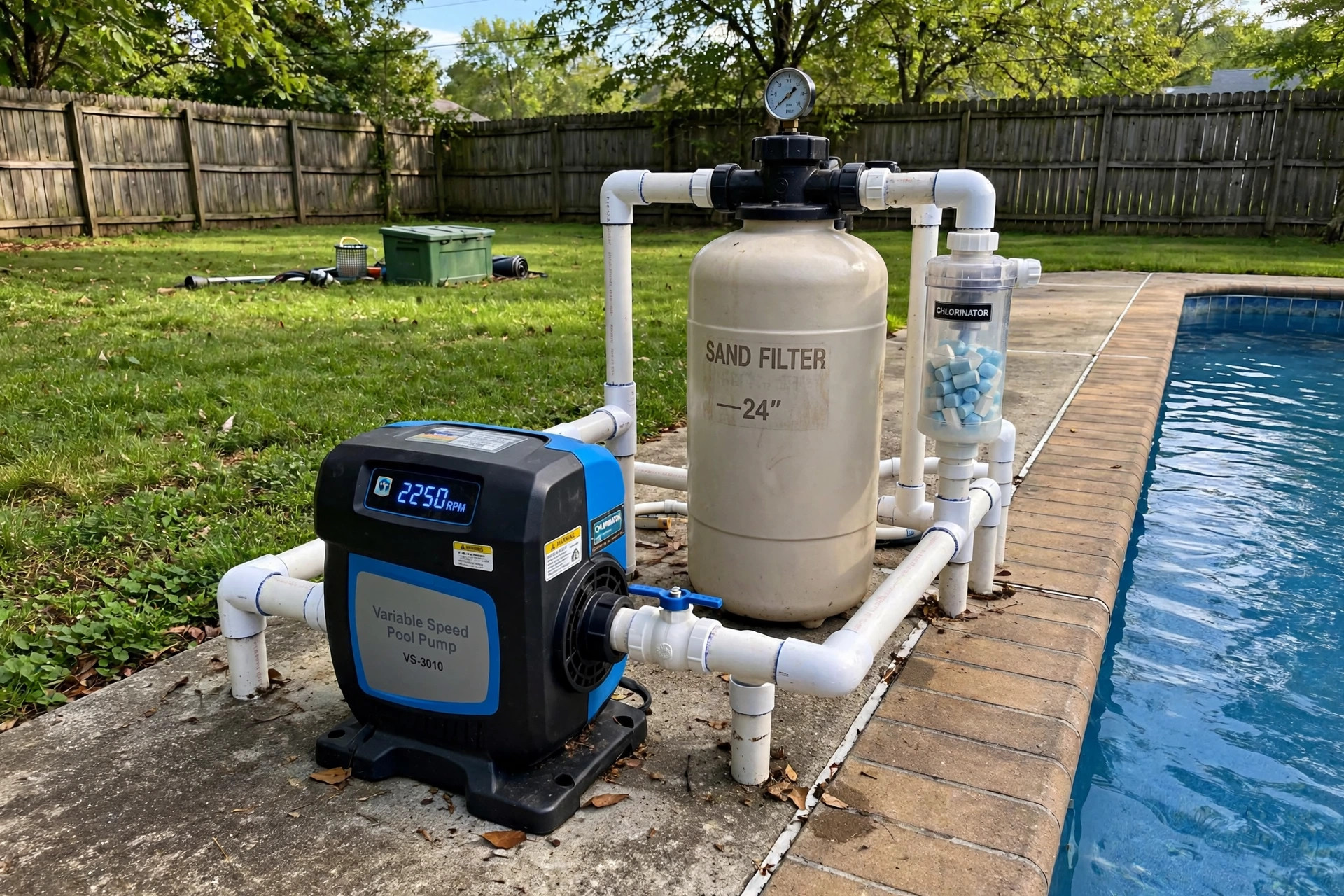

A pool pump is the heart of a swimming pool. It moves water through the filter. It keeps the water clean and clear. The old single-speed pumps run loud and use a great deal of power. A smart pool pump with app control is a better answer. You set the speed from your phone. You set the hours from your phone. The pump runs slow most of the day and fast only when it must.
This guide covers smart pool pump with app control reviews usa in plain words. It explains what these pumps do. It explains how to pick one. It covers price, energy savings, care, and safety. It answers common questions at the end.
Why a Smart Pool Pump Matters
Pool pumps are among the largest users of power in a home with a pool. A single-speed pump runs at full speed whenever it is on. That is like driving a car with the gas pedal pressed to the floor at all times. It wastes energy and wears out parts fast.
A variable speed pool pump with app control changes the picture. You can run the pump slow for most of the day. Slow water movement filters just as well. It only needs fast speed for short jobs, such as vacuuming or running a heater. Tests by state energy offices have shown that variable-speed pumps can cut pump energy use by half or more. That is real money over a summer.
App control adds ease. You do not walk out to the pad to change a timer. You open the app. You see the speed, the run time, and the power draw. You change the schedule in seconds. If you travel, you can check that the pump is running from far away. For owners of vacation homes, that peace of mind has real value.
Many owners pair pump control with other smart devices. A smart water leak detector can warn you of a leak near the pad. A smart plug with energy monitoring can show what the pump draws. These tools fit well together in a connected home.
How to Choose a Smart Pool Pump with App Control: Smart Pool Pump with App Control Reviews Usa
Reviews of smart pool pumps share a few points. The best pumps do well in five areas. Use this list when you shop.
Motor and Speed Range
Look for a true variable-speed motor. The best pumps offer a wide range, from a slow trickle to full power. Slow speeds are where the savings live. A pump that can run at low revolutions per hour uses far less power than one that must run fast. Check the motor rating in horsepower. For most home pools, 1.5 to 2.0 horsepower is enough. Very large pools may need more.
App Features and Connection
Not all apps are equal. A good app lets you set daily schedules. It lets you change speed by hand at any time. It shows power use in watts or kilowatt-hours. It sends alerts if the pump stops or loses prime. Some apps work over home Wi-Fi. Some use a direct link to the pump. Wi-Fi apps give you control from anywhere. Check that the app works with your phone system, and read recent app store ratings before you buy.
Fit with Your Pool System
A new pump must fit your pipes, your filter, and your wiring. Check the pipe size and the voltage. Most home pumps run on 230 volts. Some need a new breaker. If you have a salt system or a heater, make sure the pump can work with them. A pool supply guide from Leslie’s can help you match parts to your pool.
Brand and Support
Pool equipment lasts a decade or more. Buy from a brand that will still be there. Well known makers such as Pentair and Hayward sell smart pumps with long track records. They keep parts in stock. Their dealers know the products. A low price means little if you cannot get a seal kit five years later.
Noise Level
A pump that runs slow is a quiet pump. Many owners place the pump near a patio or a bedroom wall. A quiet unit makes the yard a nicer place. Reviews often note the noise at low speed. Give this weight if your pad sits close to the house.
Types of Pool Pumps on the Market
It helps to know the three main types. Smart control is a layer on top of the pump type.
Single-speed pumps are the old standard. They run at one speed. They are cheap to buy and dear to run. Few now offer app control. Most states now limit their sale for new pools because they waste power.
Two-speed pumps offer a low and a high setting. They cost less than variable-speed models. They save some power. Their low speed is still fixed, so you cannot fine-tune them. A few offer basic timers, but full app control is rare.
Variable-speed pumps are the top tier. The motor can run at almost any speed. Nearly all smart pool pumps with app control fall in this group. They cost the most up front. They pay back the difference through lower power bills. They also run quieter and last longer because the motor works less hard.
Cost and Price of Smart Pool Pumps
Price is a common question in smart pool pump with app control reviews usa. Here is what to expect.
A smart variable-speed pool pump for a home pool usually costs between 800 and 1,600 dollars at retail. Larger models for big pools can pass 2,000 dollars. That is the price of the pump alone.
Installation adds more. If the pump is a direct swap on old pipes and wires, a pool tech may charge 200 to 400 dollars. If new wiring or new pipe work is needed, the cost can reach 800 dollars or more. Some handy owners do the swap themselves. Pump wiring is high voltage work, so most owners should hire a licensed electrician or pool contractor.
Then comes the saving. A variable-speed pump can cut pump power use by 50 to 75 percent in many homes. At average United States power rates, that can save 300 to 800 dollars a year. Many owners see full payback in two to three years. Some power companies offer rebates for energy star rated pumps. Check your utility before you buy. Review sites like Consumer Reports and PCMag track prices and rebate news.
Energy Savings and Running Costs
To grasp the savings, it helps to know how pump power works. Power use rises fast with speed. A pump at half speed does not use half the power. It uses far less, often near one eighth. That is the physics behind the savings. Running slow for long hours filters the same water for much less money.
A smart app helps you bank those savings. Set a long slow run for the main filter cycle. Add short fast bursts for cleaning. Some apps show daily and monthly power use. You can see the numbers drop and tune the schedule further.
Pair the pump with other smart habits. Smart plugs can schedule pool lights. Small devices add up to a well run home.
Care and Upkeep
A smart pump still needs basic care. The app cannot replace a clean basket.
Clean the pump basket once a week in swim season. Leaves and hair block flow. Blocked flow makes the motor work harder. It can also make the pump lose prime, which means it sucks air instead of water.
Keep the motor vents clear. Do not stack pool toys or covers against the pump. The motor needs air to stay cool. Shade the pad if you can. Sun and rain age plastic parts.
Watch the app alerts. If the app reports a fault, do not ignore it. Common alerts include loss of prime, high temperature, and blocked flow. Most clear with simple fixes. If an alert repeats, call a pool tech.
Once a year, check the seals and the lid o-ring. A worn o-ring lets air in. Rub a thin coat of pool lube on the o-ring when you open the lid. It keeps the seal soft and true.
Winter care matters in cold states. If you close the pool for winter, drain the pump and store the drain plugs in the basket. Freezing water can crack the pump housing. The app schedule should be set to off or winter mode.
Safety Around Pool Pumps
Pool pump safety is serious. Pumps move a great deal of water with strong suction. The federal pool safety law, the Virginia Graeme Baker Act, sets rules for drain covers and suction safety. The Consumer Product Safety Commission publishes pool safety guidance for owners.
Keep drain covers in place and in good shape. A broken or missing drain cover can trap hair or limbs against the drain. Check covers each spring. Replace any that are cracked or loose.
Turn off the pump before you work on it. Lock out the breaker if you open the housing. Water and high voltage do not mix.
Teach children that the pump area is not a play area. Keep the pad fenced or gated if small children use the yard. Store chemicals far from the pump motor. Heat and fumes can harm the motor and create danger.
App control adds a safety note of its own. Do not start the pump by remote if someone may be working on the pad. Tell family members when you change the schedule. A pump that starts without warning can startle a person with hands near the equipment.
News and review outlets such as CNET and The Verge cover smart home gear each year. Their buying guides can help you compare app quality across brands.
FAQ
How much can a smart pool pump save on power bills? Many homes cut pump power use by 50 to 75 percent after moving from a single-speed pump to a variable-speed pump with app control. At typical power rates, that is 300 to 800 dollars a year. Savings depend on pool size, local rates, and how you set the schedule.
Do I need Wi-Fi at the pool pad for app control? Most smart pumps use your home Wi-Fi. The pad should sit within good signal range. If the signal is weak, a simple outdoor Wi-Fi extender can fix it. Some pumps pair by direct link and need you to stand near the pad.
Can I add app control to my old pump? There are add-on smart timers and relays that give an old pump scheduled control from a phone. They cannot change the speed of a single-speed pump, though. For full speed control, you need a variable-speed motor.
How long does a smart pool pump last? A well kept variable-speed pump often lasts 8 to 12 years. Running at low speed most of the time cuts wear on the motor and seals. Clean baskets, good water balance, and shade all extend life.
Are smart pool pumps hard to install? A like-for-like swap is simple work for a pool tech or electrician. New wiring or pipe changes add cost and time. Because pumps run on high voltage, most owners should not wire one themselves.
Do these pumps work with salt water pools? Yes. Most smart variable-speed pumps work with salt systems. Check the seals and housing material for salt rating. Rinse the pad area now and then to slow salt corrosion.
A Final Word
A smart pool pump with app control is one of the best upgrades a pool owner can make. It cuts power bills. It runs quiet. It lets you manage the pool from your phone. The reviews in the United States point the same way. Pick a variable-speed model from a known brand, set a smart schedule, and let the app do the daily work.
Smart home gear keeps growing. A smart CO detector with app alerts guards the house while the pump guards the pool. Devices from makers such as Ring, SimpliSafe, and the Google Store show how far home control has come. Your pool pump can be part of that connected home. Start with good reviews, buy once, and enjoy clean water for less.
References
CNET. (n.d.). Technology news and reviews. https://www.cnet.com Consumer Reports. (n.d.). Product reviews and ratings. https://www.consumerreports.org Google Store. (n.d.). Smart home devices. https://store.google.com Hayward. (n.d.). Pool equipment and automation. https://www.hayward.com Leslie’s Pool Supplies. (n.d.). Pool supplies and equipment. https://www.lesliespool.com PCMag. (n.d.). Technology product reviews. https://www.pcmag.com Pentair. (n.d.). Pool and spa equipment. https://www.pentair.com Ring. (n.d.). Smart home security devices. https://www.ring.com SimpliSafe. (n.d.). Home security systems. https://www.simplisafe.com The Verge. (n.d.). Technology news and reviews. https://www.theverge.com U.S. Consumer Product Safety Commission. (n.d.). Product safety information. https://www.cpsc.gov
Was this guide helpful?

About James Carter
The My Garden US editorial team writes practical, in-depth home and garden guides for American homeowners — tested advice, no fluff.
You May Also Like
Best Smart Speaker for Kitchen Reviews USA
August 8, 2026 0 views
Freeze Alarm for Vacation Home Reviews USA: What to Know Before You Buy
January 25, 2026 0 views
Dual Fuel Generator Reviews for Home Use USA
March 4, 2026 0 views