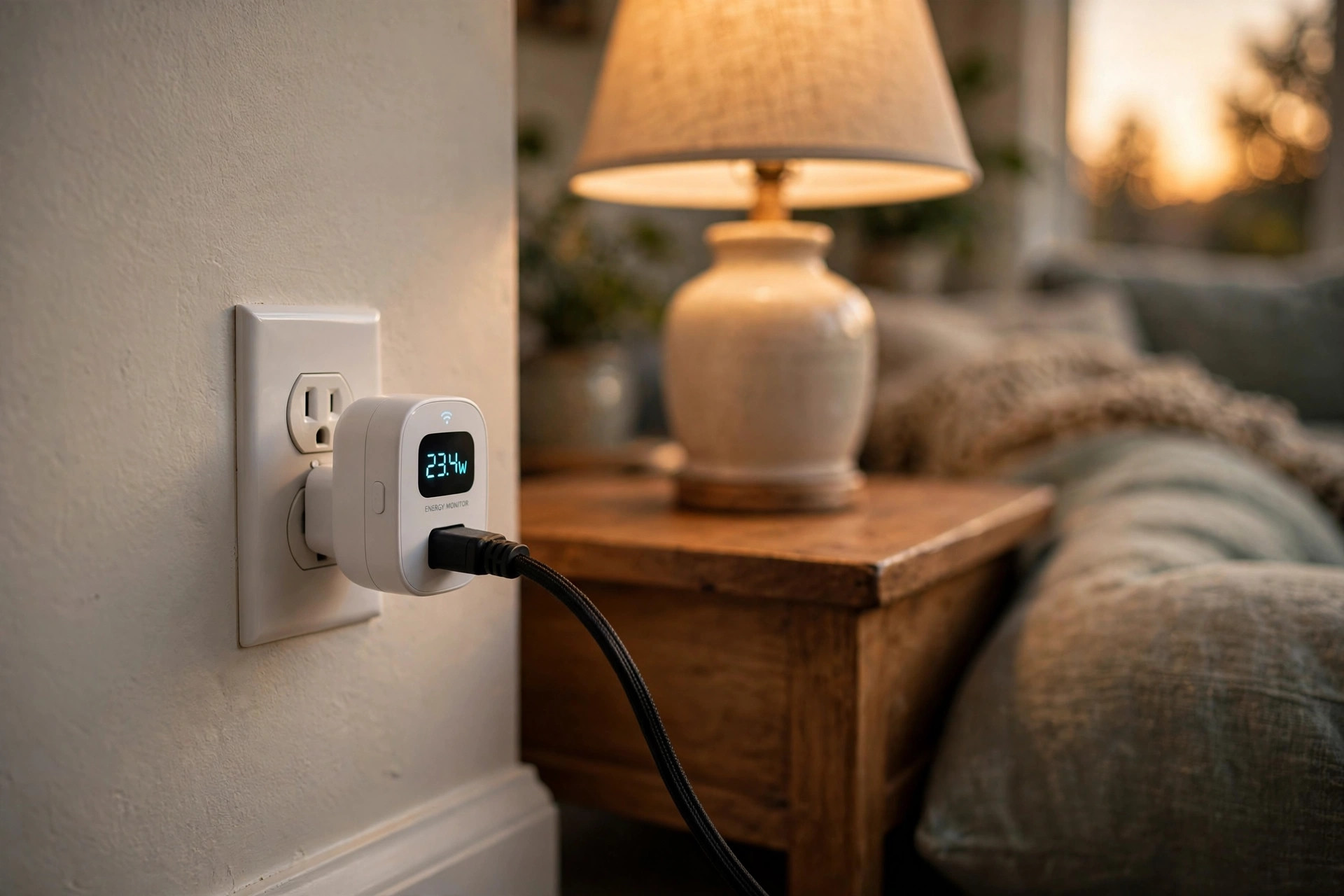

A smart plug is a small device that fits between your wall outlet and any appliance. It lets you turn the appliance on or off from your phone. The best smart plug with energy monitoring usa shoppers can buy does one thing more. It measures how much power the appliance draws. That one extra feature changes the plug from a simple remote switch into a useful home energy tool.
Many homes in America lose money to quiet power waste. A television that sits in standby mode can draw power all day. A space heater left on in an empty room costs real dollars. An old freezer in the garage may use far more energy than the owner thinks. The best smart plug with energy monitoring usa families choose shows these hidden costs in plain numbers. You plug it in. You open the app. You see the watts, the hours, and the cost. Then you decide what to change.
Why an Energy Monitoring Smart Plug Matters
Most people guess at their energy use. They guess wrong. A single device often costs more per month than expected. Small devices add up fast. The best smart plug with energy monitoring usa homes use gives you facts instead of guesses.
The plug sits on your circuit and records the flow of electricity. It shows live watts. It shows total kilowatt hours over a day, a week, or a month. Some models turn those numbers into dollars based on your local electric rate. You can see that your window air conditioner costs 38 cents per hour to run. You can see that your gaming setup draws power all night while nobody plays.
This knowledge changes habits. Studies and consumer groups have long noted that feedback on energy use lowers bills. When people see the number, they act. They move the gaming system to a power strip. They set the plug to cut power at midnight. They replace the old freezer. The device pays for itself through the savings it finds.
The plugs also add comfort and control. You can turn on the porch lamp before you drive home. You can run the coffee maker from bed. You can shut off the iron from the office when you are not sure you turned it off. Reviews at Consumer Reports often point to this mix of savings and control as the reason these devices earn their place in modern homes.
Energy monitoring plugs also serve safety. A sudden spike in power draw can warn you of a failing appliance. A motor that draws more and more current may be wearing out. Seeing the numbers early lets you act before a problem grows. The U.S. Consumer Product Safety Commission provides broad guidance on electrical safety in the home, and watching for odd behavior in appliances fits that same habit of care.
What to Look for When You Choose One: Best Smart Plug with Energy Monitoring Usa
Not every smart plug measures energy. Many models only switch power on and off. If your goal is to find the best smart plug with energy monitoring usa buyers recommend, check the product page for the words energy monitoring, power metering, or energy tracking. If those words are missing, the plug does not do the job.
Power and Ratings
American homes run on 120 volts. Most smart plugs handle up to 15 amps, which equals 1800 watts. That is enough for lamps, fans, televisions, and small heaters. It is not enough for large appliances like dryers or window air conditioners with high draw. Check the plug rating against your device before you buy.
Some plugs support only resistive loads at full rating. Motors and compressors draw a surge at start-up. A good product page states the maximum motor load. Do not run a plug past its rating. Heat builds up at the contacts when current runs too high. Respect the limit.
Wi-Fi and App Features
Most models use your home Wi-Fi. Look for support of the 2.4 GHz band, which almost every home router provides. Some plugs now work with the Matter standard or Thread radios. These newer options connect more quickly and work with many brands at once.
The app matters as much as the hardware. The best smart plug with energy monitoring usa reviewers praise tends to have a clear app with graphs. You should see live power, daily totals, monthly totals, and a way to enter your electric rate. Schedules and timers are standard. Voice control through common assistants is common too. Tech reviewers at CNET and PCMag often compare these apps side by side, and their tests show how wide the gap can be between a clear app and a confusing one.
Accuracy of the Readings
Energy monitoring chips differ in quality. Most consumer plugs read within a few percent of true values. That is fine for tracking bills and spotting waste. It is not good enough for billing disputes or scientific work. Independent testers note that cheaper plugs can drift at very low power levels. A lamp that draws 4 watts may read as zero on a weak meter.
For most homes, this small error does not matter. You want trends and totals, not laboratory numbers. If you need high accuracy for a workshop or a home business, look for models that state their metering chip and tolerance.
Types and Options
Smart plugs with energy monitoring come in a few basic shapes. The compact mini plug is the most common. It fits one outlet and leaves the second free. It works for most lamps and small devices.
The outdoor plug is built for weather. It has a sealed case and a cover over the outlet. Use it for holiday lights, fountains, and pool pumps. It tracks energy just like the indoor models. Never use an indoor plug outside. Rain and dust will damage it.
The power strip with monitoring gives you several outlets in one device. Some strips meter each outlet on its own. Others show only the total for the strip. If you want to watch a desk setup with a computer, monitor, and speakers, a strip with per-outlet metering is the right tool. For home theater gear, pairing a monitored strip with a surge protector for your home theater setup gives both measurement and defense against spikes.
Hub-based plugs use Zigbee or Z-Wave instead of Wi-Fi. They need a hub to work. The benefit is a steadier network and less load on your router. If your home already runs many smart devices, a Zigbee hub for your smart home with matched plugs can be a smooth choice.
Single plugs with two outlets exist too. They save space behind furniture. Each outlet may be metered on its own or as a pair. Check before you buy.
Cost and Price
Prices for the best smart plug with energy monitoring usa shoppers find run from about 12 dollars to about 40 dollars per unit. Single mini plugs sit at the low end. Outdoor models and multi-outlet strips cost more.
Two-packs and four-packs lower the price per plug. If you plan to monitor five or six devices, a multi-pack saves money. Watch for sales around major shopping holidays. Prices drop often.
Think about payback. A plug that finds one wasted device can save 5 to 10 dollars a month. At that rate, a 20 dollar plug pays for itself in a few months. The U.S. Department of Energy notes that small loads left running add up across a year. A plug that helps you find them is one of the cheapest energy tools a home can buy.
No subscription should be required for basic metering. Some brands offer paid plans for extra history or export. Core features like live watts and monthly totals should work free. If a brand locks basic readings behind a pay wall, choose another.
Care and Upkeep
A smart plug needs little care. Keep it clean and dry. Wipe dust from the case with a dry cloth. Do not open the case. There is nothing inside for you to fix.
Update the firmware. Makers release updates that fix bugs and close security gaps. Most apps update the plug on their own. Check the app now and then to be sure.
Watch the outlet itself. Pull the plug out once or twice a year and look at the prongs. Brown marks or a melted look mean heat. Stop using the plug and the outlet until an electrician checks them. Loose outlets cause arcing. A plug in a loose outlet is a fire risk even at low power.
Keep the app on your phone current as well. Old apps may lose the link to the plug. Sign in with a strong password and turn on two-step sign-in if the app offers it. Smart home security firms such as Ring, SimpliSafe, and ADT all stress the same point for connected devices. Strong account security is part of home security. A plug that anyone can control is a plug that anyone can misuse.
When you move or give the plug away, reset it. The reset wipes your Wi-Fi details and your energy history. The manual shows the button pattern. Then the next owner starts fresh.
Safety
Smart plugs are safe when used within their limits. The main risks come from misuse. Never exceed the rated amps or watts. Never chain power strips and plugs together. Never run a large heater or air conditioner through a plug rated for light duty.
Buy plugs with real safety marks. Look for UL or ETL listed on the product. These marks mean a lab tested the design. Unlisted plugs sold at very low prices may skip safety parts inside. The small savings is not worth the risk.
Keep plugs away from water. Do not cover them with cloth or paper. They need air to cool. If a plug feels hot to the touch, unplug it and do not use it again.
Voice assistants from major platforms, including the Google store devices at store.google.com, make control easy. But easy control needs care. Lock your phone. Do not share app access with people you do not trust. A guest who can reach your plugs can turn off your freezer or your security lights.
For a whole-home view of costs, many owners pair plugs with a whole home automation cost guide to plan their budget. Start small with one or two plugs. Learn the numbers. Then expand.
Frequently Asked Questions
Do all smart plugs measure energy use?
No. Many smart plugs only turn power on and off. Energy monitoring is a separate feature. Check the box or product page for energy monitoring or power metering. If the words are not there, the plug does not measure.
How accurate are smart plug energy readings?
Most read within a few percent of the true value. That is fine for finding waste and tracking costs. Very low draws under a few watts may read as zero. For billing or business use, choose a model that states its meter tolerance.
Will a smart plug work with my phone and voice assistant?
Most plugs work with the main phone systems and the main voice assistants. Check the product page for the logos of the systems you use. Newer plugs that support the Matter standard work with many platforms at once.
Can a smart plug lower my electric bill?
It can, by showing you where the money goes. The plug itself uses a tiny bit of power. The savings come from the changes you make. Common wins include cutting standby power, setting schedules for lights, and finding old appliances that draw too much. Technology coverage at The Verge often notes that the awareness these devices create is their greatest value.
Is it safe to run a space heater through a smart plug?
Only if the plug is rated for it. Many space heaters draw 1500 watts, near the 1800-watt limit of a 15-amp plug. The plug must be rated for resistive heating loads at that level. When in doubt, do not do it. Plug the heater straight into the wall.
Do I need a hub to use a smart plug?
Wi-Fi plugs need no hub. They join your home network directly. Zigbee and Z-Wave plugs need a hub. Wi-Fi is simpler to start. Hub systems suit larger smart homes with many devices.
A Final Word
The best smart plug with energy monitoring usa homeowners can buy is the one that fits your outlets, your devices, and your habits. Check the rating. Check the app. Look for real safety marks. Start with one or two plugs on the devices you suspect waste the most. Read the numbers for a month. The data will tell you what to do next. Small devices, watched closely, lead to real savings and a safer home.
References
ADT. (n.d.). Home security and automation. https://www.adt.com CNET. (n.d.). Technology news and reviews. https://www.cnet.com Consumer Reports. (n.d.). Product reviews and ratings. https://www.consumerreports.org Google Store. (n.d.). Smart home devices. https://store.google.com PCMag. (n.d.). Technology product reviews. https://www.pcmag.com Ring. (n.d.). Smart home security devices. https://www.ring.com SimpliSafe. (n.d.). Home security systems. https://www.simplisafe.com The Verge. (n.d.). Technology news and reviews. https://www.theverge.com U.S. Consumer Product Safety Commission. (n.d.). Product safety information. https://www.cpsc.gov U.S. Department of Energy. (n.d.). Energy efficiency and renewable energy. https://www.energy.gov
Was this guide helpful?

About Jennifer Lee
The My Garden US editorial team writes practical, in-depth home and garden guides for American homeowners — tested advice, no fluff.
You May Also Like
Cellular Security Camera No WiFi Reviews USA: A Plain Guide for Homes and Cabins
March 26, 2026 0 views
Keyless Entry Door Lock Reviews 2026 USA: A Plain Guide
August 6, 2026 0 views
Best Fingerprint Door Lock Reviews 2026 USA
June 14, 2026 0 views