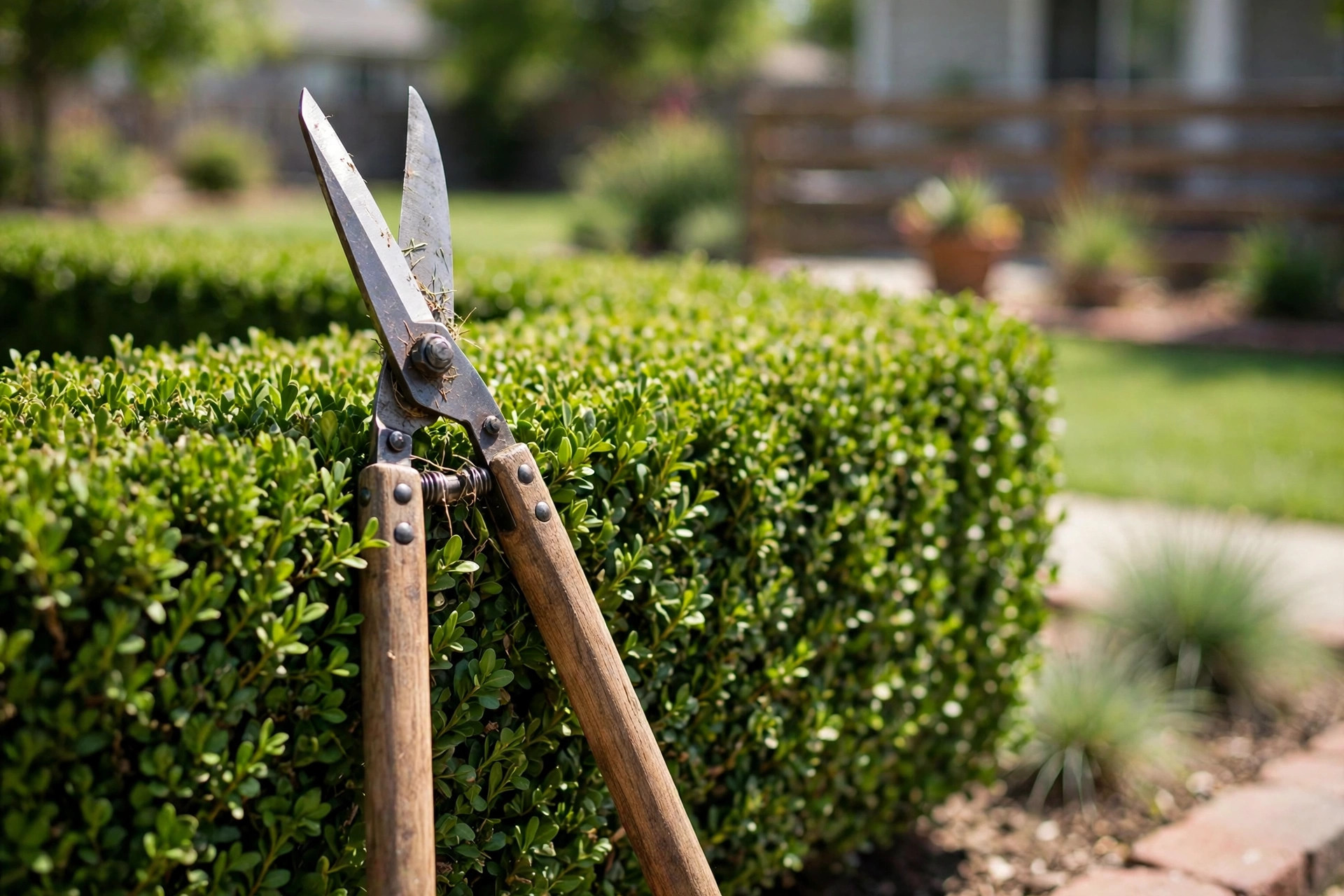

Our best garden shears for hedges reviews come from years of hands-on garden work and from reading what other gardeners say. Hedges are the backbone of many American yards. A boxwood hedge along the front walk gives a house a neat look. A tall privet hedge keeps the backyard private. But a hedge only looks good when it is cut right. Dull or cheap shears crush branches and leave brown edges. Good shears cut clean and save your arms. This guide explains how to pick hedge shears that last. It covers the main types, the features that matter, and the prices you can expect. By the end, you will know which pair fits your hedges, your hands, and your budget.
Why Good Hedge Shears Matter
A hedge is a living fence. It needs regular cutting to stay thick and green. When you cut a branch with a dull blade, the wood gets crushed instead of sliced. The wound heals slowly. The tips turn brown. Over time the hedge looks tired and thin.
Clean cuts heal fast. A sharp shear slices through a stem like a knife through soft butter. The plant seals the wound quickly and pushes out new growth. That is why gardeners say a sharp tool is a kind tool.
There is also a money angle. A hedge that is cut badly loses leaves at the tips. It takes weeks to grow back. Some gardeners give up and hire a service. One season of paid trimming can cost more than a good pair of shears. A 45-dollar pair pays for itself the first time you skip a service visit. Many reviews say the tool paid for itself in a single weekend.
Good shears also protect your body. Cheap shears have thin handles and rough grips. They force your hands to work hard. After an hour your wrists ache. A well-made pair has soft grips and long handles. The extra length gives you leverage. You cut with less force. For older gardeners and for anyone with sore hands, this matters a great deal. Consumer Reports publishes independent reviews of garden tools and often finds that comfort decides which tool gets used and which sits in the garage.
How to Choose the Right Pair: Best Garden Shears for Hedges Reviews
Check the Blade First
The blade is the heart of the shears. Look for blades made of high carbon steel. This steel takes a sharp edge and holds it through many cuts. Some blades have a non-stick coating. The coating stops sap from building up. That makes cutting smoother, especially on evergreen hedges that bleed sticky sap.
Blade length matters too. Short blades, about six inches, give fine control for shaping curves and topiary. Long blades, eight to ten inches, cut more with each pass and are faster on straight runs. Many homeowners like a blade around eight inches as a middle ground.
Look at the Handles
Handles come in wood, steel, or aluminum. Wooden handles feel warm and classic but can crack if left in the rain. Steel handles are strong but heavy. Aluminum handles are light and rust-free, and most modern shears use them.
Some shears have telescoping handles. They extend from about 25 inches to 32 inches or more. This helps you reach the top of a tall hedge without a ladder. It also helps when you cut low hedges and want to stand upright. Many reviews praise this feature.
Test the Weight and Grip
Hold the shears before you buy if you can. They should feel balanced, not nose-heavy. Rubber grips reduce shock when the blades snap shut. Some grips are made for larger hands, some for smaller hands. A pair that is too big will tire you fast. A store like Lowe’s stocks many models, so you can compare the feel of different grips side by side.
Watch for Small Details
A bumper between the handles softens the closing shock. An adjustment bolt lets you tighten the pivot when the blades loosen. Wavy or serrated lower blades grip stems so they do not slide. These small features add up over a long cutting session.
Types of Garden Shears for Hedges
Manual Hedge Shears
Manual hedge shears are the classic choice. They look like giant scissors with long handles. You power them with your arms. They are quiet, simple, and easy to maintain. They cost less than powered tools. For hedges under six feet tall and for light shaping, manual shears are often the best choice. They also give the cleanest, most controlled cuts.
Powered Hedge Trimmers
Gas, corded electric, and battery trimmers cut faster on long hedges. A battery trimmer is the most popular choice today. It is light and easy to start. Powered tools are better for large jobs and for thick, woody hedges. They cost more and need charging or fuel. Many homeowners own both: a powered trimmer for the rough cut and manual shears for fine shaping.
Bypass vs. Anvil Shears
Bypass blades slide past each other like scissors. They make clean cuts on live wood. Anvil blades press a stem against a flat plate. They can crush live stems. For hedges, always choose bypass shears. Bypass cuts heal better and keep the hedge green. If you also need garden scissors for fine floral work, those are bypass shears too, just smaller.
Loppers for Thick Branches
Some hedges grow thick old branches near the base. Hedge shears cannot cut wood thicker than about half an inch. For that job you need loppers. Loppers have the same scissor action but with much longer handles for more force. Many gardeners keep both tools in the shed.
Cost and Price: What to Expect
Hedge shears come in three price groups. Knowing them helps you shop smart.
Budget shears cost 15 to 30 dollars. They cut fine at first but dull quickly. The pivots loosen. The grips are hard. They suit a renter or a gardener with one small hedge.
Mid-range shears cost 35 to 60 dollars. This is the sweet spot for most homeowners. Brands in this range use better steel and stronger pivots. Fiskars is famous for sharp blades at fair prices, and Corona Tools makes professional-grade shears that many landscapers trust. A 45-dollar pair will serve a typical suburban hedge for many years.
Premium shears cost 65 dollars and up. They use forged steel, fine adjustments, and top grips. They stay sharp longer and feel better in the hand. They suit large properties and people who trim often. You can compare specs and prices for all three tiers at Home Depot before you decide.
Do not forget the extras in your budget. A sharpening file costs a few dollars. A blade cover costs a few more. A can of household oil lasts for years. These small items add maybe ten dollars to the total but keep the shears working like new.
Watch for sales in late fall and winter. Stores clear garden tools when the season ends. You can often find a mid-range pair at a budget price.
Care and Upkeep
Good shears last decades if you care for them. The work is simple.
Clean the blades after each use. Wipe them with a damp cloth to remove sap and dirt. For sticky sap, rub the blades with a cloth dipped in rubbing alcohol. This takes only a minute and keeps the coating working.
Oil the pivot often. One drop of household oil on the bolt, then open and close the blades a few times. This keeps the action smooth and stops rust.
Sharpen the blades when cuts start to crush instead of slice. A flat file or a sharpening stone works. Follow the factory angle of the bevel. Family Handyman has clear how-to guides for sharpening, and our own guide on how to sharpen garden tools properly walks through the steps in plain language.
Store shears dry. Hang them on a wall hook, not on the damp garage floor. Keep the blades closed with a blade cover or tied with a strap. Wooden handles last longer if you rub them with linseed oil once a year. With this care, a good pair outlives its owner.
Safety First
Sharp tools demand respect. Always know where your hands are. Cut away from your body, never toward it. When you trim overhead, wear a hat and safety glasses. Small twigs fall in your face.
Keep the shears closed when you walk with them. Carry them with the blades pointing down and behind you. Never reach into a hedge to grab a missed twig while the blades are open. Stop the tool, set it down, then reach in.
Powered trimmers need more care. Unplug corded tools or remove the battery before you clear a jam. Wear ear protection with gas models. Keep children and pets well away from the work area. Bob Vila offers practical safety checklists for all kinds of garden tools.
Wear good garden gloves while you work. Gloves protect against blisters and thorns. They also improve your grip, which makes cutting safer.
Frequently Asked Questions
How often should I trim my hedges?
Most hedges need two to three trims per year. Fast growers like privet may need four. Trim in late spring after the first flush of growth, then again in mid-summer. Avoid hard cuts in late fall. New growth started late in the season can be damaged by winter cold.
What is the difference between hedge shears and hedge trimmers?
Hedge shears are manual tools with long handles. You power them yourself. Hedge trimmers are powered, with a motor moving the blade. Shears give more control and make cleaner cuts. Trimmers are faster on big jobs. Many reviews suggest owning both.
Can hedge shears cut thick branches?
Manual hedge shears handle stems up to about half an inch thick. For thicker branches, use loppers or a pruning saw. Forcing shears through thick wood bends the blades and strains the pivot. Keep the right tool for the job.
Are expensive hedge shears worth it?
For most homeowners, mid-range shears are the best value. They cut well and last long. Premium shears are worth it if you trim large hedges often or want the best comfort. Budget shears are fine for very light use but need replacing sooner.
How do I keep hedge shears sharp?
Wipe the blades clean after each use and oil the pivot. Sharpen with a file or stone when cuts start to tear. Many gardeners sharpen once or twice a season. The Spruce reviews note that even top-rated shears need regular sharpening to stay at their best.
Where can I buy quality hedge shears?
Garden centers, hardware stores, and online retailers all carry good shears. Gardener’s Supply Company and Burpee sell tools alongside garden supplies, which is handy if you order plants too. Reading buyer reviews before you shop helps you avoid weak models.
Are telescoping handles worth it?
For many homeowners, yes. They let you reach the top of a tall hedge from the ground. They also let you cut low hedges without bending far. The locking mechanism adds some weight, but most users say the reach is worth it. If all your hedges are under waist height, fixed handles are lighter and simpler.
A Final Word
The best garden shears for hedges reviews all point to the same lesson. Buy a sharp, comfortable, well-built pair and care for it. Your hedges will grow thick and green. Your hands will thank you. And trimming day will feel like a pleasure instead of a chore.
References
Bob Vila. (n.d.). Home improvement advice. https://www.bobvila.com Burpee. (n.d.). Seeds, plants, and gardening supplies. https://www.burpee.com Consumer Reports. (n.d.). Product reviews and ratings. https://www.consumerreports.org Corona Tools. (n.d.). Garden and landscape tools. https://www.corona-tools.com Family Handyman. (n.d.). DIY home repair and maintenance. https://www.familyhandyman.com Fiskars. (n.d.). Garden and cutting tools. https://www.fiskars.com Gardener’s Supply Company. (n.d.). Gardening tools and supplies. https://www.gardeners.com Lowe’s. (n.d.). Home improvement products. https://www.lowes.com The Home Depot. (n.d.). Home improvement products. https://www.homedepot.com The Spruce. (n.d.). Home and garden advice. https://www.thespruce.com
Was this guide helpful?

About David Wilson
The My Garden US editorial team writes practical, in-depth home and garden guides for American homeowners — tested advice, no fluff.
You May Also Like

Best Garden Gloves for Digging Reviews: What Serious Gardeners Should Know
February 15, 2026 0 views
Garden Netting for Pest Control Reviews: What Buyers Should Know
January 13, 2026 0 views
Best Garden Gloves for Thorn Protection
March 17, 2026 0 views