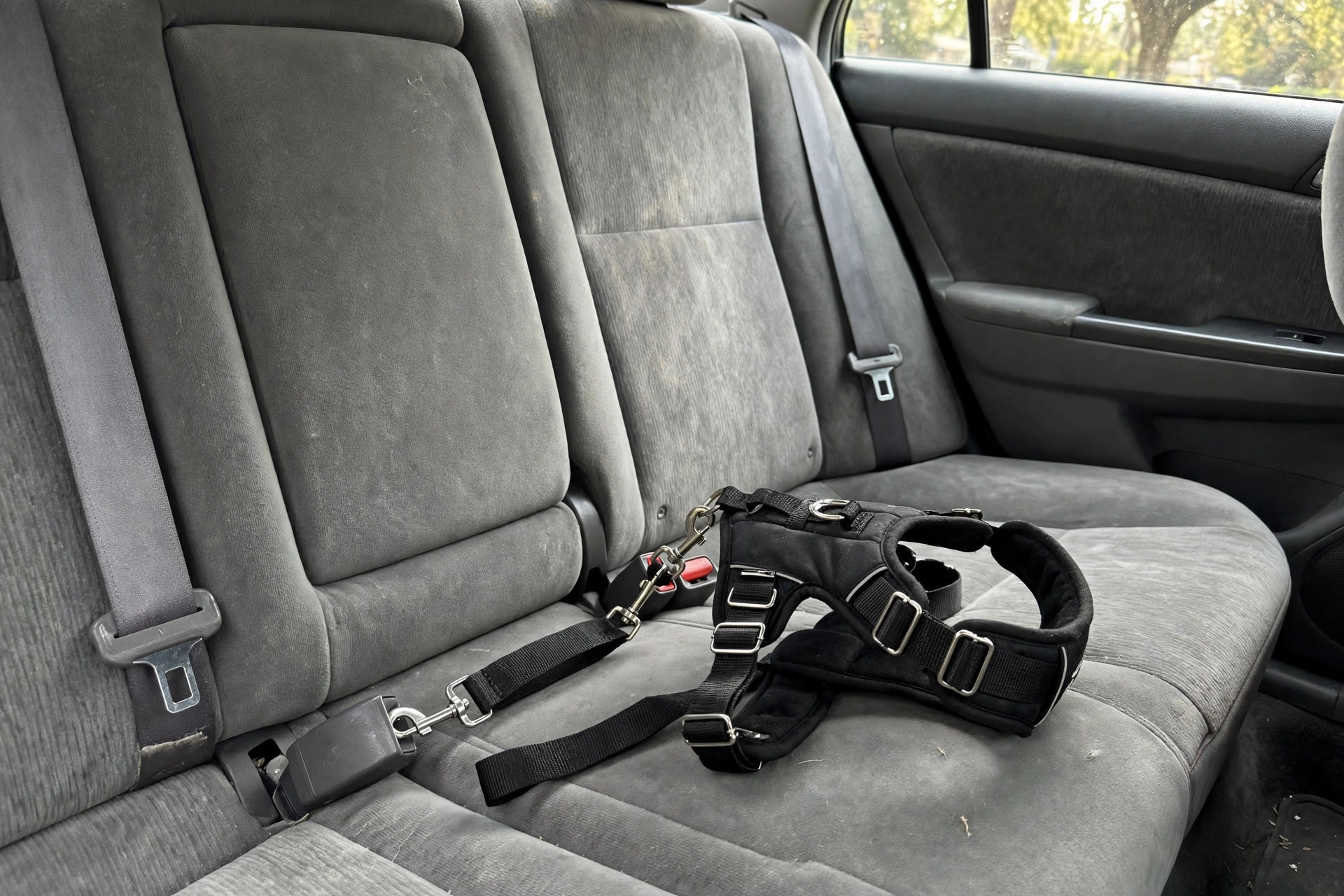

Most American families drive their dogs to parks, vets, and lakes. A loose dog in a moving car is a danger to the dog, the driver, and everyone on the road. A dog seatbelt harness for safe car travel usa buyers trust can change that in one purchase. It is a simple tool. The dog wears a padded harness. A tether strap connects the harness to the car seatbelt latch. The dog can sit or lie down but cannot roam the car.
This guide explains how these harnesses work, which type suits your dog, what they cost, and how to use them right every time.
Why It Matters
An unrestrained dog in a car is a heavy object in motion. In a sudden stop at 30 miles per hour, a 40-pound dog can strike the dashboard with the force of a far heavier weight. The dog can be badly hurt. The driver can be hurt too. A startled dog that climbs into the driver footwell can cause a crash.
Many states in the USA now have rules about distracted driving and loose animals. Some states fine drivers whose pets interfere with control of the car. Insurance records from recent years show rising claim costs tied to pet distractions on the road. Even where no law exists, common sense points the same way. A restrained dog is a calmer dog. The driver keeps both hands on the wheel and both eyes on the road.
A dog seatbelt harness also protects the dog after a crash. Emergency workers in many counties report that loose dogs flee broken cars and run into traffic. A harnessed dog stays in the car. That gives the owner a far better chance to reach the dog and get it home alive.
Pet safety writers at The Spruce Pets often note that the back seat is the safest place for a dog, just as it is for a child. The air bag zone in front seats can harm a dog. A seatbelt harness keeps the dog exactly where it should be.
What to Look for in a Car Harness: Dog Seatbelt Harness for Safe Car Travel Usa
Not all car harnesses are built the same. Some are simple straps with thin webbing. Others are crash-tested restraints with wide padded panels. The difference matters in a real crash.
Crash Testing and Certification
Look for a harness that has passed a crash test. A well-known independent standard comes from the Center for Pet Safety, a non-profit group that crash-tests pet restraints. Harnesses that pass these tests use words like “crash tested” or “crash test certified” on the label. Retailers such as Chewy and Petco carry several tested models and usually show the test claim in the product title.
A crash-tested harness spreads force across the dog chest and shoulders. Cheap strap harnesses can tear at the seams or let the dog slip free. Ask for proof before you buy. A serious maker will show test video or test data on request.
Fit and Adjustment Points
A harness must fit snug. You should be able to slide two fingers under each strap, no more. Too loose and the dog slips out. Too tight and the dog cannot breathe well or move at all.
Good car harnesses have four or five adjustment points: two at the neck, two at the chest, and one at the belly. These let you shape the harness to your dog body. Puppies grow fast, so a harness with wide adjustment range saves money. Heavy dogs need metal buckles rather than plastic snaps.
Veterinary guides at PetMD remind owners to measure the dog chest just behind the front legs and the neck at the base before ordering. A tape measure is better than a guess.
Padding and Strap Width
Wide padded straps are kinder on the dog chest. In a sudden stop, the load lands on the strap. A narrow strap digs in. A wide strap with foam or fleece padding spreads the load. The best models pad the chest plate and the back plate both.
Long-haired dogs do better with smooth straps that do not mat the coat. Short-haired dogs like soft padding against the skin. Check the buckle edges for rough seams before the first drive.
Types of Dog Car Harnesses
Stores in the USA sell four main kinds. Each has strengths and limits.
Harness with seatbelt loop. The tether strap feeds through the car seatbelt, then the seatbelt clicks shut. This is the most common type. It is cheap and fits any car. The dog gets enough slack to sit, stand, or lie down. The risk is that some dogs learn to step on the release button.
Harness with latch-bar clip. The tether clips to the ISOFIX or latch bar anchors used for child seats. Many new cars have these anchors on the back seat. This connection is very strong. The dog cannot unbuckle it. Check your car manual to find the anchors.
Harness with zip-line tether. The strap runs along a line fixed between two points on the back seat. The dog can move from window to window but cannot reach the front seats. This suits calm dogs that like to look out both windows. It is not the strongest choice in a hard crash.
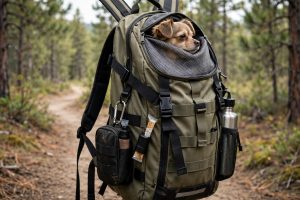
Carrier-style restraint for small dogs. Very small dogs can ride in a padded carrier that is belted into the car seat. Some carriers double as a pet carrier backpack for small dogs hiking on trails. For car use, the carrier must be secured with the seatbelt, not loose on the seat.
Dog welfare groups such as the ASPCA advise owners to pick the type that matches the dog size and temper. A strong puller needs the latch-bar clip. A calm small dog does fine with a loop harness.
Cost and Price
Prices in the USA range from about 15 dollars to about 120 dollars. The spread reflects testing, materials, and brand name.
Budget harnesses, 15 to 30 dollars, are simple strap models with seatbelt loops. They keep a calm dog on the seat for short trips. They rarely carry crash test claims. They are a fair start for a young dog in training.
Mid-range harnesses, 30 to 70 dollars, add wide padding, metal buckles, and multiple adjustment points. Many are crash tested. This is the range most vets and trainers recommend for daily use. Shoppers can compare options side by side at PetSmart or read owner reviews on Consumer Reports.
Premium harnesses, 70 to 120 dollars, come from makers that publish full crash test data. They use aircraft-grade hardware and broad chest plates. Working dog owners and long-distance travelers favor these. For a dog that rides in the car every day, the higher price is easy to justify.
Add the cost of a dog car seat cover for back seat protection to the budget. A cover costs 20 to 50 dollars and guards the upholstery from claws, mud, and hair. The two products work as a team.
Fitting and Daily Use
A harness works only if it is fitted and used the same way each time.
1. Lay the harness flat and loosen all straps. 2. Slip the dog head through the neck loop, or wrap the chest panel around the body for step-in styles. 3. Buckle the side straps and snug each one until two fingers fit under the strap. 4. Attach the tether to the harness back ring, never to the collar. 5. Click the seatbelt, feed the loop, or clip the latch bar, then give the dog a treat.
Practice at home first. Let the dog wear the harness around the house for ten minutes with treats. Many dogs accept the car harness faster when they already know the feel of a best no pull dog harness for strong pullers on walks. Keep early car rides short. End with a walk in the park so the dog links the harness with good things.
Adjust the fit every few weeks. Dogs gain and lose weight with the seasons. A winter coat makes the chest wider. Check the fit each time you switch between a thick coat season and a thin coat season.
Never attach the tether to the dog collar. In a crash, a collar can crush the throat. The harness back ring is made for this load. The AKC safety guides stress this point in every article on car travel with dogs.
Care and Upkeep
A car harness lives a hard life. It takes sun, sweat, drool, and mud. Clean it every month and check it every week.
Hand wash with warm water and mild soap. Machine washing can weaken stitching and warp padding. Air dry away from direct sun. Heat from a dryer can shrink the straps.
Inspect the buckles and the tether clip before each long trip. Look for cracked plastic, bent metal, and frayed webbing. A tether that shows wear should be replaced at once. Most makers sell spare tethers for 10 to 20 dollars.
Store the harness hanging, not crushed under cargo. Foam padding holds its shape longer when it hangs free. Keep a spare leash in the glove box for rest stops. A pet stroller for small dogs and cats travel can also help at rest stops for older or tiny dogs that tire fast.
Safety Rules on the Road
The harness is one part of a safe trip. The rest is habit.
– The dog rides in the back seat only. Front air bags can kill a dog. – One dog per seatbelt latch. Two dogs need two latches or a divider. – Windows stay up or open only a crack. Dogs that hang their heads out risk eye injury from dust and debris. – Never leave a dog alone in a parked car. A car in American summer sun can reach deadly heat in minutes, even with windows cracked. Animal health sources at Home Depot pet guides and vet groups repeat this warning each summer. – Plan rest stops every two hours on long drives. Offer water and a short walk. – Keep the dog health papers and vet phone number in the glove box.
Veterinary groups such as the AVMA add one more rule: make sure the dog wears an ID tag or a microchip record at all times. If a crash opens the car door, a tagged dog has a far better chance of coming home.
Frequently Asked Questions
Is a dog seatbelt harness required by law in the USA? No federal law requires it. Some states and cities have distracted-driving or animal-restraint rules that can apply to a loose dog. Check your state code before a long trip across state lines.
Can I use a regular walking harness in the car? A walking harness is better than nothing, but it is not built for crash loads. Walking straps are thin and buckles are light. A car-rated harness uses wider straps and stronger hardware. Use the right tool for the job.
How do I stop my dog from chewing the tether? Bitter apple spray on the strap helps many dogs. A metal-cable tether also defeats chewing. The surest fix is to tire the dog with a walk before the drive. A calm dog chews less.
What size harness does my puppy need? Measure the chest behind the front legs and the neck at the base. Buy the size that matches the chest first, since the chest takes the crash load. A harness with wide adjustment will last through several months of growth.
Can two dogs share one tether? No. Each dog needs its own harness and its own tether on its own latch point. In a crash, two dogs on one strap can tangle and injure each other.
How long can a dog stay harnessed in the car? For trips under two hours, most dogs rest fine. On longer drives, stop every two hours for water, a walk, and a stretch. Offer the dog a chance to lie down between stops.
A Final Word
A dog seatbelt harness for safe car travel usa drivers can buy today is a small price for real peace of mind. Pick a crash-tested model. Fit it snug. Use the back seat. Keep up the simple cleaning and checks. Your dog will learn that the harness means an outing is coming, and you will drive knowing your best friend is as safe as you can make it.
References
American Kennel Club. (n.d.). Dog care and training resources. https://www.akc.org American Veterinary Medical Association. (n.d.). Pet care resources. https://www.avma.org ASPCA. (n.d.). Pet care and animal welfare resources. https://www.aspca.org Chewy. (n.d.). Pet supplies. https://www.chewy.com Consumer Reports. (n.d.). Product reviews and ratings. https://www.consumerreports.org Petco. (n.d.). Pet supplies and services. https://www.petco.com PetMD. (n.d.). Pet health information. https://www.petmd.com PetSmart. (n.d.). Pet supplies and services. https://www.petsmart.com The Home Depot. (n.d.). Home improvement products. https://www.homedepot.com The Spruce Pets. (n.d.). Pet care guides and product reviews. https://www.thesprucepets.com
Was this guide helpful?

About James Carter
The My Garden US editorial team writes practical, in-depth home and garden guides for American homeowners — tested advice, no fluff.
You May Also Like

A Practical Guide to the Cat Tunnel Collapsible for Play and Hiding
January 31, 2026 0 views
Best Pet Food Mat for Messy Eaters Floor
July 11, 2026 0 views
Pet Gate with Cat Door for Stairway Safety: A Complete Guide
July 8, 2026 0 views