
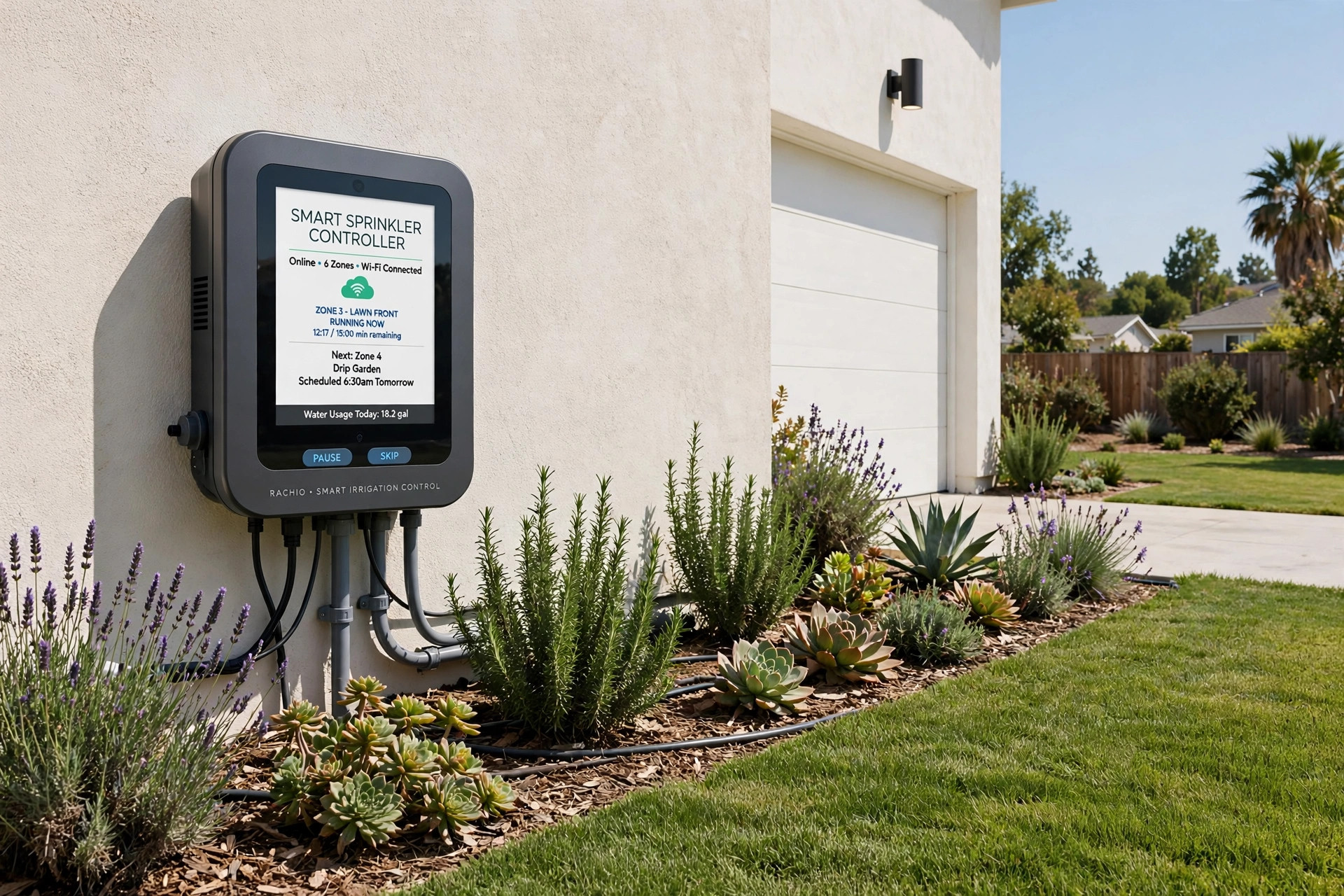

Water is precious in California. Lawns drink a great deal of it. That is why smart sprinkler timer rebates for california homes matter so much. These programs pay you back, in part or in full, for buying a smart timer that waters your lawn only when it is truly needed. The device replaces an old clock-style controller. The new one checks the weather, skips rain days, and trims each watering cycle. This guide explains what the rebates are, who gives them, how much you can get, and how to apply without trouble.
Why Smart Sprinkler Timer Rebates Exist
California faces long dry spells. The state asks homes to cut outdoor water use. Sprinklers are often the largest water user at a house. A timer that waters at noon in July wastes far more than one that waters at dawn on a cool day. Water districts know this. To nudge people along, many offer cash back for buying a smart controller.
A rebate is not a sale price. It is money the water district pays you after you buy and install the device. Some programs send a check. Others give a bill credit. The goal is simple. The district wants fewer gallons used on lawns. You want a lower bill. Both sides win when the old dumb timer goes into the trash.
Homeowners sometimes ask why the state cares about one small lawn device. Millions of homes each watering a little less adds up to vast savings. Your one timer joins a very large team.
What a Smart Sprinkler Timer Is: Smart Sprinkler Timer Rebates for California Homes
A smart sprinkler timer is a small box that controls your irrigation valves. The old type ran on a fixed clock. It watered every Tuesday and Friday at 6 a.m., rain or shine. The smart type adds brains. It connects to Wi-Fi and pulls local weather data. When rain falls, it skips the cycle. When heat rises, it waters a bit more. When wind blows hard, it waits.
Most smart timers also use an app on your phone. You can start a zone from the couch. You can pause watering during a party. Some models ask for your soil type, plant type, and sun exposure. They then build a schedule for each zone. The result is a lawn that stays green on less water.
These devices mount where your old controller sat, often in a garage or on an outside wall. Wires connect to each zone valve. The setup takes an hour or two for most do-it-yourself owners. If you have never wired a controller, you may prefer a pro. Either way, the hardware is the same. The rebate programs care that the device is new, on the approved list, and installed at a qualifying address.
How to Choose a Timer That Qualifies
Not every smart timer earns a rebate. Water districts keep lists of approved models. Buy from the list and you are safe. Buy off the list and you may get nothing back. Check the list before you spend a dollar. Here is what to look for on it.
EPA WaterSense Certification
Many programs require the EPA WaterSense label. This label means the product passed independent tests for saving water. Look for the small blue WaterSense logo on the box or on the product page. Districts trust this mark. It is the fastest way to know a model stands a chance.
Independent ratings at Consumer Reports can also help you compare smart controllers before you buy. Their tests look at app ease, weather response, and real water savings. A model that scores well there is a strong buy with or without a rebate.
Zone Count and Wi-Fi
Count your zones first. A zone is one set of sprinklers that runs together. Most homes have four to eight zones. Buy a controller that supports at least as many as you have, plus one spare. A model with Wi-Fi is standard today. Without Wi-Fi, the timer cannot pull weather data. That is the feature rebates pay for, so do not skip it.
Retailers such as The Home Depot stock many models and show which ones carry the WaterSense label. Reading the box details in the store, or the spec sheet online, helps you match the zone count to your yard.
Weather Data and Soil Settings
Good models use hyper-local weather feeds. They adjust for rain, heat, and humidity. Better models also let you set soil type, slope, and shade per zone. Sandy soil drains fast. Clay soil holds water. A smart timer that knows the difference avoids runoff and puddles. Look for these settings in the app screenshots before you buy.
Manufacturers of irrigation products such as Toro publish guides on scheduling and zone setup. Their material is a fine companion while you learn your new timer.
Flow Sensing and Leak Alerts
Some high-end timers pair with a flow sensor. The sensor sits on the main line and watches gallons per minute. If a head breaks, flow spikes and the app alerts you. This feature saves water beyond the schedule itself. A few rebate programs give higher amounts for models with leak detection. Ask your district if that bonus exists.
Types of Rebates Available in California
Rebates come from water agencies, not from the state capital. Your local water district runs the program. Amounts vary widely. Some districts give $100 back. Others cover the full price up to a set cap. A few pair the timer rebate with a free water audit.
There are two common shapes. The first is the mail-in or online rebate. You buy the device, install it, then file a claim with a receipt and photos. The check arrives in six to eight weeks. The second is the instant rebate or coupon. You buy through a partner store or program portal and the discount applies at once. Both lead to the same end: less money out of your pocket.
Some districts run turf replacement programs too. These pay you to remove grass and plant drought-wise landscaping. A smart timer pairs well with those plans. The new plants need careful watering while young. The smart schedule handles that task and keeps the new yard alive.
Funding comes and goes. Districts set a yearly budget. When the money runs out, the program pauses until the next cycle. Apply early in the year if you can. Early applicants rarely find the well dry.
Landscaping advice sites such as LawnStarter track regional water-saving programs and lawn care costs. Their guides are worth a read while you wait for your rebate claim to process.
Cost and Price
A smart sprinkler timer costs between $120 and $300 in most stores. Basic four-zone models sit at the low end. Sixteen-zone models with flow sensing sit at the high end. Installation adds cost if you hire help. A pro charges roughly $150 to $250 to swap a controller and program the zones.
Rebates often range from $75 to the full device cost. A $150 rebate on a $180 timer leaves you paying $30. That is a fine deal. When you compare models, think in net cost. A $250 premium model with a $200 rebate costs less out of pocket than a $150 model with no rebate.
Running cost is near zero. Many homes cut outdoor use by 20 to 40 percent in the first year. At California water rates, that can mean $100 to $300 saved each year. The device often pays for itself inside two summers, rebate or not.
For a clear picture of total project costs, check the affordable lawn sprinkler installation cost estimate guide. It breaks down parts and labor for a full system. If you plan to wire new zones too, the smart sprinkler controller for USA homes guide explains controller features in plain terms.
How to Apply for a Rebate
The steps are much alike across districts. First, confirm you are eligible. Most programs serve single-family homes on a metered account in good standing. Renters usually need the owner to apply. New builds may be excluded. Check the fine print.
Second, buy an approved model. Keep the receipt. Take a photo of the box showing the model number. Third, install the timer and connect it to Wi-Fi. Most claims ask for a photo of the installed device. Fourth, file the claim online. You will enter your account number, upload the receipt, and answer a few questions about zones and setup date.
Fifth, wait. If something is off, the district writes to you. Answer fast so the claim stays alive. Sixth, receive the payment. Keep a copy of everything until the money arrives.
Common reasons claims fail are simple. The model was not on the list. The receipt was lost. The claim came after the deadline. The address did not match the account. Each of these is easy to avoid. Read the rules once, fully, before you buy.
If your yard also needs new heads or piping, the how to install pop-up sprinklers yourself guide walks through that job step by step. Pairing fresh heads with a smart timer squeezes out the most savings.
Care and Upkeep
A smart timer needs little care, but not none. Once a season, walk the yard while each zone runs and fix what you find. A smart schedule cannot fix a cracked head.
Update the app when it asks. Check the Wi-Fi link too. If the timer drops off the network, it loses weather updates. Most apps warn you when the device goes quiet. A quick router restart often solves it.
In fall, adjust the schedule. Cooler days need less water. Many apps do this for you. If yours does not, cut run times by a third. In winter, you may shut zones off for weeks. Cover an outdoor-mounted timer if your area gets hard frost. Cold cracks plastic housings and weakens wire seals.
Replace the backup battery if the model uses one. The battery keeps the clock and settings alive during power cuts. A dead battery can wipe a schedule after an outage. Check it once a year.
Lawn care brands such as Pennington offer seasonal watering and feeding guides. Pairing their advice with your smart schedule keeps grass strong through the dry months.
Safety
The work is low voltage, but treat it with respect. Turn off power at the breaker before you touch the old controller wires. Twenty-four volts will not hurt most people, but a short can damage the transformer. Label each zone wire as you remove it. A phone photo of the old wiring helps.
Mount the new timer out of reach of children and pets. Keep it dry inside its housing. Do not run extension cords across wet ground to reach it. If the timer shares a circuit with a pump, confirm the load rating. Pumps draw more current than valves. When in doubt, call a licensed electrician for that part.
Outdoor power equipment brands like Ryobi, ECHO, and Greenworks stress the same habit in their manuals: read the wiring diagram first, work with dry hands, and test before you close the box. Engine makers such as Briggs & Stratton and equipment makers like John Deere follow the same practice of clear safety steps in their guides. Your sprinkler timer deserves the same care.
Store the old controller for a month after the swap. If the new timer has a fault, you can fall back while the maker ships a replacement. Keep the receipt and the rebate claim number in one folder. Paper trails end disputes.
Frequently Asked Questions
Do I have to be a homeowner to get the rebate? Most districts require the water account to be in the applicant’s name. Owners apply directly. Renters can ask the owner to apply and share the benefit. Check your district’s rules for the exact wording.
Will the rebate cover the full price of the timer? Sometimes. Programs set a cap, such as $150 or the device price, whichever is lower. Full coverage is common on mid-range models. Premium models may leave you paying part of the cost.
Can I install the timer myself? Yes, in most cases. The wires are low voltage and the apps guide the setup. If your valve box is cramped or corroded, a pro saves time and avoids mistakes. Many districts allow either path.
How long does the rebate take? Six to eight weeks is normal. Some districts pay faster with online filing.
What happens if my model is removed from the approved list? Claims go by the purchase date. If the model was approved when you bought it, the claim stands. Save the list page or a screenshot with the date. That record settles the question.
Does a smart timer really save much water? Yes. Skipping rain days alone cuts waste. Season-by-season tuning adds more. Many homes see outdoor use fall by a fifth to two fifths. The exact number depends on your yard, your soil, and your old habits.
A Final Word
Smart sprinkler timer rebates for california homes are a rare deal: the water district pays you to save money for years. The steps are plain. Check your district’s list. Buy an approved model. Install it with care. File the claim with your receipt. Then let the weather do the scheduling. Your lawn stays green. Your bill shrinks. The state’s reservoirs keep a little more of what they hold. That is a trade worth making this season.
References
Briggs & Stratton. (n.d.). Small engines and power products. https://www.briggsandstratton.com Consumer Reports. (n.d.). Product ratings and buying guides. https://www.consumerreports.org Deere & Company. (n.d.). Turf care equipment and tractors. https://www.deere.com ECHO. (n.d.). Outdoor power equipment. https://www.echo-usa.com Greenworks. (n.d.). Battery-powered lawn and garden tools. https://www.greenworkstools.com LawnStarter. (n.d.). Lawn care services and guides. https://www.lawnstarter.com Pennington. (n.d.). Grass seed and lawn care products. https://www.pennington.com Ryobi. (n.d.). Power tools and outdoor equipment. https://www.ryobitools.com The Home Depot. (n.d.). Home improvement products and supplies. https://www.homedepot.com Toro. (n.d.). Irrigation and lawn care equipment. https://www.toro.com
Was this guide helpful?

About Michael Thompson
The My Garden US editorial team writes practical, in-depth home and garden guides for American homeowners — tested advice, no fluff.
You May Also Like

Best Time to Aerate Lawn in Midwest States
March 14, 2026 0 views
Affordable Lawn Pest Control Plans USA: A Homeowner’s Guide
September 27, 2026 0 views
How to Lay Sod in Summer Heat
September 11, 2026 0 views