
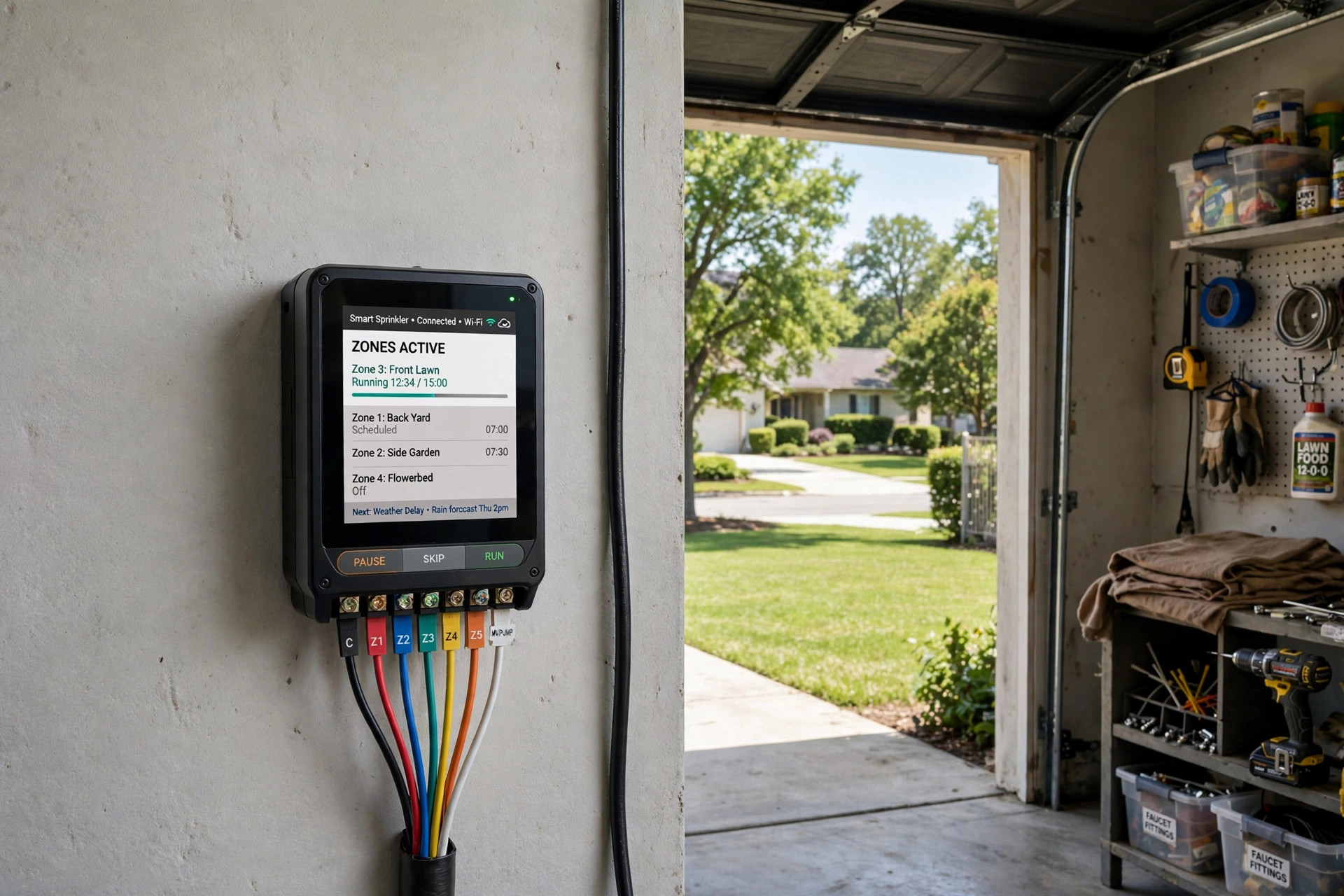

Water is one of the largest costs in lawn care. Many homes in the United States use old sprinkler timers that run on a fixed schedule. They water the lawn at the same time each day. They run when it rains. They run when it is cold. They waste water and money. A smart sprinkler controller for usa homes solves this problem. It connects to the internet. It reads local weather data. It changes the watering plan on its own. The grass stays green while the water bill goes down.
This guide explains how these devices work. It covers the main types. It lists the features that matter. It gives price ranges and upkeep advice. It answers common questions. If you want a greener lawn with less waste, this guide will help you choose well.
Why a Smart Sprinkler Controller Matters
American homes use a large share of household water outdoors. In many towns, lawn watering makes up half or more of summer water use. Much of that water never reaches the roots. It falls on driveways. It runs into the street. It soaks soil that is already wet. Old timers cause most of this waste. They cannot see the sky. They cannot feel the soil. They only follow the clock.
A smart sprinkler controller for usa homes works in a different way. It checks the forecast for your street. If rain is on the way, it skips a watering day. If a heat wave is coming, it adds water. Some models work with soil moisture sensors. These small probes sit in the ground. They tell the controller when the soil is dry. The result is a lawn that gets water only when it needs it.
There is also a money side. Many water companies in the United States give rebates for smart sprinkler timers. Some cities will pay part of the cost. A few states give tax credits for water saving devices. Check with your local water provider before you buy. The rebate may cut the price in half.
Homeowners who plan new lawn systems should read about the affordable lawn sprinkler installation cost estimate first. A controller is one part of a full system. The pipes and heads matter too. If you are building your own system, guides on how to install pop up sprinklers yourself can help you plan the layout before you add smart control.
What to Look For When You Choose: Smart Sprinkler Controller for Usa Homes
Shopping for a smart sprinkler controller can feel hard. The boxes use many terms. The apps look alike. Focus on the points below. They cover what truly matters for homes in the United States.
Number of Zones
A zone is one area of your yard that waters at one time. The front lawn may be one zone. The back garden may be another. Count your zones before you shop. Most homes have four to twelve zones. Small controllers handle eight zones. Larger models handle sixteen. Some can grow with add-on modules. Buy a model that covers your zone count plus one or two extra. Extra zones leave room for a future garden bed or side strip.
Weather-Based Scheduling
This is the heart of smart control. Good controllers pull weather data from the web. They use temperature, humidity, rain, and wind. The best ones also use plant type and soil type. You tell the app that you have tall fescue in clay soil. The controller builds a plan from that. Cheaper models may only skip watering when rain is forecast. That helps, but full weather-based plans save more. Look for terms like weather intelligence or smart watering in the product notes.
App and Voice Control
You will run the controller from your phone. Open the app before you buy. Look at the store reviews. A good app is simple. It shows each zone. It shows the next watering time. It lets you run a zone by hand with one tap. Many models also work with voice helpers. You can say a short command to water the lawn. This is nice when you spot a dry patch from the kitchen window.
Local Rules and Restrictions
Many towns in the United States limit lawn watering. Some allow watering only on certain days. Some ban midday watering. A few set monthly water budgets. Good controllers let you enter these rules. The app will keep the plan inside the rules. This is vital in dry states such as California, Texas, and Arizona. Check your city code before you set up the device.
Power and Wiring
Most controllers replace an old timer box. They use the same low-voltage wires. They mount on a wall in the garage or a utility room. Check that your home has a standard outlet near the mount point. If your old timer is outdoors, look for a controller with a weatherproof case. Some models need a strong Wi-Fi signal. The box should sit within range of your router. A weak signal can break the schedule updates.
Types and Options
Smart sprinkler controllers fall into three broad types. Each suits a different home.
Basic Wi-Fi controllers. These are the most common. They replace your old timer. They connect to home Wi-Fi. They use weather data from the web. Prices are low. Setup takes under an hour. They suit most single-family homes. Brands such as Toro and Greenworks make models in this class.
Sensor-based controllers. These add soil moisture probes in the ground. The probes read real soil water. The controller waters only when the soil is dry. This is the most exact method. It works well for large lawns and mixed gardens. The probes add cost. You must place them in the right spots. Lawn care guides from Scotts and Pennington explain how soil type changes watering needs.
Flow-meter systems. These watch water flow in the pipe. They can spot a broken head or a leak. They shut off the zone when flow looks wrong. This protects against big water loss from a cracked pipe. Flow meters suit homes with high water bills. They also suit homes with old pipe runs. Some models pair with John Deere commercial-grade valves for large yards.
There are also full smart yard systems. These join the controller with smart valves, rain sensors, and soil probes in one brand family. They cost more. They give the most control. Most homes do not need this level. A basic Wi-Fi model with weather data is enough for typical suburban lawns.
When you read product reviews, use care. Review sites such as Consumer Reports test controllers in real yards. DIY sources such as The Spruce give plain setup advice. Retail sites such as The Home Depot show owner ratings from many homes. Read a mix of sources before you decide.
Cost and Price
A smart sprinkler controller for usa homes costs between $80 and $350 in most stores. The price depends on zones and features. Here is a rough guide.
– Eight-zone Wi-Fi models: $80 to $150. – Sixteen-zone Wi-Fi models: $150 to $250. – Sensor-based kits with probes: $200 to $350. – Add-on flow meters: $100 to $200 extra.
Installation is simple for most homes. You can do it yourself in about an hour. You only need a screwdriver and your phone. If you hire a pro, expect $100 to $200 for labor. Some lawn services such as LawnStarter offer setup help in many cities.
The savings pay back the cost over time. A typical home may cut outdoor water use by 15 to 50 percent. In a dry state, that can mean $200 or more saved each year. Add a local rebate, and the payback time can drop under one year. Keep your water bills from before and after the change. They show the real saving in black and white.
Installation Basics
Most homeowners can install a smart controller without a plumber. The steps are the same across brands.
First, turn off power to the old timer. Take a photo of the old wires. Label each wire with its zone number. Loosen the screws and pull the wires free. Remove the old box from the wall.
Second, mount the new controller. Use the same wall spot if you can. Keep it near an outlet. If the spot is outdoors, use a weatherproof model or add a cover.
Third, connect the wires. Match each zone wire to the same number on the new box. Connect the common wire. Connect the power. The photo you took will guide you.
Fourth, plug in the power and open the app. The app will walk you through setup. You will enter your address. You will enter the number of zones. You will name each zone. You will set plant type, soil type, sun level, and slope for each zone. Take time on this step. Good data makes a good watering plan.
Fifth, test each zone. Run each one by hand from the app. Walk the yard. Watch every head. Look for weak spray, stuck heads, and leaks. Fix problems now, before the auto schedule starts.
Sixth, set your watering rules. Enter your city watering days if you have them. Turn on rain skip. Turn on freeze skip if your state gets cold snaps. Then let the controller run. Check the app after one week. Look at the water log. Make small tweaks to run times if one zone looks dry or soggy.
Care and Upkeep
A smart sprinkler controller needs little care. A few small tasks each year keep it working well.
In spring, walk the zones. Look for heads that broke over winter. Clean dirt from nozzles. Check that each head sprays the grass and not the fence. Update the app if the maker sent a new version. Check the Wi-Fi link. A router move can weaken the signal.
In summer, watch the water log in the app. Look for zones that run long. Look for days when watering was skipped for rain. If the lawn looks stressed, check the soil first. A probe or a simple screwdriver test tells you if the soil is dry. Do not just add water. Find the cause. A clogged head is a common cause.
In fall, cut back run times as nights cool. Grass needs less water in fall. If your state freezes, winterize the system. Blow out the lines with air or have a pro do it. Unplug the controller or set it to standby. A frozen pipe can crack a valve and waste water all spring.
In winter, leave the controller powered if the app needs it for updates. Some models need power to keep the clock and settings. Check the maker guide. Keep the box dry and clean.
Replace the backup battery if the model has one. Most use a small coin cell. Change it every year or two. A dead battery can lose settings in a power cut.
Safety
Smart sprinkler controllers use low voltage. The risk is low. Still, take care with a few points.
Turn off power at the breaker before you touch wires. The wires are low voltage, but the outlet is not. Keep the box away from water spray. Do not mount it where a sprinkler head hits it. Use outdoor-rated cases for outdoor mounts.
Keep the app account safe. Use a strong password. Turn on two-step sign-in if the app offers it. A stranger with app access could run your water all night.
If you add a flow meter or a new valve, you may work near the main water line. Know where your home shutoff valve is. Turn off the main water before you open a pipe. Keep a bucket and towels near when you test.
Watch for wet ground near the controller. A leak in the wall box can mean a valve problem. Fix leaks fast. Standing water near wires is never good.
Frequently Asked Questions
Do I need Wi-Fi for a smart sprinkler controller to work? Yes, for full smart features. The controller needs the internet to get weather data. Most models keep a basic schedule if the Wi-Fi drops. The smart changes pause until the link returns. Place the box near your router for a steady link.
Will it work with my old sprinkler heads and valves? In most cases, yes. The controller sends the same low-voltage signal as an old timer. Your heads, pipes, and valves stay the same. Only the brain changes. Check that your valves are standard 24-volt models. Almost all home valves are.
How much water can it really save? Results vary by yard and climate. Studies and owner reports often show 15 to 50 percent less outdoor water. Homes with old fixed timers save the most. Homes that already water by hand may save less. Your water bills will tell the true story after two or three months.
Can it handle watering rules in my city? Most good apps let you set allowed watering days and times. The schedule then stays inside those rules. This helps in cities with strict limits. Check your city code for the exact rules. Enter them during setup.
What happens in a power outage? The controller stops, as any timer would. When power returns, most models restart on their own. They pull the schedule from the cloud. Settings stay saved. A small backup battery keeps the clock true during short cuts.
Is a soil sensor worth the extra cost? For most lawns, weather data alone works well. A soil sensor helps in tricky yards. Use one if you have mixed sun and shade. Use one if you have sandy soil that dries fast. Use one if your water bill is very high. Start with the controller alone. Add a sensor later if you want finer control.
A Final Word
A smart sprinkler controller for usa homes is one of the simplest upgrades a homeowner can make. It costs less than a new mower. It installs in an afternoon. It cuts waste from day one. It keeps the lawn green through heat and dry spells. It follows your city rules without you thinking about them.
Start with your zone count. Pick a model with weather-based scheduling. Use the app well during the first month. Watch the lawn, not just the app. Small tweaks in those early weeks build a plan that fits your yard. In a year, the water bill will show the proof. The grass will show it too.
References
Consumer Reports. (n.d.). Product reviews and ratings. https://www.consumerreports.org Greenworks. (n.d.). Outdoor power equipment. https://www.greenworkstools.com John Deere. (n.d.). Turf and grounds care equipment. https://www.deere.com LawnStarter. (n.d.). Lawn care services and guides. https://www.lawnstarter.com Pennington. (n.d.). Grass seed and lawn products. https://www.pennington.com Scotts. (n.d.). Lawn care products. https://www.scotts.com The Home Depot. (n.d.). Home improvement retail. https://www.homedepot.com The Spruce. (n.d.). Home and garden guides. https://www.thespruce.com Toro. (n.d.). Yard care equipment and irrigation. https://www.toro.com
Was this guide helpful?

About Michael Thompson
The My Garden US editorial team writes practical, in-depth home and garden guides for American homeowners — tested advice, no fluff.
You May Also Like
Cordless Chainsaw for Tree Limbs Reviews: How to Pick a Good Saw
March 7, 2026 0 views
Tall Fescue Seed for Shade Reviews: What Grows Well Under Trees
September 20, 2026 0 views
Best Battery Leaf Blower for Patios: A Complete Buying Guide
June 11, 2026 0 views