
Introduction
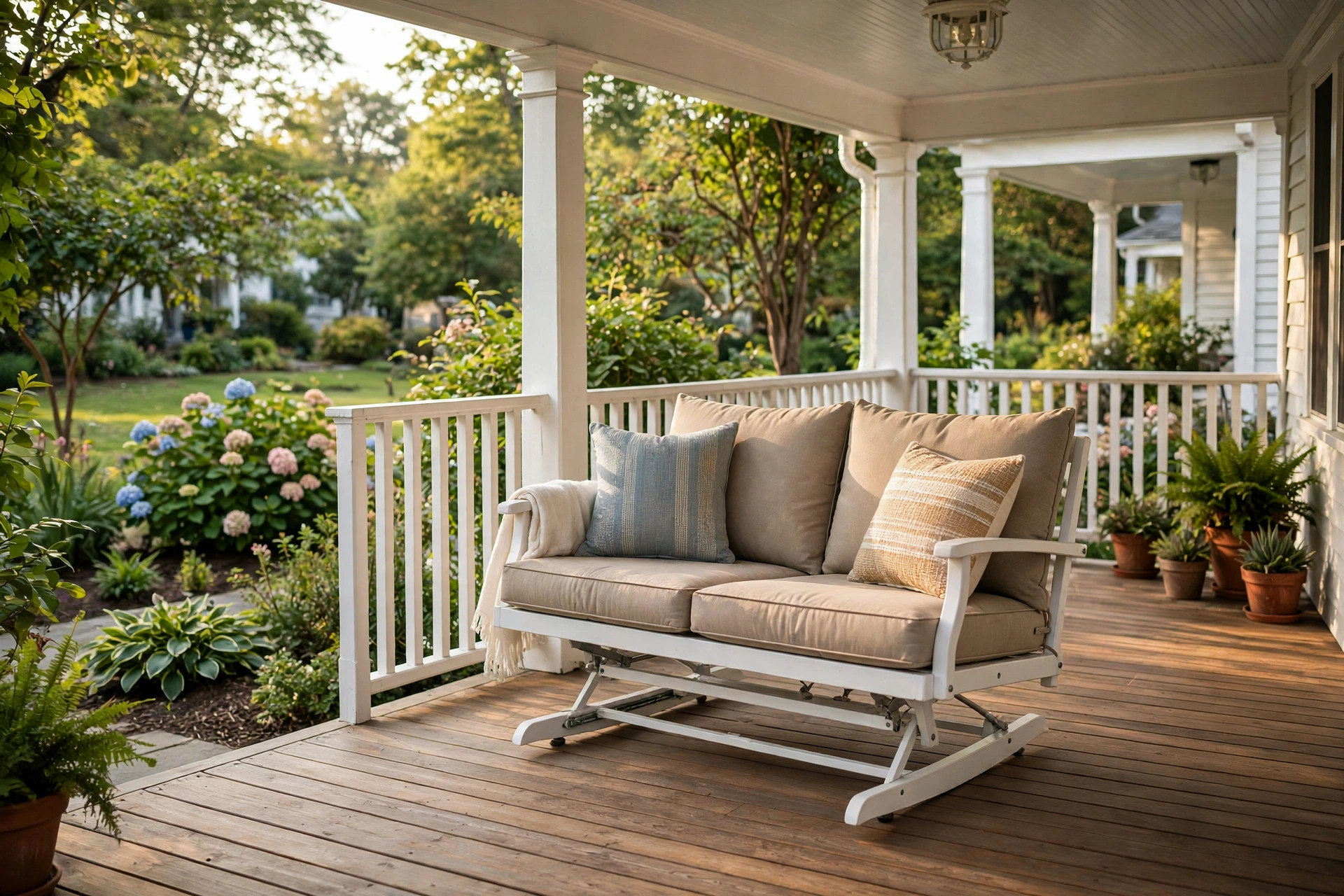
Outdoor loveseat glider for porch reviews can save you time and money. A glider is a two-seat chair that moves back and forth on a track or arms. It sits on a porch or patio. It gives you the gentle motion of a swing with the firm base of a loveseat. Before you buy one, it helps to know what to look for. This guide explains frames, cushions, glide hardware, prices, and care. It draws on the points that owners raise most often in reviews.
A porch glider is a classic piece of American outdoor furniture. It invites slow mornings and quiet evenings. Two people can sit side by side. The seat glides on ball bearings or rollers. Unlike a hanging swing, it needs no chains and no ceiling beams. That makes it easy to place almost anywhere on a porch. But not every glider is built well. Some squeak. Some rust. Some wobble after one season. That is why outdoor loveseat glider for porch reviews matter. They show how a model holds up after real use in sun, rain, and wind.
Why a Porch Glider Matters: Outdoor Loveseat Glider for Porch Reviews
A porch is a place to rest. A glider makes that rest better. The smooth back-and-forth motion is calm. It suits a cup of coffee in the morning and a glass of iced tea at night. Many people find the motion helps them unwind after a long day. It is also kind to the back. The seat supports two adults at once. You can talk, read, or simply watch the street.
Gliders also add value to a porch. A bare porch feels unfinished. One good piece of seating changes the space. It becomes a room of its own. Guests like a porch glider. They sit down without being asked. Children like the motion. Older adults like the steady armrests. A glider is easier to use than a hanging swing for people with stiff joints. You sit on a firm seat. You push with your feet. The motion starts on its own.
Reviews often note one more point. A glider feels sturdy. A hanging swing can sway side to side in the wind. A glider stays put. Its frame sits flat on the floor. The seat moves. The frame does not. That gives a sense of safety that many buyers want.
How to Read Outdoor Loveseat Glider for Porch Reviews
Outdoor loveseat glider for porch reviews are easy to find online. Retailers, magazines, and home blogs all publish them. The best reviews come from owners who have used the glider for a full year or more. A review written the day after delivery tells you about packing and shipping. It tells you little about weather resistance.
When you read reviews, look for patterns. One complaint about a squeak may be a fluke. Twenty complaints about a squeak point to a weak design. Look for comments about the glide motion. Owners describe it as smooth, stiff, or jerky. Smooth glides come from sealed ball bearings. Stiff glides often come from cheap rollers or from bolts that were tightened too much.
Check what reviewers say about assembly. Many gliders need one to two hours to put together. Reviewers will tell you if the holes line up and if the instructions are clear. Also check comments about cushions. Some cushions fade fast in the sun. Others hold their color. Reviews written after a summer of use are the most honest on this point.
Pay attention to who wrote the review. A person with a covered porch has different needs than a person with an open deck. Rain and direct sun wear a glider much faster. Match the reviewer’s setting to your own. If your porch has no roof, give extra weight to reviews that mention rain and fading. Independent product testing, such as the work done at Consumer Reports, can also help you compare build quality across brands.
What to Look For When You Shop
Frame and Glide Hardware
The frame is the heart of a glider. Look for steel, aluminum, or hardwood. Steel is strong but can rust if the coating fails. Powder-coated steel resists rust well. Aluminum does not rust at all. It is lighter than steel, which helps when you move the glider. Hardwood frames look warm and classic. Teak is the best outdoor wood. It resists rot. Pine and acacia are cheaper but need more care.
Check the glide hardware. Good gliders use sealed ball bearings. They move quietly and last for years. Cheaper models use simple bushings or rollers. These can wear and squeak. Ask how much weight the glider holds. Most two-seat gliders hold 400 to 600 pounds. A higher rating usually means a stronger frame.
Test the motion if you can. Sit on the glider in the store. Push back gently. The seat should glide in a straight line. It should not twist or bump. There should be no grinding sound. A small side-to-side wobble is normal on some designs. A large wobble is a warning sign.
Cushions and Fabric
Cushions make the glider comfortable. Look for thick foam, at least three inches deep. Foam wrapped in polyester batting feels softer. The cover fabric should be rated for outdoor use. Solution-dyed acrylic is the best choice. The color goes through the fiber. It will not fade fast in the sun. Polyester covers are cheaper. They fade sooner.
Check the zippers and ties. Cushions should fasten to the frame. Ties keep them from blowing away in the wind. Zippers let you remove the covers for washing. Some gliders come with pillows as well. Throw pillows add comfort and style. For tips on keeping outdoor cushions clean, see our guide on how to clean outdoor furniture cushions.
Dark colors hide dirt. Light colors show it. White and cream look crisp on a porch but need more washing. Many owners buy a second set of covers. That way one set can dry while the other is in use.
Common Types and Options
Outdoor loveseat gliders come in several styles. The classic metal glider has a steel frame and a simple design. It often looks like the gliders sold in the 1950s. These models are simple and strong. They suit farmhouse and cottage porches.
Wicker gliders have a softer look. They use resin wicker over an aluminum or steel frame. Resin wicker resists sun and rain far better than natural wicker. If you like the woven look for a screened porch, read our guide on the best wicker loveseat for screened porch to compare options.
Wood gliders give a warm, natural feel. Teak gliders are the top tier. They can last for decades with little care. Eucalyptus and acacia gliders cost less. They need oil or sealant each year to stay in good shape.
Some gliders convert. A few models fold flat for storage. Others include a small table between the seats. There are also gliders with a canopy for shade. A canopy is useful on a porch with no roof. But canopies wear out faster than the frame. Check if the canopy fabric is replaceable.
If you want motion but prefer a hanging seat, you may also like the best porch swing for two people. A swing hangs from chains. A glider sits on the floor. Both give a gentle ride. The choice comes down to your porch structure and taste.
Cost and Price
Prices for outdoor loveseat gliders vary widely. Simple steel models start near one hundred dollars. These are fine for light use. They may need replacement parts after a few years. Mid-range gliders cost between two hundred and five hundred dollars. This is the sweet spot for most buyers. You get powder-coated frames, decent cushions, and smooth bearings.
High-end gliders cost five hundred to over one thousand dollars. These often use teak or premium aluminum. The cushions use top-grade outdoor fabric. The glide hardware is silent and smooth. They can last ten years or more with basic care.
Watch for hidden costs. Some gliders ship with no cushions. The price looks low. Then you pay extra for the seat pads. Check the listing before you order. Also check shipping costs. A glider is heavy. Freight shipping can add fifty dollars or more. Retailers such as Wayfair and IKEA often show full delivery costs at checkout, which makes price comparison easier.
Sales follow the seasons. The best deals come in late summer and early fall. Stores clear out patio stock. Prices drop by twenty to forty percent. Spring brings new models at full price. If you can wait until August, you will likely save money.
Care and Upkeep
A glider needs little care, but not none. Wipe the frame with a damp cloth each month. This removes dust and pollen. Check the glide hardware twice a year. Tighten any loose bolts. A drop of silicone spray on the bearings keeps the motion smooth. Do not use oil-based sprays. They attract dirt.
Wash the cushions as needed. Most covers can go in the washing machine on a gentle cycle. Air dry them in the shade. Do not use bleach. Bleach weakens outdoor fabric. Store cushions indoors during long rain or in winter. This adds years to their life.
Cover the glider when you are not using it for a while. A fitted cover keeps off rain and sun. Covers are cheap and pay for themselves. If you live where winters are harsh, move the glider under a roof or into a shed. Freezing rain can crack cheap frames. For more winter storage ideas, see our article on patio furniture storage ideas for winter.
Inspect the glider each spring. Look for rust spots, loose bolts, and worn cushions. Touch up paint chips with outdoor spray paint. A small repair in spring prevents a big repair later.
Safety
Safety matters with any moving seat. Always sit, never stand, on a glider. Standing on the seat can tip it. Keep fingers and toes away from the moving parts. Children should not play under the seat while it glides.
Place the glider on a flat, level floor. A glider on a slope can drift. Leave at least two feet of clear space behind it. The seat moves back and forth. It should not hit a wall or railing. If you have small children, teach them to sit still and hold the armrests. Never leave a toddler alone on a glider.
Check the weight limit and follow it. Overloading strains the hardware. It can bend the frame or break a bearing. If the glider starts to squeak, groan, or tilt, stop using it. Inspect the hardware. Fix the problem before you sit again. A glider that moves in a smooth, straight line is a safe glider.
Frequently Asked Questions
What is the difference between a glider and a rocker?
A glider moves back and forth on a flat track or arms. The base stays still. A rocker moves on curved legs. The whole chair tips forward and back. Gliders move in a straight line and need less space behind them. Rockers need room to rock. For a small porch, a glider often fits better. If you like the classic rocking feel, compare our roundup of the best outdoor rocking chair for porch.
How long does an outdoor loveseat glider last?
A well-built glider lasts five to fifteen years. Steel frames last five to eight years. Aluminum and teak last ten to fifteen years or more. Cushions wear out first. Plan to replace cushions every three to five years. Covers, storage, and basic care extend the life of the whole piece.
Can I leave my glider outside in the rain?
Yes, if it is made for outdoor use. Powder-coated steel, aluminum, and teak all handle rain. But cushions should come inside during heavy rain. Standing water breeds mold. A cover helps too. In places with freezing winters, store the glider under a roof.
Why does my glider squeak?
Squeaks come from dry or worn glide hardware. Loose bolts can also cause noise. First, tighten all the bolts. Then apply a silicone spray to the bearings. If the squeak stays, the bearings may be worn. Many makers sell replacement bearing kits. Check the product manual or the maker’s site.
Is assembly difficult?
Most gliders take one to two hours to assemble. You need basic tools. A wrench and a screwdriver are usually enough. Some makers include the tools. Read the instructions before you start. Lay out all the parts. Do not fully tighten the bolts until the frame is together. This makes alignment easier.
What size porch do I need for a loveseat glider?
A two-seat glider is about four to five feet wide and two to three feet deep. Add two feet of clear space behind it for the glide motion. A porch that is six feet deep works well. Measure your space before you order. Check the product dimensions in the listing.
A Final Word
Outdoor loveseat glider for porch reviews point to one clear lesson. Buy the best frame you can afford. Cushions can be replaced. Fabric can be washed. But a weak frame ruins the whole piece. Look for smooth glide hardware, honest reviews from long-term owners, and a fair price. With a little care, a good glider will serve your porch for many years. It will be the seat everyone reaches for on a warm evening.
References
Consumer Reports. (n.d.). Product reviews and ratings. https://www.consumerreports.org IKEA. (n.d.). Outdoor furniture. https://www.ikea.com Wayfair. (n.d.). Outdoor furniture. https://www.wayfair.com
Was this guide helpful?

About Robert Taylor
The My Garden US editorial team writes practical, in-depth home and garden guides for American homeowners — tested advice, no fluff.
You May Also Like
Best Outdoor Sofa for Rainy Climate: How to Choose One That Lasts
June 1, 2026 0 views
Best Eucalyptus Outdoor Furniture Reviews: A Plain Guide for Buyers
May 27, 2026 0 views
Outdoor Patio Heater Cover Waterproof Reviews: A Plain Buying Guide
February 2, 2026 0 views