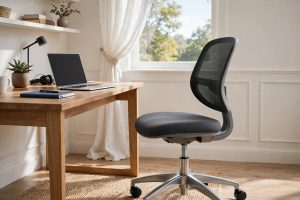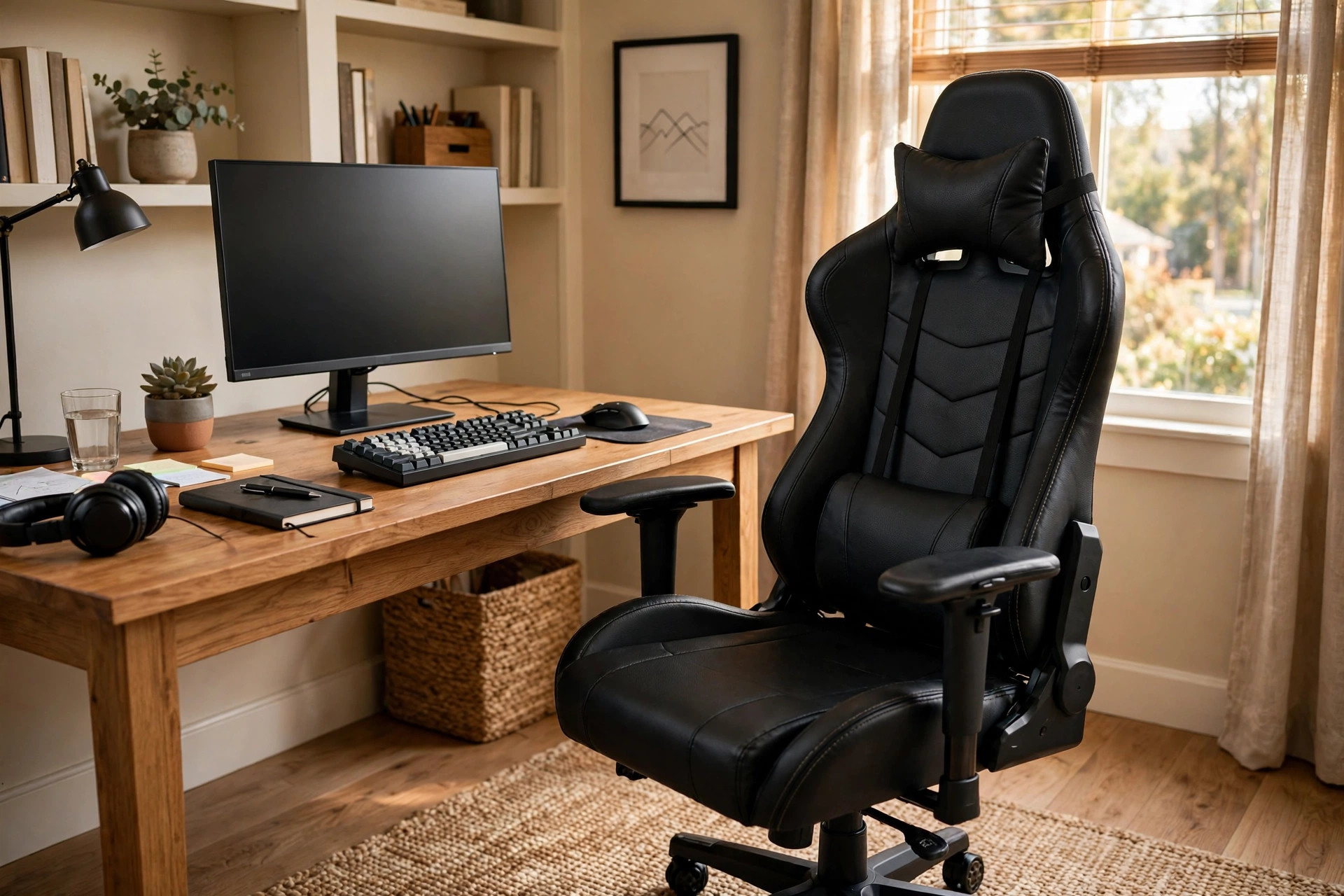

Many people now work from home all day. They sit at a desk for six, eight, or even ten hours. A plain chair can cause back pain and stiff shoulders. An ergonomic gaming chair for home office work is one answer. It was made for long sitting sessions. It gives support to the back, neck, and arms. This guide explains what these chairs are, why they matter, how to choose one, what they cost, and how to keep one in good shape.
Why an Ergonomic Gaming Chair for Home Office Work Matters
Sitting is hard on the body. When you sit for hours, your spine takes pressure. Your shoulders creep forward. Your neck bends down toward the screen. Over weeks and months, this can lead to pain in the lower back, the neck, and the wrists.
A gaming chair was first made for video game players. They sit for very long sessions. Makers of these chairs studied how the body rests. They added tall backrests, firm lumbar support, and headrests. They added armrests that move in several ways. Office workers soon saw that these features help at a desk too.
An ergonomic gaming chair for home office work is not just about comfort. Good posture helps you focus. When your back is held in a natural curve, you can work longer without breaks for pain. Blood flows better in your legs when the seat is the right height and depth. This means less swelling in the feet at the end of the day.
Many home offices are small corners of a room. A gaming chair often looks sharp and modern. It fits well in a spare room or a bedroom office. It tells the brain that this spot is for work. That small signal can help you stay in work mode.
There is also a cost angle. Doctor visits for back pain are not cheap. Time lost to a sore neck is time you cannot bill or use for rest. A good chair is a small price next to these costs. Many workers find that the chair pays for itself within the first year through fewer aches and better work days.
What to Look for When You Choose: Ergonomic Gaming Chair for Home Office Work
A chair with the word “gaming” on the box is not always ergonomic. Some are made for looks only. Use the points below to judge a real ergonomic gaming chair for home office work.
Lumbar Support
The lower back needs support. Look for a chair with a lumbar cushion or a built-in lumbar system. The best chairs let you move the support up and down. This lets it hit the curve of your own spine. Some chairs have adjustable lumbar depth. This pushes the support in or out. This matters for people of different sizes.
Headrest
The headrest should reach your head. It should hold the neck so it does not bend forward. Some headrests move up and down. A few tilt as well. Memory foam headrests feel soft and hold their shape. Check reviews on sites such as Wirecutter to compare headrest designs.
Armrests
The arms should rest at a right angle. This keeps the shoulders loose. Look for armrests that move up and down, forward and back, and side to side. Some also pivot. This is called four-dimensional adjustment. It lets the arms line up with the desk no matter your height.
Seat Cushion
The seat should be wide enough for your hips. It should be deep enough that your knees do not hang over the edge. The front edge should slope down a little. This is called a waterfall edge. It takes pressure off the backs of the thighs. Dense foam lasts longer than soft cheap foam. It may feel firm at first. It will soften a little with use.
Tilt and Recline
A good chair lets you lean back. Look for a recline range of at least 120 degrees. Many gaming chairs tilt back to 150 or 180 degrees. This is nice for short rest breaks. More important is a tilt lock. It holds the chair at the angle you like. A tension knob lets you set how hard it is to lean back.
Base and Casters
The base should be metal, not plastic. Metal bases hold more weight and last longer. Casters are the wheels under the base. Smooth casters roll well on wood and carpet. Some chairs come with blade-style wheels. These are gentle on hard floors. You can read more about chair parts at The Spruce.
Materials
Most gaming chairs use synthetic leather or fabric. Synthetic leather looks clean and wipes down fast. Fabric breathes better in warm rooms. Mesh backs are common on office chairs and appear on some gaming models too. Each material has trade-offs. Leather-style covers can crack after years in hot sun. Fabric can stain. Pick the one that fits your room and your habits.
Types and Options
There are several types of ergonomic gaming chair for home office work. Each suits a different user.
Racing-style chairs. These look like car seats. They have high backs with side bolsters. They hold the body in place. They suit users who want a sporty look. They work well in small rooms.
Office-style ergonomic chairs. Some makers build gaming chairs that look like office chairs. They have the same support but a quiet design. They suit users who join video calls and want a plain background. You can see examples from workplace seating leaders such as Herman Miller and Steelcase.
Big and tall chairs. These have wider seats and stronger frames. They are made for users over six feet tall or over 250 pounds. They use thicker steel and denser foam. Always check the weight rating before you buy.
Fabric gaming chairs. These skip the leather look. They use woven cloth. They stay cooler in summer. They suit warm climates and upper-floor rooms.
Chairs with footrests. Some models add a leg rest that pulls out. It lets you stretch your legs during breaks. This is a nice extra but not a must.
If you want a calmer look, a best office chair for long hours home office may suit you better. If money is tight, look at an ergonomic mesh office chair under 200 dollars. Pair any chair with a good desk, such as an ergonomic standing desk for small home office, for a full setup.
Cost and Price
Prices vary a lot. A budget gaming chair costs 120 to 200 dollars. It has basic support and thinner foam. It may last two to three years with daily use. A mid-range chair costs 200 to 400 dollars. It has better foam, stronger frames, and more adjustments. This is the sweet spot for most home office workers.
High-end chairs cost 400 to 700 dollars or more. They use top-grade materials and long warranties. Some brands offer five-year or ten-year warranties. A few even offer lifetime coverage on the frame.
Think of cost per year. A 350-dollar chair that lasts five years costs 70 dollars per year. A 150-dollar chair that lasts two years costs 75 dollars per year. The mid-range chair often wins on value. You can compare current prices at large stores such as IKEA, Wayfair, Amazon, and Office Depot.
Watch for sales. Prices drop around major holidays. Black Friday and back-to-school sales often cut 20 to 30 percent. Sign up for price alerts if you have time to wait.
Care and Upkeep
A chair lasts longer with small care steps. Follow these habits.
Dust the chair once a week. Use a soft cloth. For synthetic leather, wipe with a damp cloth and a mild soap. Do not use strong cleaners. They dry out the cover and cause cracks. For fabric chairs, vacuum with a brush head. Treat spills at once with a clean cloth. Blot, do not rub.
Check the bolts every few months. Chairs loosen with daily rocking and turning. Tighten any loose screws with the tools that came in the box. This keeps the chair safe and quiet.
Keep the chair out of direct sun. Sun fades colors and weakens synthetic leather. If the chair sits near a window, use a blind or curtain during the hot part of the day.
Oil the gas lift once a year. A small spray of silicone lubricant keeps the height adjustment smooth. Do not use heavy oil. It can attract dust.
Rotate the casters now and then. Hair and thread wrap around wheels. Pull it off so the wheels roll free. This protects your floors too.
Safety
A gaming chair is safe when you use it right. A few rules help.
Sit with your feet flat on the floor. Your knees should bend near 90 degrees. The seat height should let you reach the desk without lifting your shoulders.
Do not stand on the chair. Do not lean so far back that the base lifts. Even chairs that recline flat should sit on level ground.
Check the weight limit. Each chair lists a max load. Stay under it. Overloading can break the gas lift or the base.
Keep small children and pets clear of the recline path. The backrest moves fast on some models. Pinched fingers are a real risk.
Set the chair so the screen top sits at or just below eye level. You may need a monitor stand or a desk with adjustable height. A maker such as UPLIFT Desk sells desks that pair well with tall gaming chairs. Tech reviewers at PCMag also cover desk and chair pairings.
FAQ
Is a gaming chair good for office work, or only for games? It works well for office work. The features came from gaming, but the support helps anyone who sits long hours. Many remote workers use them all day.
How long should an ergonomic gaming chair for home office work last? A well-built chair lasts three to five years with daily use. High-end models can last longer. Cheap models may wear out in two years. Care and weight load affect the life span.
Are gaming chairs bad for posture? No, not if they fit you. A chair that is too big or too small can hurt posture. Pick a chair rated for your height and weight. Adjust the lumbar support, armrests, and seat height to your body.
Mesh or leather: which is better? Both work. Mesh breathes and stays cool. Leather-style covers wipe clean and look sharp. Mesh suits warm rooms. Leather-style suits shared spaces where spills happen.
Can a short person use a gaming chair? Yes, but check the size. Many gaming chairs run large. Short users should look for a lower seat height range and a headrest that moves down far enough. Some brands make compact models.
Do I need a footrest? No. A footrest is a nice extra for rest breaks. It does not replace good seat height and posture. If your feet do not reach the floor, a simple footrest under the desk helps more.
A Short Final Word
An ergonomic gaming chair for home office work is a tool. Like any tool, it works best when it fits the user and the job. Take time to check support, adjustments, and size. Set a fair budget. Keep the chair clean and tight. With the right pick, your workdays will feel easier on your back, your neck, and your focus.
References
Amazon. (n.d.). Online shopping. https://www.amazon.com Herman Miller. (n.d.). Office furniture and ergonomic seating. https://www.hermanmiller.com IKEA. (n.d.). Home furnishings. https://www.ikea.com Office Depot. (n.d.). Office supplies and furniture. https://www.officedepot.com PCMag. (n.d.). Technology product reviews. https://www.pcmag.com Steelcase. (n.d.). Office furniture and workplace research. https://www.steelcase.com The Spruce. (n.d.). Home and garden advice. https://www.thespruce.com UPLIFT Desk. (n.d.). Standing desks and ergonomic office furniture. https://www.uplift-desk.com Wayfair. (n.d.). Furniture and home goods. https://www.wayfair.com Wirecutter. (n.d.). Product reviews from The New York Times. https://www.nytimes.com/wirecutter
Was this guide helpful?

About Jennifer Lee
The My Garden US editorial team writes practical, in-depth home and garden guides for American homeowners — tested advice, no fluff.
You May Also Like

Home Office Partition Divider for Shared Room: A Plain Guide
June 15, 2026 0 views
A Quiet Mechanical Keyboard for Home Office Night Work
May 16, 2026 0 views
Home Office Monitor Riser with Drawer Storage: A Complete Buyer Guide
April 2, 2026 0 views