
An ergonomic mesh office chair under 200 dollars sounds like a tall order. Good support for the back, a seat that breathes, arms that adjust, and a price that stays below two hundred dollars. Yet this is one of the most common price bands in the office chair market, and many models in it do their job well. The trick is knowing which features matter and which ones are only decoration.
This guide walks through the whole subject in plain terms: why mesh works, what to look for when you shop, which types sit in this price range, what such a chair should cost, how to care for it, and how to use it safely.
Why a Mesh Chair Matters for Daily Desk Work
Most people now spend long hours at a desk. Six, eight, sometimes ten hours a day. A plain chair with a stiff back forces the spine into a slump. Over weeks and months, that slump turns into sore shoulders, a stiff neck, and pain in the lower back. An ergonomic mesh office chair under 200 dollars is built to fight that problem at a price most homes and small offices can afford.
Mesh is not just a fashion choice. A mesh back lets air move across your back and shoulders. On warm days, or in rooms without strong air conditioning, this matters more than it sounds. A solid back panel traps heat. Sweat builds up. The sitter shifts and fidgets. A mesh back stays cooler, so the sitter stays still and keeps better posture.
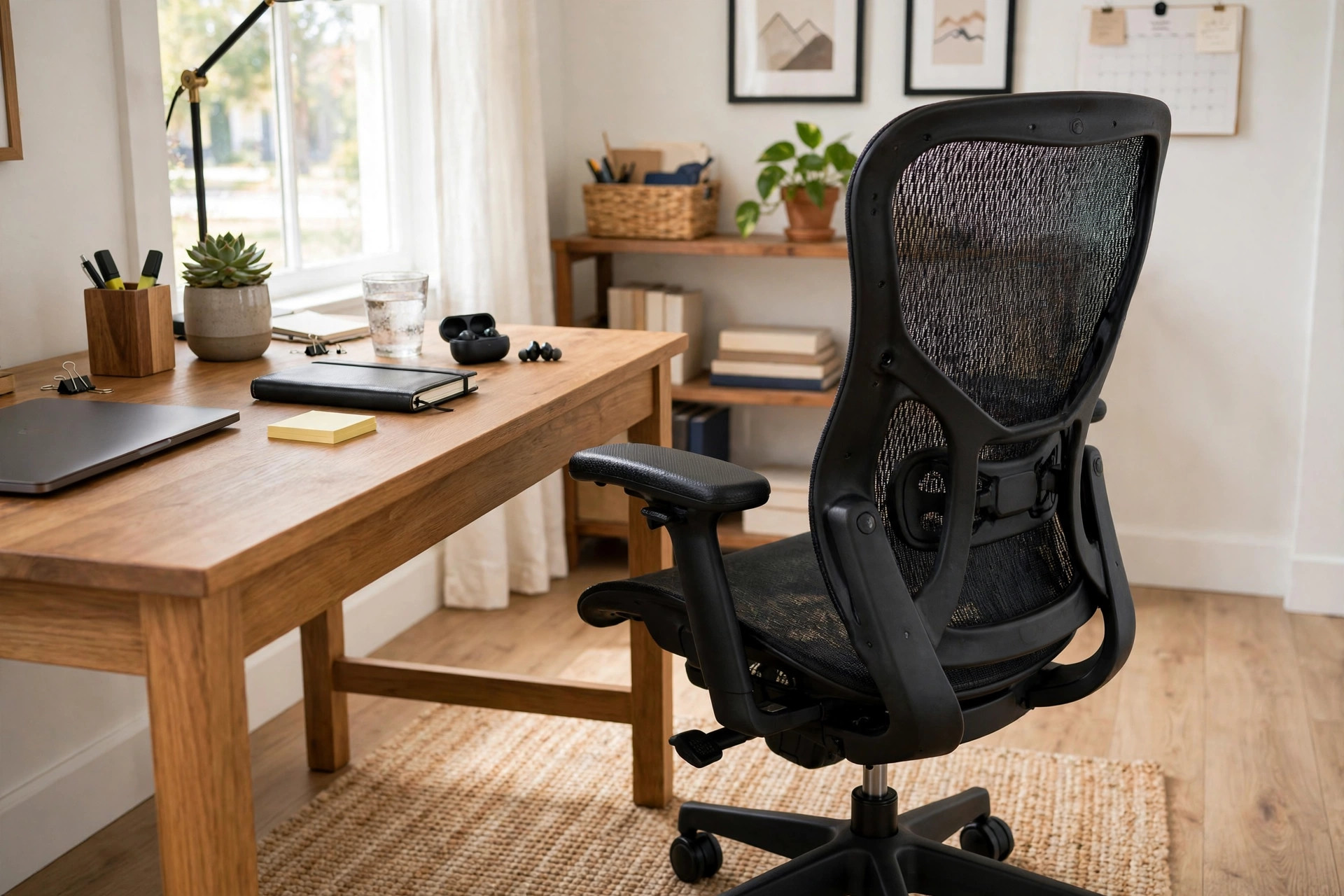
Mesh also flexes. When you lean back, the weave gives a little and then pushes back. This cradles the spine in a way that stiff plastic cannot. Good chairs add a lumbar zone, a firmer band across the lower back area, so the lower curve of the spine keeps its natural shape.
There is also the matter of weight and looks. Mesh chairs tend to be lighter than heavy padded executive chairs. They fit small rooms and home offices where space is tight. Many buyers who set up a home work area find that a mesh chair looks cleaner and takes up less visual room than a bulky leather seat.
The best home office setup for software developers often starts with the chair, because code, writing, and design all demand long still hours. A chair that supports the body is the base on which the desk, the screen height, and the lighting all rest.
How to Choose: What to Look for in the Chair: Ergonomic Mesh Office Chair under 200 Dollars
Shopping for an ergonomic mesh office chair under 200 dollars can feel confusing. The boxes all list the same words: ergonomic, lumbar, adjustable, breathable. Here is what those words should mean in practice, and how to test each claim.
Lumbar Support
Lumbar support is the single most important feature. The lumbar region is the lower part of the back, just above the belt line. When you sit, this area wants to round forward. A good chair pushes gently against it.
Look for a chair where the lumbar area is firmer than the rest of the back, or where a separate lumbar pad can be moved up and down. If you already deal with tailbone pain, you may also want to read about an ergonomic chair cushion for tailbone pain relief as an add-on.
Adjustable Armrests
Fixed arms force your shoulders up or push your elbows out. Adjustable arms let you set the height so your shoulders hang relaxed. In this price band, look for arms that move up and down at minimum.
Seat Depth and Height
Seat depth means how far the front edge of the seat is from the backrest. Too deep, and the edge presses into the back of your knees. Too shallow, and your thighs get no support. Many chairs in this range offer a seat slider that moves the seat forward and back. If you are tall or short, this one feature can make or break the fit.
Seat height adjustment is standard now, even on cheap chairs. Sit so your feet rest flat on the floor and your knees bend at roughly a right angle. If your feet dangle, the chair is too high for you, or you need a footrest.
Tilt and Recline
A chair that locks upright only will tire you out. Look for a tilt function with a lock, so you can lean back a little and hold that position. A tilt tension knob, usually under the seat, lets you set how hard it is to lean back.
Mesh Quality
Not all mesh is equal. Cheap mesh stretches out in a year and sags like a hammock. Better mesh has a tight, even weave and springs back when you press it. In a store, press the backrest firmly with your hand and watch it recover. Online, read reviews that mention sagging after six months or a year.
Base and Casters
A five-star base, usually nylon or aluminum, gives stable support. Aluminum costs more and lasts longer. Casters should roll smoothly on your floor type. Hard plastic casters suit carpet. Soft polyurethane wheels suit hard floors like wood or tile and will not scratch them.
Weight Capacity
Check the listed weight limit and take it seriously. Many chairs in this price range rate for 250 to 275 pounds. Some go to 300. Picking a chair rated well above your weight gives the frame and the gas lift an easier life, which means a longer life for the chair.
Buying guides from sources like Wirecutter and PCMag often test chairs side by side and report which adjustments actually work. Their long-term notes on sagging mesh and wobbly arms are worth reading before you spend.
Types and Options in This Price Range
An ergonomic mesh office chair under 200 dollars is not one product. Several styles sit in this band, and each suits a different user.
The standard task chair. This is the most common type. Mesh back, padded or mesh seat, adjustable arms, tilt lock. It suits general desk work and is the safest pick for most buyers.
The high-back mesh chair. Taller backrest, sometimes with a headrest. Good for people who like to lean back during calls or reading. The headrest helps the neck on long days, though cheap headrests can feel flimsy.
The mesh seat chair. Both back and seat are mesh. Maximum airflow, and people in warm climates often prefer this type.
The drafting or tall chair. Built for sit-stand desks or high counters, with a foot ring.
Big office furniture makers like Herman Miller and Steelcase set the standard for ergonomics, and their design ideas filter down into budget chairs. You will not get their build quality at this price, but you can get the same basic shape: a back that follows the spine, a seat that fits, and arms that adjust.
Retailers such as IKEA and Wayfair carry wide selections in this price band, which makes it easy to compare models side by side.
Cost and Price: What 200 Dollars Buys
Two hundred dollars is a real line in the chair market. Below about 120 dollars, chairs are mostly basic: fixed arms, thin mesh, short warranties. Between 120 and 200 dollars, the serious features appear: adjustable lumbar, better armrests, seat sliders, and sturdier bases.
Here is a rough map of the band:
– Under 120 dollars: Basic mesh task chairs. Fine for light use, a few hours a day. Expect a one-year warranty. – 120 to 160 dollars: The sweet spot for value. Adjustable arms and lumbar support appear. Many well-reviewed models live here. – 160 to 200 dollars: Near-premium features at a budget price. Seat sliders, headrests, and two- or three-year warranties.
Watch for hidden costs. Some sellers charge extra for shipping on a heavy box. Assembly is almost always do-it-yourself; most chairs take 20 to 40 minutes with the included tools. A few retailers, including Office Depot and Amazon, run frequent sales that can drop a 180-dollar chair into the 140s.
Think about cost per year. A 160-dollar chair that lasts five years costs 32 dollars a year. A 90-dollar chair that sags in eighteen months costs 60 dollars a year and gives you a sore back in the bargain. Spending closer to the top of the band often pays for itself.
Care and Upkeep: Making the Chair Last
A mesh chair asks for little care, but a little care goes a long way. Dust is the main enemy. It settles into the weave and dulls the look. Vacuum the mesh every month or two with an upholstery brush attachment. For spots, dab with a cloth dampened in mild soapy water, then let it air dry. Never soak the mesh and never use harsh cleaners or bleach, which can weaken the fibers.
Check the bolts twice a year. Chairs loosen with daily use, especially the armrests and the backrest joint. A quick tighten with the included Allen key takes five minutes and stops wobbles before they start.
The gas lift cylinder, the post that raises and lowers the seat, lasts longer if you do not slam down into the chair. Sit down with normal weight, not a drop. If the chair slowly sinks during the day, the cylinder is worn. Replacement cylinders are cheap and easy to swap, and guides from The Spruce walk through basic chair maintenance step by step.
Casters pick up hair and thread. Flip the chair over now and then and pull the tangles out of the wheels. On hard floors, consider a chair mat to protect the floor and make rolling easier.
A tidy desk helps too. A home office desk organizer for mail and bills keeps paper off the chair and the floor.
Safety: Using the Chair Without Harm
An ergonomic chair is safe when it is used as designed and kept in good repair. A few rules matter.
First, assemble it exactly as the manual shows. Every bolt has a place. Skipping bolts or mixing them up weakens the chair. If a part looks wrong or the holes do not line up, stop and call the seller rather than forcing it.
Second, respect the weight limit printed in the manual. Overloading strains the gas cylinder and the base. A cracked base can fail suddenly, so take the rating as a hard line, not a suggestion.
Third, keep the chair stable. Do not stand on the seat to reach high shelves. Do not lean far over one armrest to pick things up. The five-star base is stable on flat floors, but tipping is still possible with rough use.
Fourth, watch the recline lock. When you stand up, make sure the backrest is locked or in a stable position so it does not snap forward into your legs. Teach children not to spin wildly or tip the chair back; the tilt mechanism is made for leaning, not for play.
Fifth, check for wear. Frayed mesh, a cracked armrest, or a base with a hairline crack means the chair needs repair or replacement. A chair that creaks loudly under normal weight is telling you something is loose or stressed. Tighten it or retire it.
Frequently Asked Questions
Is a mesh chair better than a padded chair?
For most desk workers, yes, if the mesh is good quality. Mesh breathes, so you stay cooler, and it flexes with your back. A padded chair can feel softer at first, but foam flattens over time and traps heat. That said, some people simply like the feel of a cushioned seat. In that case, look for a mesh-back chair with a padded seat, which gives you both.
Can I really get good ergonomics under 200 dollars?
Yes. The core features that matter, adjustable lumbar support, height-adjustable arms, seat height and tilt lock, all appear in chairs between 120 and 200 dollars. What you give up versus a 600-dollar chair is finer adjustment, denser materials, and longer warranties. For a home office, the budget band is enough for most bodies.
How long should an ergonomic mesh office chair under 200 dollars last?
With daily use and basic care, three to five years is a fair expectation. The mesh may stretch a little in the first year; good mesh then holds its shape. The gas cylinder and armrests are usually the first parts to wear. Chairs with longer warranties, two or three years, tend to be built to last at least that long.
Do I need a headrest?
Not everyone does. A headrest helps if you lean back often, take calls in the chair, or have neck tension. If you sit upright and forward most of the day, a headrest adds little and can even push your head forward if it is badly shaped. Try before you buy if you can, or pick a model where the headrest adjusts up, down, and in angle.
What should I do if the chair hurts my back after a week?
First, adjust it. Raise or lower the lumbar support, change the seat depth, and set the arm height so your shoulders relax. Give your body a week or two to adapt, since a chair that holds you upright uses muscles a slouchy chair let rest. If pain stays sharp or gets worse, see a doctor or a physical therapist. A chair supports posture; it does not treat injury.
A Final Word
An ergonomic mesh office chair under 200 dollars is one of the best value buys in home office gear. The price band is crowded, which works in your favor: makers compete hard on features, and honest reviews are easy to find. Focus on lumbar support, adjustable arms, seat fit, and mesh quality. Buy from a seller with a fair return policy so you can sit in the chair for a week before you commit. Take care of it with simple cleaning and a twice-yearly bolt check, and it will pay you back with cooler, straighter, more comfortable workdays for years.
References
Amazon. (n.d.). Online shopping. https://www.amazon.com Herman Miller. (n.d.). Office furniture and ergonomic seating. https://www.hermanmiller.com IKEA. (n.d.). Home furnishings. https://www.ikea.com Office Depot. (n.d.). Office supplies and furniture. https://www.officedepot.com PCMag. (n.d.). Technology product reviews. https://www.pcmag.com Steelcase. (n.d.). Office furniture and workplace research. https://www.steelcase.com The Spruce. (n.d.). Home and garden advice. https://www.thespruce.com Wayfair. (n.d.). Furniture and home goods. https://www.wayfair.com Wirecutter. (n.d.). Product reviews from The New York Times. https://www.nytimes.com/wirecutter
Was this guide helpful?

About Michael Thompson
The My Garden US editorial team writes practical, in-depth home and garden guides for American homeowners — tested advice, no fluff.
You May Also Like

An Ergonomic Lumbar Support Pillow for Office Chair Comfort That Lasts All Day
May 25, 2026 0 views
The Best Desk Organizer Set for a Small Office Desk: A Practical Guide
September 28, 2026 0 views
The Best Daylight Lamp for Home Office Winter Blues
May 7, 2026 0 views