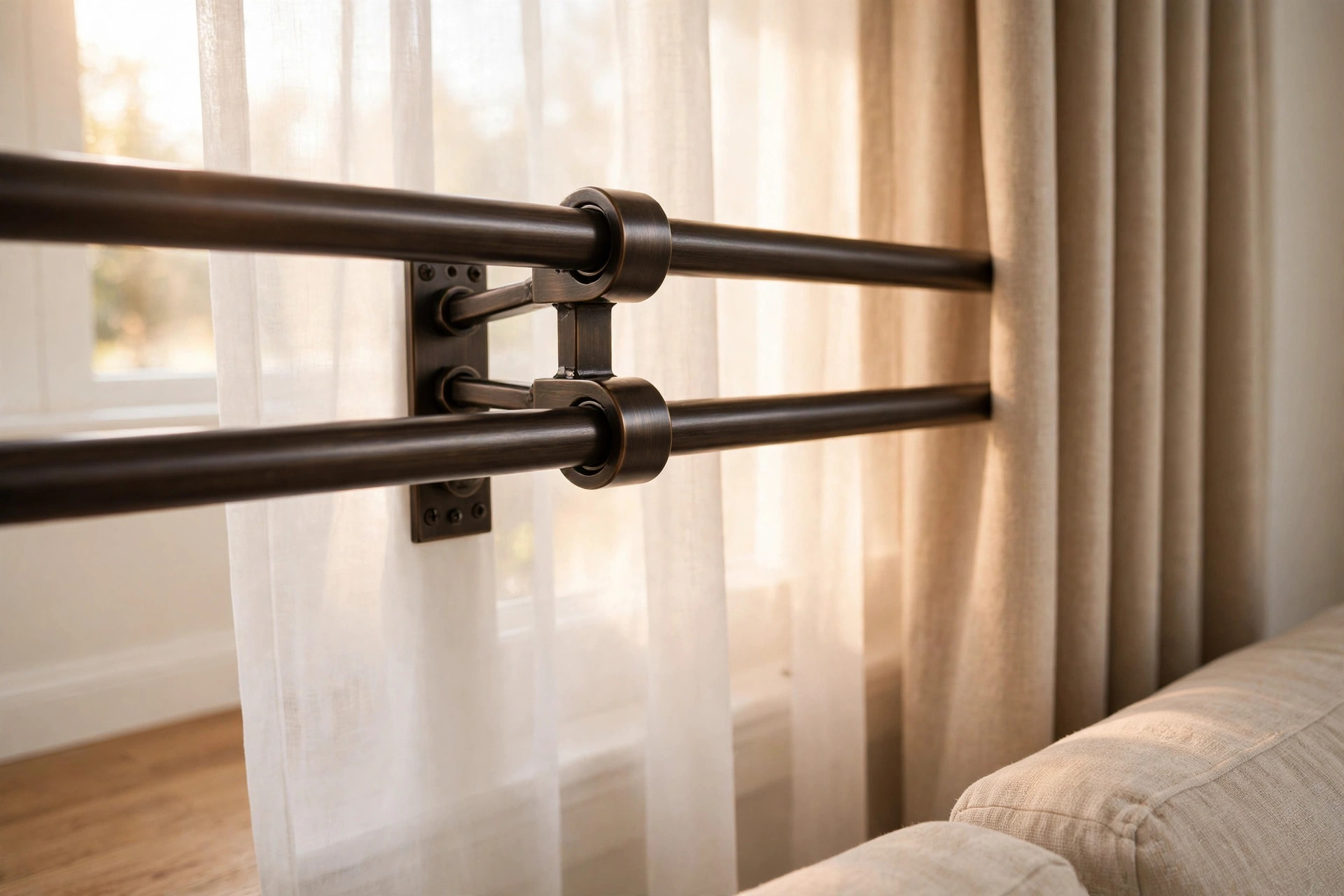
Window curtains look simple from across the room. Up close, the hardware tells a different story. The brackets carry all the weight. They keep two rods straight and level. They decide whether a layered window looks sharp or sags in the middle. Shoppers who search for premium double curtain rod brackets for sale want more than a bargain. They want brackets that last. This guide explains what premium means in this small corner of home hardware, what to look for before you buy, how to install the brackets, and what a fair price looks like in the United States.
Why Premium Double Curtain Rod Brackets Matter
A double curtain rod setup holds two parallel rods. The front rod usually carries decorative drapes. The back rod carries sheers or blackout liners. Together they give you light control and style in one window.
The brackets do all the work. Cheap brackets bend under the weight of heavy fabric. They pull out of the wall. They loosen over time. Premium double curtain rod brackets for sale are built to avoid these problems. They use thicker metal. They have deeper wall mounts. They hold alignment so both rods stay parallel for years.
Weight matters more than most buyers expect. A pair of velvet drapes can weigh ten pounds or more. Add a sheer panel and the load grows. Cheap stamped-metal brackets flex under that load. Premium brackets are rated for the weight. The rating is often printed on the box or in the product listing.
Good brackets also protect your walls. They spread the load across a wide mounting plate. They come with sturdy wall anchors. This matters in drywall, which is common in American homes. A bracket that pulls out takes paint and plaster with it.
Finally, premium brackets look better. They have clean welds. The finish does not chip. The set screws sit flush. Since the front brackets are always visible, a cheap finish ruins the look of the whole window.
How to Choose the Right Brackets: Premium Double Curtain Rod Brackets for Sale
Material and Build Quality
The best double curtain rod brackets are made of steel or solid brass. Steel brackets are strong and common. Brass brackets cost more and suit classic rooms. Avoid thin stamped aluminum if your curtains are heavy.
Look at the mounting plate. A wide plate spreads force over more wall area. A narrow plate concentrates it. Premium brackets have plates at least three inches tall. The metal should feel stiff in your hand. If it flexes when you press it, it will flex under curtains too.
Check the welds or joints where the arms meet the plate. Clean, smooth joints signal care in manufacturing. Rough spots and sharp edges signal a cheap product.
Weight Capacity
Manufacturers rate brackets by weight per pair. A rating of 20 to 30 pounds per pair is common for premium sets. Add up the weight of your curtains, both layers, plus the rods themselves. Buy brackets rated for at least double that total. The extra margin covers the force of opening and closing the drapes, which is greater than the resting weight.
Heavy drapes need more than two brackets per rod. For wide windows, plan one bracket every four feet. A twelve-foot rod needs at least four brackets, sometimes five. When you buy double curtain rod brackets for sale, count what is in the box. Some listings sell single brackets. Others sell pairs or sets of three.
Finish and Color
Finish is the visible part of the purchase. Popular finishes include brushed nickel, matte black, antique bronze, and polished brass. Match the finish to other hardware in the room: door handles, lamp bases, and cabinet pulls.
Premium finishes resist scratches and fingerprints. Look for terms like powder-coated or lacquered. These finishes hold up to daily handling. Cheap painted brackets chip where the rod meets the arm.
Finish matters for resale value too. Neutral finishes like brushed nickel and matte black appeal to more buyers. They blend with many curtain colors.
Projection Distance
Projection is the distance from the wall to each rod. Double brackets have two projections: one for the front rod and one for the back rod. Common front projections run from three to six inches.
The back projection must clear the window trim and any blinds behind it. Measure your trim depth before you shop. If the back rod sits too close to the wall, the sheers will bunch against the trim. If the front rod sits too far out, the drapes look detached from the window.
Adjustable brackets let you change the projection. This is useful when you are not sure of the final curtain depth. Fixed brackets are simpler and often stronger.
Rod Compatibility
Brackets must fit your rods. Check the cup or cradle size against the rod diameter. Most rods are one inch or one and one-eighth inches in diameter. Premium brackets often have adjustable cradles or padded inserts to grip different sizes without scratching.
Types of Double Curtain Rod Brackets
Wall-Mount Brackets
Wall-mount brackets are the most common type. They screw into the wall or window frame. They come in fixed and adjustable forms. Fixed brackets are strong and simple. Adjustable brackets telescope to fit different depths.
Ceiling-Mount Brackets
Ceiling-mount brackets attach to the ceiling above the window. They work well when there is no wall space above the frame, or when you want curtains to hang from the ceiling for a tall, dramatic look. They need solid ceiling joists or good anchors.
Wraparound and Return Brackets
Return brackets let the front rod curve back to the wall at each end. This closes the sides of the curtain and blocks light leaks. They suit bedrooms where darkness matters.
Decorative Brackets
Some brackets double as decoration. They have shaped arms, finial-like details, or colored finishes that show at each end. They cost more. They suit formal living rooms and dining rooms.
Adjustable Double Brackets
Adjustable brackets let you set both the front and back projection. They are forgiving during installation. If your measurements are off by an inch, you can correct without drilling new holes.
Cost and Price Guide
Prices for premium double curtain rod brackets for sale fall into three bands.
Budget premium, 8 to 15 dollars per bracket. These are solid steel with a decent powder-coat finish. They suit medium-weight curtains in bedrooms and living rooms.
Mid-range, 15 to 30 dollars per bracket. These add thicker metal, better finishes, and higher weight ratings. They suit heavy drapes and wide windows. This is the sweet spot for most buyers.
Designer and solid brass, 30 to 75 dollars or more per bracket. These are sold by specialty hardware makers. They suit formal rooms and custom drapery work.
A full window needs two to four brackets per rod set, so multiply the single-bracket price. A twelve-foot window with heavy drapes may need eight brackets. At twenty dollars each, that is one hundred sixty dollars in brackets alone.
Watch for what is included. Some listings include screws and anchors. Others do not. Cheap anchors fail in drywall. Plan to buy quality wall anchors separately if the listing does not name a brand.
Sales cluster around spring and fall, when home centers push window treatments. Home Depot and Lowe’s run seasonal discounts. Online sellers like Wayfair and IKEA carry affordable lines year round.
Installation Tips
Tools You Need
Gather a drill, a level, a tape measure, a pencil, and a stud finder. Have a screwdriver that fits the bracket screws. Keep wall anchors on hand for drywall.
Mark and Measure
Hold the bracket at the planned height. Mark the screw holes with a pencil. Use the level to check that both sides match. Measure twice. A bracket set an inch too low looks wrong from across the room and is hard to fix after drilling.
Mount brackets four to six inches above the window frame. This makes the window look taller. Extend the brackets three to six inches past the frame on each side. This lets the curtains stack off the glass and admit full light when open.
Anchors and Studs
Drill into studs when you can. Studs hold the most weight. Use a stud finder to locate them. When no stud lines up, use toggle bolts or self-drilling drywall anchors rated for the load. Never rely on simple plastic expansion plugs for heavy drapes. For more on safe window hardware practices, CPSC offers guidance on window covering safety.
Set the Rods
Place the back rod first. Hang the sheers or liners. Then set the front rod and hang the drapes. Check that both rods sit level in their cradles. Tighten set screws last, after everything hangs straight.
Check Alignment
Step back and look at the window from across the room. Both rods should run parallel to the floor and to each other. Adjust before you call the job done.
Care and Upkeep
Premium brackets need little care. Dust them when you clean the room. Wipe metal finishes with a soft damp cloth. Dry them after wiping. Water spots mark some finishes.
Check the set screws once a year. Curtains pull on brackets every day. Screws loosen over time. A quick turn with a screwdriver keeps everything tight.
Do not hang wet curtains on the rods. Wet fabric is heavy. It stresses the brackets and can stain the wall. It can also rust steel brackets that lack a sealed finish.
If a finish chips, touch it up with matching paint or a furniture marker. Small chips grow into rust spots if ignored.
Safety
Window hardware safety starts with secure mounting. A falling rod can injure a child or pet. Use anchors rated for the full weight of both curtain layers plus the rods.
Keep cords away from cribs and beds. The CPSC warns that window covering cords are a strangulation hazard for young children. Cordless sheers and drapes remove the risk. If your curtains have cords, use cord cleats and keep cords short.
Mount brackets high enough that children cannot pull on the rods. Check older brackets in rental homes. Landlords sometimes install cheap hardware that has loosened over the years.
For broad home safety and decor advice, The Spruce and HGTV publish useful guides on window treatments and child-safe design.
Frequently Asked Questions
How many brackets do I need for a double curtain rod? Plan one bracket every three to four feet of rod. A standard eight-foot window needs three brackets. A twelve-foot window needs four or five. Heavy drapes need the tighter spacing.
Can I use single brackets instead of double brackets? You can mount two single brackets back to back, but the result is weaker and harder to align. True double brackets keep both rods parallel by design. They are worth the extra cost.
Do premium brackets fit all rod diameters? No. Check the cradle size in the listing. Most fit one-inch and one-and-one-eighth-inch rods. Some premium sets include adapter inserts for smaller rods. Measure your rods before you order.
Are double curtain rod brackets hard to install? No. A careful homeowner can install a set in under an hour. The hard part is measuring and leveling. Take your time with the pencil and level. The drilling is quick.
Where is the best place to buy double curtain rod brackets? Home centers, specialty curtain shops, and online retailers all carry them. Compare the weight rating, finish, and what is in the box. Blinds.com focuses on window treatments and carries many options. General retailers like Apartment Therapy review styles, while Bob Vila covers installation know-how.
Can double brackets hold blackout curtains? Yes, if the weight rating is high enough. Blackout drapes are heavy. Choose steel brackets rated for at least thirty pounds per pair. Use enough brackets to keep the rod from bowing.
A Final Word
Premium double curtain rod brackets for sale are a small purchase with a large effect. They hold your curtains level. They protect your walls. They finish the look of the room. Choose steel or brass, match the finish to your hardware, and buy brackets rated well above your curtain weight. Install them level and anchor them well. The window will look right for years.
For more buying help, see our guides to custom double curtain rod brackets, best double curtain rod brackets, and luxury bay window curtain rods.
References
Apartment Therapy. (n.d.). Home design ideas and inspiration. https://www.apartmenttherapy.com Blinds.com. (n.d.). Window blinds, shades, and shutters. https://www.blinds.com Bob Vila. (n.d.). Home improvement advice. https://www.bobvila.com HGTV. (n.d.). Home and garden ideas. https://www.hgtv.com IKEA. (n.d.). Home furnishings. https://www.ikea.com Lowe’s. (n.d.). Home improvement products. https://www.lowes.com The Home Depot. (n.d.). Home improvement products. https://www.homedepot.com The Spruce. (n.d.). Home and garden advice. https://www.thespruce.com U.S. Consumer Product Safety Commission. (n.d.). Product safety information. https://www.cpsc.gov Wayfair. (n.d.). Furniture and home goods. https://www.wayfair.com
Was this guide helpful?

About Lisa Anderson
The My Garden US editorial team writes practical, in-depth home and garden guides for American homeowners — tested advice, no fluff.